National Geographic Traveller Magazine (November 2023): The latest issue features features 49 unique experiences in New York City, reveals the winners of our annual Hotel Awards, explores Turkeys ancient Lycian Way and helps plan a campervanning adventure in Australia.
Also inside this issue:
Kenya: meet a new generation of Maasai taking safari tourism into their own hands. Camargue: join the annual pilgrimage of Romani people to Saintes-Maries-de-la-Mer. Turkey: ancient tombs, lemon groves and mountainside villages await on the sun-drenched Lycian Way. Australia: pack the campervan for adventures in coastal cities and national parks. Stockholm: how the Swedish capital is shaped by the ebb and flow of the water around it. Brighton: right here, right now, visit the original party town and fountain of counterculture.
Plus,long-distance bikepacking in North Wales; reimagining heritage tours in the US; savouring the flavours of Vietnam; unearthing the history beneath Belgrade’s streets; discovering the hotels near the new Ghibli Park in Nagoya; blasting off into space-inspired family experiences; Guadalajara’s hidden quarters; escaping to the country in the North York Moors; ushering in the Day of the Dead with season reads; and packing the essentials for cold-weather camping
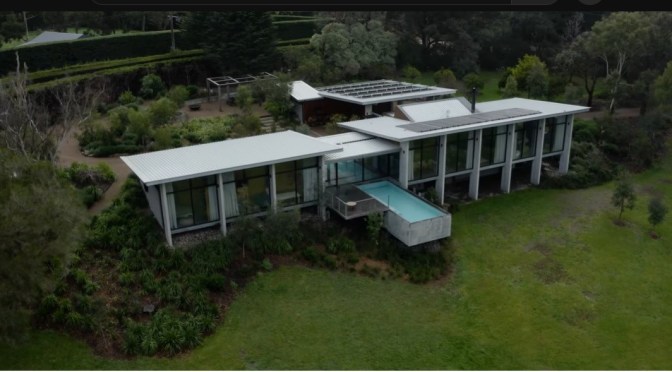
The Local Project (October 6, 2023) – Merricks House is a mid-century modern home that presents a bold response to a rural site in Victoria’s Mornington Peninsula – a coastal, countryside oasis.
Video timeline:00:00 – Introduction to the Mid-Century Modern House 00:45 – The Perks of Building Your Own Home 01:29 – A Rural Area 01:53 – A Simple Family Focused Brief 02:30 – A Walkthrough of the Home and the Elements 03:32 – Bringing the Outside In 04:04 – Compromising on Light 05:04 – Simple and Well-Thought Out Details 05:47 – Caring for the Landscape 06:39 – A Successful Outcome
Sitting on the edge of a forest, Aktis Architects works alongside the challenges presented by the site and a linear arrangement of spaces, creating an equally robust yet elegant farm home that connects and contrasts the quintessential Australian landscape it sits within. Built for the Director of Lexicon Constructions, the brief called for a mid-century modern family house that was linear in form and worked to encapsulate a strong sense of togetherness.
Approaching the mid-century modern home, one is met with a modest elevation composed of two raking roofs, each perched above a masonry box. A gravel driveway meanders through dense planting to arrive at a porte cochère lined with vertical timber cladding. The house tour reveals a linear arrangement of spaces inside, so the need for circulation areas and corridors is redundant. The concrete frame structure is defined by a geometric architecture, whilst circular windows contrast the geometry of the home and add a sense of playfulness.
The Local Project (October 3, 2023) – Tapping into Western Australian sensitivities, Enclosed House II is a hidden Italian-Inspired family home that evokes a purity and sense of harmony reminiscent of the desert.
Video timeline:00:00 – Introduction to the Hidden Italian-Inspired Family Home 01:12 – A Very Desirable and Hidden Location 01:48 – A Walkthrough of the Home 02:47 – Enabling The Space To Function As One 03:18 – The Customisation of The Vitrocsa Products 04:08 – A Reduced and Harmonised Material Palette 04:26 – Relating to Country Through Materials 05:40 – The Misconception of Minimalism 06:20 – Providing A Sense of Security and Privacy
Seemingly impenetrable, the raw, textural retreat the home provides is achieved through an innovative approach to materiality, light and space. Tucked away behind a river, the location of the hidden Italian-Inspired family home is one that is immediately desirable, set on a busy street with a strong suburban feel. The design responds directly to the bustling streetscape in the way that the architecture of the home draws on privacy – there is a visceral sense of security and solitude established from arrival.
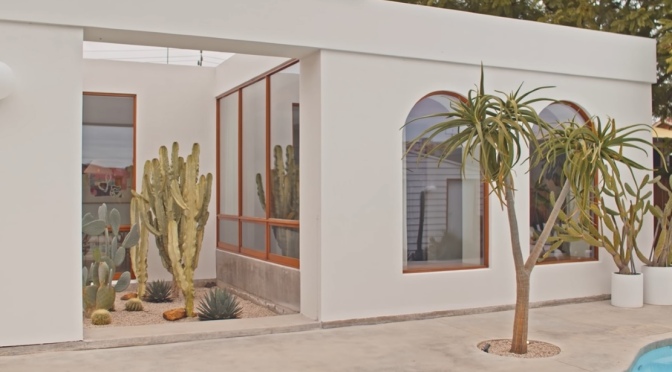
Upon entering, one is met with a stark walkway with robust textural walls that frame the process of entering. This sets the scene for the earthiness one can expect from the rest of the home. At the end of the entrance is the main living space, which, in a moment of surprise, appears as a large empty void. The space extends to the kitchen and the courtyard and is transformable, eloquently merging the indoor and outdoor due to the intelligent Vitrocsa window systems.
The raw earthiness and connection to land that is felt throughout the hidden Italian-Inspired family home derives from a considered materiality and minimal furniture. There is a reduced spectrum of materials used, seeing a harmonised palette and muted tonality connect seamlessly. Timber and natural materials dominate the interior design, and there is a strong connection to the colours and textures of the Western Australian landscape, specifically the red sand of the outback.
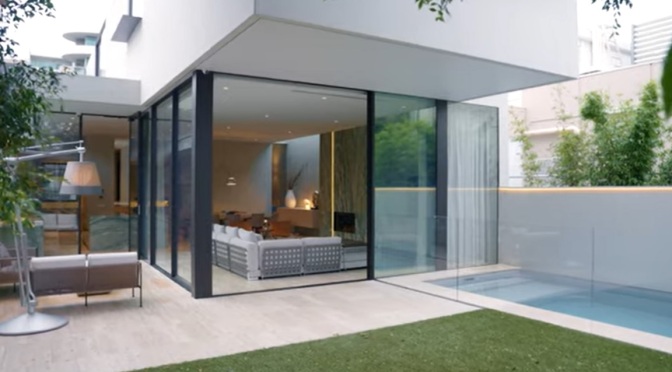
The Local Project (September 26, 2023) – Narrow sites and smaller residences tend to provide architects with an opportunity – one that inspires creativity and innovation. This is true of Concrete Curtain, an architect’s own home in inner-city Melbourne, where FGR Architects evocatively draws on materiality and natural light, imbuing the architecture of the family home with a sense of elegance and spaciousness.
Video timeline:00:00 – Introduction to the Architect’s Own Home 01:29 – Designed for a Growing Family 01:39 – A Walkthrough of the Home 03:13 – Playful Additions 03:49 – The Use of Stone Throughout the Home 05:27 – The Calming Materials 05:46 – Proud Moments
Upon entering the architect’s own home, one is met with a garage that is flanked by an ensuite, study and laundry. The house tour then leads into the central foyer area – a core part of the dwelling that allows light to enter from the east and west. The lower part of the residence contains the kitchen, living and dining area that then naturally flows out towards the al fresco dining area.
The spiral staircase leads to the second level, which is split into two segments. On the northern side is the master suite, and on the southern end is the childrens’ bedrooms. This floor also features a playful, blue carpet, which adds vibrancy to the upstairs level. Perhaps the most prominent feature of the architect’s own home is the concrete curtain, which reveals FGR Architects’s intention to illuminate areas with natural light.
Wanting to create a sense of space, the architect leveraged the idea of a sheer curtain to allow for both privacy and openness. As such, the concrete ‘cylinders’ are spaced out in a way that emulates the fold of a curtain. The result is a remarkable feature with a gentle, pleated style that softens the residence and lets light pass through seamlessly. The interior design and materiality of the architect’s own home is vital to its overall effect.
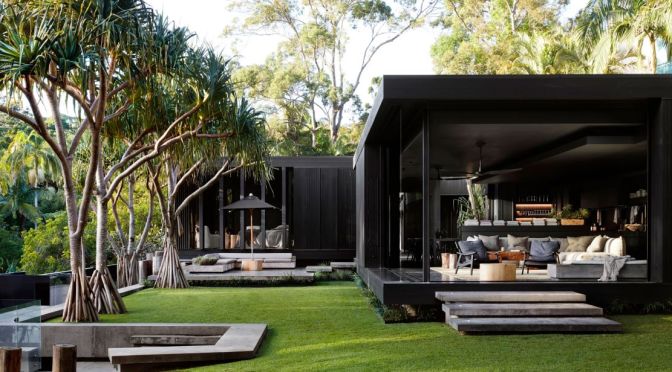
The Local Project (September 12, 2023) – Located in Noosa, Australia is a beach house designed by Frank Macchia, Principal at Macchia Design Studio. Boarded by lush greenery on the eastern side and a magnificent ocean bay on the northern, Boonburrh House does not dominate the site but instead respects all that was there before it.
Video timeline:00:11 – Introduction to the Stunning Beach House 00:40 – A Magical Beachside Location 01:07 – Respecting the Original Site 01:39 – Keeping the Home Discreet 02:05 – A Focus on The Landscaping 02:23 – Influences for the Design Process 03:11 – The Living Pavilion 04:05 – The Minimalistic Material Palette 04:48 – Proud Moments of the Design Process 05:20 – 2024 Dulux Colour Forecast
However, as the beach house sat on a public block – with a busy street out front – there was a need for the designer to make the family home private, secure, nurturing and comfortable, all while being open and connected to its surrounds. As such, Frank Macchia has used a range of interior design techniques that help to keep the home discreet from passers-by. One contributing idea for discreetness was to layer the beach house within the site while the second idea was a minimisation of the material palette.
As the beach house tour reveals, the landscape of the home has played a critical role for two reasons – one being that the designer wanted to establish a connection to the magic of the garden and the second to create a sense of privacy. Alongside these elements, there were many interior design influences for the family home that were discovered while the owners were on vacation in Sri Lanka. After staying at some of Geoffrey Bawa’s homes, the owners wanted to create a pull-apart home that would reveal a series of pavilions connected by open courtyards, link ways and verandas that are either partially opened or closed.
Complemented by Noosa’s perfect climate, Boonburrh House is further supplemented with open architecture that allows the owners to turn the extra courtyards and link ways into extra rooms. Exemplifying this is the living room pavilion, which has large glass sliding doors that disappear and open the space up to immediately connect to the garden. However, the home’s true appeal is the interplay of dark and light of the interior design where the main part of the residence is given access to both eastern and northern light.
The Local Project (September 5, 2023) – In Sydney’s Watsons Bay area, Creative Director at Wyer & Co. Anthony Wyer designs the landscape architects own family home.
Video timeline:00:00 – Introduction to the Landscape Architects Family Home 00:45 – A Coastal Location 01:11 – A Walkthrough of the House 01:59 – The Fundamental Features 02:43 – Behind the Interior Design of the Home 03:30 – Weathering All Seasons and All Conditions 04:20 – The Plant Palette 05:00 – A Mediterranean Inspired Design
“When designing a garden, I believe it comes down to balance – balance of hard surfaces, soft surfaces, understanding the natural environment and the plant palette,” says Anthony of his approach to the house, which sits on a corner allotment.
On arrival, one is immediately met with a beautiful mature olive that overhangs the entrance, setting the scene for a home that clearly interacts with its garden and foliage. The interior design of the landscape architects own family home was designed with the help of interior designers Marco Meneguzzi and Tamsin Johnson, who saw the vision for the interior spaces align with the vision for the garden. It is the garden of the landscape architects own family home that is most impressive.
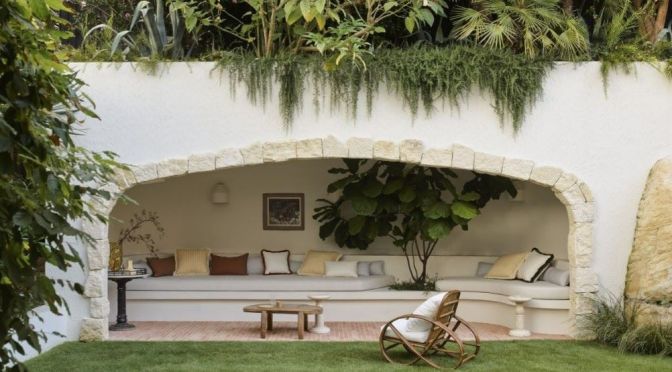
Anthony takes cues from both local and Mediterranean architecture and sensibilities to create an immersive outdoor retreat. One of the main features was the boulder in the rear garden – an impressive natural element central to the whole design. Other key features include a cabana structure covered in greenery, with its own planted roof, a fireplace, an open pergola that is waterproofed and a pool.
Whilst there is an expression of style, at the core of the garden is pragmatism and comfort, ensuring the outdoors can be enjoyed without needing to withstand the elements. The front, multi-tiered garden of the landscape architects own family home is elevated, faces the street and acts as an extension of the interior entertaining space. A plant palette of mature trees is used to create vibrancy and scale, which is combined with hedging and underplanting to imbue the home with softness.
The Local Project (September 1, 2023) – Removed from the busyness of Fitzroy, an inner-urban suburb of Melbourne where the home resides, stepping into Sunday makes one feel as though they are entering a hidden garden house. Architecture partners with Brickworks to create a sanctuary that offers a range of intimate, social and comforting spaces under the one roof.
Video timeline:00:00 – Intro to the Hidden Garden House 00:57 – The Inner-Melbourne Location 01:18 – A Specific and Well Written Brief 01:45 – A Walkthrough of the Home 02:32 – Integrating A Colour Pop 03:10 – An Indoor Jungle 03:39 – Utilising A Robust Material Palette 04:22 – The Brickworks Collaboration 05:40 – An Exciting Future
The client put forth interesting architectural reference points for the renovation. An extension creates the main communal, outdoor and private realms, and two east-west bands further divide each of these realms into two zones. The kitchen and dining are the heart of the home, with a sunken lounge that comes off the kitchen space. Expressed beams, clerestory glazing and concrete pavers connect the communal outdoor areas, which also sees the courtyard act as its own room.
Perhaps the most powerful design concept of the renovation is this assimilation of the courtyard, which further elevates the home as a hidden garden house. Designing a central courtyard not only offers a great sense of connectedness to the landscape but also maximises ventilation and natural light in the living and bedroom areas. As a way of navigating the small size of the site, key themes the architect leverages are that of separation and connection to ensure there are comfortable places to gather and retreat.
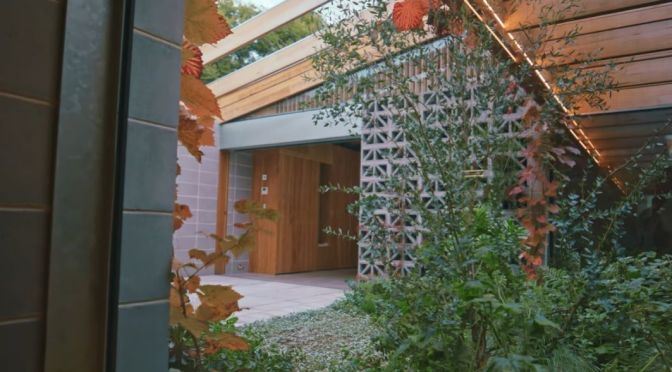
Breeze-block walls establish the various zones of the house and allow for an abundance of light, air and outward views. Similarly, accessing the bedroom requires walking across the open-air courtyard – a deliberate retreat from the house. The interior design of Sunday is defined by a robust materiality, muted palettes, clear geometries and spaces sculpted by light. Natural textures dominate, with minimal surface treatments allowing the house to develop its own patina with time that continues throughout internal and external areas of the home. Bold yellow also features throughout the hidden garden house, which is inspired by the client’s love of Luis Barragán’s colours.
The Local Project (August 29, 2023) – Just outside of Adelaide is Richmond House, a family home designed by studio gram that offers the owners a robust, relaxed and character-rich home to raise a family.
Video timeline:00:00 – Intro the Californian Inspired Family Home 00:50 – The Location of the Home 01:08 – A Desert Modernism Brief 01:36 – Connection to the Landscape 02:09 – A Walkthrough of the Home 03:18 – Behind the Collaborative Process 03:52 – The Material Palette 04:30 – Unique Aspects of the Home 04:53 – A Robust, Relaxed, Character Filled Home
After spending some time travelling around California, the clients delivered a detailed brief for a home renovation that was inspired by the architecture and interior design of desert modernism. Additionally, the brief requested a family home designed to suit a growing family and allow them access to an abundance of natural light. As the clients were a winemaker and photographer, the brief also requested a connection to landscape and the garden beyond.
The house tour begins in the original part of the house, where a considered renovation to the interior design has taken place; the bedrooms, master ensuite and main bathroom are now located here. Moving throughout, the original portion seamlessly connects to the new extensions through carefully designed openings. In the new extension of the home, the house tour reveals a simple open plan living space with a wealth of natural light. Cutting the family house in four quadrants, the family home designed by studio gram employs one quadrant as the kitchen, another for the dining space and the third for a living area.
The fourth quadrant is removed and, in its place, a courtyard garden is included to enhance the connection to nature. As a collaboration between studio gram, the client and the landscape designer, the garden and home unfold as one and give the owners a home that seamlessly connects all aspects. Additionally, discussions of midcentury Palm Springs and desert modernism played a major role in the renovation as well as the architecture and interior design of the home.
The Local Project (August 25, 2023) – Mermaid Beach House by Maher Design is located along the Gold Coast’s sandy shores. Conceived as an extensive renovation, this beach house pays deference to its coastal locale through intelligent planning of the architecture and thoughtful material combinations for the interior design.
Video timeline:00:00 – Intro to the Dream Beach House 00:44 – Behind The Original Mid-80s Build 01:53 – Facilitating an Outdoors Lifestyle 02:11 – A Walkthrough of the Home 03:15 – Key Features of The Kitchen 04:29 – A Robust Material Selection 04:56 – The Outcome of A Warm Family Home
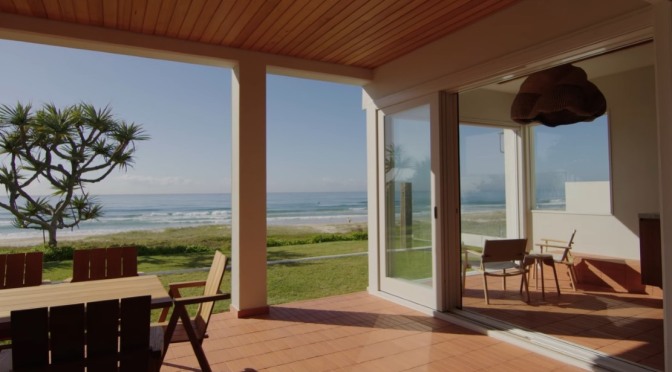
As designer Geraldine Maher explains, working within the confines of the home brought challenges and opportunities to the design, and the scope focused on introducing material cohesion and maximising the physical and visual connection to the beach. The thoughtful renovation of the ground floor of the beach house supports this. Stepping inside, a brise soleil constructed from terracotta breezeblocks designed by Adam Goodrum “defines the entry space and creates a sense of arrival,” Geraldine notes. It also helps to gently divide this entry knuckle and the kitchen, which sits deeper into the plan. As Geraldine explains, “relocating the kitchen to the rear of the space maximised the view from the dining area and living space, and those physical and dimensional constraints forced us to shoehorn a kitchen into a very tight space.” Whilst compact, the sense of openness belies the footprint, with thanks to a series of work zones that divide the room and direct the experience, supported by a suite of Fisher & Paykel appliances. Geraldine offers, “the thing that drove the selection of Fisher & Paykel was the design and aesthetic aligning with great functionality and a really high-quality product.” An induction cooktop – housed within a monolithic form constructed from stone and timber and featuring discreet, integrated ventilation – becomes a refined and sculptural centrepiece of the interior design, and the refrigerator and freezer are integrated. Stretching the far elevation, a long piece of joinery acts as a physical conduit between the kitchen’s primary work zones and the informal bar area at the home’s front edge. It also contains two integrated Fisher & Paykel CoolDrawers and two single DishDrawers. The family games room inside the beach house is also equipped with its own Fisher & Paykel CoolDrawer and DishDrawer. Mermaid Beach House is a visually exciting and contextually relevant home. The pleasure comes not only from its elevated internal experience but from its proximity to the ever-changing ocean, meaning the joyfulness felt by its residents will renew with each passing day.
The Local Project (August 23, 2023) – The revitalisation of this heritage brick house by Matt Gibson Architecture + Design was grounded on the ethos of changing as much as necessary but as little as possible.
Video timeline:00:00 – Intro to the Modern Brick House 00:32 – The Location of the Home 00:49 – William Tappin and His Designs 01:05 – Handling the Connection Between Old and New 02:01 – Requirements of the Brief 02:25 – The Interpretation of Arts & Crafts 03:07 – Behind the Kitchen Design 03:30 – A Walkthrough of the Upstairs 04:18 – The Architect’s Proud Moments
Located in the eclectic neighbourhood of South Yarra in Melbourne, William Tappin House depicts the sensitive layering of a historical footprint with contemporary innovation. Originally designed and occupied by its namesake, William Tappin – a renowned Queen Anne-style architect – the connection between old and new was something the architect wanted to handle sensitively, and this influenced the positioning of the building on site.
The existing structure is restored to remain the hero, whilst the new addition is recessive and humble in design. Restorations include revealing the original brickwork and limestone, restoring the existing verandah and carved wooden features. Exposed details, such as the fingerprints of makers on the tiles and original brick, become a symbol of the heritage façade of this home. New additions are highly sensitive to the brick home’s foundation.
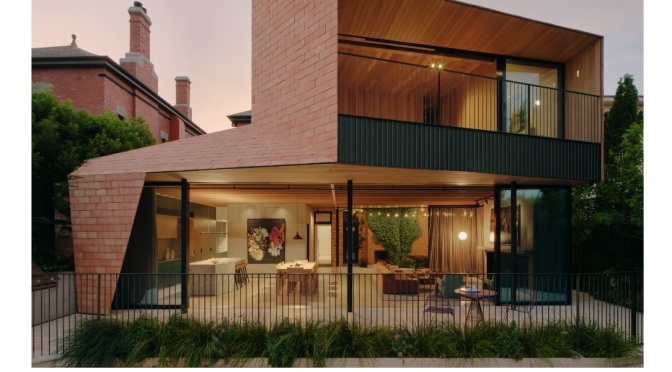
The rear addition is constructed from limed timber and off-form concrete that calls back to the tonality of the limestone and basalt detailing of the original structure. Terracotta tiles also wrap the faceted roofscape in an ode to the bespoke red brick. What the house tour shows is a strong connection between inside and out, which prevails throughout the home. The entire ground floor, which contains the kitchen and living areas, opens to the exterior, with views extending all the way out to the garden and beyond – made even more accessible through sliding glazed doors.
News, Views and Reviews For The Intellectually Curious





 The Local Project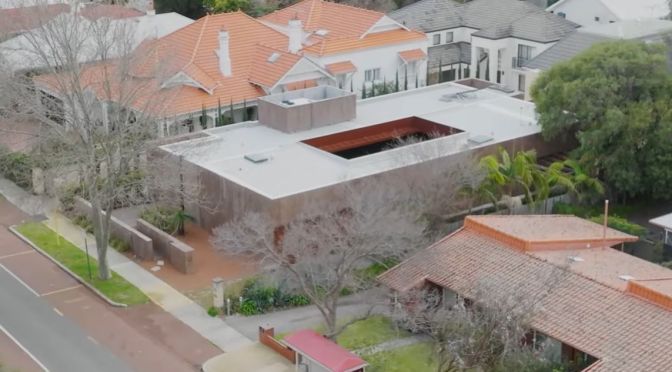
 Boomers Daily