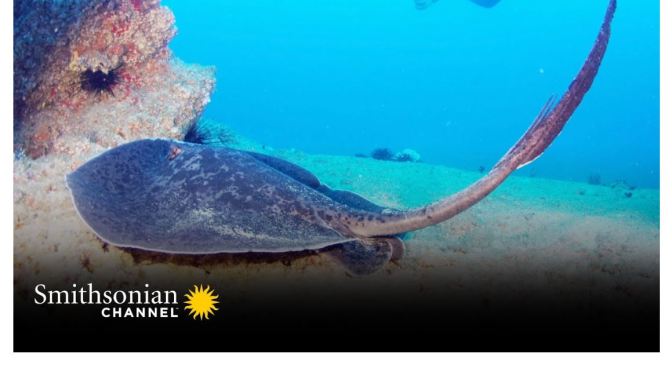
A Blotched Fantail’s stinger is located the base of its spine, packed full of venom. If it manages to connect with a vital organ, that venom is capable of killing a human being.
The Blotched Fantail Ray is widespread along the Great Barrier Reef and has a distinctive disc shape, colour pattern and a ventral skin fold on its tail. Although it is not generally aggressive by nature it has been responsible for at least one human fatality.
Australia’s Lord Howe Island is famous for its beauty and unique mix of plants and animals. Nowhere is this more evident than in a rare cloud forest atop the island’s two southern mountains. But its environment has faced a battle for survival.
Water is fundamental to life, yet it’s also a scarce commodity. In many cases, greed and mismanagement are causing this life-giving essential to run dry. What happens when water is monetized? From Australia to California, from New York to London and Brussels, this investigative documentary tells the story of the global struggle over water.
Following rushes to secure gold and oil, the age of the water rush is now here. As well as growing populations and expanding agriculture, there are the problems of environmental degradation and climate change. Global demand for water is skyrocketing. By 2050, at least one in four people will live in a country with a chronic water shortage. The situation has awakened the greed of giant financial institutions, which are going on the offensive, investing billions in the sector. Goldman Sachs, HSBC, UBS, Allianz, Deutsche Bank and BNP are among those pouncing on the commodity known as “blue gold.”
But can fresh water really be considered a commodity on par with oil, coal or wheat? Should the players in these markets – banks and investment funds – be allowed to bet on the value of water? Will concern for profits undermine water’s essential function? Or should this precious resource be declared off-limits to financial speculators? A battle has broken out between those who advocate the monetization of water, and those who defend it as a human right. It’s a battle being fought on many fronts: ideological, political, environmental and, of course, economic. And the fate of the nearly ten billion inhabitants of our planet hinges on its outcome.
An architect’s own home can be a challenge to design, with no brief or boundaries to adhere to, leaving the architect’s skill set and true style exposed for all to see. This converted warehouse is an architect’s own home, designed by and for Rob Mills of Rob Mills Architecture and Interior Design.
Located in Armadale, a Melbourne suburb known for its character and village atmosphere, the house was created through a warehouse conversion, which gave the architect plenty of scope and space to design a piece of architecture that truly reflected his likes and wishes. Harnessing this space in the converted warehouse home, the house carries over three levels, with an apartment, sauna and garage at ground level, living in the middle, and bedrooms above.
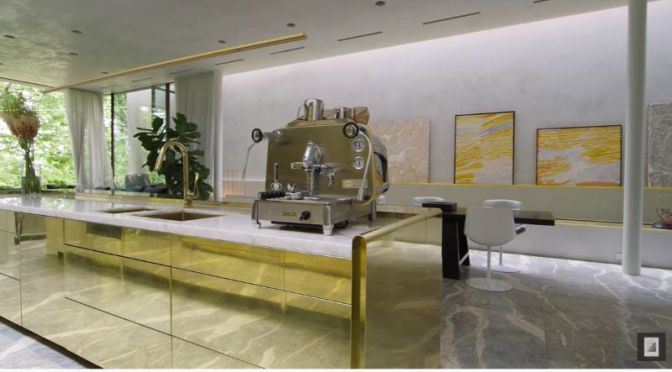
The interior design uses a minimal palette of stone, timber, stucco, glass and metal, with brass playing a large part in the design, especially in the kitchen where it is used extensively and effectively. This glamour and drama are at the heart of the interior design of the converted warehouse. A spiral staircase adds a sculptural element to the house, while also providing an efficient method of travelling between floors.
The office, which has an English aesthetic with lush yet classic-style furniture, features timber shutters that close off to create a focused environment or open to let in plenty of natural daylight. Close connections to nature were important to the architect, Rob Mills of Rob Mills Architecture and Interior Design. A water feature trickles through the living space of the converted warehouse, providing a meditative element to the room. Materials were chosen for their non-toxicity, with stucco walls specified as a natural alternative to paint.
An architect’s own converted warehouse home, Armadale Residence features designer furniture throughout that is carefully chosen to subtly fit with the shine and glamour of the materials. Architecture and Interior Design by Rob Mills Architecture and Interior Design. Filmed and Edited by Cheer Squad Film Co. Production by The Local Project.
The Ruum model proudly represents a new pathway to architect designed living. Through considered partnerships with industry leading companies such as Chamberlain Architects and Fisher & Paykel, Ruum is making architectural designs accessible to more people.
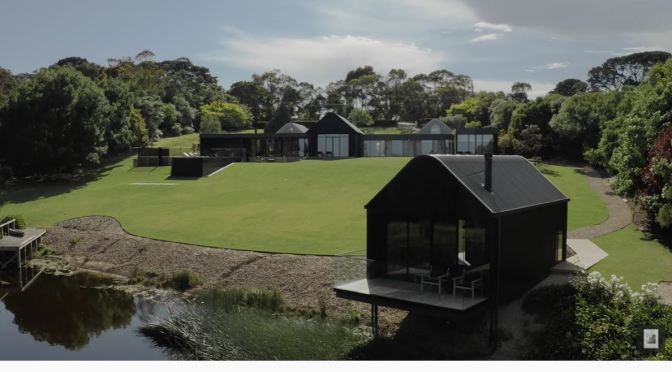
Captured in a recently completed home designed by Chamberlain Architects, Ruum founder Elliot McLaren and Chamberlain director Glen Chamberlain explain what this new pathway to architect designed living represents, and how Ruum is able to maximise value for the home-owner. As Elliot explains, “having spent over 15 years in the residential building industry, I became acutely aware of a chasm in the marketplace where traditional project building will stop and one off bespoke architecture starts.”
In practice this has seen Ruum partnering with Chamberlain Architects on the first series of Ruum architect designed homes – five different configurations that can only be commissioned ten times per state before they are retired. Within this program, there exists the potential for customisation of each template to maximise the living and lifestyle benefits of Ruum’s offering. It allows home-owners a degree of customisation to their layout, whilst achieving efficiencies in the appointments and appliances throughout their home.
For Glen Chamberlain, this meant that “the attention to the plan” and choosing to partner with “companies that have a passion and commitment to design” were of utmost importance in elevating this new pathway to architect designed living. The decision to align Ruum with Fisher & Paykel was therefore a logical choice, with all Ruum homes enjoying integrated Fisher & Paykel kitchens that become extensions of the main living space. Elliot elaborates that “what is a common theme with all the partnerships that we have curated within the Ruum model is a common belief around quality” and this is nowhere more apparent than in the Ruum kitchens.
Demonstrating a new path for architect designed living, Ruum allows clients to create beautiful and architectural spaces without the rigours of the traditional model. Presented in Partnership with Ruum. Architecture by Chamberlain Architects. Kitchen Appliances by Fisher & Paykel. Filmed by Cheer Squad Film Co. Production by The Local Project.
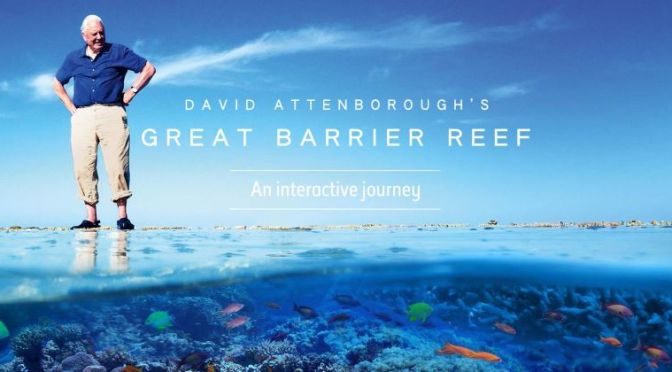
Itching to explore but don’t want to leave the house? Behold these Peak Exploration moments from David Attenborough’s Great Barrier Reef! These moments plus so much more will start streaming March 4th on Paramount+.
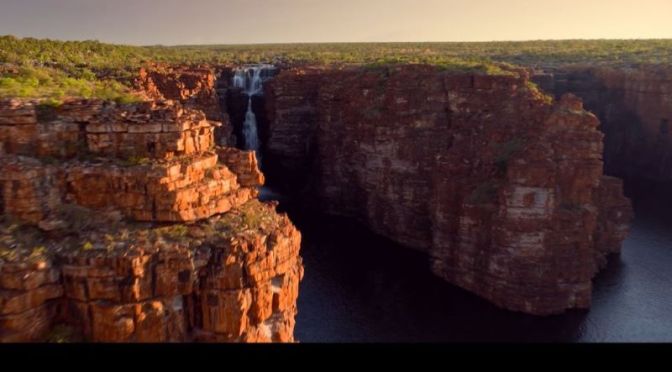
The Kimberley is Western Australia’s sparsely settled northern region. It’s known for large swaths of wilderness defined by rugged ranges, dramatic gorges, semi-arid savanna and a largely isolated coastline. The mostly unsealed (unpaved) Gibb River Road runs 660km through the region’s heart, passing by Windjana Gorge National Park, which has towering limestone cliffs and pools where freshwater crocodiles gather.
I’m drawn to this place where you’ll see no trace of modern man. A place still full of mystery and natural treasure, of ancient landmarks and undiscovered beauty. This is uncharted country, this is the Kimberley, Australia.
Special thanks to THE GREAT ESCAPE CHARTER CO. for sending me into this wilderness, thank you!
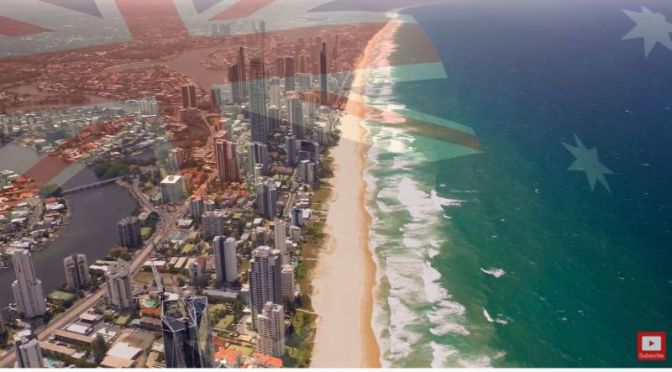
The Gold Coast is a metropolitan region south of Brisbane on Australia’s east coast. It’s famed for its long sandy beaches, surfing spots and elaborate system of inland canals and waterways. It’s also home to theme parks such as Dreamworld, Sea World and Wet’n’Wild. Inland, hiking trails crisscross Lamington National Park’s mountain ridges and valleys, home to rare birds and rainforest.
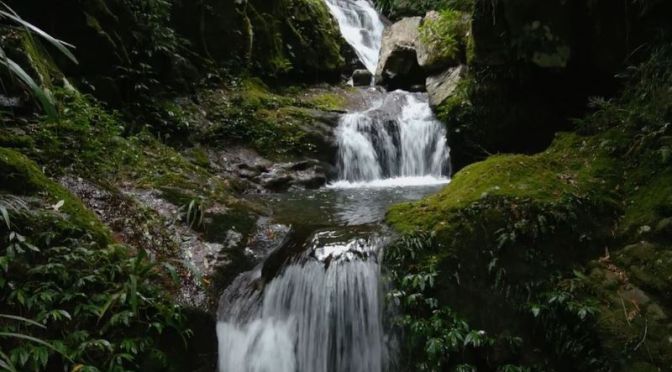
Lamington National Park is in southeast Queensland, Australia. It’s known for its section of the ancient Gondwana Rainforests, home to the rare Albert’s lyrebird. Trails in the park’s 2 areas, Binna Burra and Green Mountains, criss-cross the McPherson Range. The Border Track offers mountain views. The Caves Circuit overlooks the Coomera Valley. The tumbling Moran’s Falls can be seen from the Python Rock lookout.
The numbat – a small and little-known Australian marsupial – is one of the world’s most endangered animals. Conservationists are working hard to save them by building vast, predator-free sanctuaries.
The numbat is an insectivorous marsupial. It is diurnal and its diet consists almost exclusively of termites. It was once widespread across southern Australia, but is now restricted to several small colonies in Western Australia. It is therefore considered an endangered species and protected by conservation programs.
News, Views and Reviews For The Intellectually Curious




 Boomers Daily