Tag Archives: Australia

Design: Northside House In Clifton Hill, Australia

The Local Project – Through warm and inviting additions, Northside House becomes a dream house for the clients of Wellard Architects. In partnership with Artedomus, Wellard Architects have carefully considered the owners’ personalities with the selection of colours, tones and materials.

Video timeline: 00:00 – Introduction to Dream House 00:39 – An Alterations and Additions Project 00:51 – The History Behind Northside House 01:10 – Layout of the Dream House 02:01 – The Overarching Theme of Compression and Release 02:50 – Joining Forces with Artedomus 03:17 – The Main Materials Utilised Throughout The Home 05:02 – Artedomus’ Involvement 05:37 – The Architect’s and Artedomus’ Favourite Aspects 06:13 – Proud Moments from the Architect’s

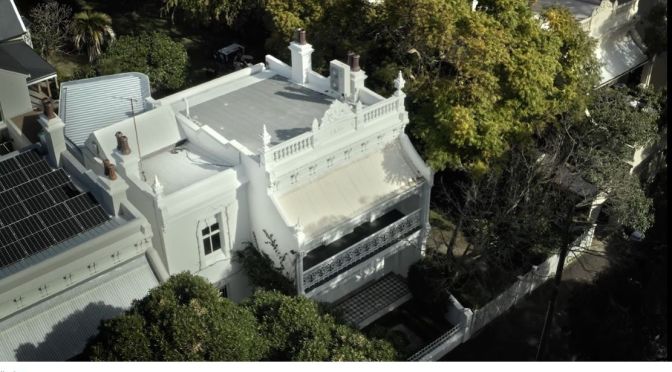
Located on a corner site of Clifton Hill, Northside House is an existing heritage home that once housed an Italian plasterer and showrooms. However, with carefully considered alterations and additions, the dream house becomes a space for private family dwelling that also opens to the surrounding community. From the front of the Federation-era home, the house tour leads guests past the principal bedrooms and bathrooms of the original home.

Wellard Architect’s alterations and additions become evident with the double-height hallway that marks the transition between the old and new. Located upstairs is a lounge and study, which offer a warm and light-filled retreat where one can find some privacy in a busy household. On the ground floor, the living and dining spaces have been subtly zoned so no space feels too cavernous. From the blonde timber walls and ceiling to the terrazzo flooring, the dream house encompasses a natural form of living.

Desiring a cosy interior, the clients and Wellard Architects worked closely in the selection of decor, furniture, finishes and fixtures for the interior space. During these project development stages, Artedomus was approached for its robust materials that would fit the brief of a busy family’s dream house. In the ensuite bathroom, porcelain tiles from Portugal infuse warm tones, while the vanity and basins use Travertine Zena and INAX tiles to establish calmness throughout.

Additionally, the main bathroom uses Verde Bardini granite and Fiandre Maximum porcelain tiles which meld with the selected Agape Vieques steel bath that sits sculpturally in the centre of the bathroom. Flowing throughout the rest of the dream house, Artedomus products can also be appreciated in the generously-sized kitchen, where Nerofino Brushed Quartz has been employed for the splashback.

Alongside the creation of a cosy atmosphere, the kitchen further instils the clients desire to have a home that can be used for entertaining – with space for intimate family cooking or a gathering of friends and neighbours. Opening up to the back garden courtyard, the orange-bricked façade of the garage seamlessly balances the terracotta shingles of the dream home and merges the heritage home with the modern additions.

News: Russia Withdraws From Kherson, France To Quit Mali, China-Australia

Russia’s withdrawal from Kherson, the end of the French-led anti-jihadist Operation Barkhane and Australia’s decision to block pilots from training the Chinese military. Plus: a look ahead at the 2024 US presidential election, a review of the papers, urbanism news and the fifth series of ‘The Crown’.

Home Design: Pavilion House In Avalon, Australia

The Local Project – An interior designer’s own holiday home, Pavilion House reflects a studious approach to the relationship between architecture, landscaping and the internal environment. Crafted by Nina Maya Interiors and Maya Sternberg Architects, the home captures an escapist experience using an array of sculptural forms.

Video timeline: 00:00 – Introduction to the Interior Designer’s Family Holiday Home 00:35 – Introduction to Nina Maya Interiors 00:55 – The Location of the Home 01:11 – A Brief Based Around That Holiday Feeling 01:47 – Pavillion Style Architecture 02:06 – A Walkthrough of the Home 02:23 – Evoking a Ubiquitous Feeling 02:43 – The Connection Between Indoor and Outdoor 03:15 – The Landscape Architecture 04:05 – A Light-filled Home 04:27 – The Hand Carved Coffee Table 05:14 – Organic, Round Soft Forms 05:34 – Nina’s Favourite Features

Situated in Avalon, a coastal suburb of Sydney, Pavilion House stands as an interior designer’s own holiday home, settled in close proximity to the beach. As the beach house sits far back on a 1000 square-metre block, a house tour of the residence begins with a sense of land, space and privacy reminiscent of a luxury hotel. Architecturally, the building champions a pavilion style with an orderly spatial layout and front façade comprised of glass.

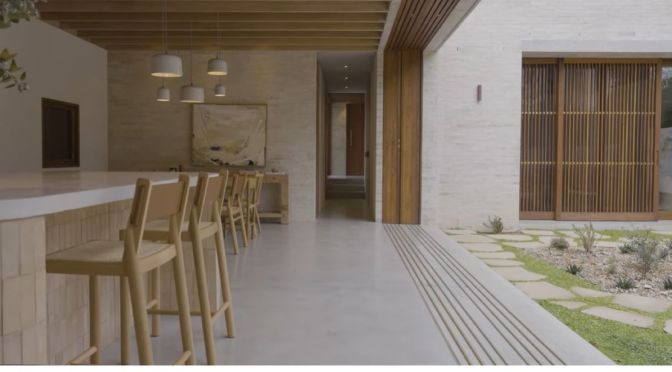
Entering Pavilion House, occupants find the kitchen and dining room, followed by the living quarters and, further back, all bedrooms and bathrooms. As an interior designer’s own holiday home, the residence effortlessly proposes a luxury living experience influenced by hotel designs from around the world. A seamless connection between indoor and outdoor space is maintained using doors which stack to their sides – opening the home to the external environment – and a sophisticated treatment of landscape.

Balancing aesthetics and functionality, Pavilion House is a prime example of an interior designer’s own holiday home. Having excavated a large portion of the front of the property, Nina Maya Interiors builds a refined outdoor dining area surrounded by palm trees, white pebbles and a custom marble table. In addition, the landscape features a firepit area and outdoor spa space, complete with a bar, vanity, free-standing bathtub and rain shower. The lighting of Pavilion House also nods towards its status as an interior designer’s own holiday home. In the lounge, a continuous skylight runs seven metres across the length of the room, inviting natural light to play across the plaster wall.

Raw finishes combine with a restrained colour palette to enhance the calming quality of the sunlight and sculptural furniture within the interior design. Exuding a sense of relaxation, Pavilion House is an uplifting iteration of an interior designer’s own holiday home. Nina Maya Interiors forges a strong connection between both the internal and external aspects of the home, establishing a coherent place of retreat.

Architecture Tour: Grove House In Sydney, Australia

The Local Project = Located in Sydney’s east, Grove House is a garden home that possesses a sense of community through its connection to the shared grove between the surrounding heritage houses. Supplying architecture and interior design, Clayton Orszaczky delivers a family home that wraps around its occupants like a cocoon.

Video timeline: 00:00 – Introduction to the Inner-City Garden Home 00:27 – The Architects 00:47 – Preservation of the Heritage Aspects of the Home 01:02 – A Walkthrough of Grove House 01:44 – The Clients 02:09 – Connecting to the Garden 02:27 – The Grove, A Community Garden 02:54 – The Landscape Designers 03:06 – A Contrast Between Old and New 03:34 – The Use of Concrete 04:06 – The Key Relationship Between Form and Lighting 04:30 – The Architects Favourite Moments

As the house tour begins, the desire to keep the original fabric of the house – while sensitively connecting to the new additions – can be seen through each design choice of the garden home. Inside, a careful consideration of materials and space has been infused from the original formal rooms to the dining and family living room and into the extensions.

However, it is the original timber staircase greeting guests from the entrance that establishes a graceful connection between the original home and new additions. Directly responding to the clients’ desire to connect to the gardens and grove beyond, Clayton Orszaczky encourages the new additions of the garden home to directly respond with the original fabric. A core aspect of the home, the kitchen and dining space connects to the gardens through large glass doors and windows which directly draw in both northern and eastern light.

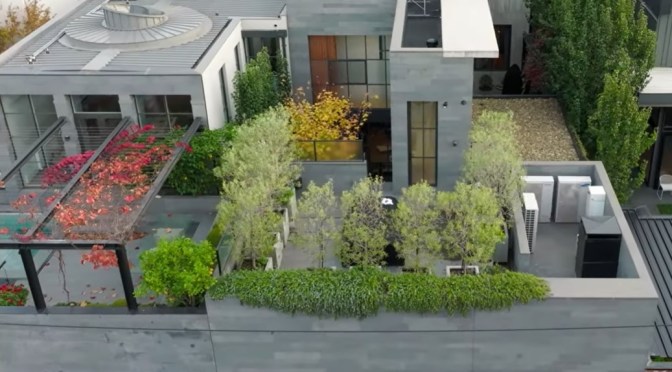
A further dialogue between the existing home and the new was addressed by specifically choosing to emphasise the contrast of eras through the use of off-form concrete, steel windows, timber veneer, black porcelain and modern furniture. Collaborating with Tanya Wood Landscape Architect on the ground level and roof garden design, Grove House establishes a renewed connection between home and garden. Looking at the garden home from the grove, it can be seen that the soft form of the exterior contributes to the grove and the shared community space.

Continuing the house tour from the back fence to the shared grove, an immediate connection with the landscape, surrounding greenery and neighbours can be experienced. Throughout the house tour, the transition between the existing and new areas of the garden home are seen through the proportional ratios. Specifically choosing to speak to this dialogue between old and new additions, Clayton Orszaczky has used concrete for mass – similarly to how masonry was used in the original home.

Additionally, continued references to the terrace house form is seen within the new additions and the renewed relationship between light and form further contributes to the connection within the home and to the garden and grove.

Home Design: Curl Curl House, Sydney, Australia

Afforded the freedom of an open design concept, interior design practice Folk Studio crafts Curl Curl House. Showcasing the collaborative work of architectural practice TRIAS, the magical home captures the spirit of the Australian coast.

Video timeline: 00:00 – An Introduction to the Magical Home 00:38 – The Collaboration of Folk Studio and TRIAS 01:51 – Adding Intentional Gestures to the L-Shaped Floor Plan 02:32 – A Beach, Bush and Coastal Palette 02:51 – Watching Visions Come to Life 03:22 – Having the Garden as an Integral Piece of the Design 03:46 – Seeing Green from all Areas 04:11 – The Hit and Miss Brickwork Screens 04:38 – Creating a Sanctuary and an Oasis for the Clients 04:58 – Finding Joy in the Client’s Comfort

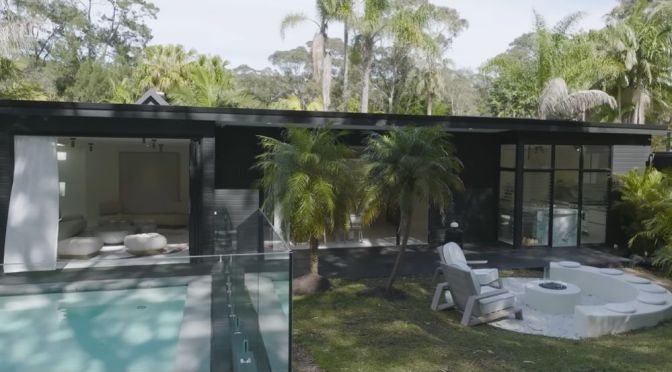
Settled into Curl Curl, the coastal suburb of Sydney located just north of the Central Business District, the same-named house reflects its immersive environment. The natural character of the local context sees bush meet coast and a beachside lifestyle cohere with suburban influence. Upon accepting the design project, Folk Studio promptly met with architectural firm TRIAS in order to solidify the creative vision – a residential sanctuary – and ensure that the architecture and interior design of the home work together to form the ideal domestic experience.

Featuring an L-shaped spatial plan, Curl Curl House encloses a collection of communal zones on its ground floor, including a living room on each end. The position of each living room marks a change from the spatial arrangement of a typical house, which sees kitchen, living and dining spaces continue on from one another. Purposefully located, the living rooms function as calming areas within the magical home, removed from the bustle of the communal zones.

Inspired by the Australian beach, bush and coast, the aesthetic palette of Curl Curl House reflects a sense of natural serenity, enhanced by contrasting injections of brickwork that pay homage to the suburban context. Integral to the design of the magical home is the garden space growing along its perimeter. As a result of TRIAS condensing the architecture of the home, the garden space is maximised and enables a natural vista to be accessed from every room of the house.

Hit-or-miss brickwork screens adorn the upper levels of the façade, intercepting the incoming natural light to create shifting visual patterns within the magical home. Achieving a residential oasis, Folk Studio and Trias craft a magical home that serves as an escape from the hectic nature of everyday life. Curl Curl House stands as a residence in which its owners can take pride, rewarded by the sense of careful curation permeating the dwelling.

Australia Views: Mount Ngungun In Queensland

Mount Ngungun, generally known as “Gun Gun”, is located an hours drive north of the city of Brisbane in south east Queensland, Australia. Mount Ngungun is the sixth tallest of the Glass House Mountains at 253 metres. The summit provides spectacular 360 degree views of nearby Mt Tibrogargan, Mt Tibberoowuccum, Mt Coonowrin and Mt Beerwah.

It is a very popular hike due to its relative ease and fantastic views, and has a well maintained walking trail to the summit. The trail from carpark is not as steep as the other higher mountains and is open to beginners. The south face contains steeper, unmarked but well known rock climbing routes.

2022 Journeys: ‘The Beauty Of Australia & Vanuatu’

Pavel Ivo Sedlacek – Our journey was 7 weeks long,

and we traveled all over the continent. We visited Western Australia, South Australia, Northern Territory, and Queensland and at the end of our journey, we went for 8 days to the tiny Pacific nation of Vanuatu.

Filmed in August 2022.

Design: St. Vincent Place In Albert Park, Australia

The Local Project – Following three years of curation, St Vincent’s Place emerges as an award winning home, peppered with art and designed to promote conversation. Crafted by B.E Architecture, the restoration project employs expressive pieces with consistency, enabling the building to be navigated with ease.

Video timeline: 00:00 – Introduction to the Award Winning Home 00:21 – A Restoration Project 3 Years in The Making 00:58 – Building Aspects From the Ground Up 01:31 – Compatibility Within the Home 01:46 – A Walkthrough of the Historic Section of the Home 02:03 – The Modern Section of the Home 02:18 – Reinterpretations of the Historic Aspects 02:46 – Encouraging Conversation Through Building and Design 03:36 – A Range of Surprising Features 04:45 – Peaceful Curation and Arrangement 05:09 – A Journey With the Client

Originally owned by a convent, St Vincent’s Place is comprised of three buildings set side-by-side, situated in the Melbourne precinct of Albert Park. The heritage façade – the only historical element that could be retained in the award winning home – represents a significant contribution to the architecture of the area, presenting a combination of stone and delicate black metalwork. Traversing two design styles in a singular project, B.E Architecture dedicates the front of the home to heritage recreation whilst providing a modern extension.

The front of the award winning home captures a formal entrance and living room and upstairs, a master bedroom and dressing room. A studious approach to restorative design is reflected in the treatment of cornices, skirtings and architraves, as well as doorjambs, doors and flooring. In contrast, the back of the building captures a contemporary interior design including a downstairs pool, onsen and steam room, elevated with tiling and considered lighting.

Several features of St Vincent’s Place indicate the designer’s penchant for aesthetic flair. Inspired by pioneering artist Sigmar Polke, sliced agate doors filter natural light with an array of neutral tones. In addition, a large text piece reading ‘Heaven is a Place Where Nothing Ever Happens’ sparks curiosity from its reference, size and impressive incorporation into the award winning home.

“You do feel the magic of how these elements come together here,” says Broderick Ely, Design Director at B.E Architecture. “We curate, we arrange and manipulate these items so it sits very quietly.” Using the even application of decorative elements, B.E Architecture establishes a coherent and award winning home. St Vincent’s Place is structured to gently guide occupants towards its many hidden gems, enabling the mind to wander in unison with the body.

Tours: Fisherman’s House, Parramatta River, Sydney

Sitting on the edge of Parramatta River, Fisherman’s House is a unique underground home with a sense of the unexpected. Without revealing all at once, the waterfront house is a unique underground home by Studio Prineas that instils moments of awe within every level.

Video Timeline: 00:00 – Introduction to the Underground Home 00:30 – The Waterfront Location of the Home 00:45 – The Original Timber Cottage 01:04 – A Minimalistic View On Arrival 01:35 – A Longstanding Friendship Between Architect and Client 02:05 – Working with an Open Design Brief for the Home 02:33 – The Original Steel Cladding 02:46 – Restoring and Reusing Original Materials from the House 03:28 – Careful Contrast of the New Wing to The Cottage 04:08 – Taking Pride in Preservation and Creation 04:30 – The Swimming Pool

Fisherman’s House is one of the last remaining timber cottages in the area that sits nine metres below the road, hidden from the public eye and offering a serene escape from the city. The client – an engineer and family friend of the architects – delivered an open design brief and sense of freedom for Studio Prineas to organically explore what the unique underground home could become.

The main desire for the client was to have the living spaces facing the water; while there was no desire to keep the original cottage, this was something that Studio Prineas knew they needed to maintain. Throughout the restoration process, removing previous cladding revealed the original weather boards underneath; inside the home, the original timber flooring and lining boards were saved to bring back the lightness of the architecture. With waterfront views from the kitchen, living and dining spaces and entertainment deck, the interior design of the original cottage defers from the new wing.

Additionally, the glazed link is a vertical connection from the original cottage to the private living spaces above. From the lightness of the timber cottage below, the upper levels speak to the rockface behind whilst offering a more grounded appearance with darker timbers. Employing concrete ceilings with rough sawn Oregon formworks that brought a timber look and imprint on the concrete, Studio Prineas established a differentiating space that still feels connected through minute details.

Conserving the history of the cottage whilst creating a contemporary unique underground home for the clients, Studio Prineas were able to embody many design ideas that they have been establishing over many years. As one of the more memorable aspects, the pool acts as one of the last additions of the unique underground home. Unexpected and holding much of the original cottage’s history, the pool offers an enchanting place to sit and watch as the sun sets over the home.

Design: Bunker House In Gerringong, Australia

Representing a built legacy, Bunker House pays homage to the 18 years that Neil Hipwell – Director of Futureflip – has spent in the construction industry. Crafted by Futureflip itself, the oceanfront super house is a proud expression of design capability, created to last over 100 years.

Video timeline: 00:00 – Introduction to Bunker House 00:29 – Introduction To The Owners & Designers 00:40 – The Location of Bunker House 01:09 – Futureflips Concrete Obsession 01:27 – Bringing In The Natural Light 02:00 – Built to Stand for 100 Years 02:20 – A Partially Underground Home 02:46 – Softening The House Through Landscaping 03:12 – The Furniture Selection Process 03:34 – A House Built for Hosting 03:57 – Focusing On The Outdoor Space 04:27 – Building A Legacy

Located in the Syndey surf town of Gerringong, Bunker House celebrates a concrete materiality, the signature base of a Futureflip project. Textural additions of creeping rosemary and Casuarina glauca visually soften the façade of the oceanfront super house whilst adjacent dragon trees, pandanus trees and cacti connect the garden landscape with its masculine character.

With much of its bulk tucked into its site, Bunker House champions the values of endurance and sustainability. Underground, the thermal climate of the oceanfront super house is controlled by the earth temperature, rendering artificial heating and cooling unnecessary. In the outdoor space, durable King furniture is employed to provide comfort whilst withstanding the harsh waterfront conditions.

The interior design of Bunker House presents a welcoming iteration of the raw aesthetic. King furniture pieces complement the built foundation of the oceanfront super house with neutral tones and pleasant tactility. Recycled messmate custom joinery – applied to the kitchens and bedrooms – balances the exposed concrete envelope with a sense of warmth.

Justifying the Futureflip devotion to concrete, Bunker House embodies a sense of timelessness, combining sustainability with compelling architecture. Clearly legible as a work of mindful craft, the oceanfront super house inspires onlookers to reimagine the application of raw materials.