Tag Archives: Asteroids

Research Preview: Nature Magazine – Oct 26, 2023

Image

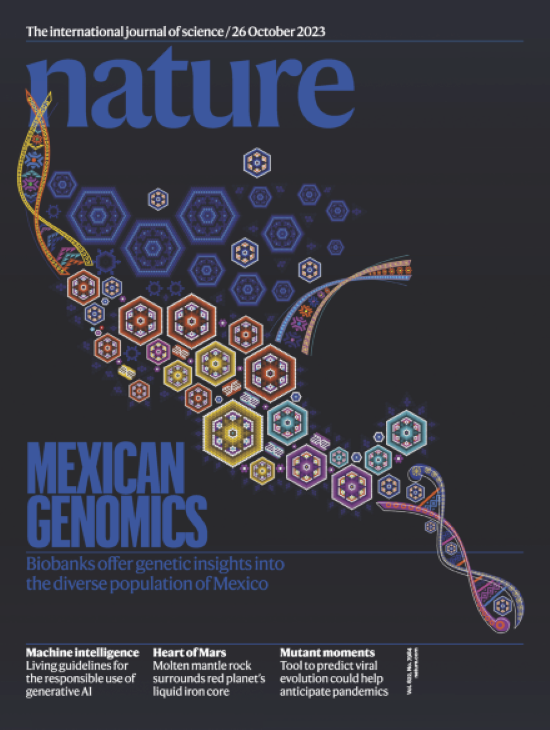
nature Magazine – October 26, 2023: The latest issue cover features  a map of Mexico based on data that reflect the nation’s genetic diversity, the initial results of the Mexican Biobank project.

How the current bird flu strain evolved to be so deadly

Genetic changes to avian influenza viruses have led to spread among many wild species, creating an uncontrollable global outbreak.

This is the largest map of the human brain ever made

Researchers catalogue more than 3,000 different types of cell in our most complex organ.

Anti-obesity drugs’ side effects: what we know so far

Recent studies evaluate risks associated with drugs such as Wegovy and Mounjaro.

Research Preview: Nature Magazine – Oct 19, 2023

Image

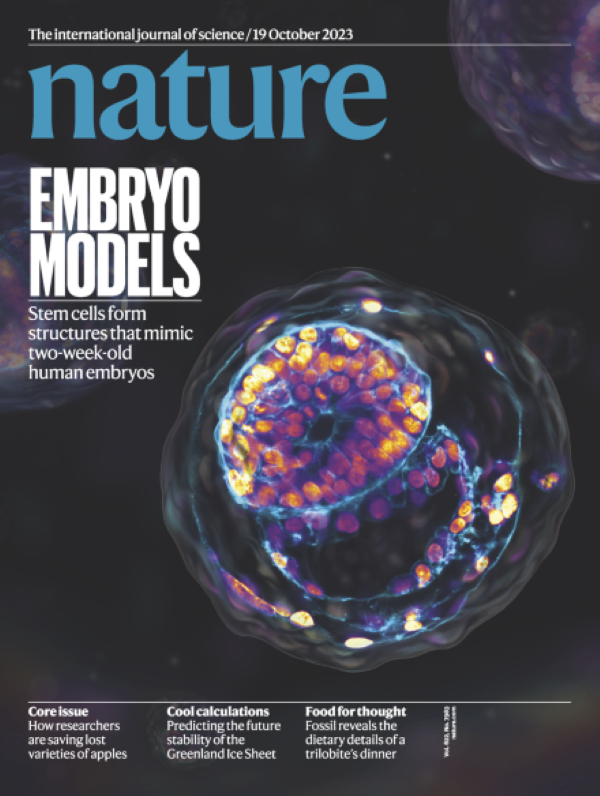
nature Magazine – October 19, 2023: The latest issue features how humans develop in the very early stages when a newly formed embryo is implanted in the wall of the uterus, largely because of the physical and ethical challenges that are presented by studying early human embryos. 

Carl Sagan’s audacious search for life on Earth has lessons for science today

The test 30 years ago of what remote sensing could tell us about our own planet shows the value of looking with unbiased eyes at what we think we already know.

Runes on Viking stones speak to an ancient queen’s power

Analysis of carved inscriptions more than 1,000 years old suggests the prominence of the Viking queen Thyra.

‘Incredible’ asteroid sample ferried to Earth is rich in the building blocks of life

Samples of asteroid Bennu delivered by the OSIRIS-REx mission contain carbon, water and other ingredients from the primordial Solar System.

Research Preview: Nature Magazine – April 20, 2023

Volume 616 Issue 7957, 20 April 2023

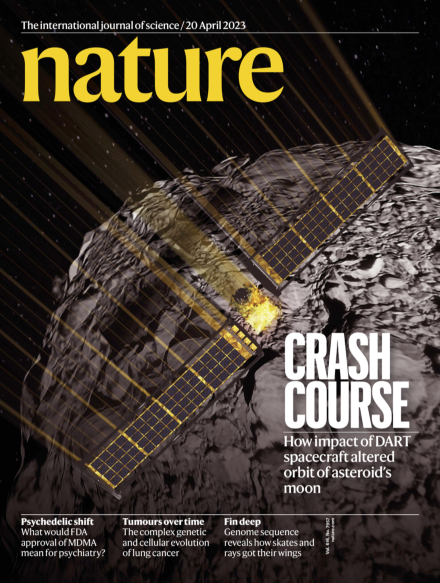
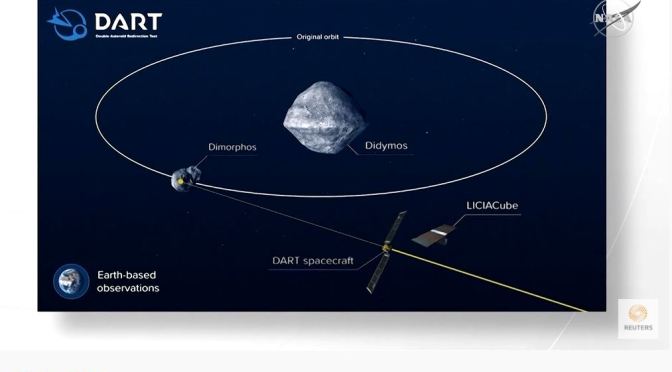
nature Magazine – April 20, 2023 issue: Although currently there is no known threat to Earth from asteroids, strategies to protect the planet from a collision are being explored. On 26 September 2022, NASA and the Johns Hopkins Applied Physics Laboratory successfully tested one such approach: the Double Asteroid Redirection Test (DART) spacecraft was deliberately crashed into Dimorphos, a moon orbiting the small asteroid Didymos, resulting in a change in the moon’s orbit.

Is Africa’s Great Green Wall project withering?

The plan to re-green a 7,000-kilometre swathe south of the Sahara is at risk of losing its pan-African vision and ambition.

A glacier’s catastrophic collapse is linked to global warming

Eleven hikers died after weeks of unusually warm weather led to melting of the Marmolada Glacier in the Alps.

Sunshine is transformed into green hydrogen on an ambitious scale

Prototype facility smashes record for converting solar power to hydrogen for its technology category.

Research Preview: Science Magazine – March 24, 2023

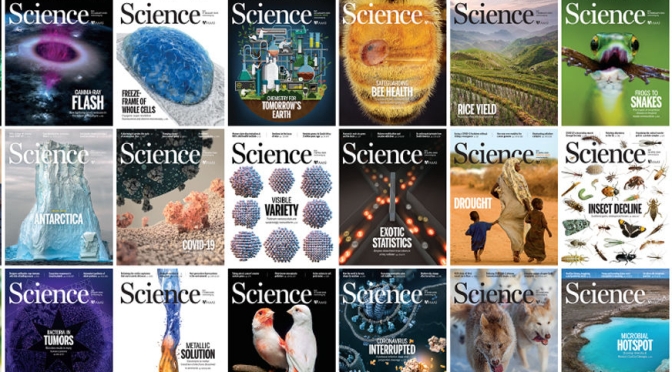
Science Magazine – March 24, 2023 issue: This color-enhanced scanning electron microscopy image shows Ti2CCl2 MXenes grown by chemical vapor deposition. The two-dimensional layers of this material grew perpendicular to the substrate and then folded into microspherical structures. Ion intercalation between two-dimensional MXene sheets has potential for energy storage and other applications.

A new pandemic origin report is stirring controversy. Here are key takeaways

Workers in hazmat suits carry rubbish bins at the Huanan Seafood Wholesale Market
Workers disinfected Wuhan’s Huanan Seafood Wholesale Market in March 2020, but not before a Chinese research team collected samples there that would reveal the presence of SARS-CoV-2–susceptible mammals.

Virology database cuts off—and then reinstates—scientists who found and analyzed data collected 3 years ago by team in China

Earth at higher risk of big asteroid strike, satellite data suggest

Image with rings showing crater width on map of Kazakhstan
If Zhamanshin crater in Kazakhstan is 30 kilometers wide (red ring) instead of 13 kilometers (black ring), as a new study suggests, the impact that made it would have been far more fierce.

“It would be in the range of serious crap happening.

At a basic level, humanity’s survival odds come down to one thing: the chances of a giant space rock slamming into the planet and sending us the way of the dinosaurs. One way to calibrate that hazard is to look at the size of Earth’s recent large impact craters. 

Research Preview: Science Magazine – Feb 24, 2023

Contents | Science 379, 6634

Science Magazine – February 24, 2023 issue:

Samples returned from the asteroid Ryugu are similar to Ivuna-type carbonaceous meteorites

The Hayabusa2 spacecraft made two landings on the asteroid (162173) Ryugu in 2019, during which it collected samples of the surface material. Those samples were delivered to Earth in December 2020. The colors, shapes, and morphologies of the returned samples are consistent with those observed on Ryugu by Hayabusa2, indicating that they are representative of the asteroid.

Journals take up arms against AI-written text

Many ask authors to disclose use of ChatGPT and other generative artificial intelligence

Iron stress threatens Southern Ocean phytoplankton

Lack of the nutrient limits the plants’ productivity, key to climate and ecosystems

Preview: New Scientist Magazine – Dec 17, 2022

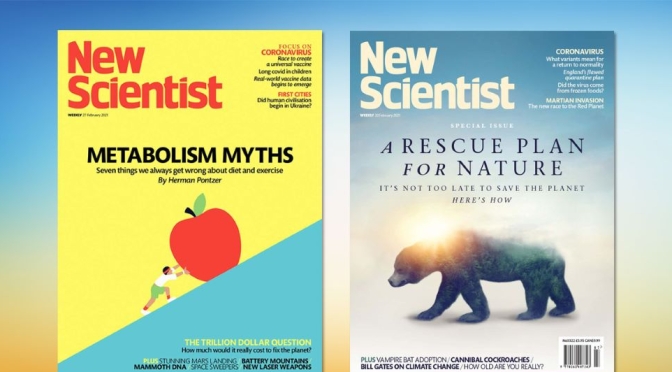
ISSUE 3417 | MAGAZINE COVER DATE: 17 December 2022 | New Scientist

New Scientist (December 17, 2022) issue:

How reindeer eyes change colour in winter to help them see in the dark

It turns out reindeers’ amazing night vision is thanks to a strange ‘mirror’ in their eyes called the tapetum lucidum that is extra sensitive to UV light

How a US civil war shipwreck became a template for marine conservation

The USS Monitor, an iconic piece of military history, sank 160 years ago. Now a marine sanctuary, the wreck has become an unlikely testbed for ocean conservation

NASA’s asteroid redirection spacecraft was a smashing success in 2022

The Double Asteroid Redirection Test aimed to change the orbit of the space rock Dimorphos, and it did so perfectly

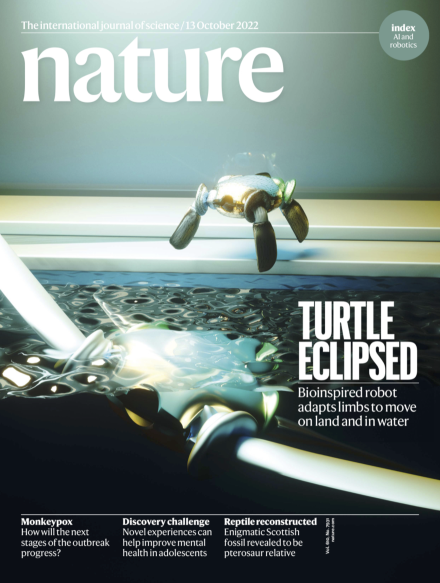
Research Preview: Nature Magazine – Oct 13, 2022

Volume 610 Issue 7931

Had COVID? A delayed booster might lead to a better response

People vaccinated not long after being infected with SARS-CoV-2 mount a weaker immune response than do those whose infections are well behind them.

This rare primate will not survive deforestation

Modelling suggests that tree cutting is a greater threat to the Milne-Edwards’s sifaka than are climate extremes.

Hydrogen could help China’s heavy industry to get greener

Providing the clean fuel to manufacturing plants would be a cost-effective way to tackle the country’s climate goals.

Dinosaur-killing asteroid set off colossal global tsunami

For the first time, scientists simulate the worldwide spread of the staggering wave triggered by the Chicxulub impact.

Research Preview: Nature Magazine – Oct 6, 2022

Volume 610 Issue 7930

Deflecting asteroids is not enough — we need to know when they approach

After NASA’s DART asteroid-deflection experiment, a fully funded telescope for detecting space rocks is an equally pressing priority.

The oceans store more carbon than thought — but not enough to save the planet

Although the marine ‘carbon sink’ is bigger than expected, it is still inadequate to keep global warming at bay.

Electric cars could break the grid if future drivers stick to today’s routines

The rise in electric-vehicle ownership could overload the electric grid unless charging becomes a daytime activity.

Science: Research Salary Survey, Jumping Spiders, NASA Smashing Asteroids

The Nature salary and satisfaction survey reveals researchers’ outlook, and NASA’s test of planetary defenses.

In this episode:

00:45 Salary and satisfaction survey

Like all aspects of life, scientific careers have been impacted by the pandemic. To get an insight into how researchers are feeling, Nature has conducted a salary and satisfaction survey. We hear from some of the respondents.

Careers Feature: Stagnating salaries present hurdles to career satisfaction

09:07 Research Highlights

The physics of a finger snap, and the surprisingly strong silk of jumping spiders.

Research Highlight: It’s a snap: the friction-based physics behind a common gesture

Research Highlight: High-speed spinning yields some of the toughest spider silk ever found

11:23 Briefing Chat

We discuss some highlights from the Nature Briefing. This time, the plans to smash a spacecraft into an asteroid, and how baby formula is changing to better resemble breast milk.

Nature News: NASA spacecraft will slam into asteroid in first planetary-defence test

Chemistry World: The science of breast milk and baby formula

Technology: NASA Targets Asteroid With Spacecraft

NASA introduced the space agency’s first planetary defense test mission, the Double Asteroid Redirection Test or DART, a spacecraft they plan to launch later this month on a mission to crash into an asteroid.