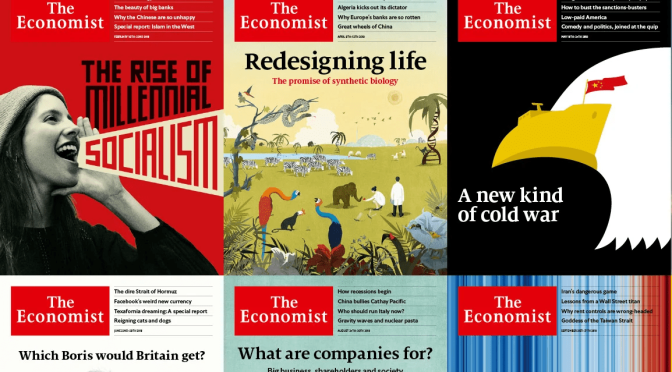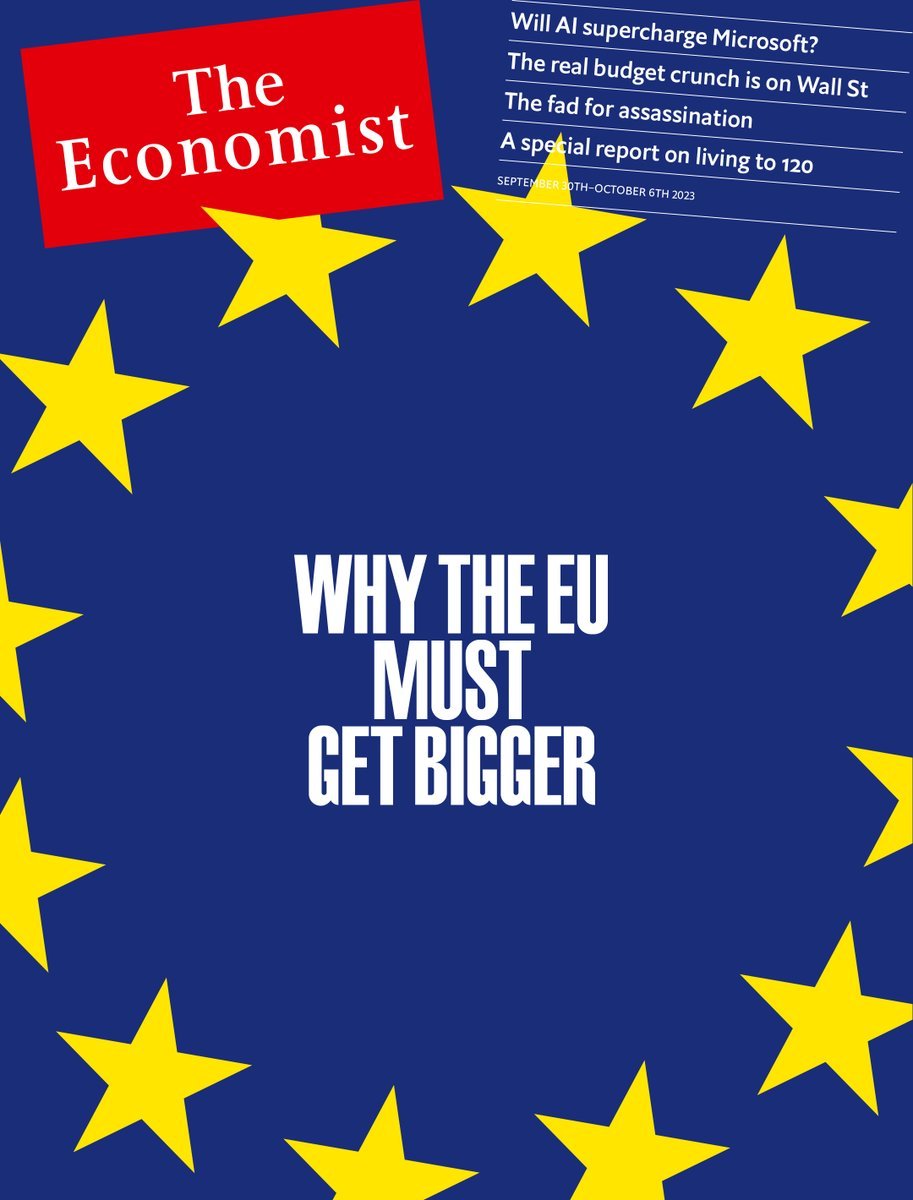

The Economist Magazine (September 30, 2023): The latest issue features The war in Ukraine is a powerful reason to enlarge—and improve—the EU; Why fear is spreading in financial markets; A humanitarian disaster is under way in Nagorno-Karabakh…
Deceptive videos and images created using generative AI could sway elections, crash stock markets and ruin reputations. Researchers are developing methods to limit their harm.
‘Editor’s Picks’ Podcast (September 25, 2023) – A selection of three essential articles read aloud from the latest issue of The Economist. This week, how to win a long war in Ukraine, what Asia’s economic revolution means for the world (11:05) and why a disgraced comedian is the symbol of a cruel, misogynistic and politically vacant era in Britain (18:52).
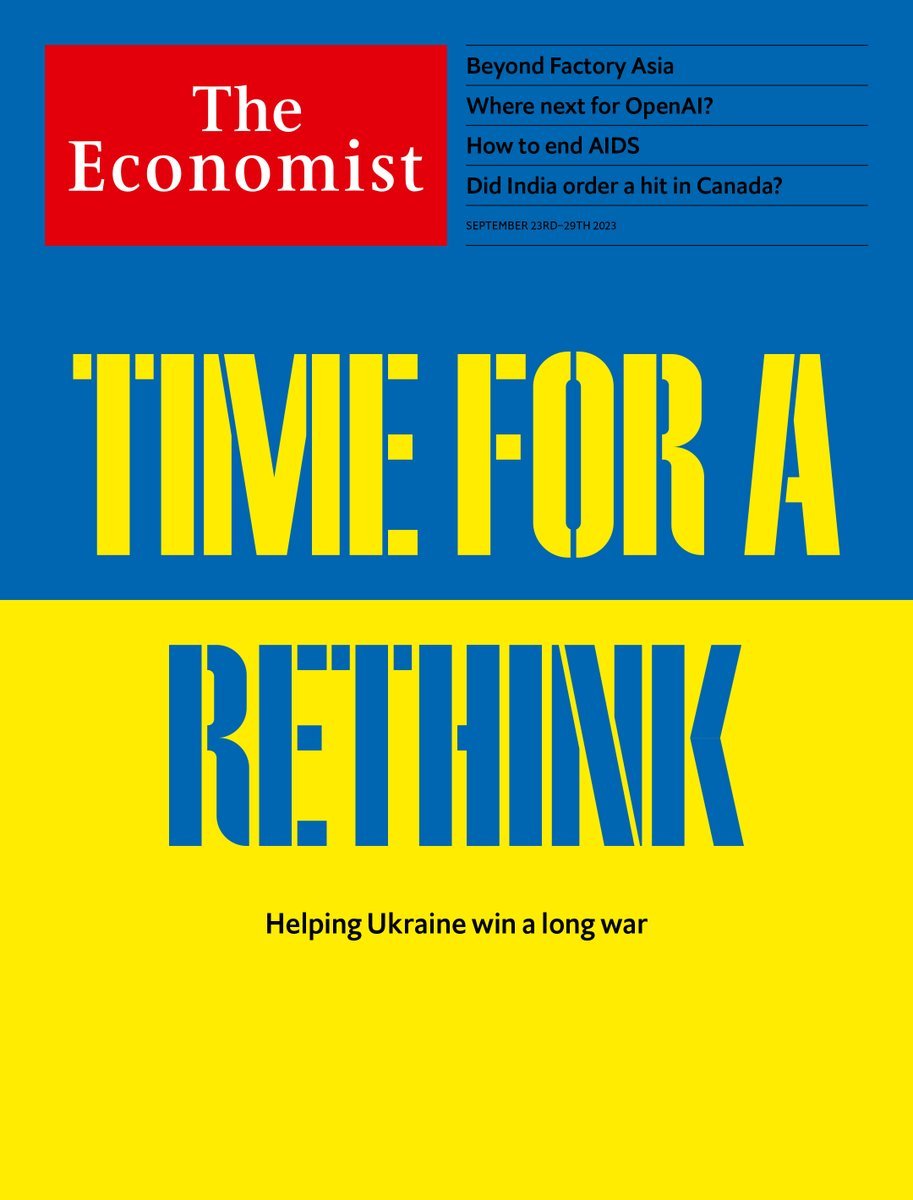
The Economist Magazine (September 23, 2023): The latest issue features ‘Ukraine faces a long war’ – A change of course is needed; Its backers should pray for a speedy victory—but plan for a long struggle.
Its backers should pray for a speedy victory—but plan for a long struggle
The war in Ukraine has repeatedly confounded expectations. It is now doing so again. The counter-offensive that began in June was based on the hope that Ukrainian soldiers, equipped with modern Western weapons and after training in Germany, would recapture enough territory to put their leaders in a strong position at any subsequent negotiations.
Western countries have for too long acquiesced to the Indian government’s abuses
For years, India objected to Western strategists lumping it together with its violent and chaotic neighbour in the phrase “Indo-Pakistan”. Now recognised as a fast-growing giant and potential bulwark against China, India claims to have been “de-hyphenated”. Yet the explosive charge aired this week by Justin Trudeau suggests that diplomatic recalibration may have gone too far. Canada’s prime minister alleges that Indian agents were involved in the murder in Vancouver of a Canadian citizen sympathetic to India’s Sikh separatist movement.
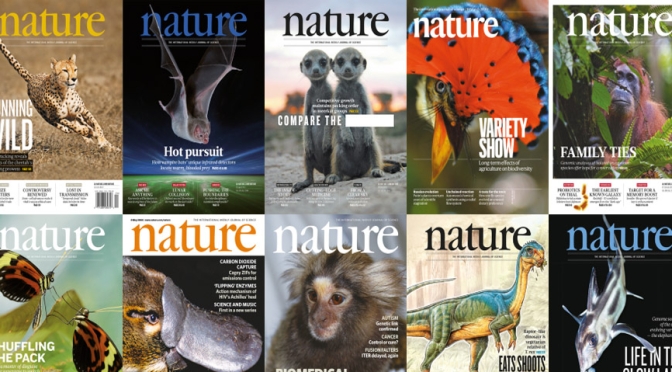
nature Magazine – September 21, 2023: In this week’s issue, an estimate of global human exposure to air pollution from landscape fires (dominated by wildfires, but also including planned or controlled open land fires) between 2000 and 2019.
As many countries head into autumn, they are targeting vaccinations at people in high-risk categories, leaving those at lower risk uncertain about what to do.
Climate change, civil war and international sanctions all contributed to the devastation caused by some of Libya’s worst flooding ever, researchers say.
Two separate natural disasters in north Africa have dominated the news recently. But Moroccan emergency responses to an earthquake that killed about 3,000 people seemed rapid and efficient in contrast to the chaos at the deluged Libyan port of Derna, where many thousands more lost their lives after the town was deluged following a double dam burst caused by Storm Daniel.
While logistical and administrative challenges have made access to Derna incredibly difficult, Observer reporter Kaamil Ahmed has gathered the testimonies of several local Libyan journalists who witnessed scenes they are still struggling to process. Diplomatic editor Patrick Wintour explains why the disaster can be seen as a culmination of the climate crisis descending upon a failed state, while Rupert Neate and Peter Beaumont discuss the differing responses to the two situations.
From Europe, Jon Henley previews three upcoming electionsthat could have profound consequences for the region’s political future. Indeed, as the Guardian launches a new Europe-focused digital edition, editor-in-chief Katharine Viner outlines why now is the right time for us to expand our reporting across the continent.
‘Editor’s Picks’ Podcast (September 18, 2023) – Three essential articles read aloud from the The Economist. This week, an analysis of how AI can revolutionize scienceand how a fresh wave of hard-right populism is stalking Europe.
The Economist Magazine (September 16, 2023): The latest issue reviews How AI can revolutionize science; Donald Trump will “never” support Putin, says Volodymyr Zelensky; The hard right is getting closer to power all over Europe, and more…
Debate about artificial intelligence (ai) tends to focus on its potential dangers: algorithmic bias and discrimination, the mass destruction of jobs and even, some say, the extinction of humanity. As some observers fret about these dystopian scenarios, however, others are focusing on the potential rewards. ai could, they claim, help humanity solve some of its biggest and thorniest problems. And, they say, ai will do this in a very specific way: by radically accelerating the pace of scientific discovery, especially in areas such as medicine, climate science and green technology.
In the next decade regional tensions will build in India
The world has been seeing the bright side of India. In August it landed a spacecraft on the Moon. In the latest quarter gdp grew at an annual rate of 7.8%, making it the world’s perkiest big economy. Narendra Modi, the prime minister, has just hosted a g20 summit where other leaders, including Joe Biden, courted Asia’s rising behemoth. Yet inside India the talk has turned to whether Mr Modi’s hunger for power and dreams of national renewal could lead him to bend the constitution.
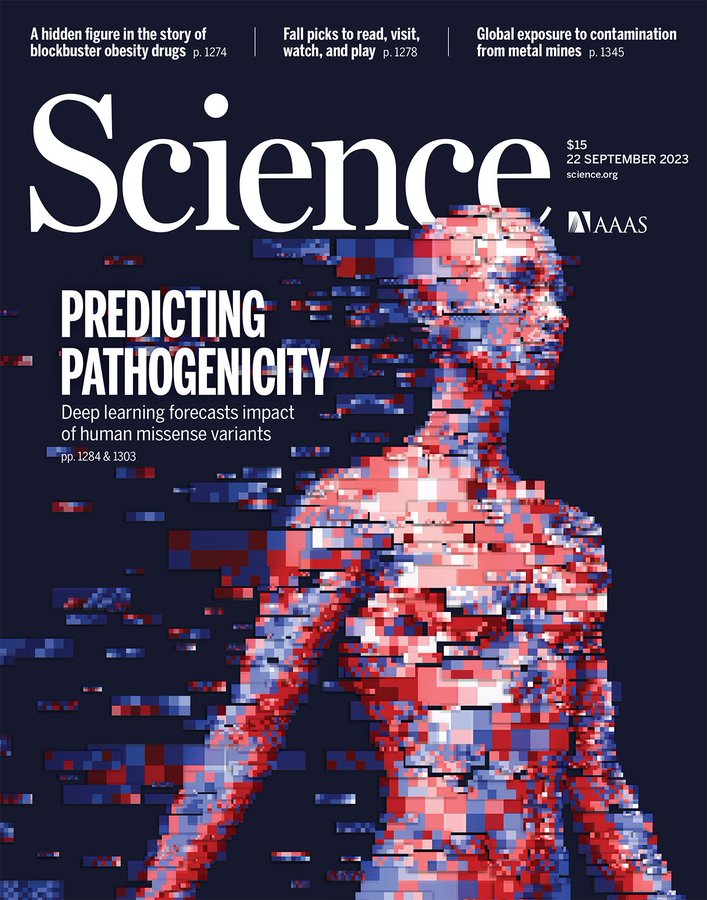
Science Magazine – September 15, 2023: Blue jays, similar to other corvid songbirds, are known for their impressive cognitive abilities, presumably due to their relatively large brains.