
Tag Archives: Artificial Intelligence

Previews: The Economist Magazine – Oct 28, 2023

Image

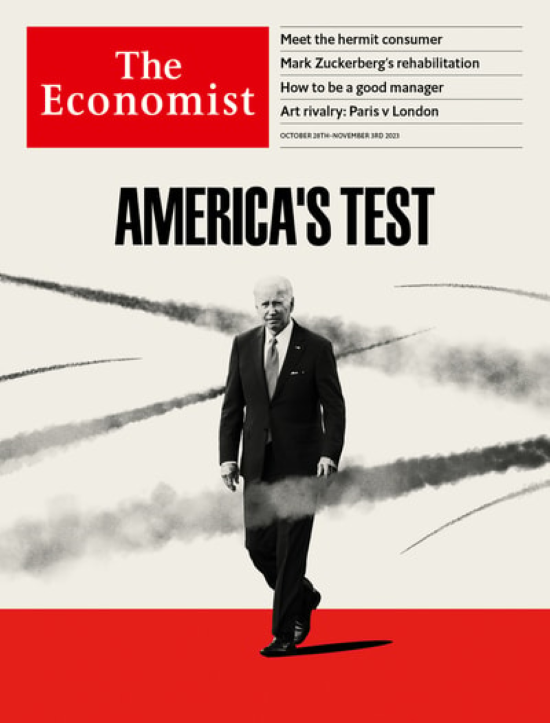
The Economist Magazine (October 28, 2023): The latest issue features America’s Test – How will it manage the Israel-Hamas war?; Argentina’s troubling election result; Should governments be ‘policing’ AI? and the ‘Art Rivalry’ between Paris and London….

American power: indispensable or ineffective?

How Joe Biden manages the war between Israel and Hamas will define America’s global role

Argentina’s election result is the worst of all possible outcomes

Sergio Massa, the economy minister, will now go head-to-head with Javier Milei

Governments must not rush into policing AI

A summit in Britain will focus on “extreme” risks. But no one knows what they look like


Preview: Foreign Affairs Magazine- NOV/DEC 2023

Image

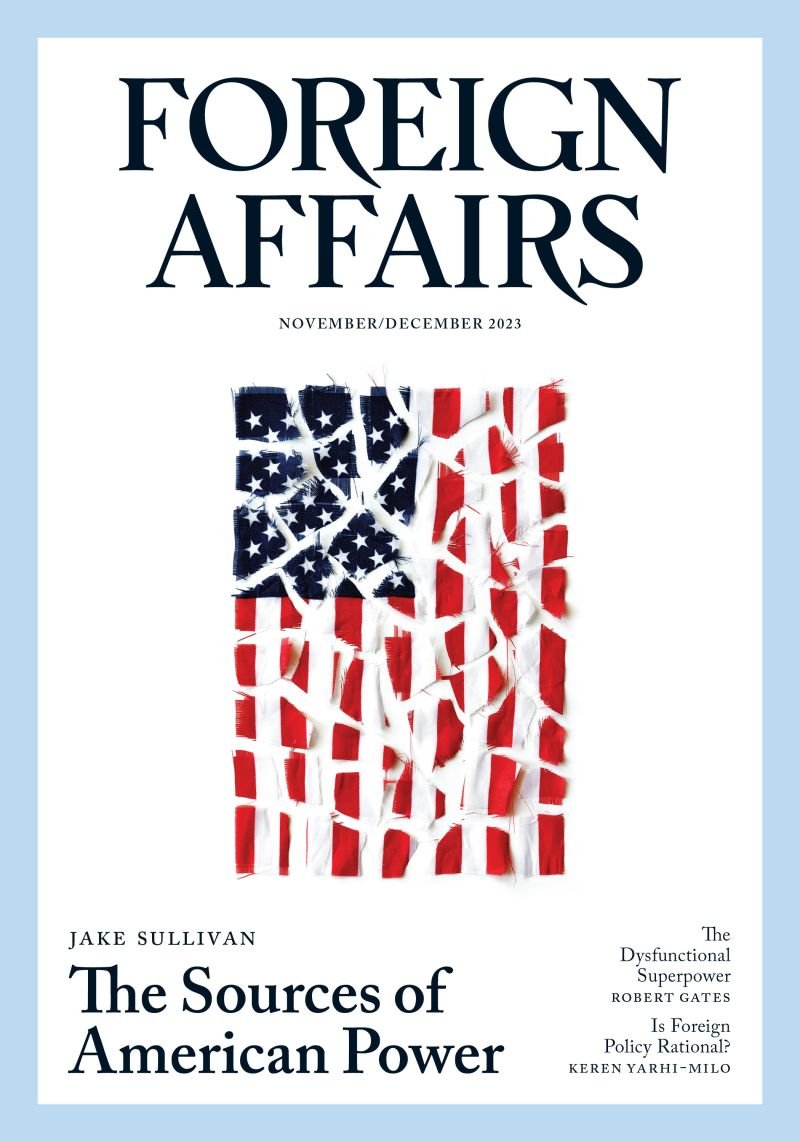
Foreign Affairs November/December 2023: The new issue features  new essays by today’s leading policymakers and thinkers, including U.S. National Security Adviser Jake Sullivan on the future of American foreign policy, former U.S. Undersecretary of Defense for Policy Michèle Flournoy on how artificial intelligence will transform the military, and scholars Henry Farrell and Abraham Newman on the convergence of economic and national security

The Sources of American Power

A Foreign Policy for a Changed World

By Jake Sullivan

Nothing in world politics is inevitable. The underlying elements of national power, such as demography, geography, and natural resources, matter, but history shows that these are not enough to determine which countries will shape the future. It is the strategic decisions countries make that matter most—how they organize themselves internally, what they invest in, whom they choose to align with and who wants to align with them, which wars they fight, which they deter, and which they avoid.

The Dysfunctional Superpower

Can a Divided America Deter China and Russia?

By Robert M. Gates

The United States now confronts graver threats to its security than it has in decades, perhaps ever. Never before has it faced four allied antagonists at the same time—Russia, China, North Korea, and Iran—whose collective nuclear arsenal could within a few years be nearly double the size of its own. Not since the Korean War has the United States had to contend with powerful military rivals in both Europe and Asia. And no one alive can remember a time when an adversary had as much economic, scientific, technological, and military power as China does today.

Research Preview: Nature Magazine – Oct 26, 2023

Image

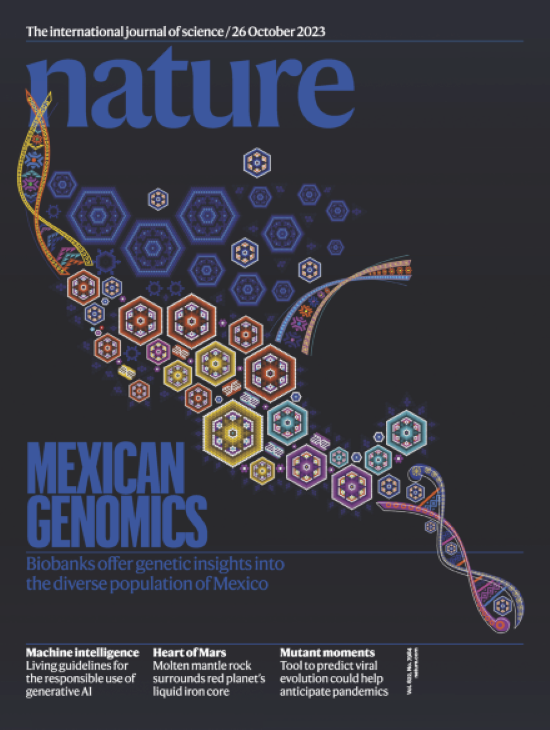
nature Magazine – October 26, 2023: The latest issue cover features  a map of Mexico based on data that reflect the nation’s genetic diversity, the initial results of the Mexican Biobank project.

How the current bird flu strain evolved to be so deadly

Genetic changes to avian influenza viruses have led to spread among many wild species, creating an uncontrollable global outbreak.

This is the largest map of the human brain ever made

Researchers catalogue more than 3,000 different types of cell in our most complex organ.

Anti-obesity drugs’ side effects: what we know so far

Recent studies evaluate risks associated with drugs such as Wegovy and Mounjaro.

Preview: MIT Technology Review – November 2023

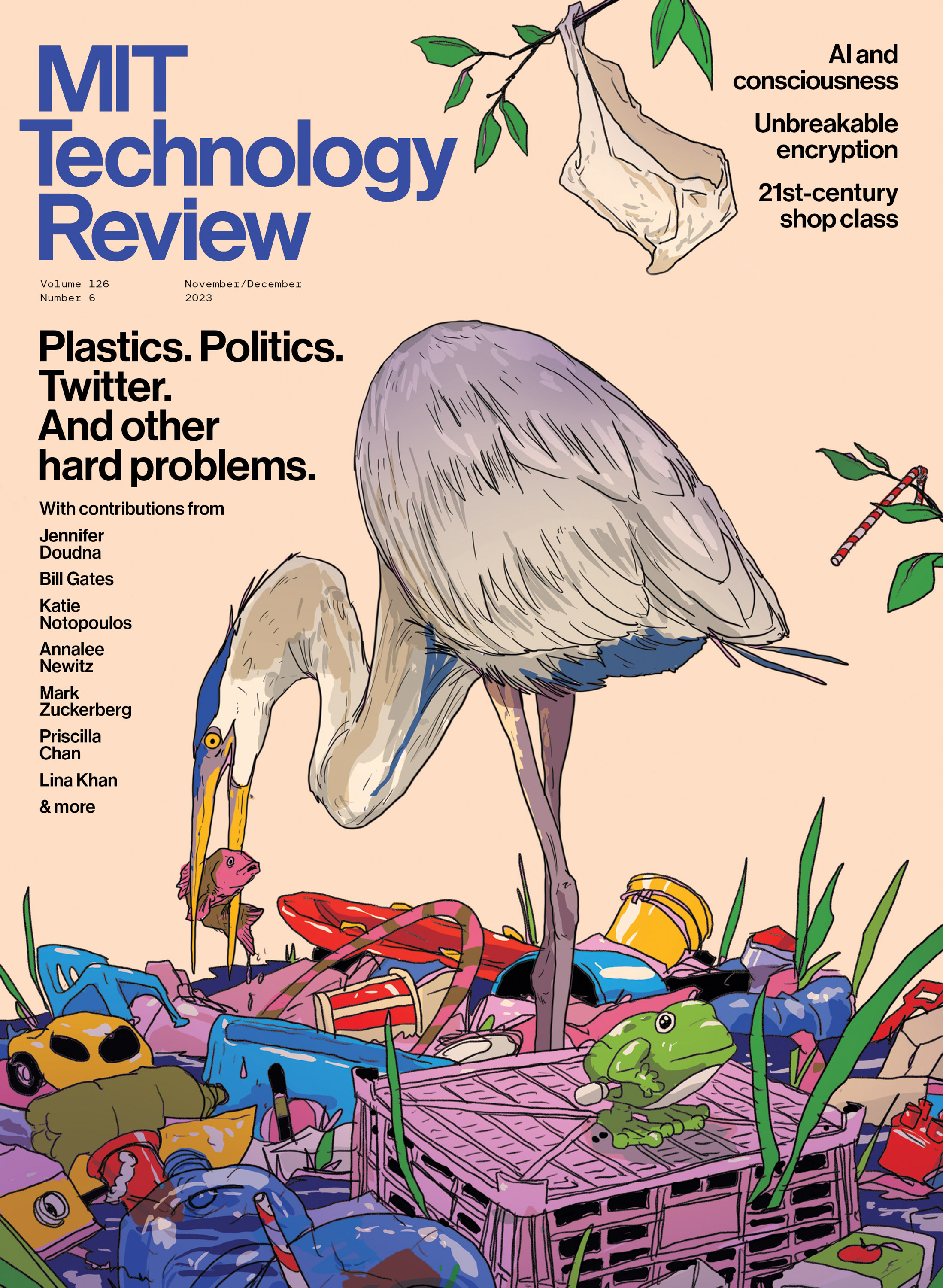
ND23 cover image: a heron plucks a pink plastic fish from a landscape contaminated with plastic trash

MIT Technology Review – November/December 2023: The Hard Problems issue features the Intractable problem of plastics; Fixing the internet; Exploring what it would it take for AI to become conscious. Also, there are so many urgent issues facing the world—where do we begin? Bill Gates, Mark Zuckerberg, Jennifer Doudna, and others offer their ideas.

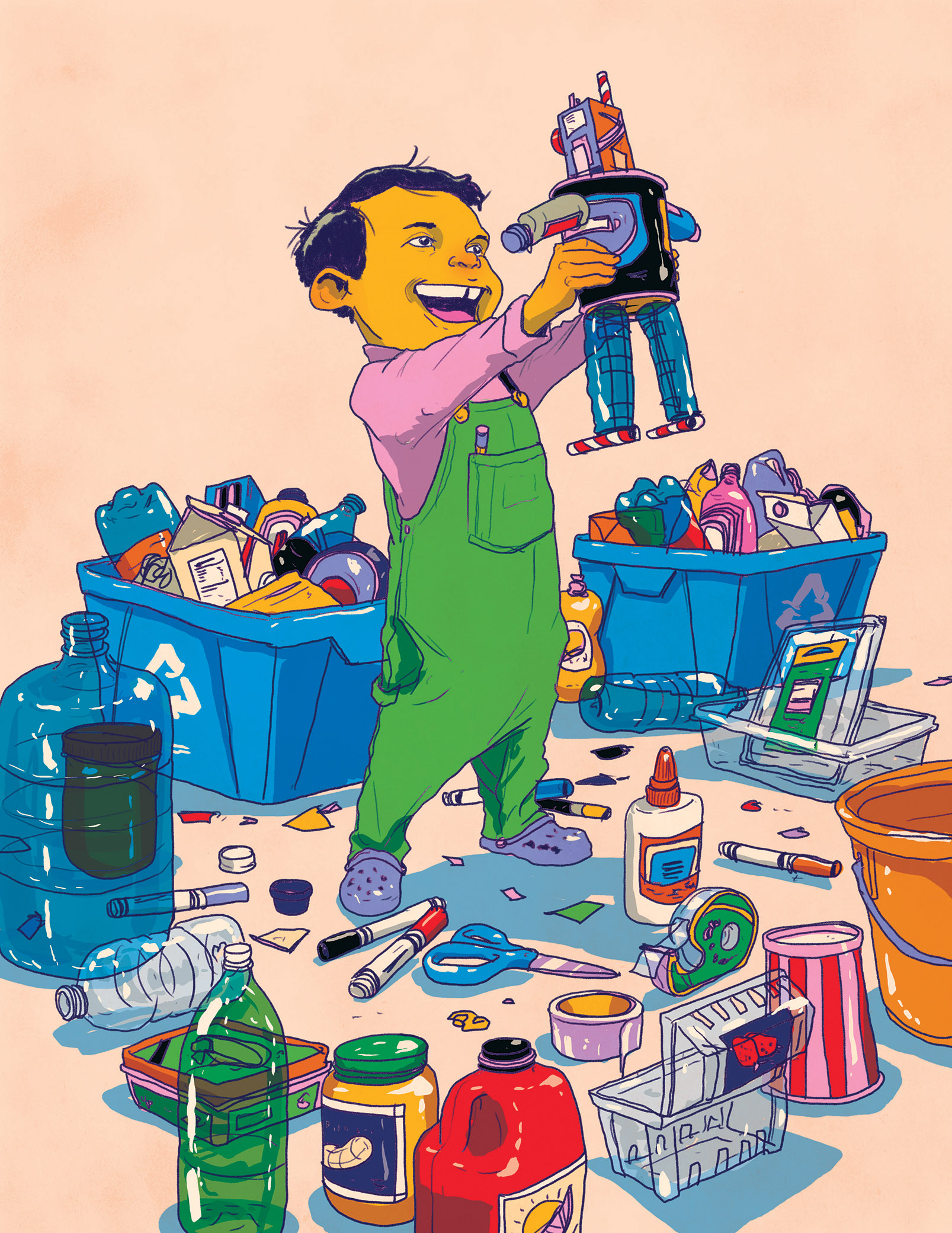
Think that your plastic is being recycled? Think again.

Kid surrounded by bins and scattered plastic containers proudly holds up a toy figure constructed by plastic parts

Plastic is cheap to make and shockingly profitable. It’s everywhere. And we’re all paying the price.

Plastic, and the profusion of waste it creates, can hide in plain sight, a ubiquitous part of our lives we rarely question. But a closer examination of the situation can be shocking. 

Indeed, the scale of the problem is hard to internalize. To date, humans have created around 11 billion metric tons of plastic. This amount surpasses the biomass of all animals, both terrestrial and marine, according to a 2020 study published in Nature

Currently, about 430 million tons of plastic is produced yearly, according to the United Nations Environment Programme (UNEP)—significantly more than the weight of all human beings combined. One-third of this total takes the form of single-use plastics, which humans interact with for seconds or minutes before discarding. 

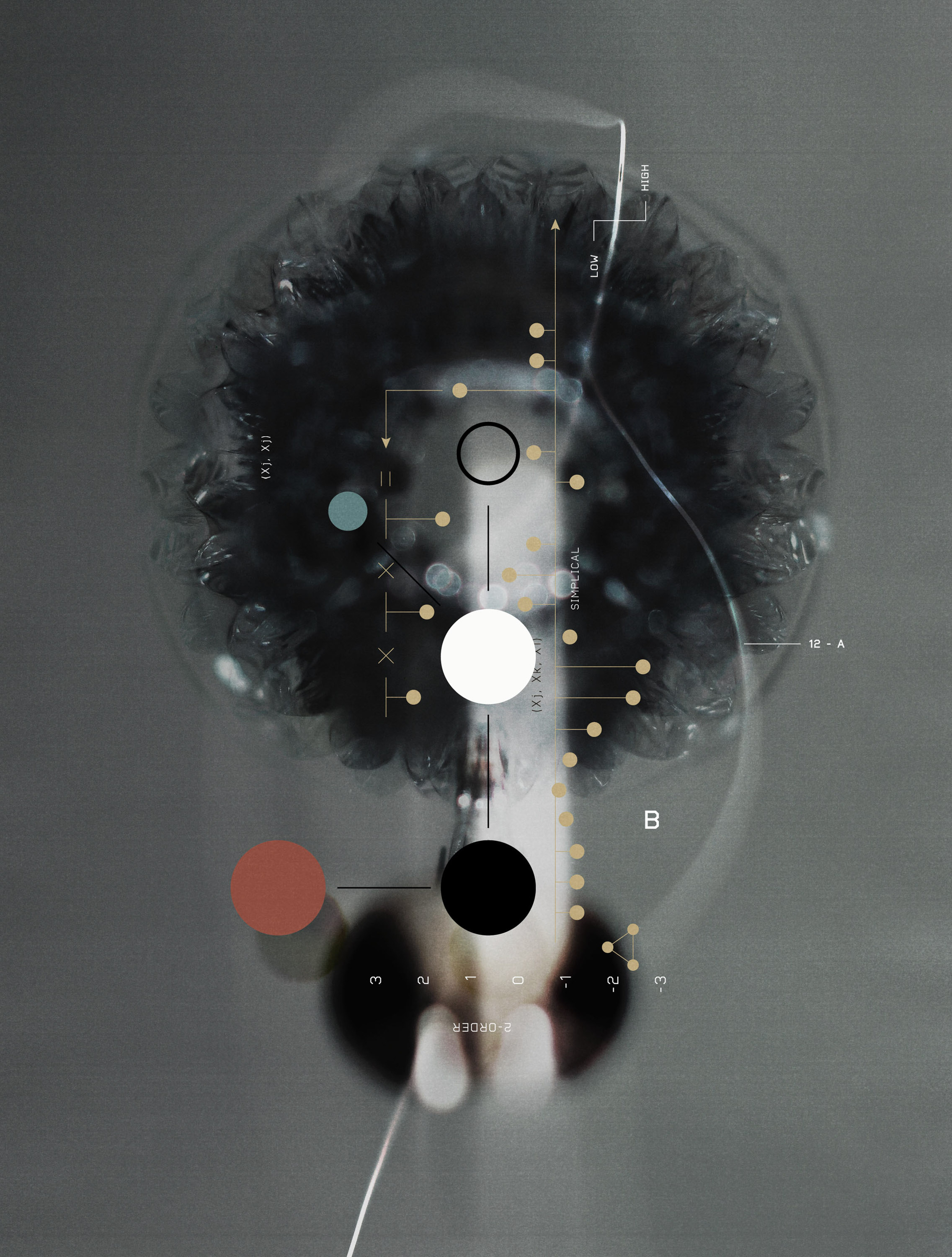
Minds of machines: The great AI consciousness conundrum

"'

Philosophers, cognitive scientists, and engineers are grappling with what it would take for AI to become conscious.

David Chalmers was not expecting the invitation he received in September of last year. As a leading authority on consciousness, Chalmers regularly circles the world delivering talks at universities and academic meetings to rapt audiences of philosophers—the sort of people who might spend hours debating whether the world outside their own heads is real and then go blithely about the rest of their day. This latest request, though, came from a surprising source: the organizers of the Conference on Neural Information Processing Systems (NeurIPS), a yearly gathering of the brightest minds in artificial intelligence. 

World Economic Forum: Top Stories – Oct 21, 2023

World Economic Forum (October 21, 2023) – The top stories of the week include:

0:15 AI can predict your risk of Parkinson’s – RETFound was trained using 1.6 million retinal images which gave it a picture of a healthy retina. Then its creators added images of eyes from people with certain conditions. Our eyes are a window to our health. They’re the only place where doctors can directly observe capillaries, our smallest blood vessels, enabling detection of cardiovascular illnesses such as hypertension. Eyes are also linked to the central nervous system, giving an insight into neural tissue, too. The RETFound tool was best at picking up eye diseases such as diabetic retinopathy. On Parkinson’s, stroke and heart disease, it performed not quite as well but still beat other AI models.

2:08 These are the most detailed heat maps of our planet – They use imagery from a satellite called HotSat-1 which can detect heat and cold at a resolution of 3.5 metres. The satellite can precisely map the fronts of forest fires, detect and monitor heat islands in cities and measure the thermal efficiency of buildings. This information can drive more effective decision-making.

3:51 AI designed this robot in 26 seconds – Researchers from Northwestern University gave an AI a simple prompt. ‘Design a robot that can walk across a flat surface’. By the 9th iteration, the AI had successfully met its brief. The robot could walk half its own body length per second. The entire iteration process took just 26 seconds and it ran on a laptop.

6:26 Norway completed it’s largest rewilding project – It’s centred around Sveagruva, a 100-year-old mining town on the Arctic island of Svalbard. Norway decided to close the town and its mining operations in 2017 and return the area to its natural state, restoring biodiversity and the local ecosystem.

_____________________________________________

The World Economic Forum is the International Organization for Public-Private Cooperation. The Forum engages the foremost political, business, cultural and other leaders of society to shape global, regional and industry agendas. We believe that progress happens by bringing together people from all walks of life who have the drive and the influence to make positive change.

Research Preview: Science Magazine – Oct 20, 2023

Image

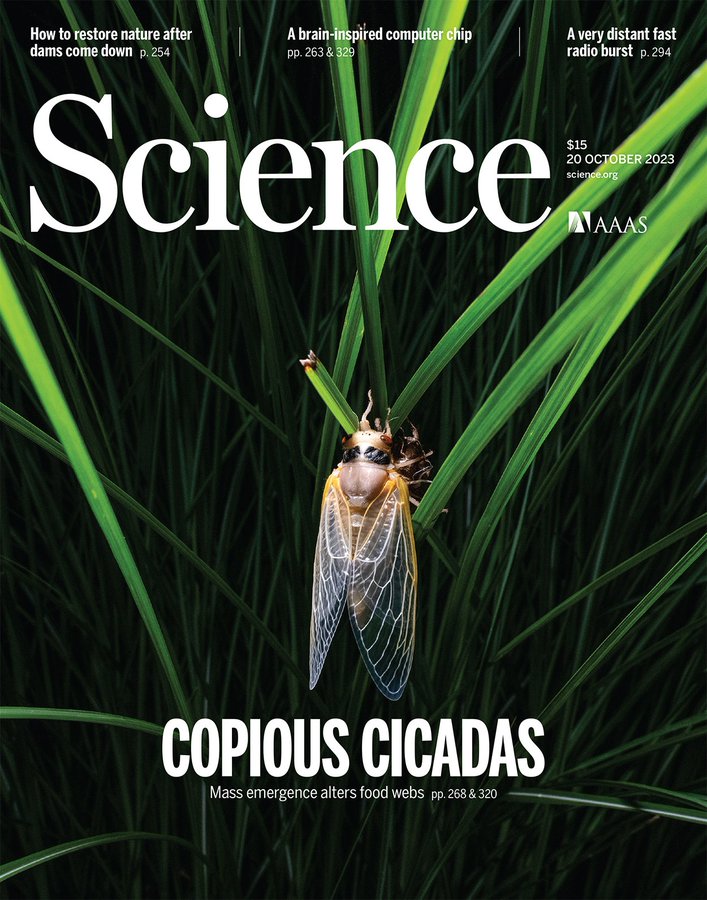
Science Magazine – October 20, 2023: The new issue features Copious Cicadas – Mass emergence alters food webs; A giant European telescope rises as U.S. rivals await rescue; Probe of Alzheimer’s studies finds ‘egregious misconduct’, and more…

A giant European telescope rises as U.S. rivals await rescue

ESO’s Extremely Large Telescope (ELT) under construction at sunrise in the Chilean Atacama Desert.
In August, the Sun rose behind the Extremely Large Telescope, under construction in Chile.

Past the halfway point, Extremely Large Telescope prepares to receive first mirrors

A web of steel girders is rising from the flattened summit of Cerro Armazones, 3000 meters above sea level in Chile’s Atacama Desert. The dome it will support will be vast—with a footprint as big as a soccer field and almost as tall as the Statue of Liberty— and unexpectedly nimble: It will smoothly rotate on rails as a giant telescope inside tracks stars through the night.

Probe of Alzheimer’s studies finds ‘egregious misconduct’

Co-developer of biotech’s drug couldn’t supply original data

U.S. hands out $7 billion for hydrogen hubs

Gas could replace fossil fuels and fight climate change—if it is made cleanly

Previews: The Economist Magazine – Oct 21, 2023

Image

The Economist Magazine (October 21, 2023): The latest issue features ‘Where will this end?’ – Only America can pull the Middle East back from the brink; Are American CEO’s overpaid?; The holes in export controls; Argentina’s radical option, and more….

The stakes could hardly be higher in the Israel-Gaza conflict

Only America can pull the Middle East back from the brink

America’s Republicans cannot agree on a speaker. Good

How the GOP could yet, inadvertently, further the national interest

Poland shows that populists can be beaten

A victory for the rule of law in the heart of Europe


Research Preview: Nature Magazine – Oct 19, 2023

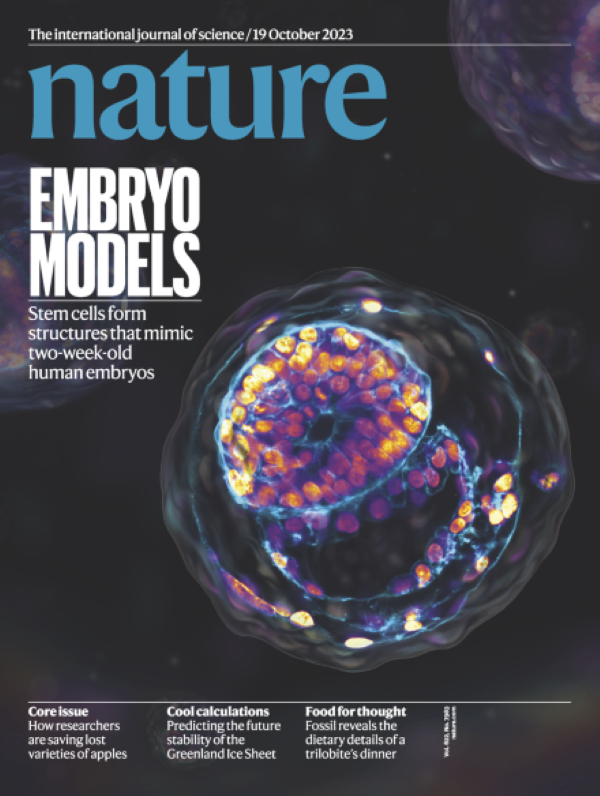
Image

nature Magazine – October 19, 2023: The latest issue features how humans develop in the very early stages when a newly formed embryo is implanted in the wall of the uterus, largely because of the physical and ethical challenges that are presented by studying early human embryos. 

Carl Sagan’s audacious search for life on Earth has lessons for science today

The test 30 years ago of what remote sensing could tell us about our own planet shows the value of looking with unbiased eyes at what we think we already know.

Runes on Viking stones speak to an ancient queen’s power

Analysis of carved inscriptions more than 1,000 years old suggests the prominence of the Viking queen Thyra.

‘Incredible’ asteroid sample ferried to Earth is rich in the building blocks of life

Samples of asteroid Bennu delivered by the OSIRIS-REx mission contain carbon, water and other ingredients from the primordial Solar System.

Harvard Business Review – November/December 2023

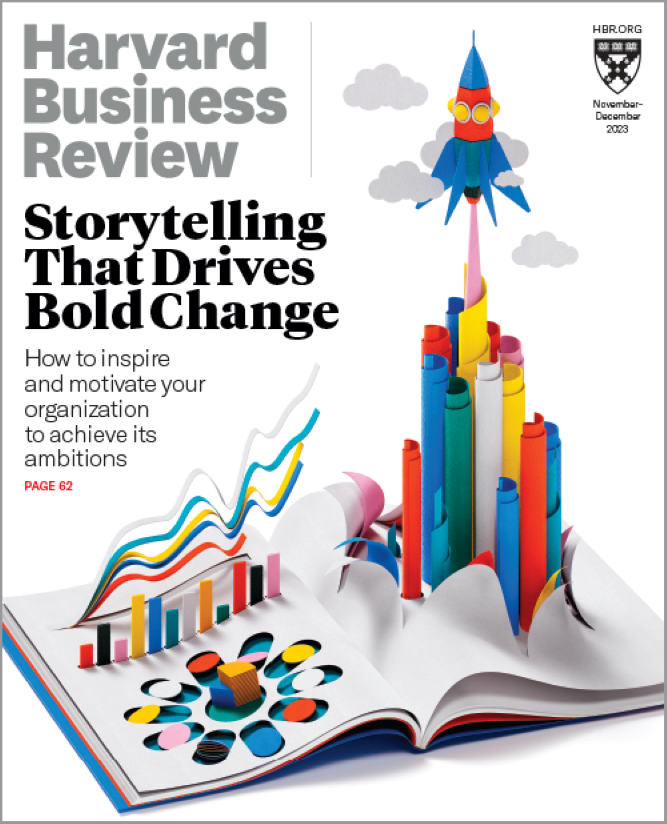
Image

Harvard Business Review (November/December 2023) –

The Resale Revolution

Increasingly, companies are reselling their own products. Should you get into the game? 

by Thomas S. Robertson 

Summary: The average U.S. household contains a trove of potentially reusable goods worth roughly $4,500. That’s a lot of trapped value, and companies are at last getting serious about accessing it—by developing new resale capabilities. Resale has been with us for a very long time, of course—at yard sales, on used-car lots, in classified ads. 

A Step-by-Step Guide to Real-Time Pricing

An advanced AI model considers much more than what competitors are charging. 

Summary: In today’s fast-paced world of digital retailing, the ability to revise prices swiftly and on a large scale has emerged as a decisive differentiator for companies. Many retailers now track competitors’ prices via systems that scrape rivals’ websites and use this information as an input to set their own prices manually or automatically. A common strategy is to charge X dollars or X percent less than a target competitor. However, retailers that use such simple heuristics miss significant opportunities to fine-tune pricing.

World Economic Forum: Top Stories – Oct 14, 2023

World Economic Forum (October 14, 2023) – This week’s top stories of the week include:

0:15 Why engagement in the news is in decline – A massive media survey looked at trust and engagement in the news and found both are in steady decline. Just 48% of people say they are very or extremely interested in the news in 2023 down from 63% in 2017. Trust in the news has fallen 2 percentage points in a year. Now, only 40% say they trust the news most of the time and 36% say they actively avoid the news sometimes or often.

1:53 This robot can help people with disabilities dress – The robot was designed by a team at Carnegie Mellon University (CMU). They used a simulation to teach it how to perform its task. The team used an AI-driven approach called ‘reinforcement learning’. The robot was rewarded each time it correctly placed a shirt further along an arm.

3:25 Company captures and stores CO2 with limestone – Heirloom takes crushed limestone and heats it in a kiln powered by renewable energy. The reaction generates two products. These are CO2, which can be permanently stored underground or in materials like concrete and a powder, which is hydrated with water to make calcium hydroxide. When the calcium hydroxide is spread onto trays, it absorbs CO2 from the air to become limestone and the whole process can begin again.

5:24 How to use ChatGPT more safely – ChatGPT is an AI tool that gives detailed, natural language answers to prompts based on a database of 300 billion words drawn from books and articles. The AI learns from its interactions with you, so here are 5 ways to ensure you’re using it safely.

_____________________________________________

The World Economic Forum is the International Organization for Public-Private Cooperation. The Forum engages the foremost political, business, cultural and other leaders of society to shape global, regional and industry agendas. We believe that progress happens by bringing together people from all walks of life who have the drive and the influence to make positive change.