Tag Archives: Artificial Intelligence

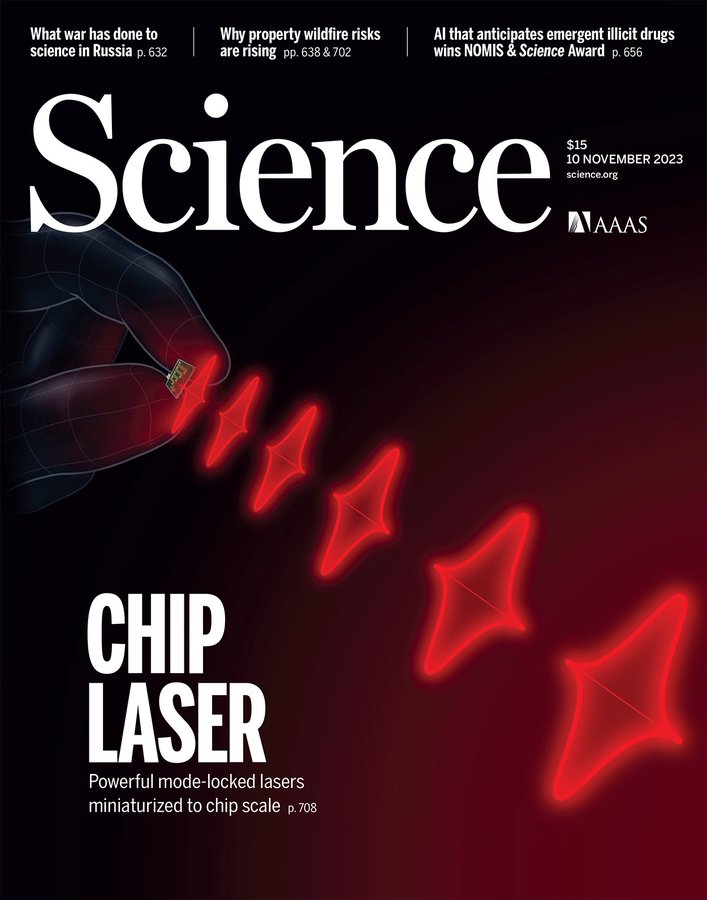
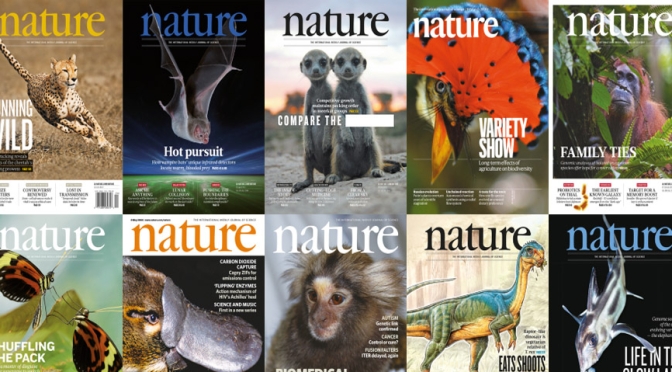
Covers: Science Magazine November 10, 2023 Preview

Image

Science Magazine – November 10, 2023: The new issue features Mode-locked “chip lasers” generating intense ultrashort pulses of light have been the backbone of ultrafast sciences and technologies. 

AI’s challenge of understanding the world

By MELANIE MITCHELL

In thinking about the challenge of getting artificial intelligence (AI) to understand our complex world, I recalled a Twitter post from a user of Tesla’s self-driving system. The user tweeted that his car kept stopping abruptly at a particular location for no apparent reason. Then he noticed a billboard advertisement on the side of the road, featuring a sheriff holding up a stop sign. The car’s vision system had interpreted this as an actual stop sign, and slammed on the brakes.

The Scottish wildcat has been wiped out by breeding with domestic cats

three captive Scottish wildcats
This trio of captive Scottish wildcats is part of the Royal Zoological Society’s Saving Wildcats Project.

After 2000 years of isolation, a few decades of interbreeding have rendered the animal “genomically extinct”

BY DAVID GRIMM

Though it lies in ruins on the northeast coast of England, Kilton Castle was once an imposing stone fortress, home to several noble families, and—it appears—at least eight cats. Archaeological excavations in the 1960s uncovered a well, at the bottom of which lay the bones of several felines dating back to the 14th century. The animals were an odd mix: Some were domestic cats, but other, larger specimens appeared to be European wildcats, a fierce, burly species that has inhabited the continent for hundreds of thousands of years.

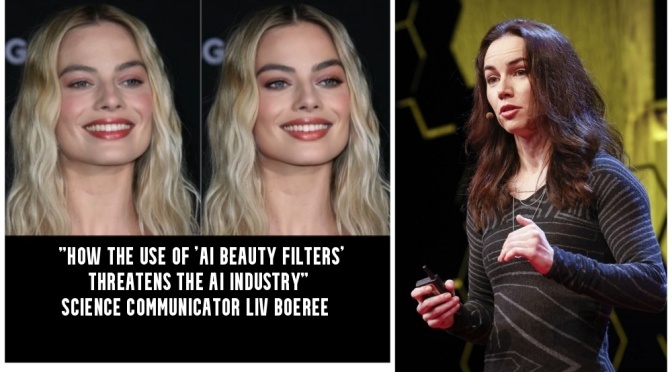
Technology: Liv Boeree On The ‘Dark Side Of Game Theory’ Competition In AI

TEDx Talks (November 9, 2023) – Competition is a core part of human nature, and it can drive us to extraordinary feats. But when it goes wrong, the results can be devastating.

Poker champion and science communicator Liv Boeree introduces us to the dark force of game theory driving many of humanity’s biggest social problems — a force that’s now threatening to derail the AI industry.

Olivia “Liv” Boeree is a British science communicator, television presenter and former professional poker player. She is a World Series of Poker and European Poker Tour champion, and is the only female player in history to win both a WSOP bracelet and an EPT event.

Previews: The Economist Magazine – Nov 11, 2023

Image

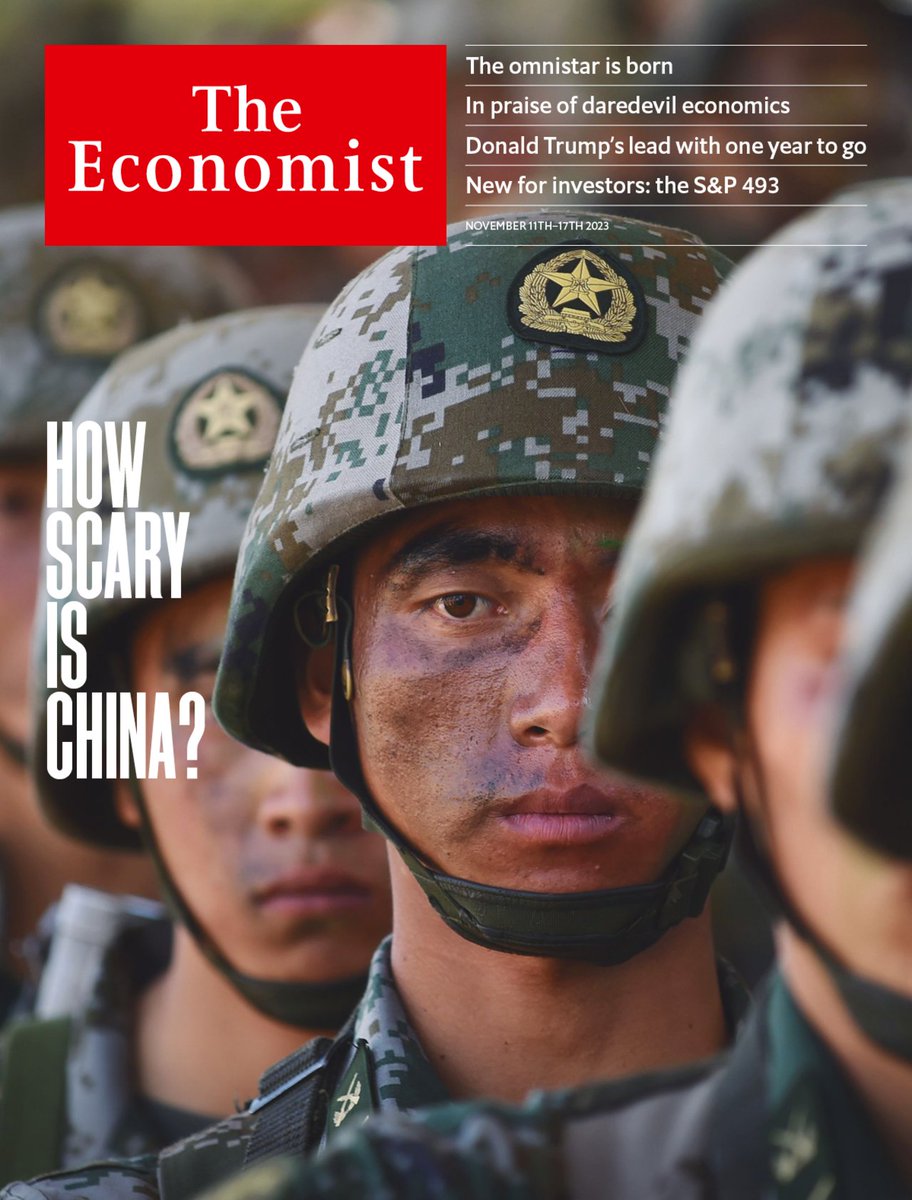
The Economist Magazine (November 11, 2023): The latest issue features How Scary is China? – America must understand China’s weaknesses as well as its strengths; The Omnistar is born – How artificial intelligence will transform fame; Giorgia Meloni’s “mother of all reforms” is a power grab – Italians should reject their prime minister’s demagogic proposal, and more….

How artificial intelligence will transform fame

The omnistar is born – Those complaining the loudest about the new technology stand to benefit the most

How scary is China?

Superpower politics – America must understand China’s weaknesses as well as its strengths

Giorgia Meloni’s “mother of all reforms” is a power grab

Constitutional chicanery – Italians should reject their prime minister’s demagogic proposal

Research Preview: Nature Magazine – Nov 9, 2023

Volume 623 Issue 7986

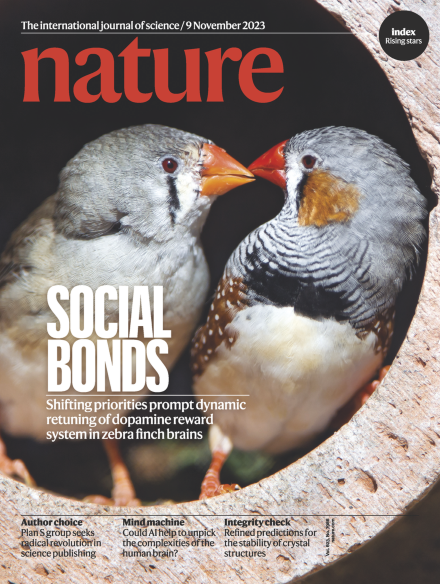
nature Magazine – November 9, 2023: The latest issue cover features the changes in dopamine signals in male zebra finches (depicted on the cover), as they engage in activities such as drinking, song evaluation and courting. The researchers found that dopamine responses are dynamically adjusted based on the birds’ current priorities. 

Brain and body are more intertwined than we knew

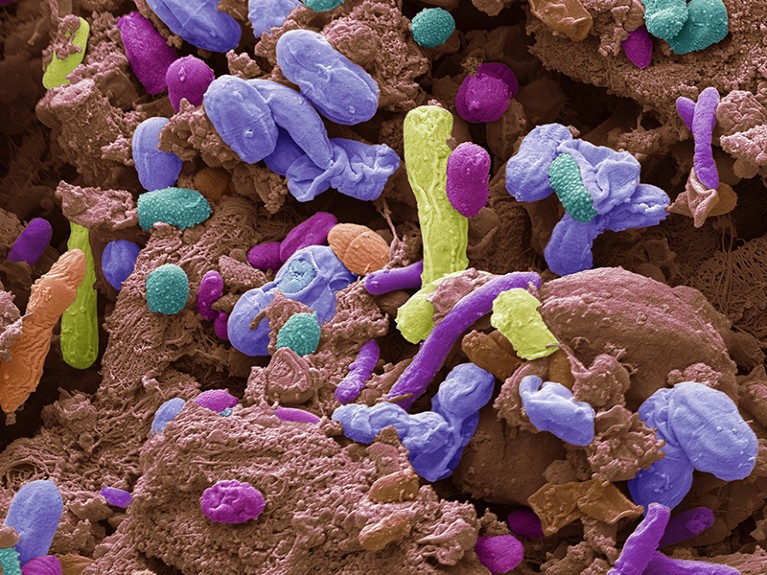
Gut bacteria. Scanning electron micrograph (SEM) of various bacteria found in a sample from a human small intestine.

A host of disorders once thought to be nothing to do with the brain are, in fact, tightly coupled to nervous-system activity.

A robot performs heart surgery with a strong but delicate touch

Device can wield tools inside one of the heart’s chambers while bracing itself against a stabilizer fitted into a major cardiac vein.

The Solar System’s biggest moon is spattered with salt

Dried brine from a subsurface ocean speckles the surface of Ganymede, which orbits Jupiter.

Science Magazine – November 3, 2023 Issue

Image

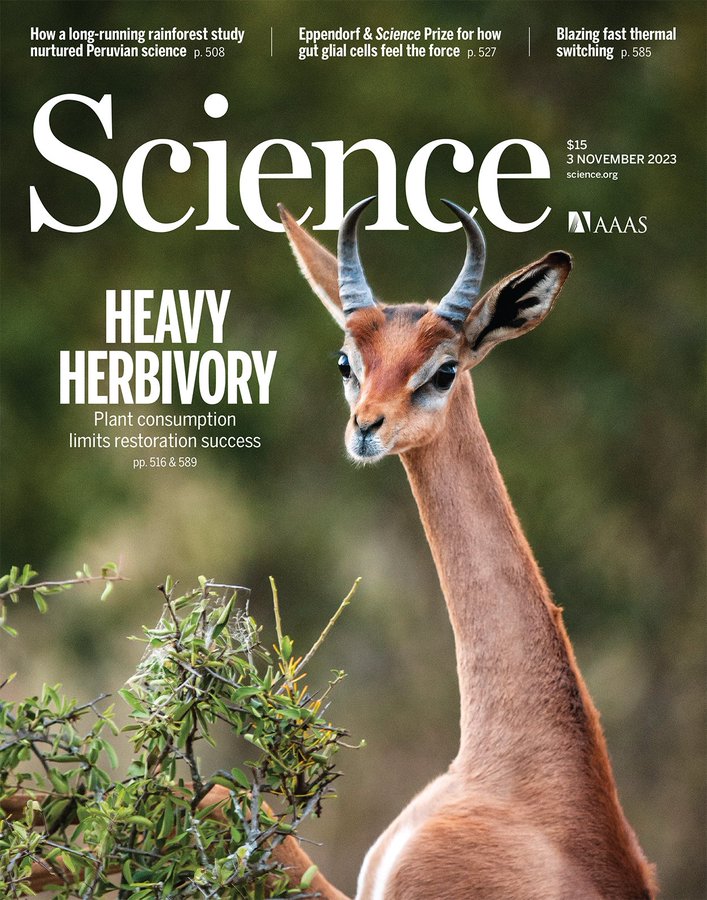
Science Magazine – November 3, 2023: The new issue features Heavy Herbivory – Plant consumption limits restoration success; How a long-running rainforest study nurtured Peruvian science; No easy way to explain cosmic expansion mystery; Ancient fish reveal the origin of the shoulder in vertebrates, and more…

No easy way to explain cosmic expansion mystery

“Hubble tension” could be a signal of new physics. But deciphering it may not be simple

Ancient fish reveal the origin of the shoulder in vertebrates

Cleft in fossil skull suggests solution to a long-standing mystery: shoulder tissue evolved from gill arches

To “feel” better, sleep on it!

Emotional memories are consolidated during REM sleep

Previews: The Economist Magazine – Nov 4, 2023

Too good to be true: The contradiction at the heart of the world economy

The Economist Magazine (November 2, 2023): The latest issue features The contradiction at the heart of the world economy – Threats abound, including higher-for-longer interest rates; Why Israel must fight on – Unless Hamas’s power is broken, peace will remain out of reach; unless Hamas’s power is broken, peace will remain out of reach; Donald Trump’s tariff plans would inflict grievous damage on America and the world – You may think his worst ideas won’t get far. Sadly, on trade he has been singularly influential…

Too good to be true: The contradiction at the heart of the world economy

The world economy is defying gravity. That cannot last. Threats abound, including higher-for-longer interest rates

Even as wars rage and the geopolitical climate darkens, the world economy has been an irrepressible source of cheer. Only a year ago everyone agreed that high interest rates would soon bring about a recession. Now even the optimists have been confounded. America’s economy roared in the third quarter, growing at a stunning annualised pace of 4.9%. Around the world, inflation is falling, unemployment has mostly stayed low and the big central banks may have stopped their monetary tightening. China, stricken by a property crisis, looks likely to benefit from a modest stimulus. Unfortunately, however, this good cheer cannot last. The foundations for today’s growth look unstable. Peer ahead, and threats abound.

Why Israel must fight on

Israel’s bombardment of Gaza is taking a terrible toll. But unless Hamas’s power is broken, peace will remain out of reach

Trade wars: episode II

Donald Trump’s tariff plans would inflict grievous damage on America and the world

You may think his worst ideas won’t get far. Sadly, on trade he has been singularly influential

Research: New Scientist Magazine – Nov 4, 2023

Image

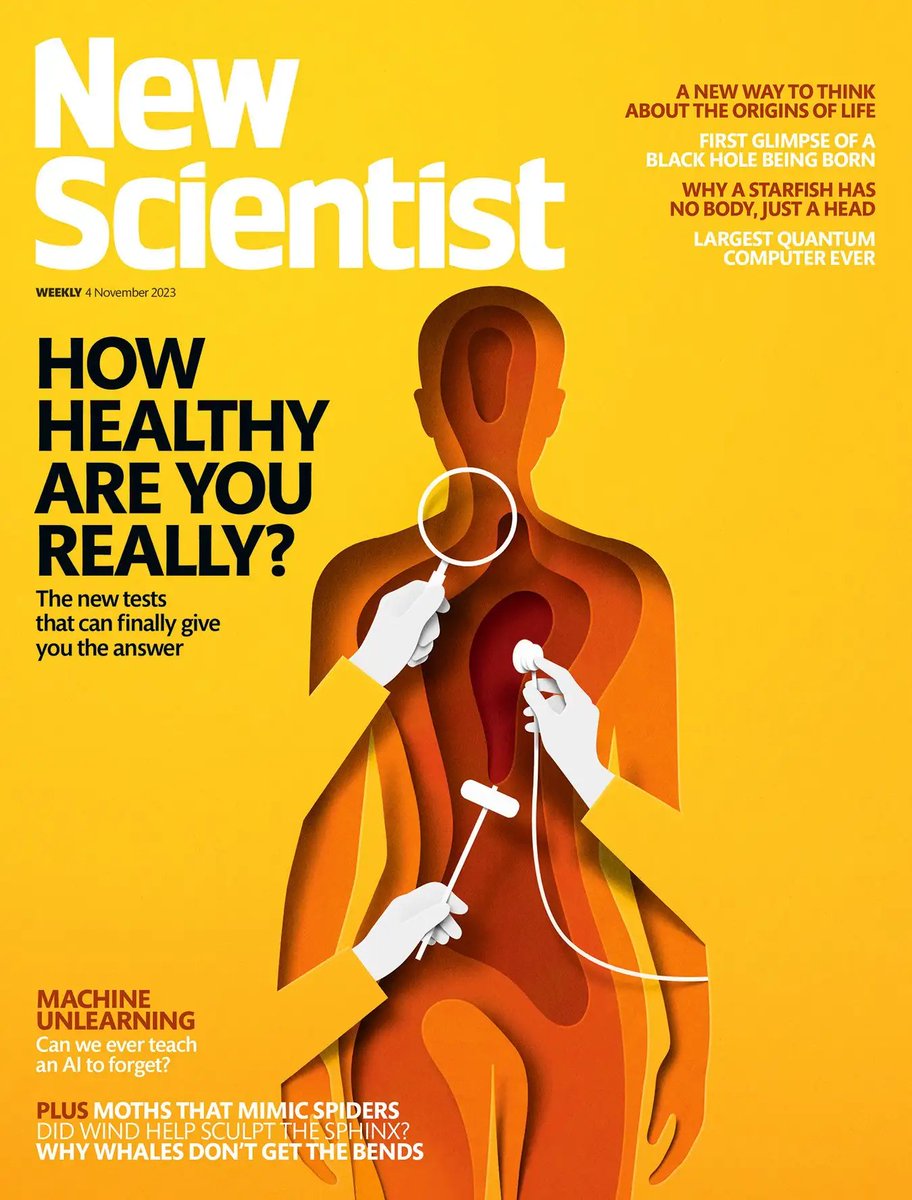
New Scientist Magazine (November 4, 2023): This issue features How healthy are you really? – New tests to give you the answer; The origins of Life; Machine Unlearning – Can we ever teach an AI to forget?; Moths that mimic spiders; Did wind help sculpt the Sphinx; and more…
Features

Are you truly healthy? These new tests provide the ultimate check-up

How we will discover the mysterious origins of life once and for all

With privacy concerns rising, can we teach AI chatbots to forget?

News

Record-breaking quantum computer has more than 1000 qubits

The Great Sphinx of Giza may have been blown into shape by the wind

Strange supernova blasts hint we have glimpsed a black hole’s birth

Some insects disguise themselves as spiders to avoid getting eaten

Starfish don’t have a body – they’re just a big squished head

Research Preview: Nature Magazine – Nov 2, 2023

Image

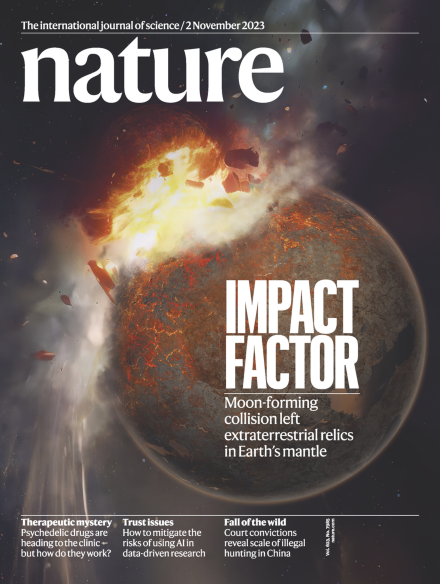
nature Magazine – November 2, 2023: The latest issue cover features an artist’s impression of the collision between the protoplanet Theia and proto-Earth about 4.5 billion years ago. It has been suggested that it was this ‘Giant Impact’ that formed the Moon, but direct evidence for the existence of Theia remains elusive.

Ancient DNA reveals traces of elusive first humans in Europe

Europe’s earliest Homo sapiens seemed to have vanished without a genetic legacy — but genomic studies now show otherwise.

‘Mind-blowing’ IBM chip speeds up AI

IBM’s NorthPole processor sidesteps need to access external memory, boosting computing power and saving energy.

Politics: The Guardian Weekly – November 3, 2023

Image

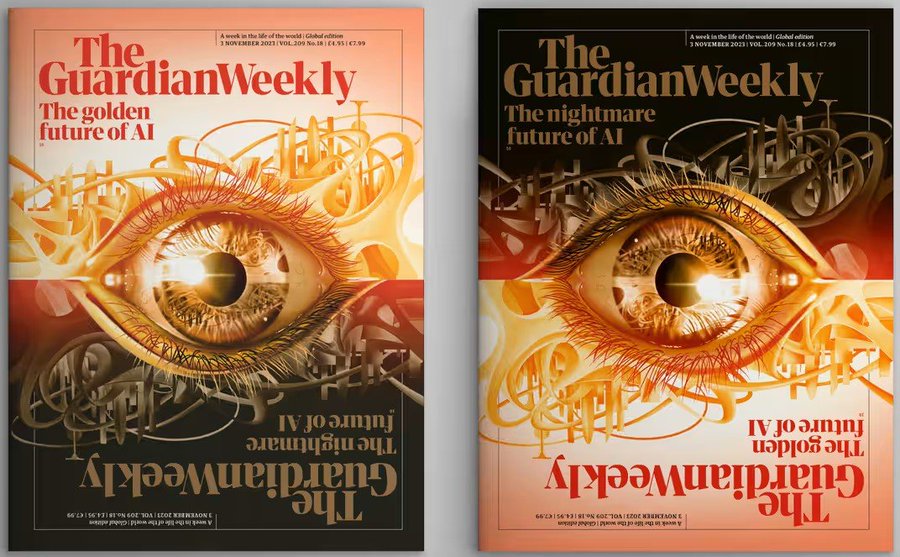
The Guardian Weekly (November 3, 2023) – The new issue features Bletchley Park, the main center of allied second world war codebreakers, and it’s no coincidence that the English country house was chosen as the venue for this week’s landmark summit on safety in artificial intelligence. The age of AI brings opportunities but also significant risks, as a number of experts in the field outlined in an open letter last week.

Global technology editor Dan Milmo discusses the pros and cons with one of the technology’s leading thinkers, Demis Hassabis, the CEO of Google DeepMind, who says the rise of AI must be thought of as seriously as the climate crisis. Then, Observer columnist Sonia Sodha argues that calling for AI to be reined in is not simply a sign of luddism.

As Israeli forces entered Gaza this week, Bethan McKernan and Rory Carroll report for us on the increasingly unbearable nature of life in the besieged enclave, and there’s expert analysis and commentary from Julian BorgerPeter Beaumont and Jason Burke.

Science Magazine – October 27, 2023 Issue

Image

Science Magazine – October 27, 2023: The new issue features The Hypothalamus – Coordinating basic survival functions; High hopes for low-growing corn plants; A quantum process in a laser microchip….

Small and mighty: The hypothalamus

By MAROSO & PETER STERN

If you pause for a second and think about the activities that occupy most of your day, presumably sleeping, eating, and engaging in social interactions are among the first that come to your mind. Perhaps surprisingly, a small area buried deep inside the brain, called the hypothalamus, is responsible for coordinating neuronal signals related to these activities. By controlling the homeostasis of the neuroendocrine, limbic, and autonomic nervous systems, the hypothalamus is a key brain region for many physiological and pathological processes. Despite its small size, the hypothalamus has a complex cellular organization and circuitry that determine its structural and functional organization. It is composed of 11 nuclei grouped by their location and has vast, mostly bidirectional connections with many neuronal and endocrine systems.

HIGH HOPES FOR SHORT CORN

Plants bred or engineered to be short can stand up better to windstorms. They could also boost yields and benefit the environment

To an interstate traveler—or anyone lost in a corn maze—the most impressive feature of corn is its stature. Modern corn can grow twice as tall as a person, but height has drawbacks, making the plants vulnerable to wind and more difficult for farmers to tend. Plant scientists think corn can be improved by making it shorter, and leading seed companies are doing that through both conventional breeding and genetic engineering. Bayer has launched a short variety in Mexico, another company is selling its versions in the United States, and more are getting involved.