


90 years ago today, Maie Bartlett Heard, curator Allie Walling BraMé along with a small group of friends and volunteers spent Christmas Day making final preparations for the opening of the Heard Museum. The next day, December 26, 1929, the Heard Museum began our now nine decade long and ongoing legacy of advancing American Indian Art.
This short video poem written, recorded and edited by longtime artist and friend of the Heard Museum, Steven J. Yazzie (Diné) is our very sincere thank you to you.
Heard Museum 90th Celebration Poem, December 2019

“Home” By Steven J. Yazzie (Diné)
Voiced by: Jenn Henry
Music: Better Now, Phillip Daniel Zach
Why do we come here to these walls painted shades of off white
In search of beauty
or memory
or place
Where the sounds of children can be heard echoing in these vast
and intimate spaces
And where everyone has just arrived here from a journey
What brings us to the feet of stone
or textile
or dried paint
In the galleries of our hearts and truths
Our histories are revealed
and our humanity ensured
This place of my youth and older age
This place of beauty
stewardship
and celebration
Is home
Featured cars have won many of the world’s most iconic races, including Le Mans, the Indianapolis 500, and the Italian Grand Prix, and were loaned to the Museum by internationally recognized collectors from Arizona and across the United States. Legends of Speed offers an unparalleled opportunity for Museum guests to experience and learn about some of the most successful and famous racecars of all time.
Legends of Speed is the first major exhibition of racing cars presented at Phoenix Art Museum. Opening in fall 2019 and featuring more than 20 legendary cars by Maserati, Mercedes, Alfa Romeo, Ford, and more, the landmark exhibition showcases an unprecedented collection of cars driven by some of the greatest drivers in the history of racing, including A.J. Foyt, Dan Gurney, and Stirling Moss.
Directors/Producers/Shooters: Harun Mehmedinovic & Gavin Heffernan
Editor: Harun Mehmedinovic
Music: Richard Lacy & Jeff Dale

Scattered across the United States, from the Southwest, all the way to Hawai’i, ancient astronomy petroglyphs and archaeoastronomy structures sit weathering in the landscape. Carved and built by diverse group of tribes, from Native Hawaiians, to the Paiutes of Bishop, California, and the Ancestral Puebloans of the Southwest, these petroglyphs and structures reflect the long standing interest in Ancient Astronomy which grew stronger as many of the tribes went from the Hunter Gatherer to the Agrarian societal orders. From references to the Sun carved in the rock, and interest in using the Sun to predict seasons (entire buildings built to essentially serve as sundials and calendars, a critical element in the farming communities) to those of 13 moons (lunar annual calendar), to carvings of stars and constellations, interest in celestial bodies is ever present across the indigenous communities of the United States.
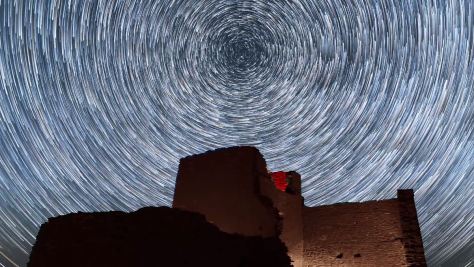
This video journeys to National Park Service sites from California, Arizona, Colorado, and New Mexico, many of whom give us a glimpse of how the night sky may have appeared to the ancient inhabitants of those lands. Many of these places were named International Dark-Sky Parks by the International Dark-Sky Association, partly due to their remote locations, and partly due to the hard work by the National Park Service to preserve the quality of the night skies through lighting retrofits and educational programs about the night sky heritage and astronomy.
The video also features 2018’s epic Lunar Eclipse, a.k.a. “Blood Moon,” seen at 1:03.

This video was filmed as part of SKYGLOW (skyglowproject.com), an ongoing crowdfunded quest to explore the effects and dangers of urban light pollution in contrast with some of the most incredible dark sky areas in North America. This project is being produced in collaboration with International Dark-Sky Association (darksky.org), a non-profit fighting for the preservation of night skies around the globe.
——-
Locations:
Wupatki National Monument, Arizona
Chaco Culture National Historical Park, New Mexico
Bandelier National Monument, New Mexico
Bishop, California

Website: http://www.bloodhoney.com/
From a Fodor’s online article:
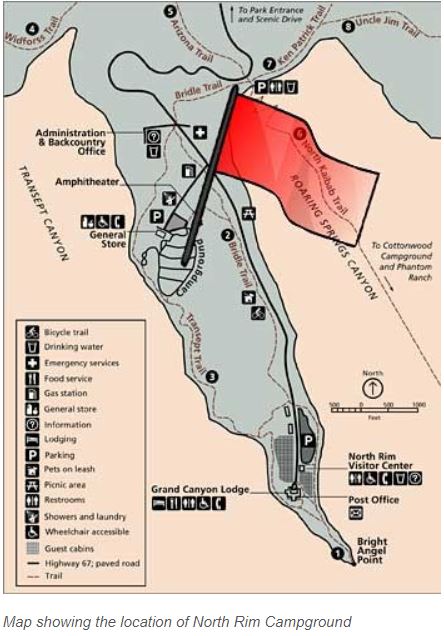
 One of America’s most iconic national parks, it’s no surprise to learn that the Grand Canyon is often crowded. Most visitors, though, stick to the park’s South Rim, leaving the less populated North Rim open to campers in search of wildlife and a little tranquility. The North Rim Campground is a whopping 8,200 feet in elevation bordering the Transept Canyon, an offshoot of the main canyon, of which some sites have fantastic views. The 90-site campground, open May through October (reservations only), is located a mile south of the Grand Canyon Lodge and visitor center.
To read more click on the following link: https://www.fodors.com/world/north-america/usa/arizona/grand-canyon-national-park
From Kiplinger’s online article by Brendan Pedersen:
 Residents can enjoy four beautiful seasons in Flagstaff, says Meg Roederer, of the Flagstaff Convention and Visitors Bureau. She graduated from Northern Arizona University (located at the heart of Flagstaff) 30 years ago and never looked back. “Between the student, professional and retirement populations, the city has a real vibrancy,” she says. Don’t be fooled by downtown Flagstaff’s sleepy western vibe. “It’s really a mountain-foodie town,” Roederer says. It has more than 200 restaurants and award-winning craft beers in abundance along a “brewery trail.”
At an elevation of 7,000 feet, this mountain town swaddled by sweet-smelling Ponderosa pine trees has plenty to offer retirees by way of outdoor activities, top-tier dining, volunteer opportunities and seasonable weather. Snowbirds, take heed: This is not the sun-bleached Arizona you may be thinking of. Despite its crisp lack of humidity, it regularly receives about 100 inches of snow every winter.
To read more click on link below:
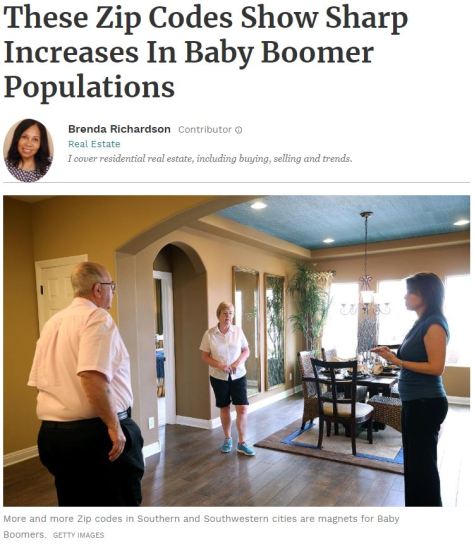
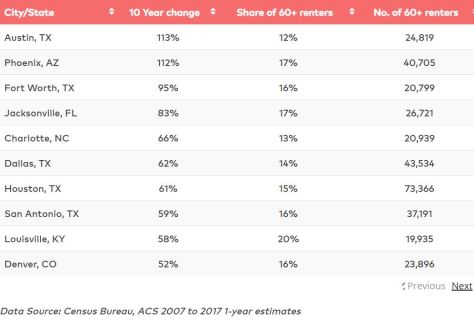
“Many older adults are downsizing and moving into rentals. Out of the 30 most populous cities in the United States, 16 experienced an increase of more than 40% in the age 60-plus renter household share between 2007 and 2017, according to research by RENTCafé. Austin, Texas takes the first-place spot as the city with the highest percentage change in the share of 60-plus renter households, increasing by 113% in the 10-year period. Phoenix shows the second highest increase of 112%.” (From Forbes.com article below)



 Boomers Daily