Tag Archives: Architectural Tours

Architecture Tour: Light Scoop House In Australia

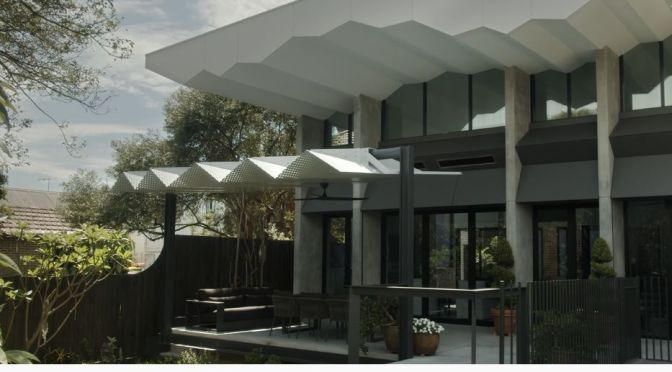
Situated on a site measuring only 6 metres wide, Light Scoop House required a compelling architectural response. As is necessary when an architect designs a narrow home, Molecule Studio enables function in a compact space, crafting a serene residence well-suited to the lifestyle of the client. Understandably, when an architect designs a narrow home, access to natural sunlight is given high priority.

00:00 – The Local Project Print Publication 00:18 – Introduction to a Narrow Home That is Only 6 Meters Wide 00:47 – The Clients Original Goal 01:06 – The Architects Pre-Design Process 01:25 – Zen Vibes and Interconnected Design 02:05 – Behind the Narrowness of The Home 02:39 – Landscape Courtyards and Garden Connection 03:06 – Architectural Elements within The Home 03:37 – Central Materials and Their Links to Light 04:46 – Achievements of The Original Brief 05:54 – Subscribe to The Local Project Print Publication
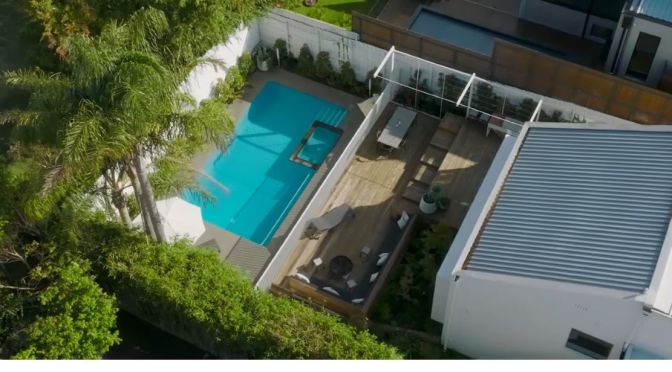
Located in the bay-side suburb of Brighton, Light Scoop House is named in reference to its tapered-edge pavilion roofs which pull natural light into the home and lift the gaze upwards. If an architect designs a narrow home without considering the lifestyle of the occupant, the design will not succeed. Molecule Studio thoroughly examines the personal likes, dislikes and daily habits of the client, producing a tranquil home that captures sunlight across its textural surfaces. Molecule Studio punctuates the spatial plan of Light Scoop House with landscaped courtyards. In doing so, the architect designs a narrow home that fosters a distinct feeling of retreat, effortlessly connecting the occupant to nature. Light Scoop House demonstrates that when an architect designs a narrow home, the outcome can exceed expectations. Using a limited materiality, Molecule Studio creates a sense of calm and careful construction that extends far beyond the demands of the brief. 00:00 – The Local Project Print Publication 00:18 – Introduction to a Narrow Home That is Only 6 Meters Wide 00:47 – The Clients Original Goal 01:06 – The Architects Pre-Design Process 01:25 – Zen Vibes and Interconnected Design 02:05 – Behind the Narrowness of The Home 02:39 – Landscape Courtyards and Garden Connection 03:06 – Architectural Elements within The Home 03:37 – Central Materials and Their Links to Light 04:46 – Achievements of The Original Brief 05:54 – Subscribe to The Local Project Print Publication

Home Renovations: May House, Malvern, Australia

When an architect designs a house with consideration and care, dwellings such as May House emerge. Taking a playful approach to colour and materiality, Neil Architecture reimagines a 1980s home as a relaxed, modern family residence.

Video timeline: 00:00 – The Local Project’s Print Publication 00:10 – Introduction to the House 00:45 – Complementary Design 01:01 – Exterior Renovations 02:03 – 1980s Materiality 03:12 – Landscape Architecture 04:09 – A House Made for Entertaining 04:42 – Timeliness Rejuvenation 05:17 – Subscribe to The Local Project’s Print Publication

When an architect designs a house, the design brief can often stipulate a complete renovation. However, Neil Architecture recognised the value of the original 1980s construction – settled into the leafy suburb of Malvern – and decided instead to complement the home with architectural additions.

To maintain the strong and simple form of the original structure, Neil Architecture covers the pre-existing truss with a perforated screen. Off-form concrete is used to create the carport, whilst a roughcast concrete render is applied to the fence – in doing so, the architect designs a house that interacts with the local built environment. As an architect designs a house, the intent can be expressed through the finer details of the scheme.

In May House, rusty red and green tones appear in the material palette, paying homage to the colours present in 1980s interior design. May House sees a 1980s residence both celebrated and reimagined, embraced and rejuvenated. Managing the external architecture and interior detail, the architect designs a house that is imbued with a sense of warmth and continuity; a house for the future that is inspired by the past.

Architecture: La Casa Rosa, Randwick, Australia

A modern house designed by Luigi Rosselli Architects, La Casa Rosa is the romantic reimagination of a heritage property. Combining architecture from the late 19th century with contemporary additions, the renovated home forms a considered and contemporary home.

Video timeline: 00:00 – The Local Project Print Publication 00:10 – Introduction to the Modern House 00:58 – Entering the House 01:57 – Maintaining the Existing Home 02:53 – Utilising Fluid Lines 03:25 – The Pool 04:18 – Selecting the House Colour 05:02 – What the Architect is Most Proud Of 05:41 – The Local Project Print Publication Subscription
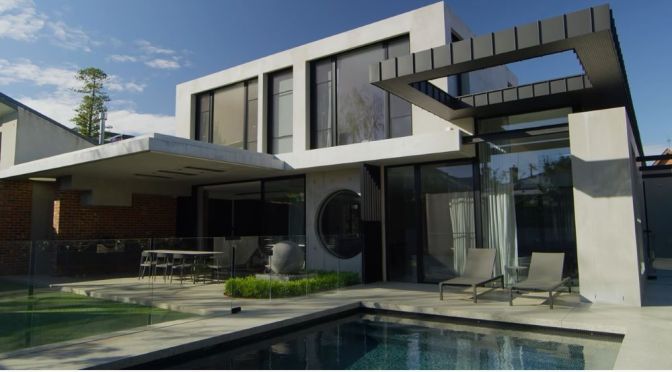
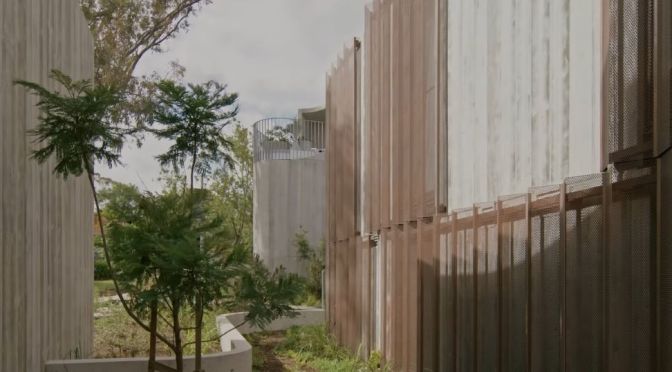
Settled on an escarpment overlooking the Pacific Ocean, La Casa Rosa is accompanied by many other Victorian buildings. The steep roof of the modern house testifies to its roots, obviously referring to the architecture of its time. In materiality, La Casa Rosa pays homage to its past. Bricks, timber and sandstone reference the palette of the built surrounds, whilst some of the original roof tiles are used to make a tile screen.

To the rear, the tile screen breaks the western sun, but is also used in connected the original and modern roof structures. Entering through the front of the modern house, the small, original rooms are immediately revealed as the children’s bedrooms. The back of the modern house represents the contemporary addition. An open-plan living space encapsulates the kitchen, dining and sitting area, with a staircase that leads to the first floor.

Outdoors, Luigi Rosselli Architects also retains the pre-existing pool, a peanut-shaped feature that complements the landscaping concept. Incorporating the fluid lines that have become synonymous with the work of Luigi Rosselli Architects, La Casa Rosa is undoubtedly a modern house. However, the completed project sees historic architectural elements subtly blended with the latest features, establishing a cohesive dwelling that proudly represents its past.

Architecture: ‘Clifftop House’ On Coromandel Peninsula, New Zealand

A holiday home with a dual focus, Clifftop House maximises coastal views whilst maintaining a sense of privacy. Created by Ponting Fitzgerald Architects with appliances from Fisher & Paykel, the holiday house has a surprising relationship to its context.

Chapters: 00:00 – Introduction to the Holiday House 00:39 – The Client Brief 01:12 – Entering the House 02:16 – Designing the Kitchen 03:09 – The Master Bedroom 03:25 – Design Inspired by Context 04:21 – Connection to Nature 04:59 – A Unique Perspective

Settled into a coastal community on the Coromandel Peninsula, Clifftop House sits on a ledge overlooking Hahei Beach. While the holiday house has access to striking vistas, including views to Mercury Islands, the unusual topography also leaves the home within eyeshot of other properties. To foster a sense of privacy, Ponting Fitzgerald Architects purposefully restricts access to the surrounding context in some parts of the home.

The atmospheric interior of the holiday house distinctly contrasts the coastal scene outside – however, the top floor of the residence sees a large, covered deck flow out to the view, re-establishing the connection to nature in dramatic fashion. As an interior element of the design, the kitchen of Clifftop House contributes to the feeling of retreat from the outdoors. Dark American oak cabinetry establishes a modest and unimposing space, complemented by the seamless insertion of appliances by Fisher & Paykel.

The result sees the internal architecture play a dominant role in the holiday house, guiding occupants through the home and towards the view. A gentle imposition on its context, Clifftop House is defined by its architectural discretion. Ponting Fitzgerald Architects ensures that, despite having access to incredible views, the holiday house appears as a mere canopy from the perspective of the beach.

Australian Architecture: ‘Round Choreography’

Evolving from a symmetrical design, Round Choreography is a playful geometric home with a familial tenor. With the architecture, interior design and build undertaken by mckimm, the forever house sees a clear design intent rigorously executed.

00:00 – Introduction to the Forever Home 00:38 – Designing with Unique Geometries 01:08 – In-Situ Concrete 01:40 – Intuitive Design 02:14 – Wellness and Gym Area 02:31 – Collaborative Approach to Design 03:28 – The Material Palette 04:07 – What the Architect’s Are Most Proud Of

Settled into the leafy suburb of Malvern, Round Choreography is named in homage to the original floorplan of the home that flourished into the completed forever house. Geometric in nature, the interiors celebrate a circular motif, visible from the kitchen to the ensuite and the internal courtyard of the home’s lower level.

As architect, interior designer and builder, mckimm’s construction team had intimate knowledge of the design intent, enabling efficiency to undertake strenuous tasks to deliver the desired forever house. The unique frameless window in the living area is a particular triumph. The practical nature of the forever house extends to its materiality. mckimm chooses a durable palette comprised of concrete, timber and stone to express a commitment to longevity whilst celebrating aesthetic rawness.

Polished concrete flooring with hydronic heating meets walls of the same material, creating an architecturally consistent envelope. Designed in the knowledge that the clients are growing their family, Round Choreography captures the excitement of embedding oneself in a location. The light-filled forever house marks the beginning of family life.

Modern Architecture: 10 Apartment Home ‘Fenwick’, Kew, Melbourne, Australia

Uniting the gestures of interior design, architecture and landscape, Fenwick embodies a coherent vision of modern apartment homes. Developed by ANGLE in collaboration with Edition Office and Flack Studio, the building uses an evolving connection to context to answer an open design brief.

00:00 – Introduction to the Modern Apartment Homes 00:42 – The Client Brief 01:29 – Finding Inspiration for the Apartment’s Design 02:18 – The Kitchen Island Bench 02:35 – Durable Material Selection 03:10 – Hero Spaces 03:30 – Landscape Architecture 04:42 – Connection to Country

Situated on the banks of Yarra River in the Melbourne suburb of Kew, Fenwick straddles environments of dense forest and heritage buildings. As a unique by-product of its location – wherein nothing can be built in front of the home – the ten modern apartment homes have access to immersive, panoramic views that capture both the wilderness and city.

The exterior of Fenwick purposefully interacts with the natural surrounds. Conceived as a broken mass, the modern apartment homes are divided amongst three distinct pavilions that allow for view corridors between parts, extending across the gardens to the landscaped scenes beyond. Presenting Fenwick as an extension of the environment, Eckersley Garden Architecture designs a landscape reminiscent of the neighbouring greenery.

Lying beyond the modern apartment homes are layers of native shrubs, grasses and lower ground covers that change in accordance with the seasons, continuing to establish the development over time. With an interior design that draws the eye towards the outdoors, Fenwick thoroughly embraces its Kew context. By pursuing a connection to nature through interior design, architecture and landscaping, ANGLE ensures that the modern apartment homes effectively echo the language of the surrounds.

Architecture: Flinders Residence – A Modern Cabin Design In Australia

Flinders Residence is a modern cabin mansion imbued with the romantic character of a farm-style home. Created by Abe McCarthy Architects with an interior crafted by AV-ID, the coastal building combines minimalism and luxury to benefit a growing family.

Timeline: 00:00 – Introduction to The Modern Cabin Mansion 00:46 – The Reveal 02:09 – Collaboration Between Architect and Interior Designer 02:47 – Use of Materials 03:27 – Contrast Between Light and Dark 04:10 – Design and Detail 04:44 – Materials, Products and Furniture Round-Up 06:18 – What the Interior Designer is Most Proud Of

Aptly removed from the city workings of nearby Melbourne, Flinders Residence sits in its namesake town as a modern cabin mansion. The building is first revealed at the end of a long driveway, standing as three interconnected pavilions nestled within the landscape. Located at the entry point of the home is an architecturally framed view of the horizon, whilst a sense of volume created by the barn-style framework contributes to the dramatic experience of the internal envelope of the modern cabin mansion.

The interior design of the modern cabin mansion intertwines the aesthetic preferences of both homeowners. A minimalist scheme of contrasting light and dark tones is complemented by luxurious materials and finishes, including Brazilian granite, marble, brass and bronze.

The use of timber pays homage to both clients’ involvement in the timber industry. Inspired by European and American homesteads, Flinders Residence stands as a refined and modern cabin mansion. Using a sophisticated and restrained materiality, the design successfully captures the romantic appeal of a farm-style home whilst adding a luxurious touch.

Architecture: Water-Themed ‘Zig Zag House’ In Kensington, Australia

Designed by Stukel Architecture in collaboration with AJP Constructions, Zig Zag House makes waves as a contemporary house in an environment dominated by traditional cottages. Named after its distinctively dynamic architecture, the home is a sculptural response to its Kensington site.

Timeline: 00:00 – Introduction to the Contemporary House 00:49 – The Relationship between Architect and Builder 01:14 – The Client Brief 01:48 – The Unique Ceiling Form 02:52 – Building the Roof 03:24 – The Stairs 04:10 – Unique Use of Materials 05:17 – Concrete Finishes 06:13 – The Architects Favourite Part of the House

As a contemporary house, the architecture of the home reflects the movement of water, paying homage to the waterway that cuts through the landscape connecting Centennial Park and Botany Bay. Architecturally, the contemporary house is both impressive and bold. An overhang to the west orientation internally defines the home’s lounge, kitchen and dining spaces whilst a large blade column – inserted into the stairs – provides a solid focal point within a generous open space.

The interior design of Zig Zag House sees typical materials elevated through considered treatment. A seamless quality is inhered in the venetian plaster blade column, while a concrete wall is marked to elegantly resemble a particular grain of timber. The treatment of each material brings to the surface subtle aesthetic qualities, establishing the home as a contemporary house.

Located in the Sydney suburb of Kensington, Zig Zag House introduces 21st century architecture into the urban milieu. Visualised by Stukel Architecture and skilfully executed by AJP Constructions, Zig Zag House stands as a contemporary house that testifies to a successful design collaboration.

Tours: Fairweather House In Sydney, Australia (4K)

Stemming from an inside-out design approach, Fairweather House sees a 1940s Federation-era home reimagined with a modern kitchen. While extending the home, Pohio Adams Architects designs in careful consideration of its heritage and current use.

Video timeline: 00:00 – Introduction to the Home 00:56 – The Client Brief 01:18 – Reinvigorating the Original Home 02:28 – Outside-Inside Planning Approach 03:56 – The Glass Pavilion 04:29 – Landscape Architecture 05:04 – The Heart of the Home 05:35 – Materiality 06:13 – What the Architect is Most Proud Of

Set amongst the equally grand residences of Sydney’s Bellevue Hill, Fairweather House brings together the old and the new through a considered lens. Pohio Adams Architects elevates the interior design and architecture of the Federation-style home with refined, contemporary insertions such as a modern kitchen, creating a sense of stylistic coherence.

Architecturally, Pohio Adams Architects respects the heritage of the building whilst steering the design towards functionality and grandeur. The original front façade is retained, as well as three formal rooms towards the entrance of the property. Throughout the house, alterations are well-considered and benefit the home. The inserted modern kitchen accommodates the homeowners’ love of entertaining, whilst an added glass and steel pavilion offers an externally focused alternative to the original dark structure.

Pohio Adams Architects designs the modern kitchen to be the hero piece of the interior design. Over four metres long, the kitchen feeds into a sense of openness permeating Fairweather House, allowing residents and guests to circulate with ease around the marble island bench. Located in the rear pavilion, the modern kitchen proposes the ideal space for guests to gather, with seating provided for six people.

Focusing on the relationship between inside and out, Pohio Adams Architects crafts a compelling interiority that actively refers to the external landscape. Fairweather House exemplifies the inside-out methodology, with the boundary between the rear spaces and the garden successfully blurred.

Architecture: National Mall In Washington DC

Architectural Digest takes you to Washington, D.C. for a walking tour of The National Mall with architect Nicholas Potts, highlighting some complex architectural details hidden in plain sight. The development of our nation’s capitol was drastically reimagined by 1902’s McMillan plan, implemented primarily to improve the design of the city’s monuments and parks.

Nick Potts brings this evolution to life, highlighting some remaining vestiges of 19th century D.C. while explaining how the city changed around them – including the White House itself.