
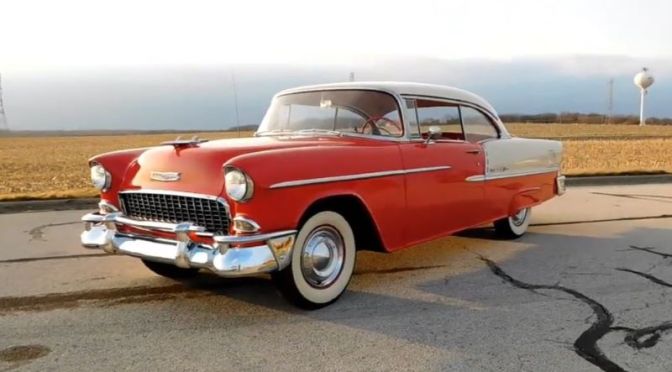
The 1955 Chevrolet (sometimes referred to as ‘55 Chevy) is an automobile which was introduced by Chevrolet in Autumn 1954 for the 1955 model year. It is considered a huge turning point for the manufacturer and a major success. It was available in three models: the 150, 210, and Bel Air.
The ’55’s top trim offering was the Bel-Air, which had more chrome than the 150 or 210. The Bel-Air, 210 and 150 model could be bought as a four-door, or could be bought as a two door with a post between the front and rear passenger windows, known as the two-door sedan.
The Bel-Air or 210 model could also be had as a two door with no post between the side windows. This was known as the sport coupe, or better known by collectors as “the two door hardtop”. Since this model had no post between the two side windows, it had a shorter roof and longer rear deck than the two door sedan had. Chevy also offered a convertible, with the same shorter roof and longer rear deck as the sport coupe, and it was offered in Bel-Air trim only.
1955 also saw the introduction of the Bel Air Nomad, a sporty two-door station wagon which featured frameless door glass and elongated side windows. The unique roof design of the Nomad came directly from the 1954 Corvette Nomad, a “dream car” designed to be shown at auto shows as a concept sport wagon. Although regarded as one of the most beautiful station wagon designs of Fifties, the Nomad sold poorly, partly due to its price tag (one of the most expensive models in the Bel Air lineup) as well as its lack of four doors. Also the Nomad’s two-piece tailgate design was prone to let excess rainwater leak through to the interior.
The ’55 offered a wide array of colors. One solid color, which was standard for the 150, could be had for the 210 or Bel Air…or nineteen different two-tone color combinations were also available.
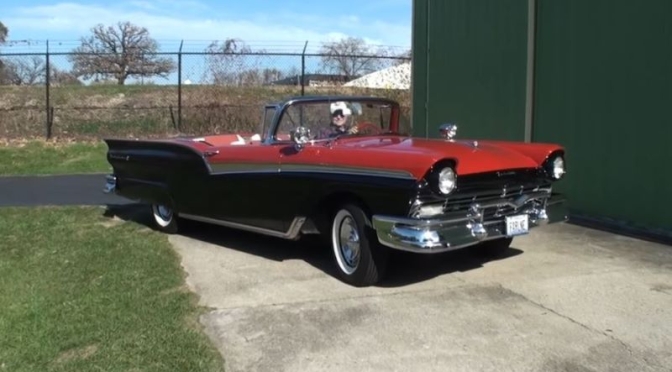
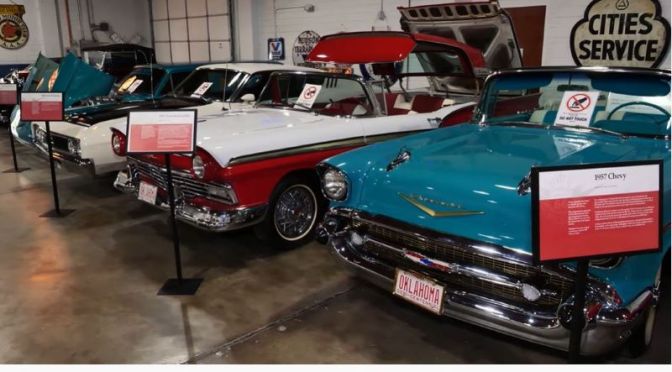

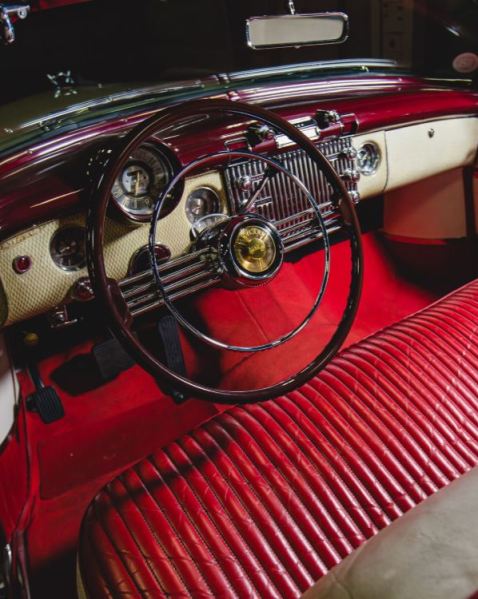 The Buick Skylark is a passenger car produced by Buick. The model was made in six production runs, during 46 years, over which the car’s design varied dramatically due to changing technology, tastes and new standards implemented over the years.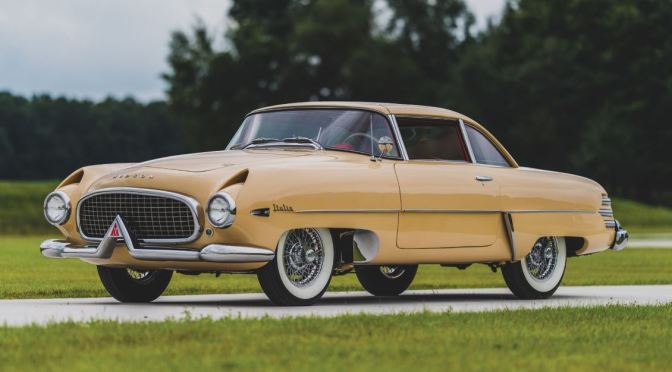
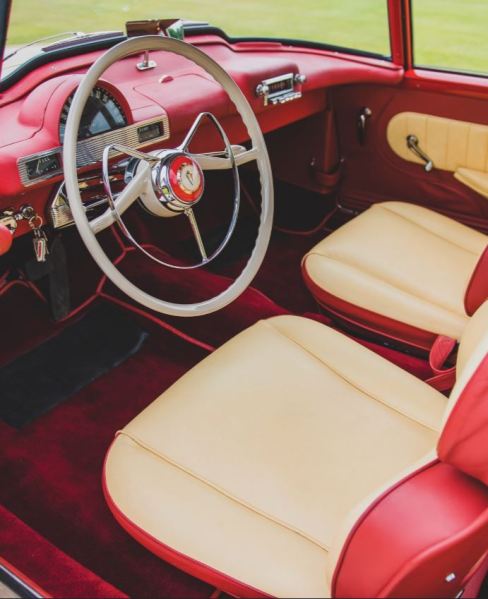 The Hudson Italia is an automobile styling study and a limited production two-door compact coupé that was produced by the Hudson Motor Car Company of Detroit, Michigan, in cooperation with Carrozzeria Touring of Italy, and subsequently marketed by American Motors Corporation during the 1954 and 1955 model years. Designed by Frank Spring with input from Carlo Felice Bianchi Anderloni of Carrozzeria Touring, and introduced 14 January 1954,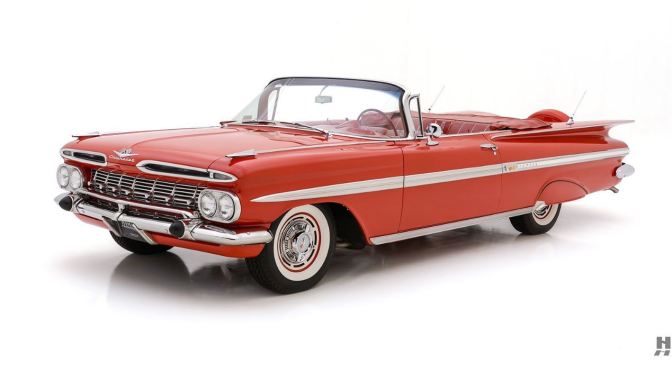
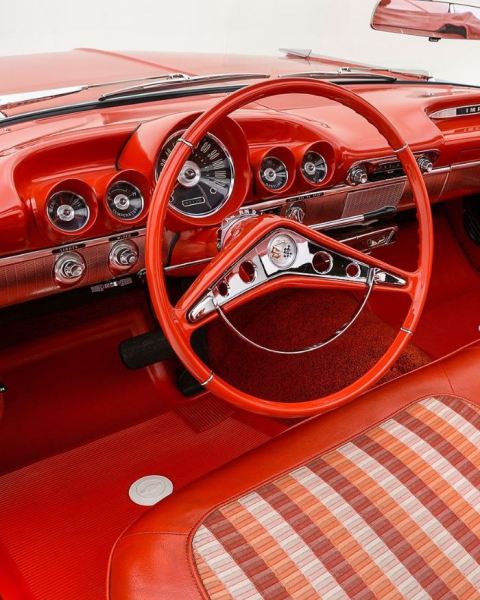 The Chevrolet Impala is a full-size car built by Chevrolet for model years 1958 to 1985, 1994 to 1996, and 2000 onward. The Impala is Chevrolet’s popular flagship passenger car and is generally among the better selling American made automobiles in the United States.
 The Impala became a separate series, adding a four-door hardtop and four-door sedan, to the two-door Sport Coupe and convertible. Sport Coupes featured a shortened roof line and wrap-over back window. The standard engine was an I6, while the base V8 was the carryover 283 cu in (4.6 L), at 185 hp (138 kW). Optional were a 283 cu in with 290 hp (220 kW) and 348 cu in (5.7 L) V8 up to 335 hp (250 kW). Standard were front and rear armrests, an electric clock, dual sliding sun visors, and crank-operated front vent windows. A contoured hooded instrument panel held deep-set gauges. A six-way power seat was a new option, as was “Speedminder”, for the driver to set a needle at a specific speed and a buzzer would sound if the pre-set was exceeded.
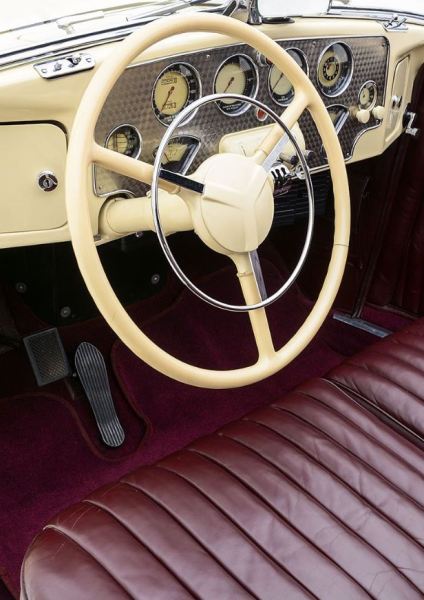 The Cord 810, and later Cord 812, was a luxury automobile produced by the Cord Automobile division of the Auburn Automobile Company in 1936 and 1937. It was the first American-designed and built front wheel drive car with independent front suspension. It followed the 1934 Citroën Traction Avant and the Cord L-29, both of which also had front wheel drive. Both models were also the first to offer hidden headlights.
 The styling of the Cord 810 was the work of designer Gordon M. Buehrig and his team of stylists, which included young Vince Gardner and Alex Tremulis. While the first American front-wheel-drive car with independent front suspension, it had an archaic tube rear axle with semi-elliptic rear springs. Power came from a 4,739 cc (289 cu in) Lycoming V8 of the same 125 hp (93 kW) as the L-29. The semi-automatic four-speed transmission (three plus overdrive) extended in front of the engine, like on a Traction Avant. This allowed Buehrig to dispense with the driveshaft and transmission tunnel; as a result, the new car was so low it required no running boards. It had a 125 in (3,175 mm) wheelbase (shared with several 812 body styles), and in 1936 came in four models: the entry-level sedan at US$1995, the Beverly sedan ($2095), Sportsman ($2145), and Phaeton ($2195). The 1937 812s had the same models, priced $2445, $2545, $2585, and $2645, plus two more, on a 132 in (3,400 mm) wheelbase, the $2960 Custom Beverly and $3060 Custom Berline.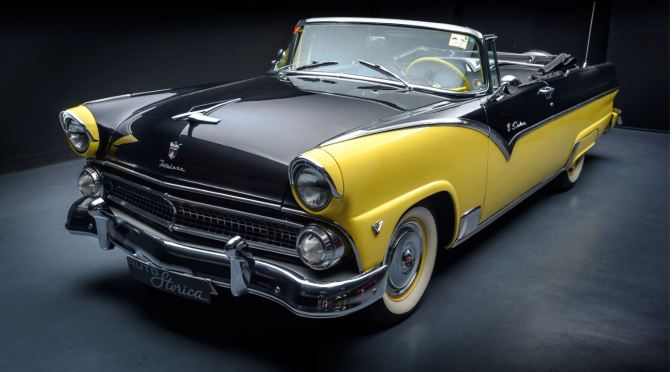
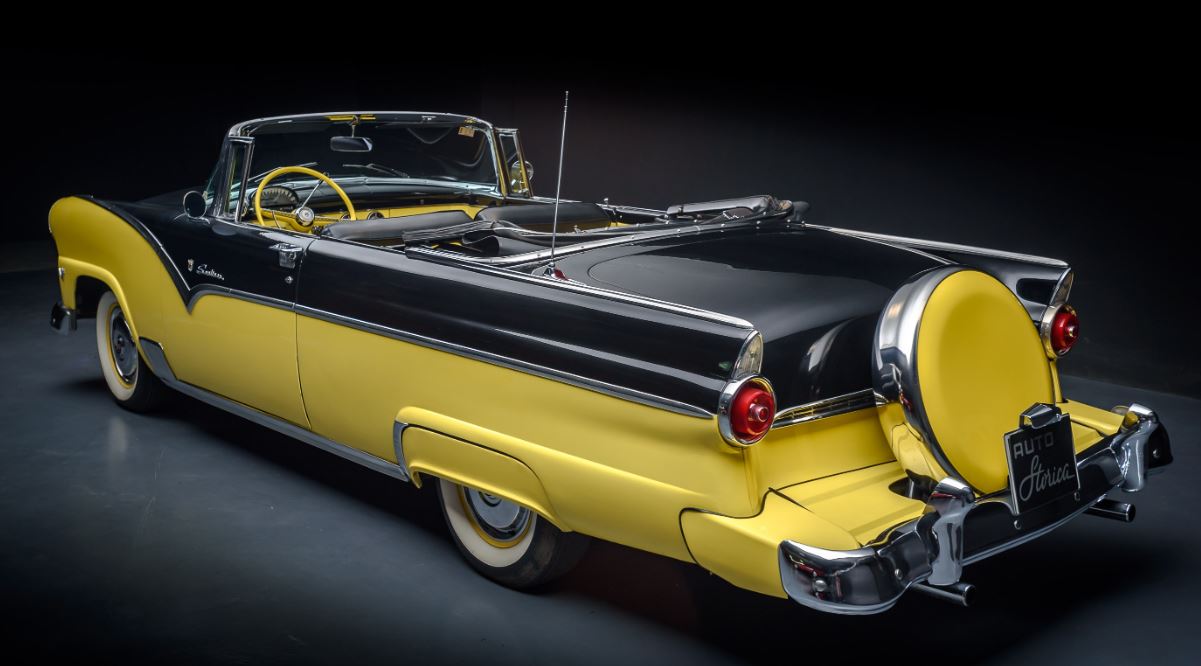

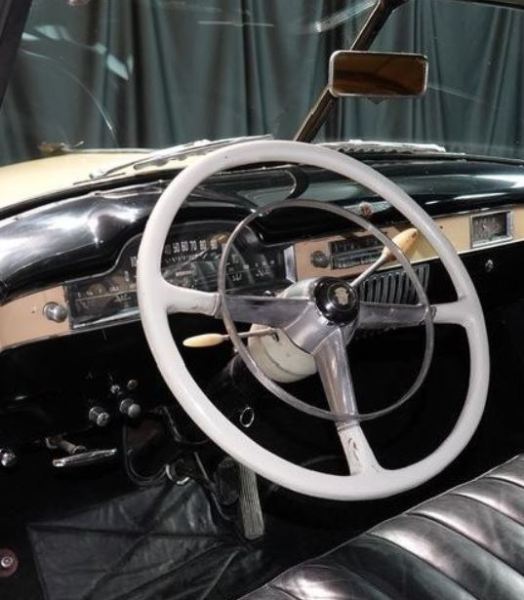 The Cadillac Series 62 is a series of cars which was produced by Cadillac from 1940 through 1964. Originally designed to replace the entry level Series 65, it became the Cadillac Series 6200 in 1959, and remained that until it was renamed to Cadillac Calais for the 1965 model year. The Series 62 was also marketed as the Sixty-Two and the Series Sixty-Two.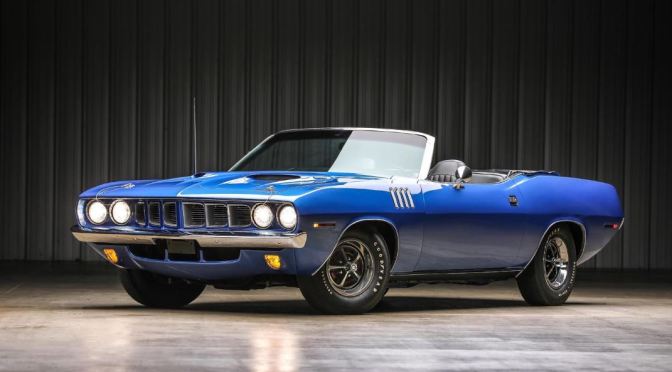
 The Plymouth Barracuda is a two-door
  Boomers Daily