Category Archives: Wildlife

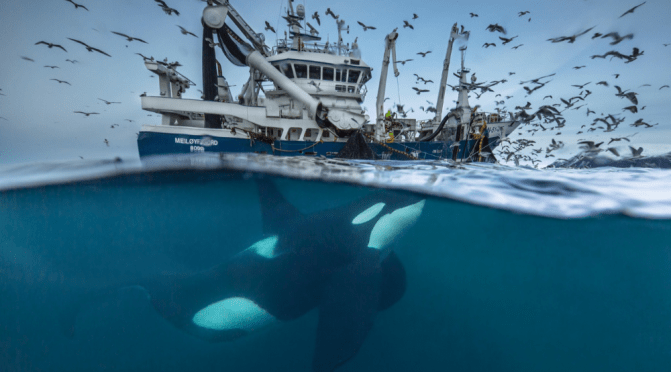
Top New Wildlife Videos: “Feast Of The Killer Whales” By Didier Noirot

Filmed & Directed by: Didier Noirot

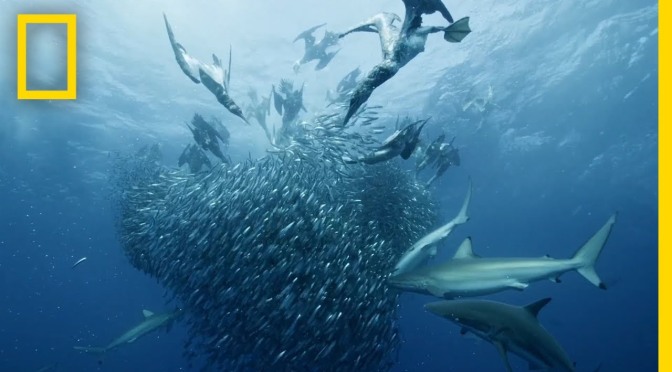
Didier Noirot is known as one of the world’s greatest underwater cameramen and has several prestigious awards for his natural history film camerawork. Over the past 40 years, Didier has been driven by his passion for marine life, but now he’s set himself a new challenge, to film what is perhaps the largest known gathering of marine mammals in the world; hundreds of killer whales in pursuit of shoals of herring. Today, these killer whales are faced with unexpected competition from humpback whales, who began appearing in this Arctic region only a few years ago, driven by a lack of food resources in the Atlantic Ocean, their natural habitat. In the midst of this changing ecosystem, we journey to the heart of the Norwegian fjords, where Didier Noirot’s aim is to take us as close as we can get to these giants of the Arctic so we can witness first-hand their new behaviour and hunting activity, which has never been captured on film before.

Website

Travel & Wildlife: “The Future of Koalas” in Australia (NatGeo Video)

The destructive wildfires that swept through Australia destroyed the habitats for many of the island’s animals. Zoologist Jack Randall explores the efforts being made to rescue and care for the Koalas that were impacted by the wildfires.

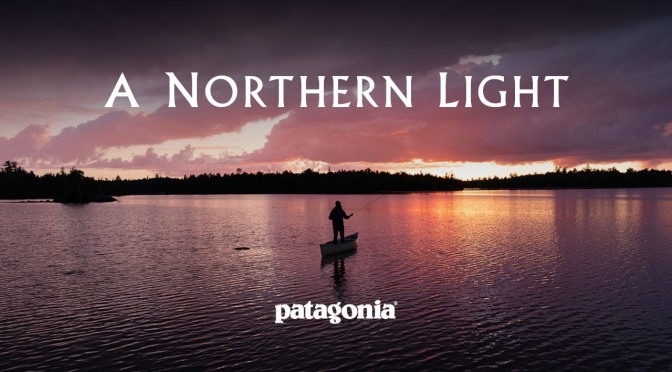
Travel Video: “A Northern Light”, Boundary Waters Canoe Area (Patagonia)

Encompassing over 1,000,000 acres, the Boundary Waters Canoe Area Wilderness is in peril from a proposed toxic copper mine on the park’s boundary. Patagonia ambassador Nathaniel Riverhorse Nakadate paddles through the BWCAW to give voice to a silent, pristine place. A film by Riverhorse Nakadate and Tony Czech.

The Boundary Waters Canoe Area Wilderness, is a 1,090,000-acre wilderness area within the Superior National Forest in northeastern part of the US state of Minnesota under the administration of the U.S. Forest Service. 

Website

Photography Contests: “2020 Audubon Awards”

Every spring, the judges of the Audubon Photography Awards gather at Audubon’s headquarters in Manhattan to review their favorite images and select the finalists.

This slideshow requires JavaScript.

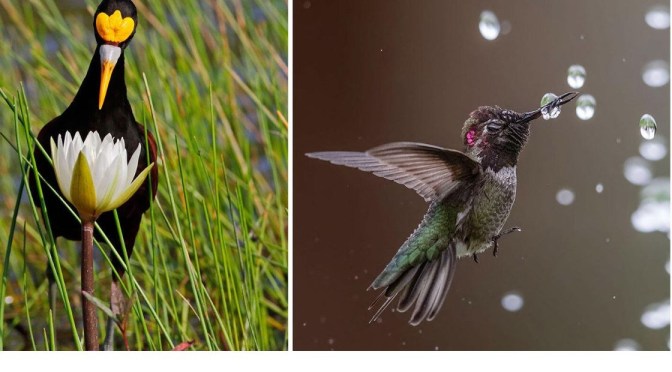
The thousands of submissions from nearly 1,800 entrants showed birdlife in all of its splendor. In total, photographers from all 50 states, Washington, D.C., and 7 Canadian provinces entered images that captured the creativity, wonder, and beauty of species small and large, terrestrial and aquatic.

This year we also continue with two new awards introduced in 2019: The Fisher Prize, which recognizes an image that is as artistic as it is revealing, and the Plants for Birds category, which honors the top photographs illustrating the crucial relationship between native plants and birds.

Website

New Wildlife Videos: “The Drill – Among Rarest Primates In The World”

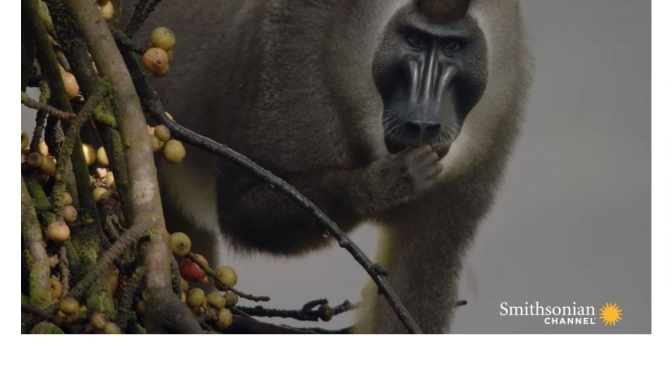
Roughly 20 miles off the coast of West Africa, the island of Bioko sits alone in the Atlantic Ocean. This rainforest-dominated terrain is home to one of the rarest primates in the world: the drill.
From the Show: Monkeys of Bioko https://bitly.com/2DlbNX9

New Wildlife Books: “A Lifetime in Galápagos” By Tui De Roy (Princeton)

Featuring hundreds of breathtaking color photos, this stunning book guides you into labyrinthine mangroves to observe nesting herons, to misty cloud forests to glimpse flycatchers and orchids, high onto erupting volcanoes, and into the ocean to swim with hammerhead sharks. 

A beautifully illustrated and deeply personal chronicle of De Roy’s lifelong connection with these spectacular islands

A Lifetime In Galapagos - Tui De Roy - Princeton Press - July 20 2020Tui De Roy was a year old in 1955 when her family left Europe, boarding a banana boat bound for the Pacific to lead a different sort of life in Galápagos, one of self-sufficiency and living close to nature. She grew up on the islands and returned to them often over the next five decades. Discovering photography at a young age, she has dedicated her life to recording the islands’ natural history in infinite detail. A Lifetime in Galápagos is De Roy’s intimate portrait of one of the most spectacular places on Earth, presenting the wildlife and natural wonders of Galápagos as you have never seen them before.

De Roy’s lens provides up-close encounters with orca and sperm whales, colonies of iguanas, and the giant tortoises of Alcedo Volcano. She paints unforgettable portraits of her childhood in Galápagos―the islands at night under the stars of the Milky Way, sea lions at play and on the hunt, the diverse birdlife of Galápagos, and much more.

Blending striking images with vivid prose, A Lifetime in Galápagos also discusses the threats that global warming and other environmental challenges pose to the archipelago’s unique wildlife and fragile habitats.

Read more or purchase

New Literary Podcasts: “Consider The Lemur” By Katherine Rundell (LRB)

Consider The Lemur - Katherine Rundell

It is​ probably best not to take advice direct and unfiltered from the animal kingdom – but lemurs are, I think, an exception. They live in matriarchal troops, with an alpha female at their head. 

LRB PodcastThe first lemur I ever met was a female, and she tried to bite me, which was fair, because I was trying to touch her, and humans have done nothing to recommend themselves to lemurs. She was an indri lemur, living in a wildlife sanctuary outside Antananarivo; she had an infant, which was riding not on her front, like a baby monkey, but on her back, like a miniature Lester Piggott. She had wide yellow eyes. William Burroughs, in his lemur-centric eco-surrealist novella Ghost of Chance, described the eyes of a lemur as ‘changing colour with shifts of the light: obsidian, emerald, ruby, opal, amethyst, diamond’. The stare of this indri resembled that of a young man at a nightclub who urgently wishes to tell you about his belief system, but her fur was the softest thing I have ever touched. I was a child, and the indri, which is the largest extant species of lemur, came up to my ribs when standing on her hind legs. She looked, as lemurs do, like a cross between a monkey, a cat, a rat and a human.