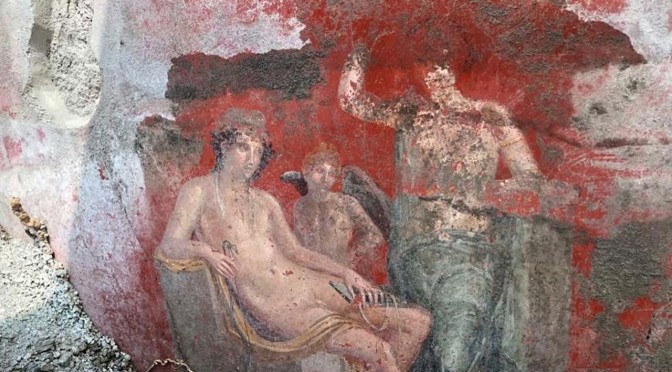
When Mount Vesuvius erupted in 79 CE, it buried Pompeii, Herculaneum, and the surrounding settlements under nearly 20 feet of volcanic ash and pumice. Pliny the Elder, a Roman writer, documented his eyewitness account of the disaster, supporting the archaeological evidence uncovered there in the last two centuries.
This Great Lecture reviews how these buried cities and their exploration have had a lasting impact on European and American culture. C. Brian Rose, Ph.D., Curator-in-Charge, Mediterranean Section, Penn Museum; Immediate Past President, Archaeological Institute of America; Trustee, American Academy in Rome
Syndicated columnist Mark Shields and New York Times columnist David Brooks join Judy Woodruff to discuss the week’s political news, including the unique magnitude of the novel coronavirus pandemic, how President Trump is handling the crisis, what the government should do to reassure fearful Americans, and how the outbreak might affect the 2020 Democratic presidential primary race.
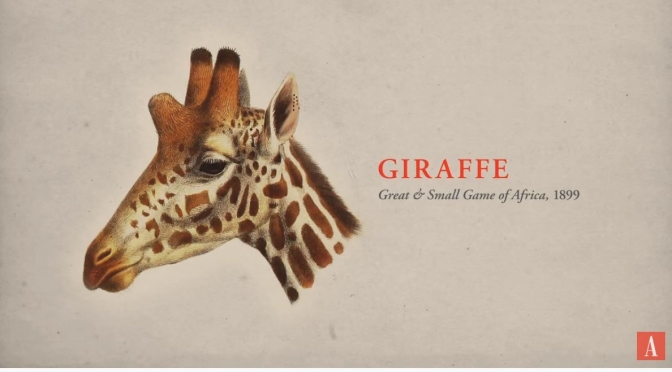
Since time immemorial, giraffes have captivated the human imagination. Yet the total giraffe population has fallen 30 percent in the past few decades, and very few people have seemed to notice. “Giraffes are all over the place in popular culture,” says the Atlantic staff writer Ed Yong. “I think because of that, we forget that, actually, they are endangered.” In a new episode of The Idea File, Yong explains why it’s crucial to channel our reverence for these beloved animals into tangible conservation efforts.
The kingdom of Bhutan — wedged like a hanging Garden of Babylon in the mighty eastern Himalayas — is the new frontier in the world of Enduro mountain biking. The arrival of the sport has been late but timely, as it enables riders to traverse the numerous ancient trails that make up an intricate web of pathways and dirt paths that dot and connect the kingdom’s diverse twenty districts, providing a backdrop for a ride in what is easily one of the world’s most pristine landscapes.
When is elbow pain an emergency? Can the elbow joint be replaced? What’s that weird feeling when you hit your funny bone? Orthopedic Surgeon, William Seitz Jr., MD, sits down to answer these questions and more.
What’s new about the new Nutrition Facts label? Watch this Q&A with Susan T. Mayne, Ph.D., Director of FDA’s Center for Food Safety and Applied Nutrition.
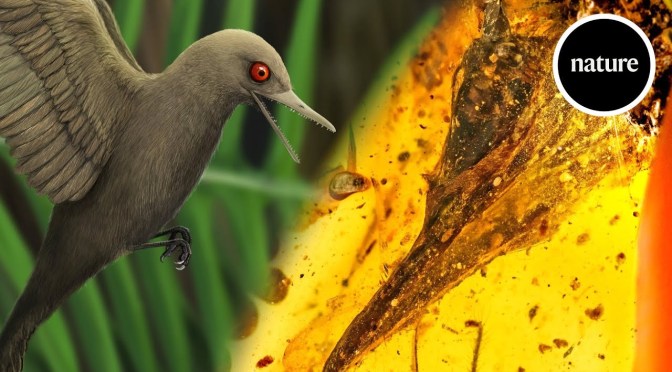
A tiny new species of bird-like dinosaur has been discovered, preserved in a lump of 99-million-year-old amber. The tooth-filled skull is only 7.1mm long, suggesting that this ancient creature would have been the size of a hummingbird – far smaller than other dinosaurs known from that time. Unusual features include large, side-facing eyes and a large number of sharp teeth suggesting a predatory lifestyle. The species has been named Oculudentavis khaungraae and is evidence of previously unimagined biodiversity in the Mesozoic era.
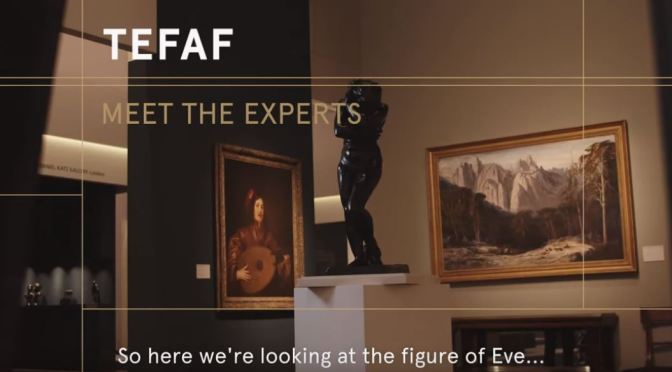
John Swarbrooke from Dickinson Gallery explains the beauty and play of light behind the cast of Auguste Rodin’s Eve.
François Auguste René Rodin (12 November 1840 – 17 November 1917) was a French sculptor. Although Rodin is generally considered the progenitor of modern sculpture, he did not set out to rebel against the past. He was schooled traditionally, took a craftsman-like approach to his work, and desired academic recognition, although he was never accepted into Paris’s foremost school of art.
Eve is a nude sculpture by the French artist Auguste Rodin. It shows Eve despairing after the Fall.
n 1880 Rodin was commissioned to produce The Gates of Hell, for which he exhibited Adam at the 1881 Paris Salon. In a sketch for Gates Rodin showed a central silhouette possibly intended as Eve (both the sketch and Gates are now in the Musée Rodin), but in October 1881 he decided to produce Eve as a pair for Adam, with the two sculptures flanking a huge high-relief bas-relief. This would be the first free-standing female sculpture he had produced since the destruction of his Bacchante in an accident between 1864 and 1870. He began Eve in 1881, later abandoning his intended colossal version of it when he realised his model, probably Adèle Abruzzesi, was pregnant. It was first exhibited to the public at the 1899 Paris Salon. It shows a strong influence from Michelangelo, picked up by Rodin in Italy in 1876.
He also produced an autograph white marble version in 1884 (now in the Museo Soumaya in Mexico City), a version in patinated plaster and a much-reproduced 71 cm high bronze version in 1883 (known as the Petite Ève or Little Eve, whose original is also in the Musée Rodin in Paris). He also reused the same figure of Eve in his marble Eve and the Serpent (1901) and his plaster Adam and Eve (1884).









 Boomers Daily