Saitama Prefecture is part of the Greater Tokyo area. In Saitama City, the Railway Museum traces rail history from the steam engines to bullet trains. Kawagoe city is known for well-preserved Edo-era buildings. West, the 3 Kuroyama Santaki falls cascade down mountains. Chichibu city is home to the 34 Buddhist temples of the Kannon Pilgrimage. Near Kinsho Temple, the Iwadatami rock formations line the Arakawa River.
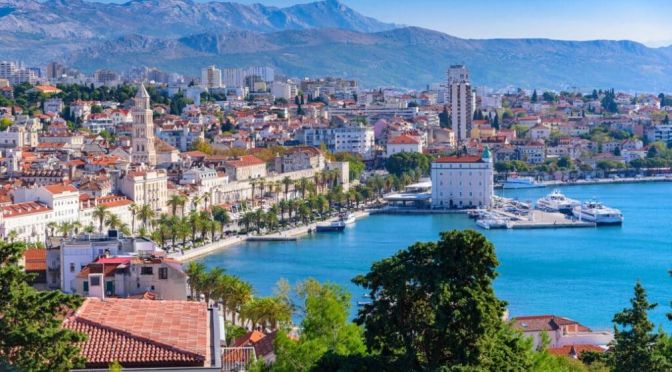
Split, Italian Spalato, seaport, resort, and chief city of Dalmatia, southern Croatia. It is situated on a peninsula in the Adriatic Sea with a deep, sheltered harbour on the south side.
A major commercial and transportation centre, the city is best known for the ruins of the Palace of Diocletian (built 295–305 CE). Collectively with the historic royal residences, fortifications, and churches in the city, the palace was designated a UNESCO World Heritage site in 1979.
Video timeline:0:00 Drone intro and Map 2:15 Matejuška Port 4:39 Trumbiceva Obala 6:40 Riva Promenade 12:11 Ferry Terminal 20:11 Marmontova Ulica 21:33 Fish Market 26:35 Ulica kralja Tomislava 30:20 Golden Gate & Gregory of Nin 32:41 Hrvojeva Ulica 33:56 Silver Gate 37:15 Riva Promenade 40:01 Trg Brace Radic (Fruit Square) 42:35 Narodna trg (People’s Square) 49:21 The One-time Convent of Santa Maria de Taurello 54:51 Morpurgova Poljana 57:24 Trg braće Radić (Fruit Square) 58:26 The remains of the Church of St. Michael 1:04:37 Peristyle Court 1:05:41 Vestibul 1:14:35 Triclinium (Diocletian’s Dining Room) 1:20:40 Diocletian’s Mausoleum & Cathedral 1:25:56 Undergound Market 1:31:59 Hrvojeva Street Market 1:32:39 Green Market 1:37:21 Silver Gate 1:41:02 Iron Gate 1:41:55 Narodni trg (People’s Square) 1:46:20 Golden Gate 1:52:21 Carrarina Poljana 1:57:03 Peristyle Square 1:58:11 Temple of Jupiter 1:59:05 Let Me Pass Lane 2:01:50 Trg braće Radić (Fruit Square) 2:03:04 Riva Promenade 2:06:24 Platz der Republik 2:08:13 Marmontova Ulica 2:11:48 Matošića Ulica 2:14:10 Ulica ban Mladenova 2:16:01 Senjska Ulica 2:20:34 Prva vidilica na Marjanu 2:29:01 Seaside Promenade
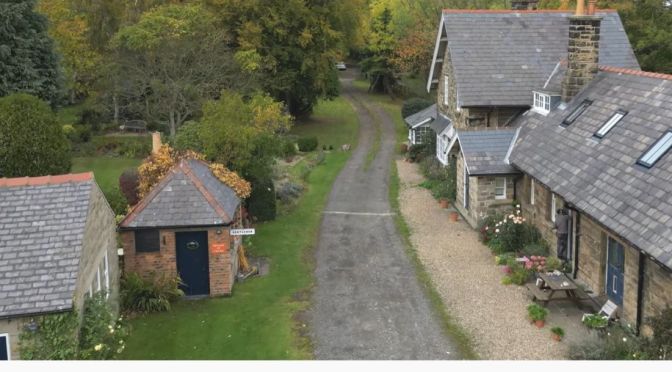
ScarboroughTourist – The Scarborough & Whitby Railway was a railway line from Scarborough to Whitby in North Yorkshire, England. The line followed a difficult but scenic route along the North Yorkshire coast.
The line opened in 1885 and closed in 1965 as part of the Beeching Axe. The route, now a multi-use path, is known as “The Cinder Track”
The track was subsequently lifted in 1968, although speculation about a potential potash mine near Hawsker meant that the track from there to Whitby remained in place until 1972.
The line is now used as a bridleway for cycles, pedestrians and horses, known as the “Scarborough to Whitby Rail Trail”, “Scarborough to Whitby Cinder Track”, or simply “The Cinder Track”.
In the 1980s an area of the former line in the Northstead district of Scarborough was briefly used as football and cricket pitches.
In 2018 plans to spend £3.5 million to repair and improve the Cinder Track were backed by the borough council. The plans would see the route resurfaced, drainage improved and the creation of a new management body to oversee the development of the track. There is also the possibility of introducing a visitor centre, cafe and pay and display parking to generate ongoing funding to maintain the route. Work upgrading the track began in January 2020 and the first stage is now complete.
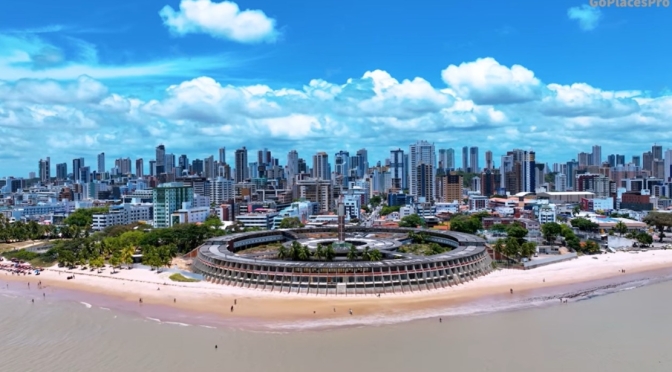
João Pessoa is a coastal city near the mouth of the Paraíba River in eastern Brazil. Its old town is known for its baroque and art nouveau architecture. The 16th-century São Francisco Church has Portuguese painted tiles in its courtyard and an ornate, gold-adorned chapel. Tambaú and Cabo Branco beaches are lined with bars and nightclubs, plus shops selling local woodcarvings and pottery.
Video timeline: 1:35 Panning wide sunset landscape of famous place of the city of Joao Pessoa at Brazilian Paraiba State. , 2:06 Touristic city of Joao Pessoa, 2:43 Downtown Joao Pessoa Paraiba, 3:12 Historical downtown city of Joao Pessoa at Brazilian Paraiba State. Medieval buildings at the Historic center, 3:31 Downtown Joao Pessoa.
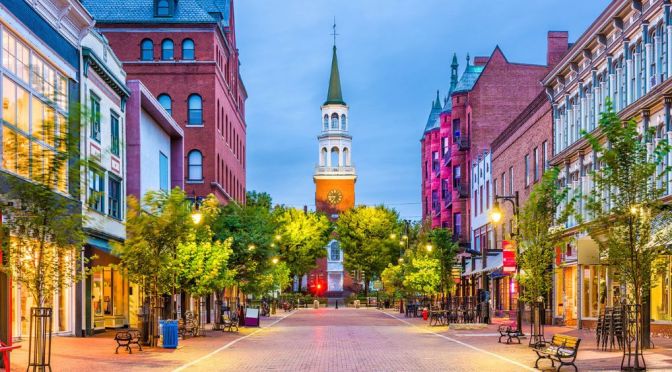
The Church Street Marketplace is an uncovered outdoor pedestrian shopping and dining mall in Burlington Vermont us consisting of the four blocks of Church Street between Main and Pearl Streets. Major retailers include five national chain stores as well as local retailers of clothing, home-wares, books, and other goods. It is the site of festivals throughout the year.
Burlington is a city in northwestern Vermont, on the eastern shore of Lake Champlain, south of the Canadian border. Downtown, shops and restaurants line pedestrianized Church Street Marketplace. North of downtown, the Ethan Allen Homestead Museum is a former home of the Revolutionary War hero. The vast Shelburne Museum, south of the city, houses American folk and decorative art in a collection of historic buildings.
and we traveled all over the continent. We visited Western Australia, South Australia, Northern Territory, and Queensland and at the end of our journey, we went for 8 days to the tiny Pacific nation of Vanuatu.
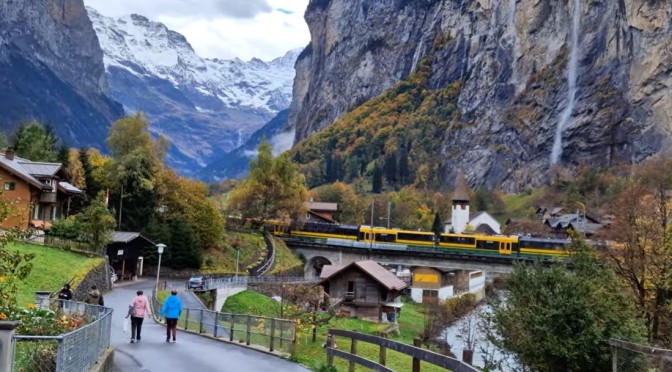
of the most impressive trough valleys in the Alps, between gigantic rock faces and mountain peaks. With its 72 thundering waterfalls, secluded valleys, colourful alpine meadows and lonely mountain inns, the Lauterbrunnen Valley is one of the biggest nature conservation areas in Switzerland.
The very name ‘Lauter Brunnen’ (‘many fountains’) suggests the magnificence of this landscape. There are 72 waterfalls in the Lauterbrunnen Valley, the most famous being the Staubbach Falls. Plunging almost 300 metres from an overhanging rock face, they are one of the highest free-falling waterfalls in Europe. In 1779, Johann Wolfgang von Goethe visited the valley, and was inspired by the roaring waters to write his well-known poem ‘Spirit song over the waters’
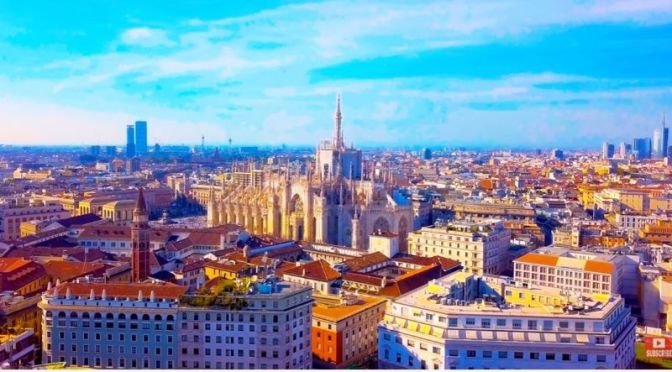
Milan is Italy’s city of the future, a fast-paced metropolis where money talks, creativity is big business and looking good is an art form.
Ruled by the Caesars, Napoléon, the Austro-Hungarians and Mussolini, Milan has an ancient and fascinating history. After the unification of Italy in 1861, it also became an important industrial and cultural centre – a title it still holds today. While it may not have the historic attractions of other Italian cities, it holds its own with art collections old and new, which mark the genius of old masters and provoke new conversations about where the world is headed. Prestigious nights at La Scala, an illustrious literary heritage and a vibrant music scene also do much to debunk the city’s workaholic image.
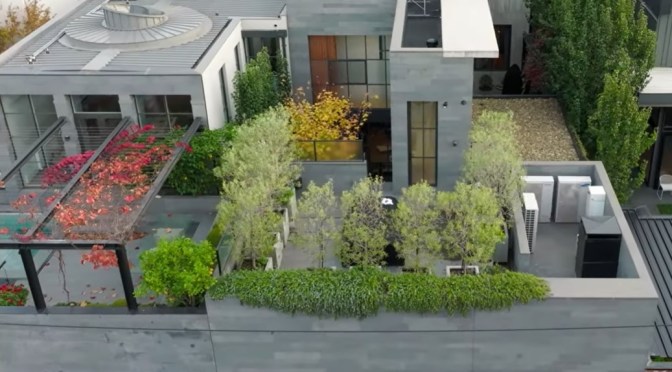
The Local Project– Following three years of curation, St Vincent’s Place emerges as an award winning home, peppered with art and designed to promote conversation. Crafted by B.E Architecture, the restoration project employs expressive pieces with consistency, enabling the building to be navigated with ease.
Video timeline:00:00 – Introduction to the Award Winning Home 00:21 – A Restoration Project 3 Years in The Making 00:58 – Building Aspects From the Ground Up 01:31 – Compatibility Within the Home 01:46 – A Walkthrough of the Historic Section of the Home 02:03 – The Modern Section of the Home 02:18 – Reinterpretations of the Historic Aspects 02:46 – Encouraging Conversation Through Building and Design 03:36 – A Range of Surprising Features 04:45 – Peaceful Curation and Arrangement 05:09 – A Journey With the Client
Originally owned by a convent, St Vincent’s Place is comprised of three buildings set side-by-side, situated in the Melbourne precinct of Albert Park. The heritage façade – the only historical element that could be retained in the award winning home – represents a significant contribution to the architecture of the area, presenting a combination of stone and delicate black metalwork. Traversing two design styles in a singular project, B.E Architecture dedicates the front of the home to heritage recreation whilst providing a modern extension.
The front of the award winning home captures a formal entrance and living room and upstairs, a master bedroom and dressing room. A studious approach to restorative design is reflected in the treatment of cornices, skirtings and architraves, as well as doorjambs, doors and flooring. In contrast, the back of the building captures a contemporary interior design including a downstairs pool, onsen and steam room, elevated with tiling and considered lighting.
Several features of St Vincent’s Place indicate the designer’s penchant for aesthetic flair. Inspired by pioneering artist Sigmar Polke, sliced agate doors filter natural light with an array of neutral tones. In addition, a large text piece reading ‘Heaven is a Place Where Nothing Ever Happens’ sparks curiosity from its reference, size and impressive incorporation into the award winning home.
“You do feel the magic of how these elements come together here,” says Broderick Ely, Design Director at B.E Architecture. “We curate, we arrange and manipulate these items so it sits very quietly.” Using the even application of decorative elements, B.E Architecture establishes a coherent and award winning home. St Vincent’s Place is structured to gently guide occupants towards its many hidden gems, enabling the mind to wander in unison with the body.
News, Views and Reviews For The Intellectually Curious







 Boomers Daily