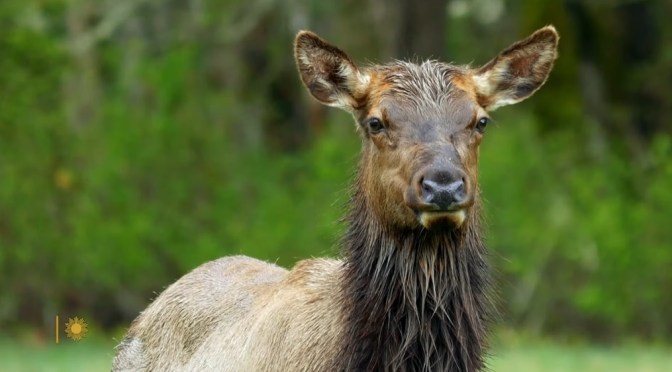
“Sunday Morning” takes us among the elk and turkeys at the Great Smoky Mountains National Park in North Carolina. Videographer: Scot Miller.
Elk are the second-heftiest members of the deer family, after the bigger and darker-haired moose. While there’s really no mixing up those two giant deer, the names are definitely a cause for confusion from an international perspective. In Europe, what North Americans call moose are known as “elk.” The word “moose” is an indigenous North American (likely Algonquin) word, and in New England, early European colonists distinguished between the “black moose”—the moose as we know it today—and the “grey moose,” or elk.
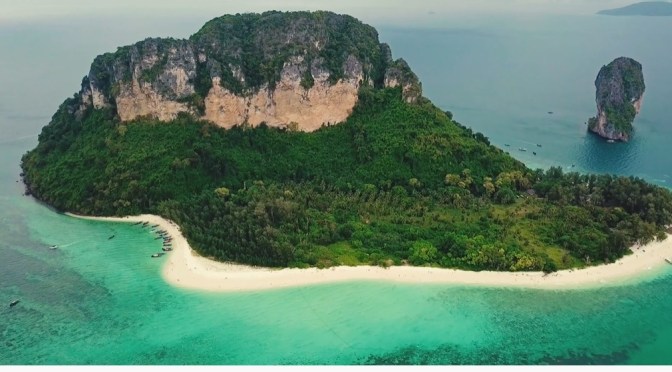
Ko Poda is an island off the west coast of Thailand, in Krabi Province, about 8 kilometres from Ao Nang. It is part of the Mu Ko Poda, or Poda Group Islands, which are under the administration of Hat Nopharat Thara-Mu Ko Phi Phi National Park. The group consists of Ko Poda, Ko Kai, Ko Mo and Ko Thap.
San Francisco Bay is playing host this weekend to a new sailing competition called Sail GP. The races are short, the boats are very fast and, if Saturday’s crowd was any indication, it may be the wave of the future.
This is only the second season for Sail GP, an international sailing competition that patterns itself on the Grand Prix auto racing circuit. The 50-foot catamarans ride up out of the water on foils, turn on a dime and can reach speeds over 60 mph.
“Sail GP is all about high-adrenaline, close-to-shore racing,” said chief marketing officer Erica Kerner. “It is the fastest boats on the water. It is absolutely incredible.”
Turn off the lights and connect with nature. Join us as we reflect on our mission to create a world where all live thrives by celebrating Earth hour this evening at 8:30PM.
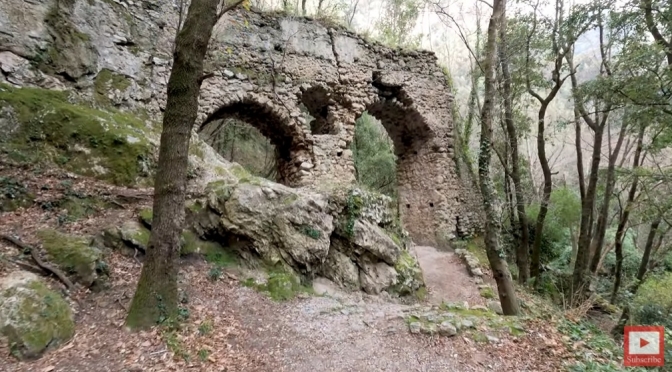
This walk starts at the ruins of the Basilica Sant’Eustachio in the town of Pontone. The hike will take you through the Valle delle Ferriere (Valley of the Ironworks) and then through the Valle dei Mulini (Valley of the Mills). The walk concludes with a tour of Amalfi and a walk along the beach.
The Amalfi Coast is a 50-kilometer stretch of coastline along the southern edge of Italy’s Sorrentine Peninsula, in the Campania region. It’s a popular holiday destination, with sheer cliffs and a rugged shoreline dotted with small beaches and pastel-colored fishing villages. The coastal road between the port city of Salerno and clifftop Sorrento winds past grand villas, terraced vineyards and cliffside lemon groves.
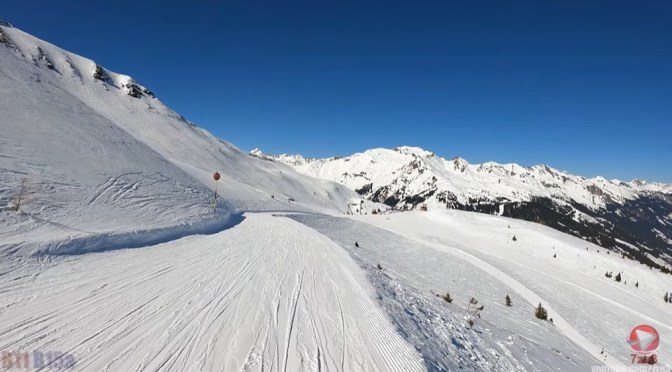
Bad Gastein is an Austrian spa and ski town in the High Tauern mountains south of Salzburg. It’s known for the belle epoque hotels and villas built on its steep, forested slopes. The Wasserfallweg is a path offering views of the town’s central Gasteiner Waterfall plummeting to the valley floor. Gothic frescoes adorn St. Nicholas Church. The Gasteiner Museum chronicles the town’s thermal springs and notable guests.
Video timeline: 00:00 Stubnerkogel, cable car station, suspension bridge, Glocknerblick 04:20 SKIING to Bad Gastein, blue ski slopes – B15 Glackfeld & B14 Almabfahrt
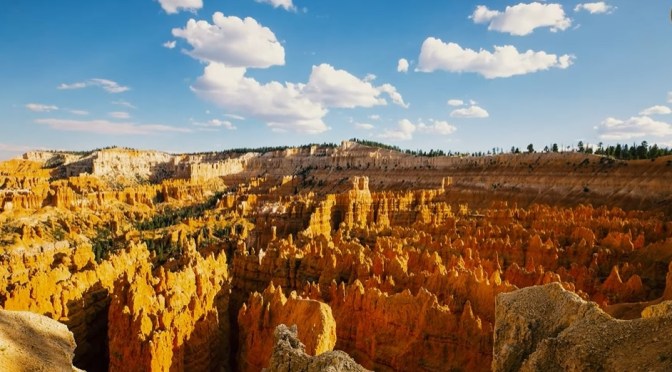
Bryce Canyon National Park, a sprawling reserve in southern Utah, is known for crimson-colored hoodoos, which are spire-shaped rock formations. The park’s main road leads past the expansive Bryce Amphitheater, a hoodoo-filled depression lying below the Rim Trail hiking path. It has overlooks at Sunrise Point, Sunset Point, Inspiration Point and Bryce Point. Prime viewing times are around sunup and sundown.
Bhutan, a Buddhist kingdom on the Himalayas’ eastern edge, is known for its monasteries, fortresses (or dzongs) and dramatic landscapes that range from subtropical plains to steep mountains and valleys. In the High Himalayas, peaks such as 7,326m Jomolhari are popular trekking destinations. Paro Taktsang monastery (also known as Tiger’s Nest) clings to cliffs above the forested Paro Valley.
Mahé is the largest island in the Seychelles archipelago, in the Indian Ocean off East Africa. Its terrain is defined by white-sand beaches such as those in the popular resort area of Beau Vallon, and granite peaks including the rainforested Morne Seychellois. The island is also home to Victoria, Seychelles’ capital, known for Creole architecture and a colorful covered market with wares like fish, fruit and clothing.
Crafted by James Stockwell Architect, Bunkeren could be the best modern house in the world. Considered more landscape than building, the concrete dwelling is a robust insertion within the surrounding natural context. Embedded into a rocky forest edge just south of Newcastle,
Video Timeline: 00:00 – Introduction to the Best Modern House in the World 00:40 – The Concept 01:30 – Designing for Family and the Landscape 02:09 – House Inspired by Danish Design 02:25 – Intimate Spaces 02:44 – Bunker within the Landscape 03:20 – Benefits of a Concrete Bunker House 04:20 – Bringing Natural Light into the House 04:55 – The Cellar 05:30 – Materiality 06:12 – Indoor-Outdoor Living 07:05 – Highlights of the House 07:28 – The Architect’s Favourite Part of the House
Bunkeren sits on the land of the Awabakal people. Externally, the building is reminiscent of the inspiring botanical garden that once occupied the location in the late 1800s; sprouting greenery covers the top of floating concrete platforms where, beneath, the internal spaces are held. A sense of architectural freedom is permitted by minimising necessary supporting columns and removing the need for load-bearing walls, lending structural significance and an impressive silhouette to what is considered the best modern house in the world.
A house tour of Bunkeren – named according to the Danish translation of ‘bunker’ – reveals the negotiated peaks and pitfalls of the bunker configuration. In materiality and position, the home expresses a reassuring invulnerability; partly shielded by the rocky landscape and comprised of concrete, Bunkeren can retain its structural integrity in the event of a bushfire or storm. Crafted by the architect to be low maintenance, the home does not require painting and cannot be eroded by mould or termites. The enveloping botanical element of the design supports the forest ecosystem and microclimates by interacting with natural species. James Stockwell Architect designs the interior to combat the limited natural light and ventilation associated with the architecture of a traditional bunker. Skylights and an internal garden draw light into the underground aspects of the home in an aesthetically engaging manner, whilst the elevated nature of the concrete platforms allows space for fresh air to travel through the dwelling. The interior design of Bunkeren contributes to its potential as the best modern house in the world. Whilst utilising the work of local artists, James Stockwell Architect also takes care to reflect the influence of Danish design culture in consideration of the homeowners’ lifestyle. In application of the Danish principle of proportion, all decoration is scaled to human level, emphasising the togetherness of the family unit. The design also champions the Danish furniture inherited by the homeowners. A restrained approach to styling sees each space defined by a sense of intimacy, with the absence of elaborate ornamentation establishing an unimposing, experientially gentle atmosphere. The most unique aspect of the home – through which James Stockwell Architects proposes Bunkeren as the best modern house in the world – is the cellar, situated at the lowest level. Inside the space, the rock into which the residence is settled within is left exposed, providing visual drama, natural tactility and a reflection of the external environment, blurring the line between the home and landscape. Warmed by the additional materials of wood, concrete and brass, the cellar exudes individuality. In 20 years, the foliage surrounding Bunkeren will have grown, until the building cannot be clearly distinguished from its natural context. It is this foresight that allows Bunkeren to be considered the best modern house in the world.
News, Views and Reviews For The Intellectually Curious