Category Archives: Technology

World Economic Forum: Top Stories – May 13, 2024

World Economic Forum (May 13, 2024) – The top stories of the week include:

0:15 Banking uplifts women in Pakistan – Pakistan has a large gender gap in financial inclusion. 47% of men have at least one registered financial account but just 13% of women. Even for those with an account, banking can be prohibitively time-consuming, especially for women who are running a business alongside a household. Now a new kind of digital banking service is helping to close this gap.

2:23 World’s busiest airports revealed – The world’s busiest airports in 2023 were dominated by the United States, with five airports cracking the top 10. Overall, global airports saw a significant rebound in 2023, handling a total of 8.5 billion trips.

4:39 WMO: Asia hardest hit by climate – In 2023, Asia saw a wave of extreme weather events from floods to cyclones. World Economic Forum Head of Climate Adaptation Eric White explains why climate change is making extreme weather more likely.

7:07 Saving Earth with space science – Simonetta Di Pippo says that space is already helping tackle the greatest challenges on Earth. Satellite connectivity is improving our management of disasters and powering digital transformation. Which is revolutionizing sectors from healthcare to education, retail and communication.
Preview: MIT Technology Review – May/June 2024

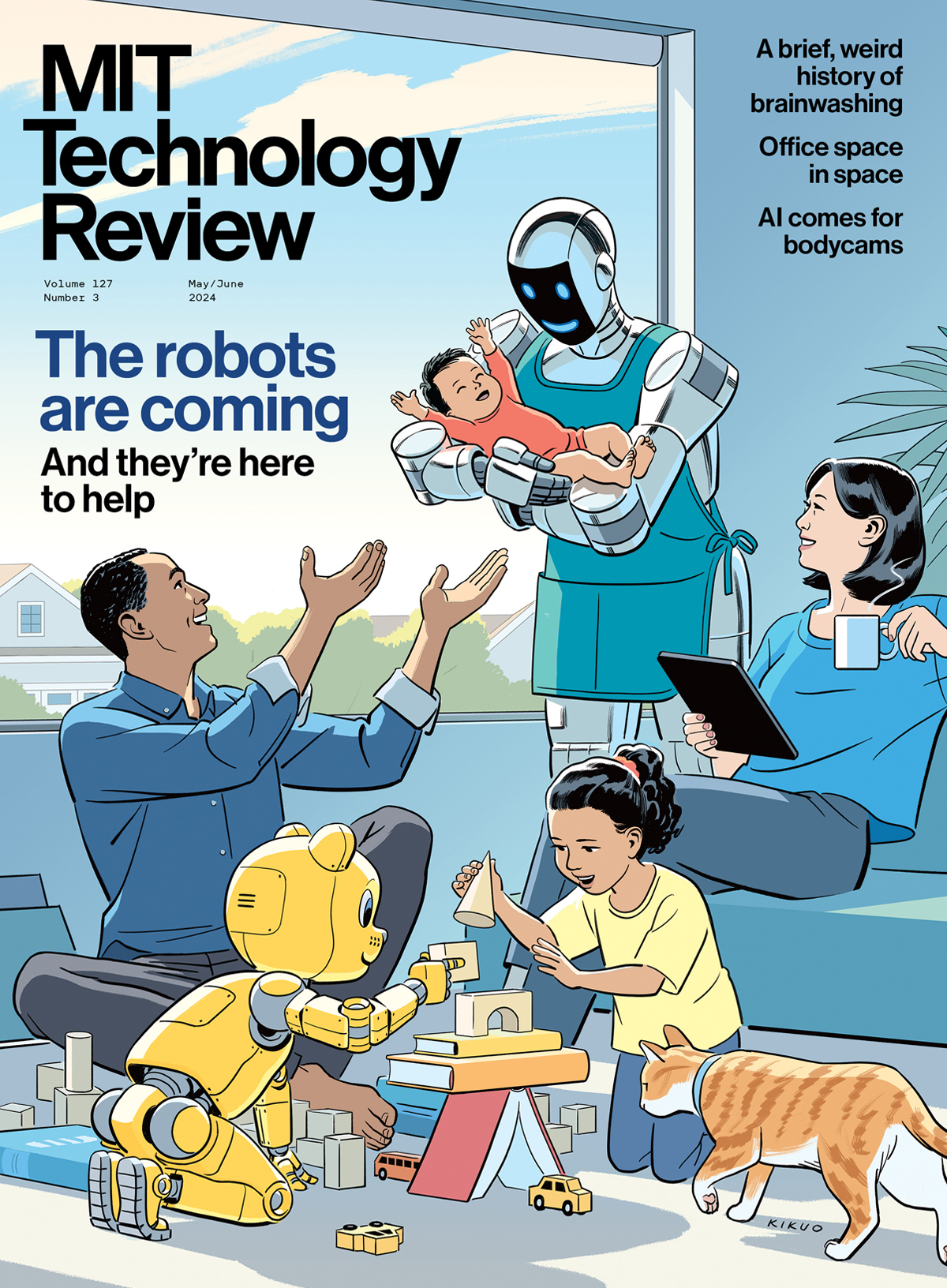
MIT Technology Review (April 29, 2024): The new issue features ‘The Robots Are Coming’ – And they’re here to help; A brief, weird history of brainwashing; Office space in space; AI comes for bodycams…

The Build issue

Who says we can’t still build things? In this issue: a look at the robots we’ve always wanted; a new model for space exploration; and efforts to flood-proof Louisiana’s coastline. Plus a wild, weird history of brainwashing; designing cheese with AI; and glow-in-the dark petunias.

Is robotics about to have its own ChatGPT moment?

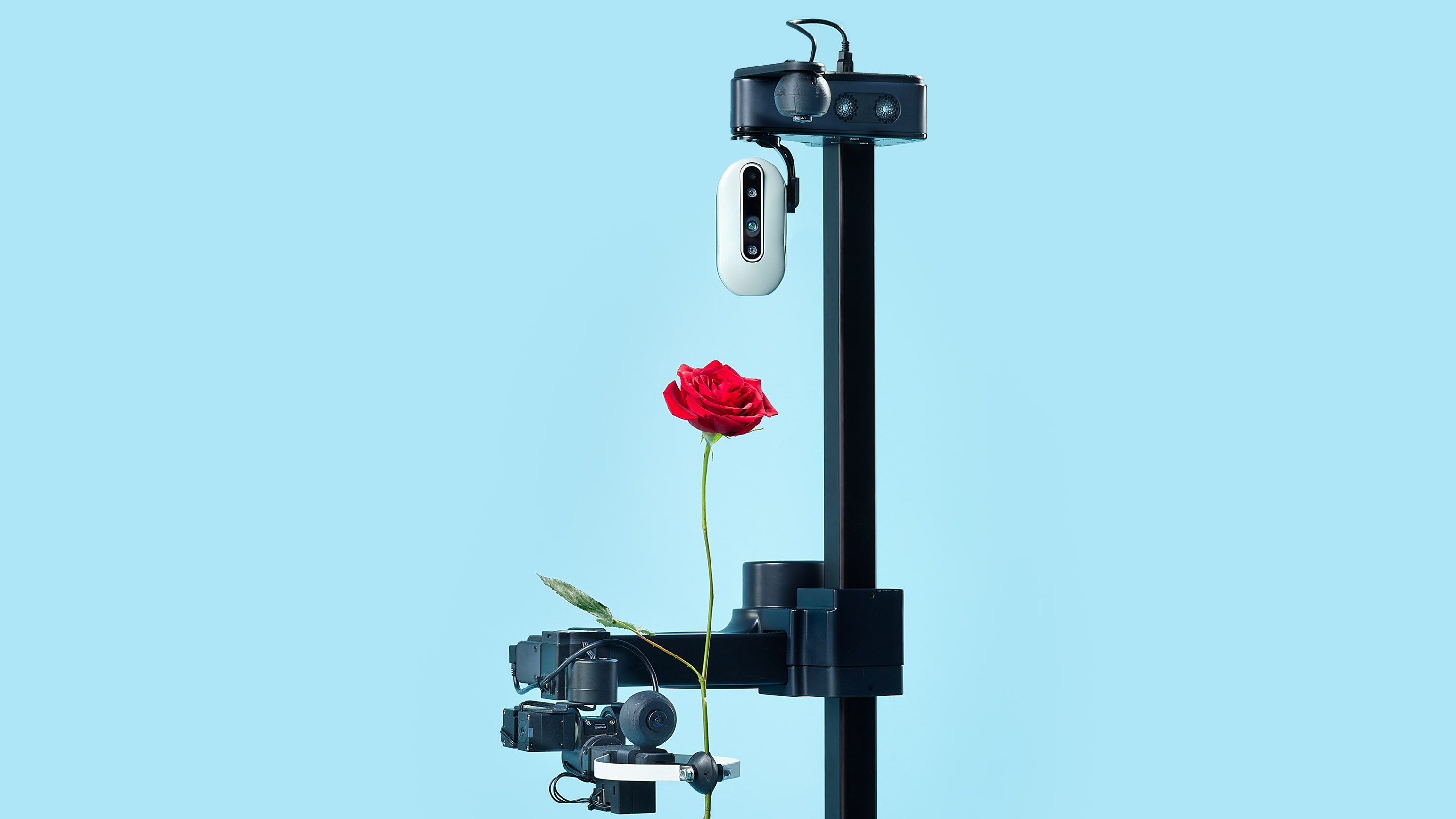
Researchers are using generative AI and other techniques to teach robots new skills—including tasks they could perform in homes.Stretch Robot Presents Rose in its gripper

Technology Quarterly: ‘Health And AI’ (April 2024)

Technology Quarterly: A new prescription

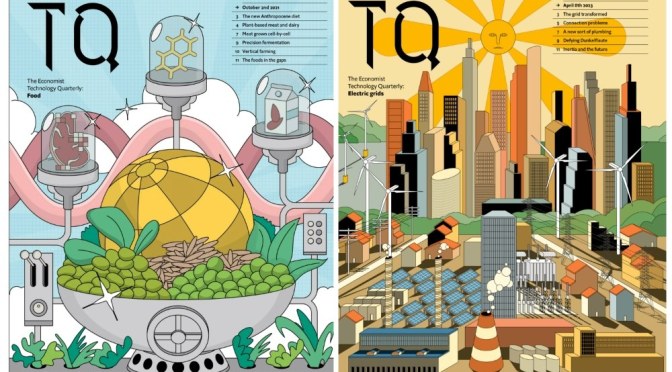
The Economist (April 1, 2024): The latest issue of THE ECONOMIST TECHNOLOGY QUARTERLY is focused on:

A new prescription

AIs will make health care safer and better, reports Natasha Loder. It may even get cheaper too

AIs will make health care safer and better

Artificial intelligence has long been improving diagnoses

Medical AIs with human faces are on their way

Artificial intelligence is taking over drug development

Can artificial intelligence make health care more efficient?

Read full report

Preview: MIT Technology Review – March/April 2024

Image

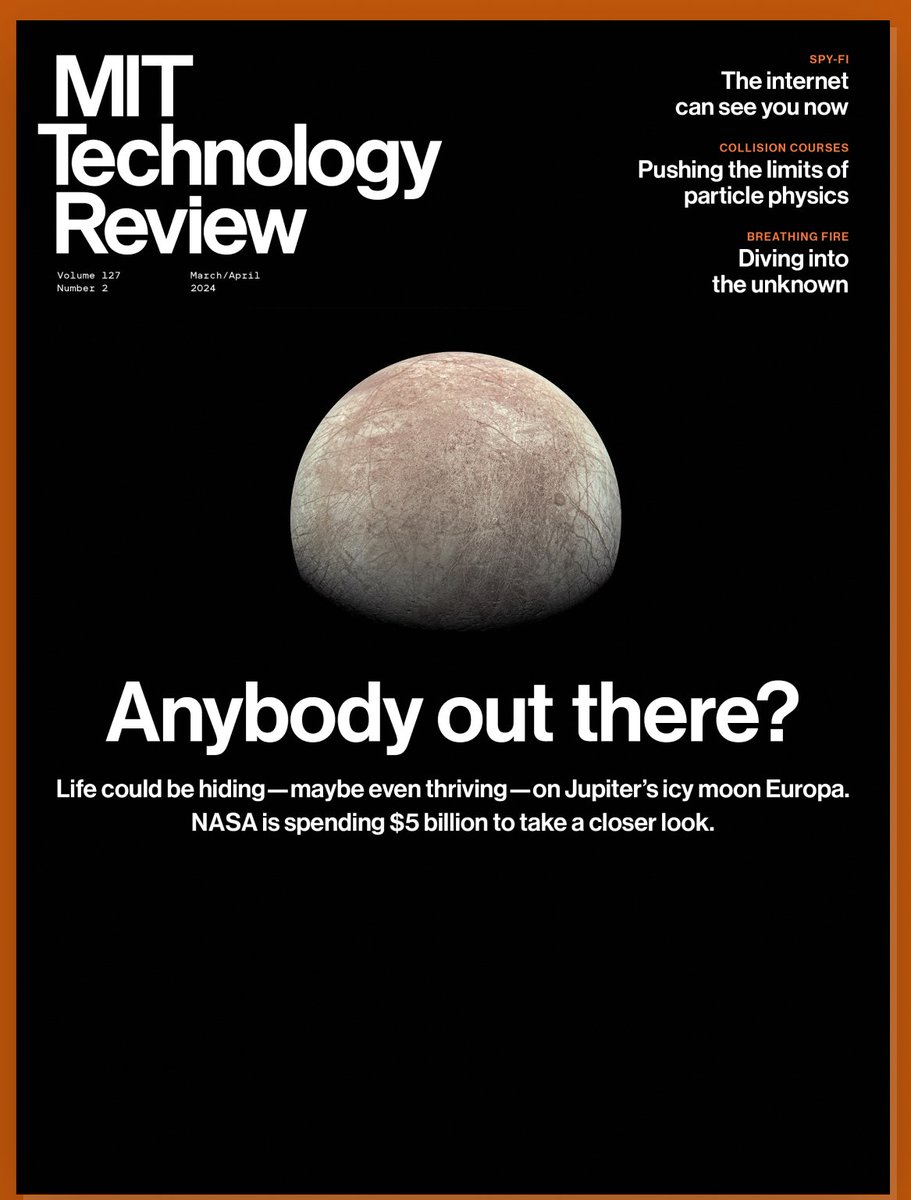
MIT Technology Review (February 29, 2024): The new issue features ‘The Hidden Worlds Issue’ – Is Anybody Out There? Using technology to explore and expose hidden worlds, from enabling deeper dives into ocean depths to journeying to one of Jupiter’s orbiting bodies to pushing the boundaries of particle physics. Plus: wearables for wildlife, Wi-Fi sensing, and a reconsideration of Luddites.

The search for extraterrestrial life is targeting Jupiter’s icy moon Europa

NASA’s Europa Clipper mission will travel to one of Jupiter’s largest moons to look for evidence of conditions that could support life.

Inside the hunt for new physics at the world’s largest particle collider

The Large Hadron Collider hasn’t seen any new particles since the discovery of the Higgs boson in 2012. Here’s what researchers are trying to do about it.

Meet the divers trying to figure out how deep humans can go

Figuring out how the human body can withstand underwater pressure has been a problem for over a century, but a ragtag band of divers is experimenting with hydrogen to find out.

Previews: New Humanist Magazine – Spring 2024

Image

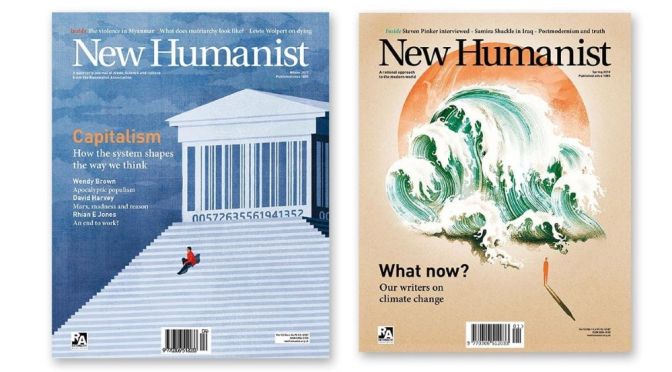
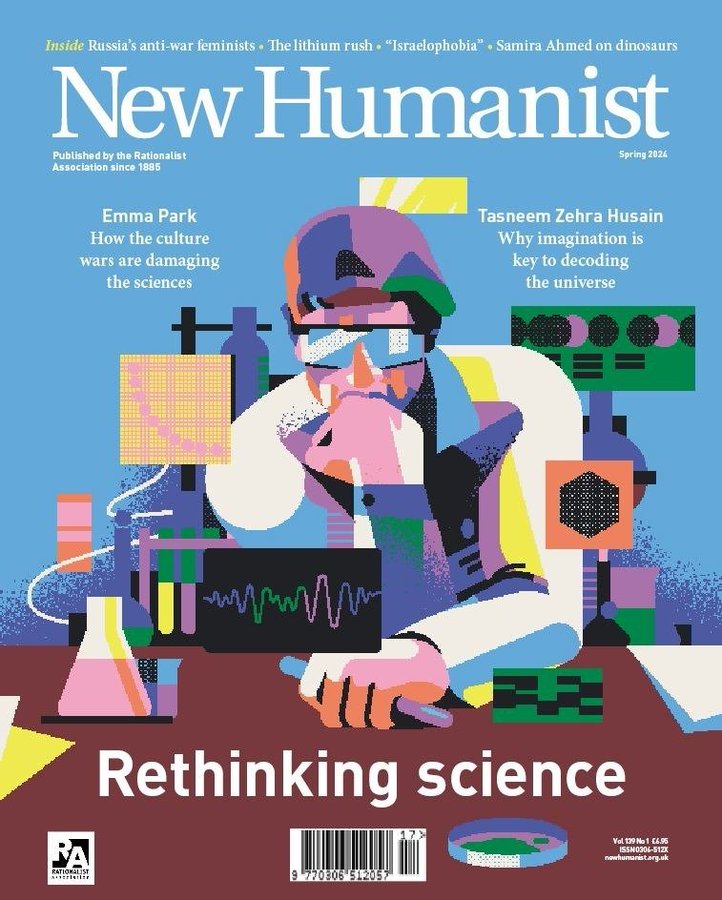
NEW HUMANIST MAGAZINE – SPRING 2024 ISSUE: The new issue features Emma Park on how the culture wars are damaging the sciences, theoretical physicist Tasneem Zehra Husain on why the imagination is key to decoding the universe, and Alom Shaha on what can be gained by thinking like a scientist

Beyond the two cultures

Amid a polarised debate, science and art seem further apart than ever. Emma Park, editor of The Freethinker, explores what humanism has to teach us about the apparent conflict between these ways of thinking and how to bridge the divide.

“While humanities scholars are often (not without justification) accused of being Luddites, those on the science and technology side could also benefit from the knowledge that the humanities have accumulated over the centuries … [And] no intellectual activity worth the name can flourish in a politically repressive environment: freedom of expression and enquiry should be an issue to unite artists, scholars and scientists.”

The poetry of science

Metaphors are key to unlocking the secrets of the universe – scientists should do more to harness their power, writes acclaimed physicist Tasneem Zehra Husain.

“Metaphors aren’t only a means of description, they can also lead to revelations. Centuries ago, Newton was able to calculate the gravitational attraction between two objects … [but] would ‘feign no hypothesis’ as to why it was so. He had the equation, but he did not understand gravitation … With Einstein, we finally have a metaphor. When we picture space-time as a dynamic ‘fabric’ … we begin to understand what gravity means.”

American Scientist Magazine – March 2024

Current Issue

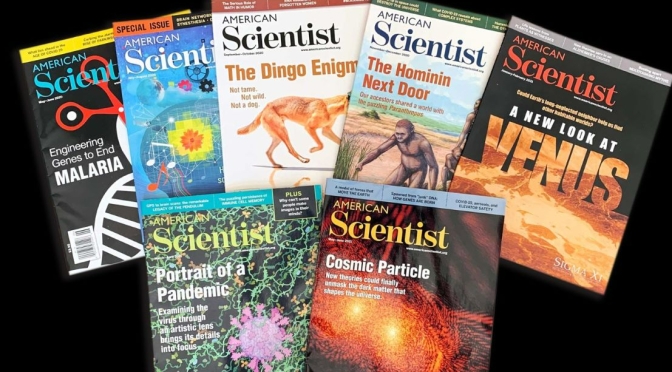
American Scientist (February 15, 2024): The latest issue features “Deconstructing DNA Beyond the Helix” – science educator and artist Caryn Babaian explores through illustration the molecular details and interactions that can affect DNA’s structure. She contends that for people to fully understand DNA, it must be shown in relationship to water. 
Deconstructing DNA Beyond the Helix

BY CARYN BABAIAN

An artist’s experimental approach to Rosalind Franklin’s Photo 51 reveals the molecule’s intricate biochemistry.

When Sharks Eat an Angler’s Haul

BY DAVID SAMUEL SHIFFMAN

Tensions are rising as the ocean’s great predators nab fish on the line, inciting a major new challenge in human–wildlife conflict.

Preview: The New Atlantis Magazine – Winter 2024

Image

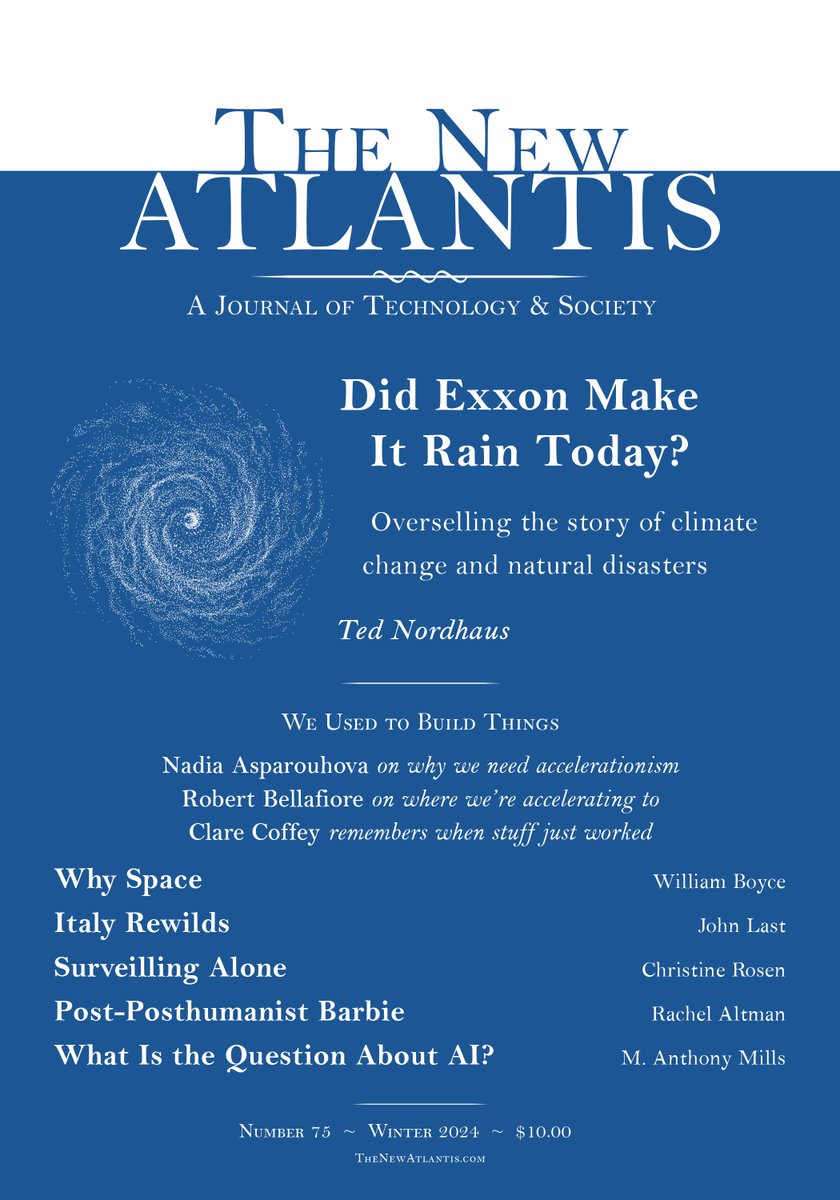
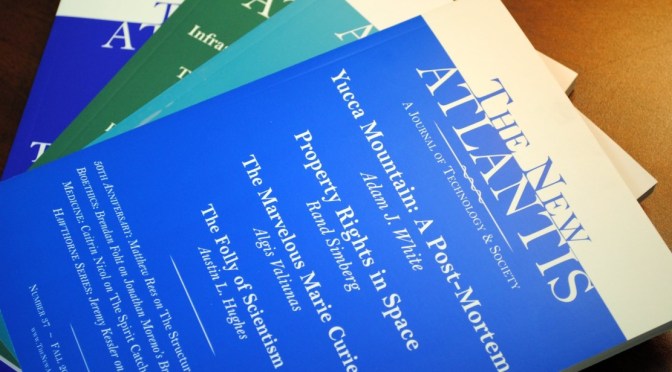
The New Atlantis Magazine (February 8, 2024) : The latest issue features ‘Did Exxon Make It Rain Today? – Overselling the story of climate change and natural disasters; Bears in the Villa – On whether Italians are ready for the return of wilderness; What Is Space For? – On Why gaze and why we should go…

Did Exxon Make It Rain Today?

Why headlines blaming extreme weather on climate change don’t hold up, the peril of catastrophism, and the case that we’re actually safer than ever before

Bears in the Villa

For the first time since the fall of the Roman empire, wilderness is returning to Italy. Are Italians ready?

What Is Space For?

Why we gaze and why we should go

Technology Quarterly: Where The Internet Lives

Technology Quarterly: Where the internet lives

The Economist (January 31, 2024): The latest issue of THE ECONOMIST TECHNOLOGY QUARTERLY is focused on:

Where the internet lives

Users of the internet can ignore its physical underpinnings. But for technologies like artificial intelligence and the metaverse to work, others need to pay attention, argues Abby Bertics

Preview: MIT Technology Review – January 2024

Image

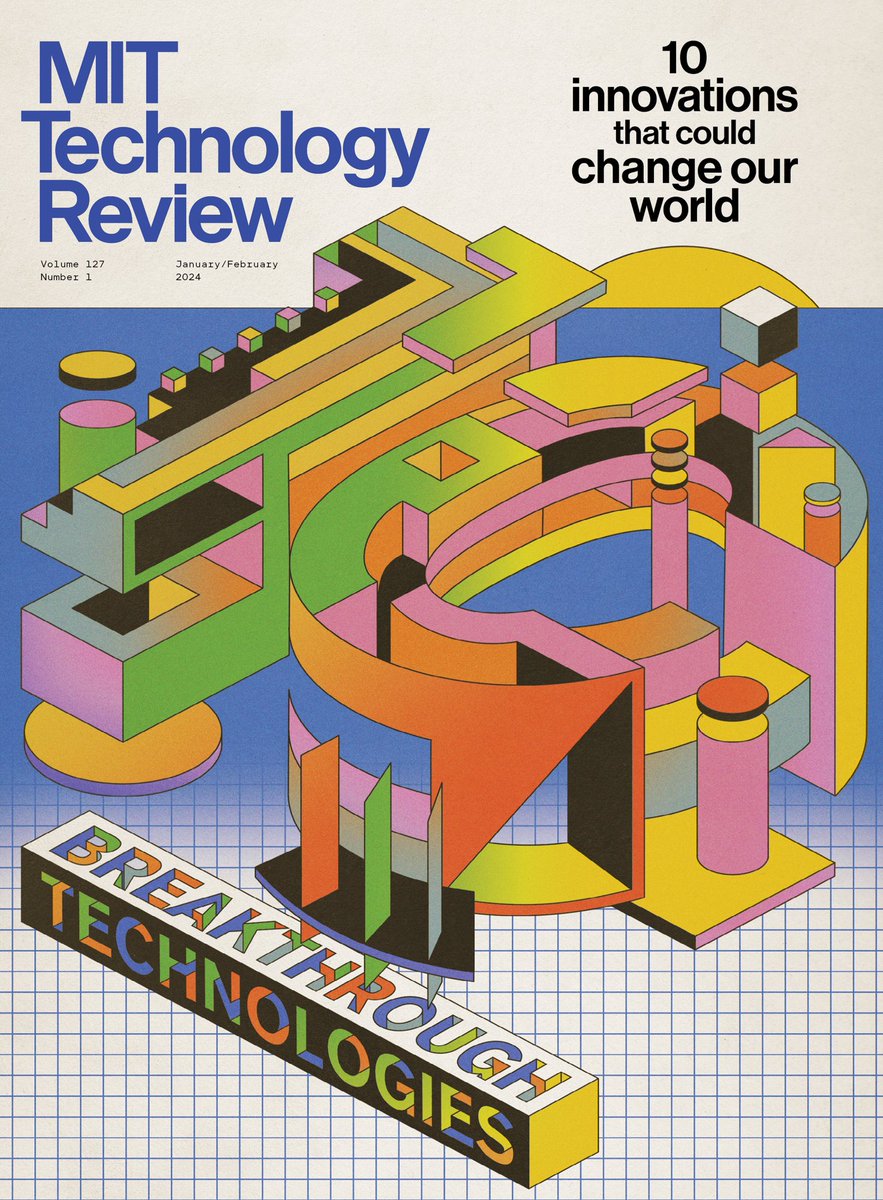
MIT Technology Review (January/February 2024) – The new issue features 10 Innovations that could change our World.

10 Breakthrough Technologies 2024

Every year, we look for promising technologies poised to have a real impact on the world. Here are the advances that we think matter most right now.

AI for everything

Passwordless Login

We now live in the age of AI. Hundreds of millions of people have interacted directly with generative tools like ChatGPT that produce text, images, videos, and more from prompts. Their popularity has reshaped the tech industry, making OpenAI a household name and compelling Google, Meta, and Microsoft to invest heavily in the technology.

Super-efficient solar cells

Solar power is being rapidly deployed around the world, and it’s key to global efforts to reduce carbon emissions. But most of the sunlight that hits today’s panels isn’t being converted into electricity. Adding a layer of tiny crystals could make solar panels more efficient. WHY IT MATTERS

Apple Vision Pro

Apple will start shipping its first mixed-reality headset, the Vision Pro, this year. Its killer feature is the highest-resolution display ever made for such a device. Will there be a killer app? It’s early, but the world’s most valuable company has made a bold bet that the answer is yes. WHY IT MATTERS

Weight-loss drugs

The global rise in obesity has been called an epidemic by the World Health Organization. Medications like Mounjaro and Wegovy are now among the most powerful tools that patients and physicians have to treat it. Evidence suggests they can even protect against heart attacks and strokes. WHY IT MATTERS