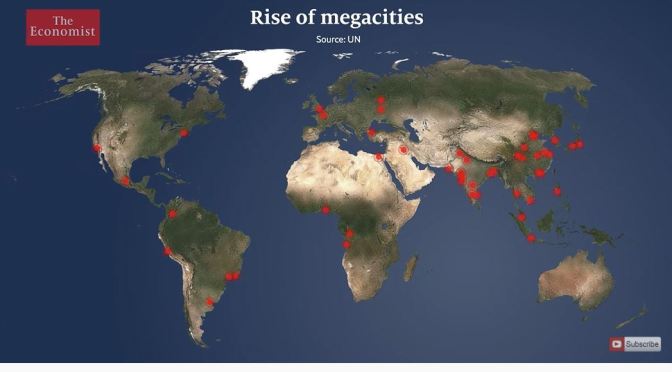
By 2050, 6 billion people could be living in megacities. How should the challenges caused by rapid urbanization be handled in the world ahead? Film supported by @Mission Winnow
Video timeline: 00:00: What are megacities? 01:01: The problem with megacities 03:07: How is Ahmedabad tackling rapid urbanisation? 04:45: How can cities manage traffic? 07:04: The problem with waste 08:00: How is Recycle Central revolutionizing trash? 10:58: What are the most urgent issues to resolve?
CRISPR is a technology that can be used to edit genes and, as such, will likely change the world. The essence of CRISPR is simple: it’s a way of finding a specific bit of DNA inside a cell. After that, the next step in CRISPR gene editing is usually to alter that piece of DNA.
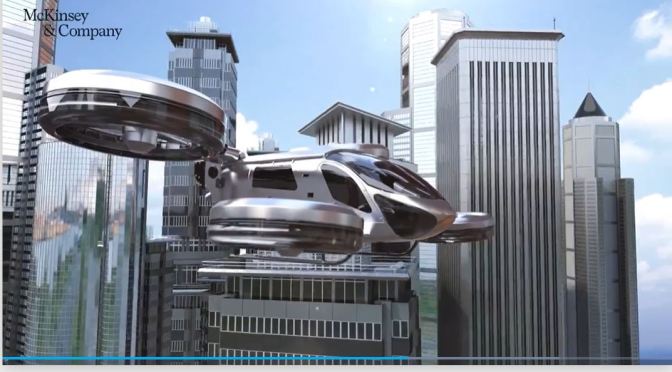
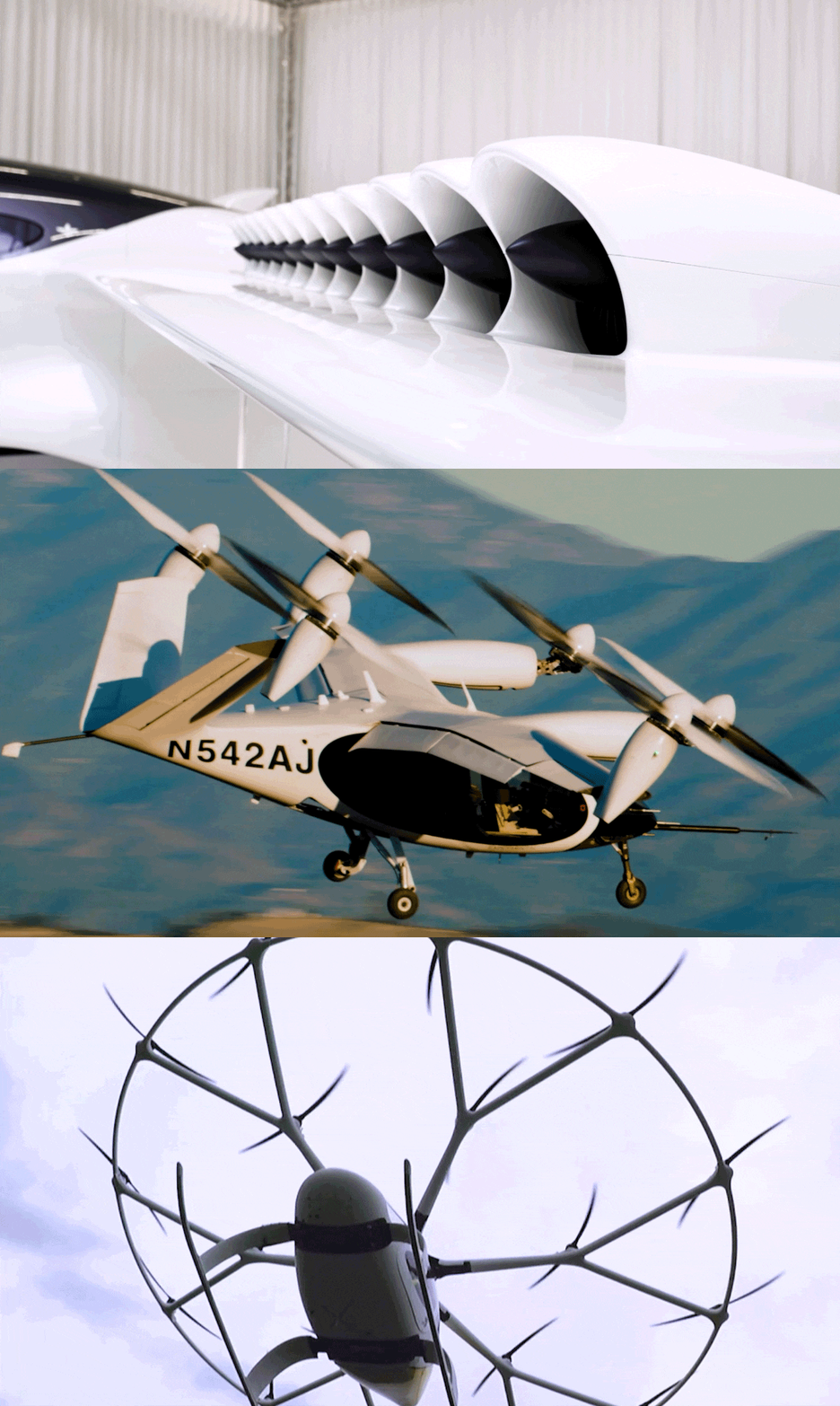
Look! Up in the sky! Not a bird … or a plane … it’s an eVTOL! An eVTOL (pronounced “ee-vee-tol”) is an electric vertical takeoff and landing aircraft—and thousands of them could be flying above cities by 2030.
“Flying taxis will happen; it’s a question of ‘when,’ not ‘if’”
What new modes of air transportation will exist in 2030? Could eVTOLs replace cars by then? Will passenger aircraft be piloted or autonomous—or somewhere in between? McKinsey’s Kersten Heineke, Benedikt Kloss, and Robin Riedel imagine the future of advanced air mobility.
Despite the vast resources aimed at finding ways to detect cancer early, more needs to be done. The disease, in all its forms, is most treatable when caught in its initial stages. https://t.co/IhvPA4QBiG
Everyone is blabbing about the metaverse. But what does this future digital world look like? WSJ’s Joanna Stern checked into a hotel and strapped on a virtual-reality headset for the day. She went to work meetings, hung out with new avatar friends and attended virtual shows. Photo illustration: Tammy Lian / The Wall Street Journal
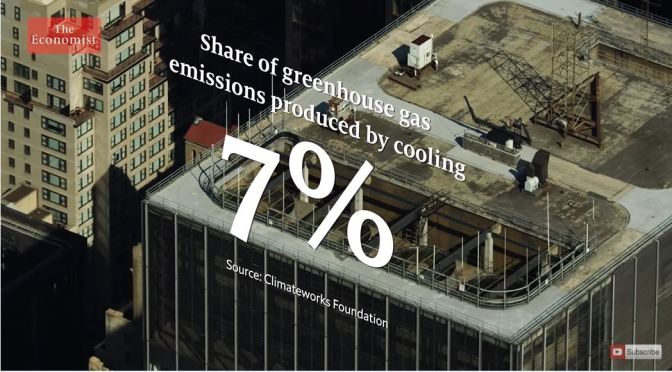
The warmer it gets, the more people use air conditioning—but the more people use air conditioning, the warmer it gets. Is there any way out of this trap?
Video timeline: 00:00: What’s the cooling conundrum? 01:05: The pros and cons of AC 03:28: How to reinvent air conditioning 05:02: Can buildings be redesigned to keep cool? 07:30: Scalable, affordable cooling solutions 10:24: Policy interventions for cooling
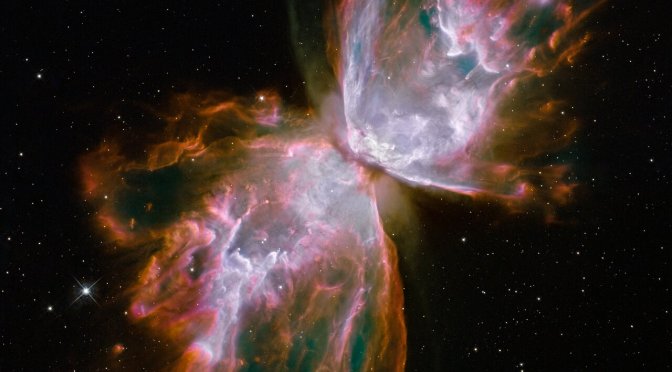
This celestial object looks like a delicate butterfly. But it is far from serene. What resemble dainty butterfly wings are actually roiling cauldrons of gas heated to nearly 20 000 degrees Celsius. The gas is tearing across space at more than 950 000 kilometres per hour — fast enough to travel from Earth to the Moon in 24 minutes! A dying star that was once about five times the mass of the Sun is at the centre of this fury. It has ejected its envelope of gases and is now unleashing a stream of ultraviolet radiation that is making the cast-off material glow. This object is an example of a planetary nebula, so-named because many of them have a round appearance resembling that of a planet when viewed through a small telescope. The Wide Field Camera 3 (WFC3), a new camera aboard the NASA/ESA Hubble Space Telescope, snapped this image of the planetary nebula, catalogued as NGC 6302, but more popularly called the Bug Nebula or the Butterfly Nebula.
WFC3 was installed by NASA astronauts in May 2009, during the Servicing Mission to upgrade and repair the 19-year-old Hubble. NGC 6302 lies within our Milky Way galaxy, roughly 3800 light-years away in the constellation of Scorpius. The glowing gas is the star’s outer layers, expelled over about 2200 years. The “butterfly” stretches for more than two light-years, which is about half the distance from the Sun to the nearest star, Proxima Centauri. The central star itself cannot be seen, because it is hidden within a doughnut-shaped ring of dust, which appears as a dark band pinching the nebula in the centre. The thick dust belt constricts the star’s outflow, creating the classic “bipolar” or hourglass shape displayed by some planetary nebulae. The star’s surface temperature is estimated to be over 220 000 degrees Celsius, making it one of the hottest known stars in our galaxy. Spectroscopic observations made with ground-based telescopes show that the gas is roughly 20 000 degrees Celsius, which is unusually hot compared to a t
At the recent Cannes Yachting Festival, MBY editor Hugo Andreae took the helm of the Candela C-7, the world’s first foiling electric boat, for the flight of a lifetime… Candela C-7 specifications LOA: 25ft 3in (7.7m) Beam: 7ft 10in (2.4m) Weight: 1,300kg Motor: 55kW Torqeedo Battery: 40kWh Lithium Ion Top speed: 30 knots Range: 50nm @ 22knots +8nm @ 5knots Wave height: Up to 1.1m Draft: 0.7m (foils lifted) 1.5m (foils down) Foiling capacity: 800kg
News, Views and Reviews For The Intellectually Curious







 Boomers Daily