

From a New Criterion online article:
 A Booklover’s Guide to New York, by Cleo Le-Tan, with drawings by Pierre Le-Tan (Rizzoli): As Prufrock measured out his life in coffee spoons, some New Yorkers measure theirs in departed bookstores. I weep most for Crawford Doyle, which in 2017 closed after twenty-one years in stately residence on Madison Avenue at Eighty-first Street. But there have been compensations among the heartaches. In 2014, Albertine opened at the French Embassy, on Fifth Avenue and Seventy-ninth Street. The gorgeous store cheekily asserts on billboards that “The best bookstore in France is in New York City.” And Rizzoli, which lost its lease in its double-front townhouse on Fifty-seventh Street in 2014, later reopened on Broadway and Twenty-sixth Street, in a space nearly as grand as the original. Cleo Le-Tan’s A Booklover’s Guide to New York is expressly made for those who view the city’s bookstores as integral to its being. Documenting the shops, sellers, libraries, and bibliophiles of the city, the illustrated book is a worthy addition to any personal collection.
To read more: https://newcriterion.com/


 Even with a few months of 2019 left to go, we feel confident that the
 DoorDash customers can now order from a handful of chain restaurants and either pick up food right at the commissary or have it delivered. This first location of DoorDash Kitchens, located in Redwood City, CA, will serve several cities in the California Peninsula area, including Menlo Park, Palo Alto, and Woodside, among others.
 The irony is
 To kick off the 2019 season, Sandy Pines installed some new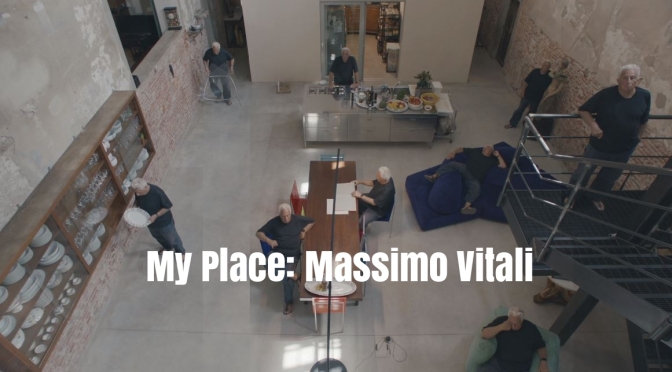
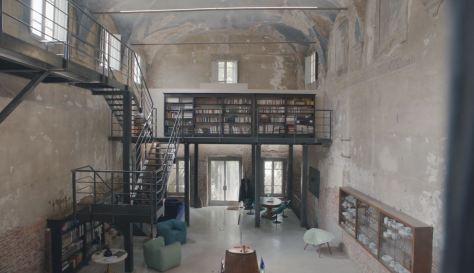
 An assortment of inflatable alligators, damp bodies and candy cane-colored umbrellas typify Italian photographer Massimo Vitali’s ongoing Beach Series, which he began in 1995. Born in Como, Italy in 1944 Vitali’s internationally recognized panoramas of busy ski resorts, clubs, pools and piazzas explore the multilayered stories present in communal leisure places.

 Enthusiasts and friends travelled from France, England, Belgium, the Netherlands, Switzerland, America and even Argentina to enjoy great food and wine (we were in the Champagne region, after all), even better locations and roads and a truly diverse selection of classic cars. Wilhelm Schmid – the ever-passionate CEO of A. Lange & Söhne, Journées d’Automne’s low-key title sponsor – drove his stunning Porsche 911S from Dresden together with his wife Yvonne. “For me, this event is the highlight of my personal motoring year,” he told me. “I wouldn’t miss it for the world.”
  Journées d’Automne. It sounds a bit like the title of a romance novel by Rosamunde Pilcher, but it’s actually a wonderful classic car meeting that takes place every October just east of Paris. What began several years ago as an autumnal outing for a small number of car-minded friends has evolved into a large yet intimate get-together and an insider’s tip for celebrating the end of the events season in style.
 “Agent Running in the Field” is narrated by Nat, a 47-year-old spy for British intelligence—known not as “the Circus” of yore but, more prosaically, as “the Office”.
 The plans for the venue were previously
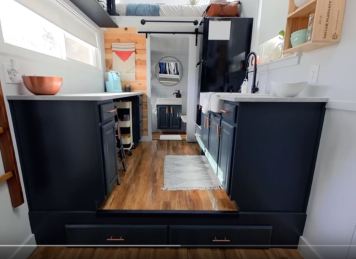 Amazingly, this high-end home was constructed for an unbelievable budget of only US$25,000, a testament to Saul’s perseverance with the DIY build and the couple’s clever sourcing of materials. That means this entire home was built for around the same amount of money that the couple would normally spend on one years rent living in San Diego.
 beautiful, modern tiny house, and best of all, they have pulled off the entire build for a budget equivalent to just a years worth of rent in San Diego. In this weeks episode, we explore this stunning tiny house and meet its builders.
  Boomers Daily