
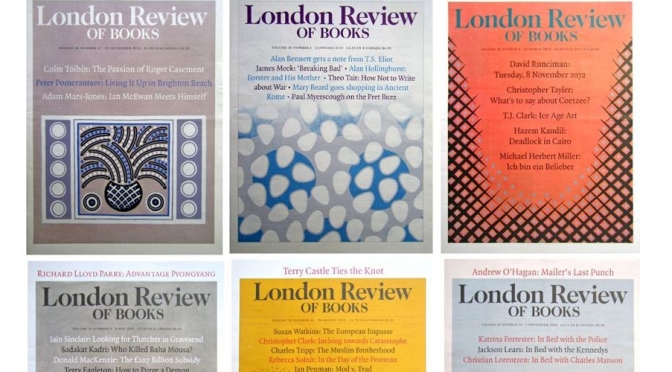
Our four-week summer issue is now online, featuring @TriciaLockwood on Marian Engel’s ‘Bear’, David Runciman on Michael Wolff’s ‘Landslide’, Colm Tóibín on Pessoa, a new essay by Lydia Davis, Andrew O’Hagan on Fergie’s Mills & Boon and a cover by @Jon_McN: https://t.co/xaTOjYd3Vr pic.twitter.com/85zYXXbrnn
— London Review of Books (@LRB) August 4, 2021
Category Archives: Reviews

Front Cover Views: New Scientist Magazine – Aug 7

EDITOR’S PICK

Samir Shaheen-Hussain interview: Doctors left children to suffer
Discoveries of mass graves of Indigenous children in Canada have prompted new scrutiny of the residential school system – including the role physicians played in unethical experiments, says paediatrician Samir Shaheen-Hussain

How the fossil fuel era ends – and four possibilities for what follows
Killing fossil fuels to halt global warming is the greatest challenge we face. We now have a masterplan of what we must do when – and there’s no time to delay

Fatih Birol interview: Using energy isn’t evil – creating emissions is
People think using more energy is a bad thing, says International Energy Agency chief Fatih Birol – but as long as we can make it cleanly, it needn’t be

How we can transform our energy system to achieve net-zero emissions
Killing fossil fuels to halt global warming is the greatest challenge we face. We now have a masterplan of what we must do when – and there’s no time to delay

Medicine: Transcatheter Treatments For Valvular Heart Disease (JAMA Video)
Transcatheter valvular repair and implantation has become increasingly common for treating patients diagnosed with valvular heart diseases.
0:00 This video summarizes the three transcatheter valvular therapies currently in use in the United States: transcatheter aortic valve implantation (TAVI), transcatheter valve-in-valve procedures, and transcatheter edge-to-edge mitral valve repair.
0:47 Transcatheter aortic valve replacement (TAVI) for patients with severe aortic stenosis regardless of surgical risk 2:47 Transcatheter valve-in-valve procedures for patients with bioprosthetic valve failure
3:35 Transcatheter mitral valve repair for high surgical risk degenerative mitral regurgitation and for severe functional mitral regurgitation regardless of surgical risk.
Science: Flood Risks In High Population Areas, Selfishness, Democracy
Satellite imaging has shown population increases are 10x higher in flood prone areas than previously thought, and a new way to introduce fairness into a democratic process.
In this episode:
00:47 Calculating how many people are at risk of floods.
Researchers have used satellite imagery to estimate the number of people living in flood-prone regions. They suggest that the percentage of people exposed to floods has increased 10 times more than previously thought, and with climate change that number is only set to climb.
Research Article: Tellman et al.
News and Views: The fraction of the global population at risk of floods is growing
09:41 Research Highlights
People are happy to be selfish towards a crowd, but generous to an individual; and how wildfire smoke affects clouds’ brightness.
Research Highlight: ‘Robber’ experiment tests generosity — with sobering results
Research Highlight: Wildfire smoke creates brighter clouds — and weather changes
12:01 Making democracy fairer
Citizens’ assemblies are small groups of people invited to come together to help inform and affect policy decisions. But deciding who is in these groups is a mathematical challenge — the process needs to be random, but still reflect social demographics. This week, researchers describe a new algorithm that could offer a solution.
Research article: Flanigan et al.
News and Views: A bridge across the democracy–expertise divide
20:04 Briefing Chat
We discuss some highlights from the Nature Briefing. This time, how ships could spread a deadly coral disease, and research shows that female scientists are less likely to be cited in elite medical journals.
The Guardian: Deadly coral disease sweeping Caribbean linked to water from ships
Nature News: Fewer citations for female authors of medical research

Outdoor Sports Books: “Remarkable Bicycle Rides”
The latest title in the bestselling Remarkable series, this is a fully illustrated collection of some of the most spectacular and life-affirming cycling trips from around the world.




There are the classic mountain climbs beloved of followers of the Tour de France and the Giro d’Italia, such as the climb to Alpe D’Huez in France and the Stelvio Pass in Italy. Gentler touring routes include the Hadrian’s Cycleway, which crosses from Britain’s Solway Firth to the North Sea following the line of Hadrian’s Wall.
For those wishing to push themselves to the very edge, there is the North Yungas Road, also known as El Camino de la Muerte (Death Road), in Bolivia; bike trails round some of the world’s most spectacular national parks, such as the Canyonlands National Park, and a journey through the forests and mountains of Transylvania.
About The Author
When author Colin Salter isn’t penning his incredibly successful “100” series (100 Books that Changed the World, 100 Speeches, 100 Letters, and 100 Children’s Books), he likes nothing better than taking his mountain bike out to the highlands and islands of his native Scotland. The author of Remarkable Road Trips, Colin has swapped four wheels for two in this global treat for all levels of cyclists.

World Affairs: Emerging Markets Growth, Tunisia Turmoil, Ireland Dry Bars
A selection of three essential articles read aloud from the latest issue of The Economist. This week: growth in emerging markets, Tunisia faces a constitutional crisis (9:53) and dry bars of Ireland (16:03)

Art: Vasudeo S. Gaitonde’s “Painting 4” – The Abstract Artist ‘Haven From Chaos’
Cara Manes, Associate Curator in the Department of Painting and Sculpture, discovers a haven from the chaos of the everyday amid the “silence” and imperfection of Vasudeo S. Gaitonde’s “Painting, 4.”
Vasudeo S. Gaitonde was regarded as one of India’s foremost abstract painters. He received the Padma Shri Award in 1971.
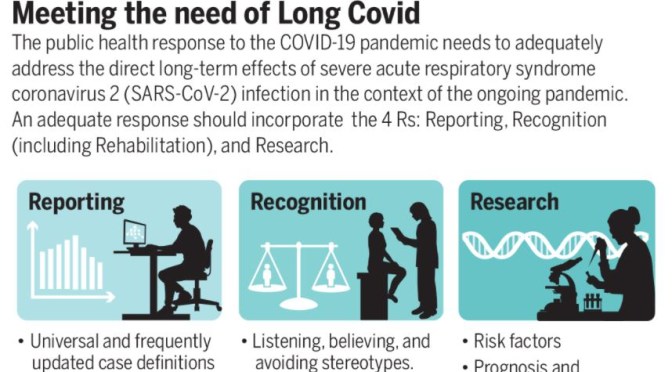
Medicine: Understanding ‘Long Covid’ Syndrome

Depression: How Ketamine Can Help (Yale Medicine)
Depression is one of the most common and most debilitating mental health disorders, affecting some 17 million adults in the US. It also continues to be a misunderstood, often hard-to-treat illness. Researchers have worked for decades to better understand the neurobiology underpinning depression.
For patients with severe, treatment-resistant depression, spending months or even years searching for good treatments can be totally disabling. The prevailing hypothesis for years was that depression was regulated by the neurotransmitter’s serotonin and norepinephrine.
Eventually, data began to suggest that maybe something much larger and more global was involved in the brain to account for depression, which led researchers to begin working with glutamate and GABA, the most abundant neurotransmitters in the brain. These chemicals are involved in neuroplasticity – the brain’s ability to adapt to change and protect itself against stressful events.
Neuroplasticity is a physical thing, too: it manifests itself “in terms of synapses, how these neurons are actually touching each other and communicating with each other,” explains Gerard Sanacora, PhD, MD, Director of the Yale Depression Research Program. “And we know that in depression, the number and strength of these interconnections decreases,” says Rachel Katz, MD, a professor of Clinical Psychiatry at Yale.
Ketamine – originally developed and still used as an anesthetic – works on those two neurotransmitters and was discovered to have rapid antidepressant effects. Some experience an improvement in symptoms in 24 hours or less. “We think that one of the things that Ketamine does, that helps to explain its antidepressant effects, is help the brain to regrow the synapses, the connections between nerve cells,” says John Krystal, MD, Chair of the Department of Psychiatry at Yale.
Science: Metabolic Health Markers & Obesity, Type 1 Diabetes, “Bone Rooms”
First this week, Staff Writer Jennifer Couzin-Frankel joins host Sarah Crespi to discuss the paradox of metabolically healthy obesity. They chat about the latest research into the relationships between markers of metabolic health—such as glucose or cholesterol levels in the blood—and obesity. They aren’t as tied as you might think.
Next, Colin Dayan, professor of clinical diabetes and metabolism at Cardiff University and senior clinical researcher at the Wellcome Centre for Human Genetics at the University of Oxford, joins Sarah to discuss his contribution to a special issue on type 1 diabetes. In his review, Colin and colleagues lay out research into how type 1 diabetes can be detected early, delayed, and maybe even one day prevented. Finally, in the first of a six-patrt series of book interviews on race and science, guest host Angela Saini talks with author and professor of history at the University of Massachusetts, Amherst, Samuel Redman, about his book Bone Rooms: From Scientific Racism to Human Prehistory in Museums. The two discuss the legacy of human bone collecting and racism in museums today.
 Boomers Daily