A headbashing relative gives insights into giraffe evolution – How the giraffe got its long neck is a longstanding question in science. One possibility is that giraffes evolved longer necks for sexual competition, with males engaging in violent neck-swinging fights.
Now, a team have described fossils of an ancient giraffoid species with a thick headpiece adapted for fighting, which could add weight to this hypothesis.
05:18 A wave of resignations signals discontent in academia
Around the world, the ‘great resignation’ has seen huge numbers of workers re-evaluating their careers and lifestyles and choosing to leave their jobs following the pandemic. Academia is no exception, with many scientists deciding to leave the sector in the face of increased workloads, systemic biases and pressure to publish.
Earlier this year, NASA’s MAVEN spacecraft, which has been orbiting Mars since 2014, developed some serious equipment issues that prevented it from keeping its correct orientation in space. In a race against time, a team on Earth fixed the problem by developing a system that allowed the spacecraft to navigate by the stars.
14:28 The Perseverance rovers continues its rock collection
NASA’s Perseverance rover has arrived at an ancient Martian river delta where it will spend the next few months exploring, while scientists assess where to drill and extract rock samples. It’s thought that rocks from this region have the best chance of containing evidence of Martian life, and plans are being developed to return them to Earth in the future.
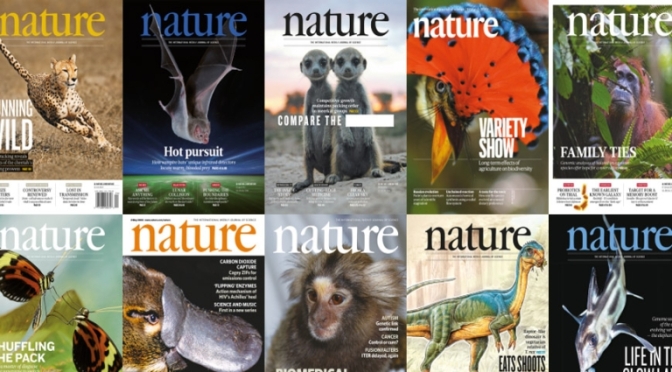
The Casarabe people lived in southwest Amazonia around AD 500–1400, but understanding of this culture has been limited because the archaeological remains are covered in dense forest. In this week’s issue, Heiko Prümers and his colleagues reveal the discovery of new Casarabe settlements in the Bolivian Amazon. The researchers used lidar to scan the forest, revealing 2 large settlements (each covering more than 100 hectares) and 24 smaller sites, 15 of which had previously been known to exist.
The cover image shows Cotoca, one of the two large settlements, in which earthen mounds (one more than 20 metres high) and long causeways can clearly be seen. The team suggests that these results are the first evidence of agrarian-based, low-density urbanism in western Amazonia. They conclude that the region was not as sparsely populated in pre-Hispanic times as was previously thought.
This remarkable painting by Michel Corneille the Elder has been hidden away from view for at least the past 110 years and is a truly exceptional rediscovery for French painting of the 17th century. After a recent restoration, the artist’s signature has been re-exposed so that now this impressive work can be confidently attributed to the early French Classicist.
This episode of Anatomy of a work of art, discover The Death of Virginia, taken from Roman historian Livy and recounts the death of Virginia, daughter of a centurion in the Roman army. This rediscovery will be one of the highlights of our sale Tableaux Dessins Sculptures 1300-1900, Session I, Including Treasures from the Antony Embden Collection.
Times Literary Supplement (TLS), June 10, 2022 – This week’s @TheTLS, featuring @ianground on Wittgenstein’s notebooks; @CaroDuttlinger on Kafka’s drawings; @wander2wonder on Budapest; Emily Barton on Mieko Kawakami; @sophieolive on fabric; @TobyLichtig on Jarvis Cocker – and more.
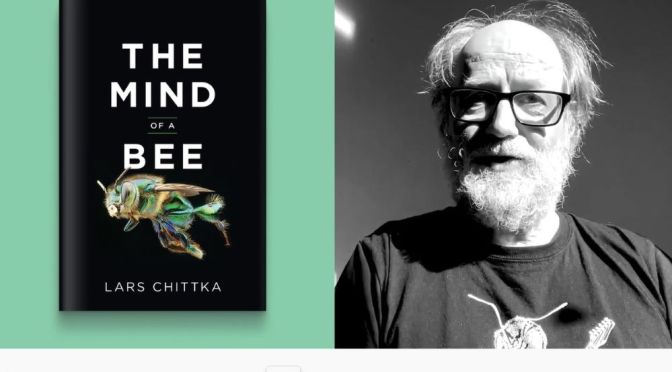
Most of us are aware of the hive mind—the power of bees as an amazing collective. But do we know how uniquely intelligent bees are as individuals? In The Mind of a Bee, Lars Chittka draws from decades of research, including his own pioneering work, to argue that bees have remarkable cognitive abilities.
He shows that they are profoundly smart, have distinct personalities, can recognize flowers and human faces, exhibit basic emotions, count, use simple tools, solve problems, and learn by observing others. They may even possess consciousness. Taking readers deep into the sensory world of bees, Chittka illustrates how bee brains are unparalleled in the animal kingdom in terms of how much sophisticated material is packed into their tiny nervous systems.
He looks at their innate behaviors and the ways their evolution as foragers may have contributed to their keen spatial memory. Chittka also examines the psychological differences between bees and the ethical dilemmas that arise in conservation and laboratory settings because bees feel and think. Throughout, he touches on the fascinating history behind the study of bee behavior. Exploring an insect whose sensory experiences rival those of humans, The Mind of a Bee reveals the singular abilities of some of the world’s most incredible creatures.
Things don’t usually fall apart completely in Britain and the centre holds. In the mid-seventeenth century, however, civil war raged across the islands. Military rule in England was followed by the conquest of Ireland and Scotland, paving the way for the Union. Michael Braddick, reviewing Ian Gentles’s The New Model Army, thinks there are lessons here for our “dysfunctional” democracy. This week the TLS features several meditations on times of civil war.











 Boomers Daily