Ian McKellen Swings from Shakespeare to Gandalf to Virtual Reality
On a visit to New York, the actor reflected on mortality and coming out, and unleashed an Elizabethan anti-ICE monologue on “Colbert” that went viral. By Henry Alford
James Talarico Puts His Faith in Texas Voters
The Senate candidate believes that Democrats can win by appealing to higher values. Can he succeed in the age of Trump? By Tad Friend
Why the World Cup Can Feel Like War
Soccer stadiums can be dominated by violence, tribalism, chauvinism, and near-religious fervor‚ animated by the memory of old hostilities and the power of ritual. By Ian Buruma
The Trial of Gisèle Pelicot’s Rapists United France and Fractured Her Family
After fifty-one men were convicted, Pelicot became a feminist hero. But additional accusations left her children struggling to accept her new role. By Rachel Aviv
Vladyslav Vlasiuk has spent the past four years pressing Western allies to squeeze the Russian economy through more sanctions. He hopes that 2026 will be the tipping point.
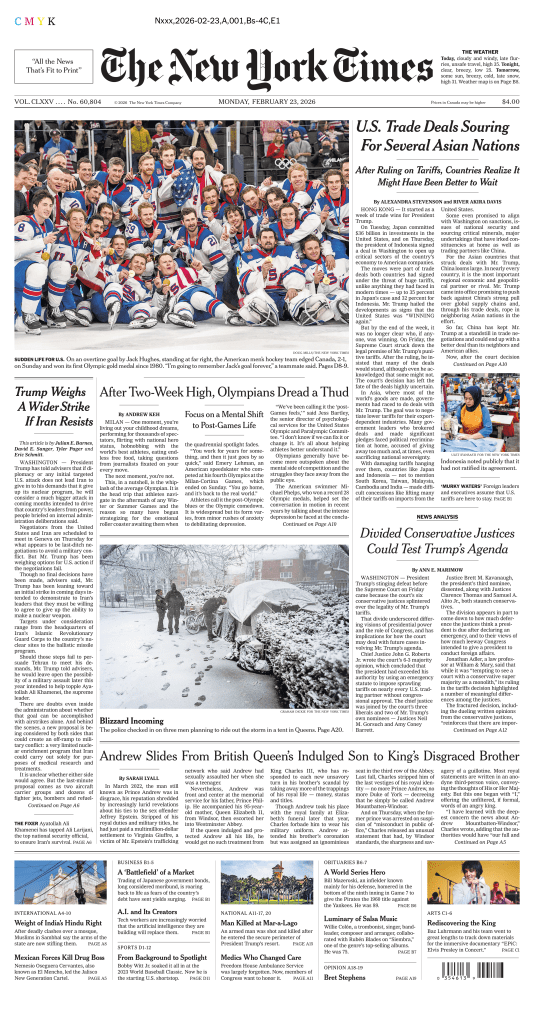
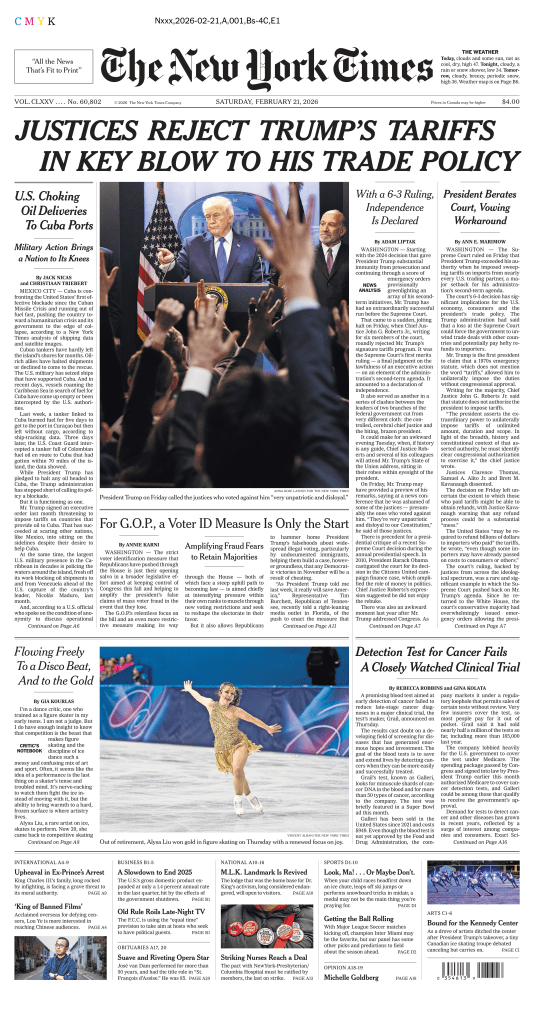
In Asia, countries that rushed to reach deals with the U.S. before the Supreme Court decision now face the reality that they may have been better off waiting.
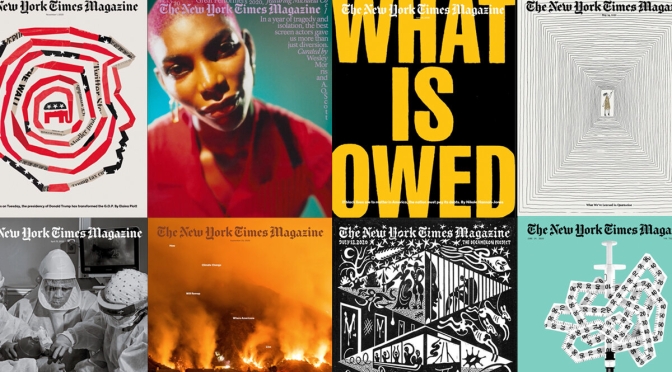
THE NEW YORK TIMES MAGAZINE:The 2.22.26 Issue features Lulu Garcia-Navarro interviews Gisèle Pelicot; Caitlin L. Chandler on Europe’s harsh new immigration policy; Reid Forgrave on the olympic cross-country skier Jesse Diggins; and more.
In 1994, the Olympics were rocked by a giant skating scandal. When it was all over, three athletes waited for their medals. Interviews by Charley Locke
Even after the Supreme Court invalidated many of the levies, foreign leaders and executives assume that U.S. tariffs are here to stay, in one form or another.
The PAC and the White House say the donation had nothing to do with President Trump’s tirade against a new bridge connecting Detroit and Windsor, Ontario.
Kevin Warsh, the president’s pick to lead the Federal Reserve, thinks so. But he may face a tough task persuading his colleagues to lower borrowing costs.
The bill may bring the release of political prisoners. But critics say the legislation, passed after pressure from the Trump administration, raises concerns.
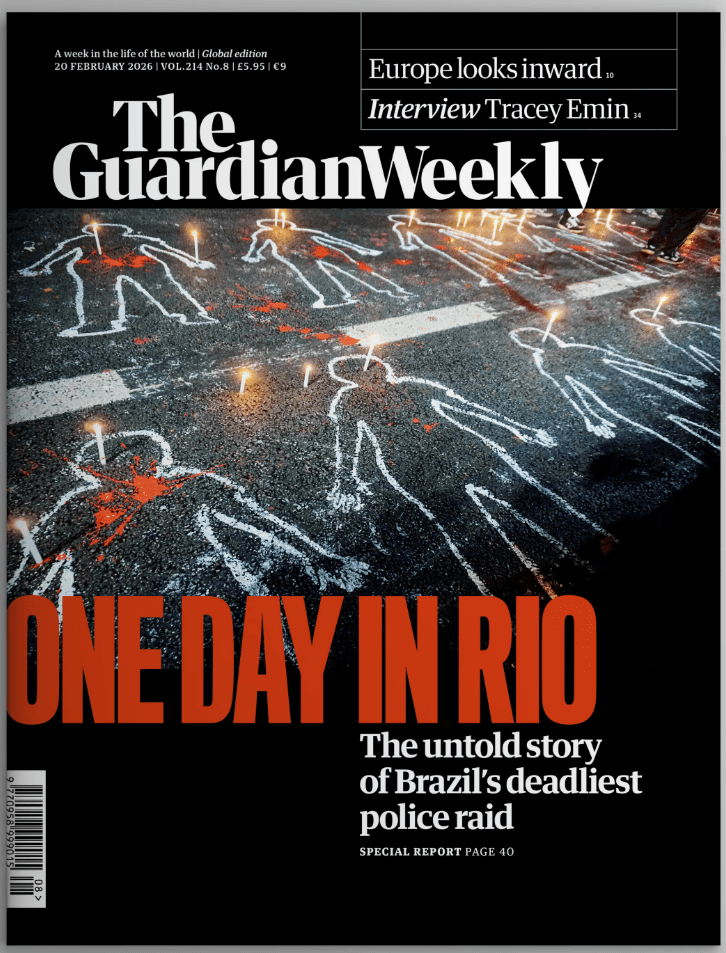
The first shots of an infamous day were fired in Rio’s Complexo da Penha favela at 4.30am. It was 28 October 2025 and the deadliest police raid in Brazil’s history had just begun. By the end of the day, 122 people, including five police, were dead.
The raid, nicknamed Operation Containment, was intended to apprehend members of one of the country’s most powerful organised crime groups, the Red Command – and in particular its kingpin, Edgar Alves de Andrade, who is also known as “the Bear”.
But the list of 100 arrest warrants justifying the operation featured none of the 117 people killed, and at least one of the dead was not involved in organised crime at all. The Bear, meanwhile, remains at large. Activists, security experts and even Brazil’s president, Luiz Inácio Lula da Silva, have described the operation as a futile massacre.
Now, in a forensic investigation encompassing interviews with community leaders, lawyers, security specialists and bereaved relatives, the Guardian’s South America correspondents Tom Phillips and Thiago Rogero have pieced together the full, previously untold story of what happened.
The big story | Continental drift in Munich Europe’s leaders met to discuss the continent’s future safety at the Munich Security Conference, a gathering characterised by mistrust of the US Trump administration and divisions over Ukraine. Patrick Wintour was there
Spotlight | Pressure mounts for Andrew to talk to police As calls for the former prince to cooperate with the investigation become deafening, this may be the reckoning the British king’s brother cannot escape. Caroline DaviesandAlexandra Topping investigate
Interview | Tracey Emin on reputation and radical honesty She scandalised the art world in the 1990s with her unmade bed, partied hard in the 2000s – then a brush with death turned the artist’s life upside down. Now Tracey Emin is as frank as ever, as Charlotte Higgins discovered
Opinion | Iran’s 1979 revolution offers some present-day pointers The similarities between Iran’s current crisis and events preceding the shah’s exile are striking. The radical clerics benefited then – but, asks Jason Burke, who would prevail this time?
Culture | Thundercat on funk, lost friends and being fired by Snoop Dogg The genre-hopping bass virtuoso has backed Ariana Grande and Herbie Hancock, appeared in Star Wars and become a boxer. Stephen Bruner explains his polymath mindset to Alexis Petridis
News, Views and Reviews For The Intellectually Curious







 Boomers Daily