
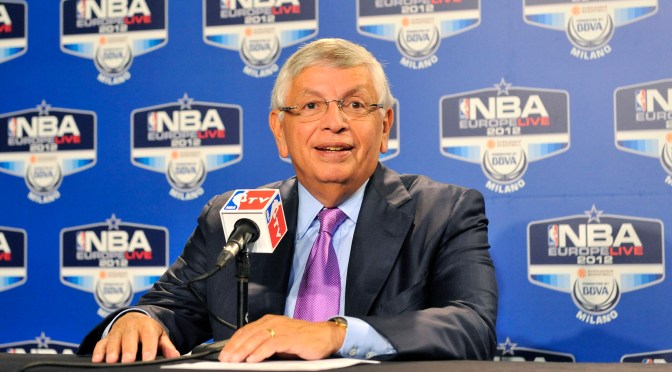
From an NBA.com online release:
“It was David Stern being a marketing genius who turned the league around. That’s why our brand is so strong,” said (Magic) Johnson, who announced he was retiring because of HIV in 1991 but returned the following year at the All-Star Game with Stern’s backing.
“It was David Stern who took this league worldwide.”
NEW YORK — David Stern, the basketball-loving lawyer who took the NBA around the world during 30 years as its longest-serving commissioner and oversaw its growth into a global powerhouse, died Wednesday. He was 77.
Stern suffered a brain hemorrhage on Dec. 12 and underwent emergency surgery. The league said he died with his wife, Dianne, and their family at his bedside.
Stern had been involved with the NBA for nearly two decades before he became its fourth commissioner on Feb. 1, 1984. By the time he left his position in 2014 — he wouldn’t say or let league staffers say “retire,” because he never stopped working — a league that fought for a foothold before him had grown to a more than $5 billion a year
industry and made NBA basketball perhaps the world’s most popular sport after soccer.

 At the moment, about two-thirds of Americans do not meet the standard exercise guidelines of about 30 minutes a day of moderate exercise, such as walking.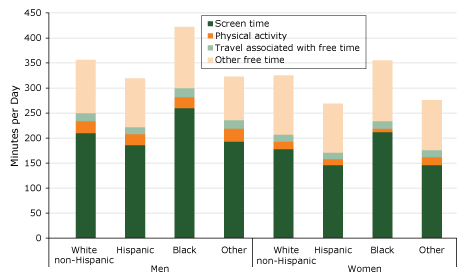








 and Paris and collected work by artists such as Pablo Picasso, Joan Miró, and Georges Braque.

 Boomers Daily