Category Archives: Homes

Architectural Remodels: North Adelaide House

With calming detail and considered materiality, Williams Burton Leopardi transforms the heritage listed North Adelaide Residence into a modern home. Through the new expansions, different moods are evoked from room to room, seeing the modern home uplifted into a refined contemporary context.

Video timeline: 00:00 – Subscribe to The Local Projects Print Publication 00:13 – Introduction to North Adelaide Residence 00:38 – Single Fronted Cottages 01:07 – Bringing Grandness into A Workers Cottage 01:38 – Working with An Unusual Brief 02:13 – Creating Different Moods Throughout The Home 02:46 – The Separation of Old and New 03:17 – The Impact of A Narrow Site 04:00 – The Handmade Aspect to A Heritage Home 04:33 – The Materials Palette 05:18 – Subtle but Beautiful Details 06:02 – The Architects Favourite Aspects of The Home 06:49 – The Local Projects Print Publication

The infusion of muted natural light demarks the old from the new whilst material choices reference the original worker’s cottage. Inspired by a desire for simplicity and quality detail, the redesign of the modern home mirrors the original fabric of the residence. The choice to remove the third bedroom allows for an extra living area, whilst elongating the structure into the garden ensures the home aligns with the lifestyle of its occupants. The residence provides a visual experience with increased access to sunlight through integrated skylights and the introduction of natural materials.

The use of oak wood references the heritage sandstone exterior and grounds the modern home. Further echoing the outdoors is joinery toned to match the washed oak flooring and the Turco Argento limestone kitchen benchtops. By establishing an indoor-outdoor connection, a natural flow between the garden and the modern home is seamlessly achieved. Through folded doors and a large picture window, the inviting garden helps to enhance the liveability of North Adelaide Residence – where an intentional quality resonates through each material choice.

Somerset Views: Tour Of A Georgian Country House

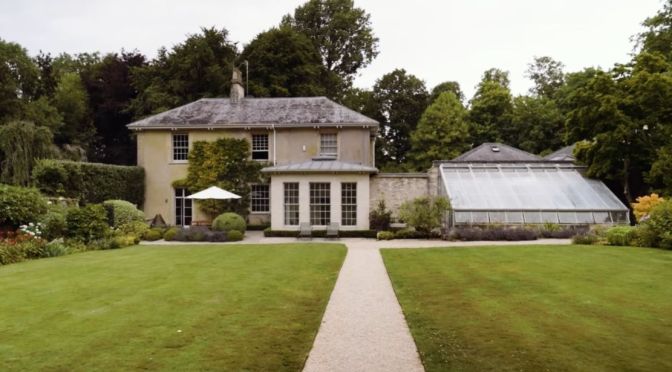
We take a trip to Somerset, where Tim and Emily Swift, who sold their place in Highbury, north London, via The Modern House in 2018, have found their “perfect home” in a Georgian country house they’ve given a modern makeover.

Design: Boronia House In Bellevue Hill, Australia

Celebrating colour and materiality, Boronia House is the contemporary reimagination of a pre-existing dwelling. With interior design by Esoteriko, the family home captures an uplifting and lively environment.

Video Timeline: 00:00 – Introduction to Boronia House 00:30 – The Entry to The Home 00:46 – Starting with A Gallery Space 01:00 – Refurbishment of The Kitchen 01:38 – The Custom Metal Work 01:54 – The Clients and The Brief 02:07 – Custom Pieces from Local Artisans 02:40 – Rising Up Into The Bedrooms 03:14 – Connecting The Landscape and The Living 03:48 – An Elevated and Extended Living Area 04:20 – Living Through Colour

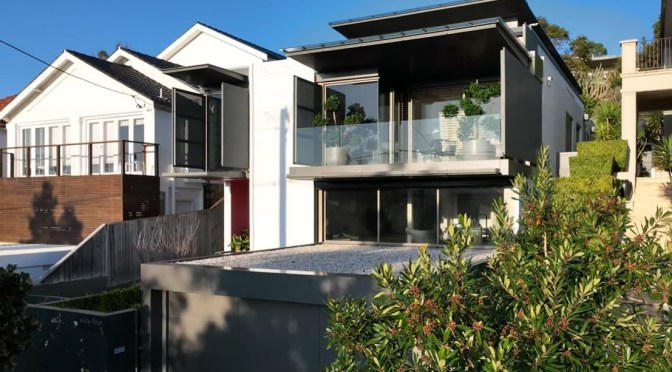
Located in the harbourside suburb of Bellevue Hill, Boronia House is surrounded by expansive properties interspersed by leafy sections of green. Mirroring the height of the neighbouring houses, the family home is comfortably settled within its immediate built context. In the kitchen, walnut panelling clads the cabinetry, complementing the dark limestone flooring of the original dwelling.

An impressive double-height void frames the kitchen island bench from above, presenting the piece as the dramatic focal point of the family home. Guiding residents up through the void is a set of floating concrete stairs. Throughout Boronia House, Esoteriko forges a strong relationship between the home and the natural vistas beyond. On the ground floor, outdoor joinery bridges the conceptual gap between family home and garden. An external seating area increases engagement with the landscape, alongside a new staircase and elevated swimming pool.

Embracing a natural connection alongside colour, Esoteriko develops the liveability of a family home. Boronia House enhances everyday life, prompting residents to adopt a more relaxed and explorative means of occupying space.

Design: ‘Sunrise House’ In Melbourne, Australia

Designing an architect’s own home and office space, Jolson architecture and interior design studio combines two distinct spaces that remain inherently separate. With a fascination of blurring lines between architecture, interior design and landscape design, Sunrise House becomes an exploration of how each discipline crafts a sense of space within.

Video timeline: 00:00 – Masterworks Advertisement 00:11 – Introduction to Sunrise House 00:42 – The Original 1950s Confectionary Factory 01:01 – Combining A Family Home and A Commercial Office Space 01:17 – Placing An Emphasis on Natural Light and Garden Space 01:27 – A Sanctuary with Sculptural Elements 02:19 – A Connection Between Outside and Inside 02:52 – Moving Vertically Through The House 03:32 – Connection to History Through The Gym and Courtyard Space 04:14 – Living With Colour, Texture and Memories 04:55 – A Reaction to The Original Facade 05:25 – Masterworks Advertisement

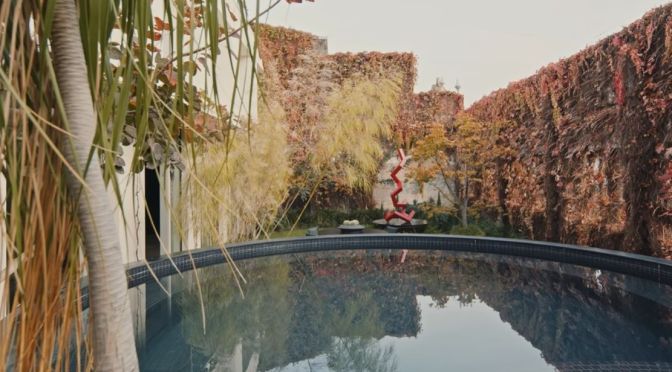
Sitting on the edge of an industrial commercial zone, Sunrise House by Jolson architecture and interior design studio was once a 1950s sweet factory before becoming an architect’s own home. Greenery covers the building’s façade, offering a dynamic sense of style not often seen within Melbourne’s cityscape. Yet inside, the connection from inside to out is made through an open floor plan that allows for the family to easily transition between living areas.

From the entrance, the office and ground level of the house honours the original build by keeping the concrete, paring it back to expose the aggregate. Although, in spaces where new concrete was poured, Jolson celebrates the new markings with memories of his own family, establishing the structure as an architect’s own home as well as a workplace. Retaining as much of the honesty and texture of the original building was key to bringing forth vibrancy.

The main design idea in the open living space was to insert three walls. Black joinery adorns one wall containing a concealed kitchen, another a large artwork that celebrates the history of the building and a third wall containing a luxurious fireplace. Through optimising the entirety of the volume within, Sunshine House becomes more than an architect’s own home, it becomes an art form. Jolson balances life, texture and colour – further complementing the minimal design aspects of an architect’s own home.

Amalfi Coast Tour: A 16th-Century Saracen Tower

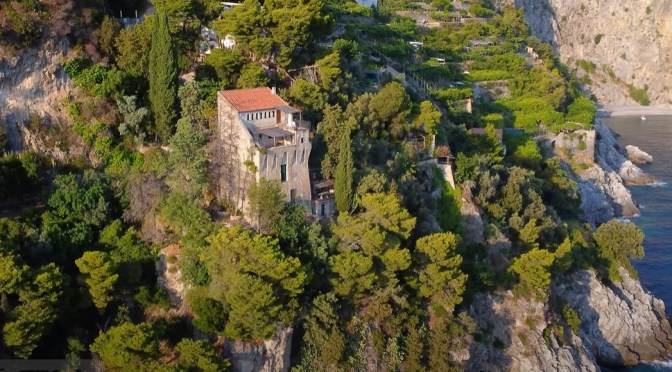
Set into a rock dropping sheer down to the sea, this ancient 16th-century Saracen Tower is located in Maiori, one of the most exclusive areas of the Amalfi Coast.

This is truly a unique object standing between sky and sea, in a panoramic, high position less than a kilometer from the town center of Maiori, protected by a majestic chain of mountains: from here the view sweeps from the mountains to the charming town below, to then get lost in the infinite blue of the sea, offering one of the most picturesque views of the entire Amalfi Coast.

Built as a watchtower to defend this stretch of coast from invasions by the Saracens and pirates, who in past times attacked it by sea, this property has helped preserve the wonders of the Amalfi Coast, of which it is a splendid example. Developed on the panoramic road from the coast to the sea, with exclusive access to a wonderful private platform with sun loungers, this estate is part of a natural setting of incomparable beauty, characterized by dense Mediterranean scrub.

A true maze of paths crosses the 6,500-sqm park, arranged in terraces, along which the various living areas are located, including the Belvedere, the Canonica and the Saracen Tower.

Design: ‘D_Residence’ In Scarborough, Australia

Complementing an established art collection, D_Residence is a modern home with an open interiority. Crafted by Carrier and Postmus Architects (CAPA), the serene residence represents a unique approach to interior design and architecture. Located in the maritime suburb of Scarborough in Western Australia,

00:00 – Introduction to D_Residence 00:32 – Behind The Name D_Residence 01:00 – Taking A Journey with Landscaping 01:41 – The Street Presence of the Modern Home 01:57 – The Endemic Landscape Character 02:20 – Separating Interior Design from Exterior Architecture 02:40 – Venturing Through D_Residence 03:03 – Concrete and Brickwork 03:46 – The Range from Brickworks and Austral Bricks 04:11 – Favourite Aspects of the Modern Homes and Proud Moments

D_Residence is named in reference to the nearby sand dunes. A house tour of the modern home begins at its façade, where lush greenery is positioned as a natural barrier between the home and the harsh wind. Utilising light and dark-toned brickwork from Austral Bricks at Brickworks, CAPA gently defines the modern home. Applied at the garage, basement level and entry, the dark-toned brickwork causes the practical amenities to visually recede and create an intimate arrival experience.

Combining with the blockwork which comprises the remainder of the façade, the bricks form a textural backdrop to the initial greenery. As the builder’s chosen medium, concrete is also featured in the modern home, offering a neutral complement to the owners’ art collection. Aesthetically flexible, D_Residence testifies to the impressive design restraint of CAPA. Ultimately determined by the influence of its occupants, the modern home welcomes personal injections of colour, texture and vibrancy.

Australian Architecture: ‘Jan Juc Studio’ Home Tour

Sitting underneath the eucalyptus trees, a slice of paradise awaits. As an architect’s own home, Jan Juc Studio creates a subtle ease between home and work life, whilst also establishing a humble presence within the surrounding landscape.

Video timeline: 00:00 – Roborock’s S7MaxV Ultra 00:15 – Introduction to Jan Juc Studio 00:41 – The Redevelopment of Jan Juc 01:08 – The Exterior vs. The Interior 01:36 – Creating Openness Through Doors 01:57 – Maximising What’s Available 02:23 – Multifunctional Screens 03:02 – The Materiality of The House 03:51 – Designing on The Move 04:10 – Surveying The Landscape 04:47 – Sun Filtration 05:14 – Architectural Clarity and A Humble Presence 05:52 – Roborock’s S7MaxV Ultra

Eldridge Anderson Architects draws inspiration from the architectural design they saw while travelling through Japan and incorporate nods to the built proportions, finishes and materials they experienced. In establishing an architect’s own home, Eldridge Anderson Architects creates architectural clarity by maximising what already existed.

Surrounding the façade of the home with wide timber screens made of pre-aged wood enables an indoor-outdoor connection. Able to adjust to the changing weather and seasons, the sliding timber screens and opening doors offer a range of different lighting configurations throughout the day.

When opened, the diffusing of light through the bedrooms creates a relaxed start to the day and, by afternoon, the warm golden glow reflects off the blackbutt flooring throughout, creating a gilded living space. Complementing the interior of an architect’s own home, the recycled blackbutt is used for doors and floors which harmonise with the timber façade and the eucalyptus trees surrounding the exterior. Eldridge Anderson Architects engages with an open plan living that allows for an architect’s own home to flow from room to room while optimizing upon liveable space throughout the home.

Encouraging a journey through light diffused halls, Eldridge Anderson’s design emphasises the idea of open plan living with rear doors that slide open to the backdrop of vegetation and landscape of Jan Juc Studio. As the sun dances through the coastal home, timber and humble material choices combine to establish a composed presence.

Striving for architectural clarity, Eldridge Anderson Architects’ Jan Juc Studio presents a refined execution of ideas that were inspired by travelling through Japan, materials that help interchange moods throughout the day and the connection of an architect’s own home to the surrounding landscape.

Tours: ‘Sliding House’ In Suffolk County, England

Having spent his formative years working as an actuary, Ross Russell knows a thing or two about calculated risks. As such, there was no better client to commission an experimental house with a 20-tonne sliding shell that can be removed to reveal roofless rooms and a behemoth conservatory-like structure beneath it. Here Ross takes a deep dive into the house’s design and reflects on life in truly versatile living spaces.

The house has been described by drMM as one for all seasons. During the warmer months, the structure can slide over the terrace to give shade to alfresco diners, while in winter it provides as extra insulation. Then there are the adaptable rooms inside the house, designed so they can either be sheltered or open to the sky, depending on the weather. One of the highlights is the bathroom, where people can soak under directly the sun or stars. When guests come to stay the first thing they typically ask, Ross says, is: “Can we have a bath?”

Read more

Home Design: ‘Wyoming House’ In Kew, Australia

Embodying a specific set of client stipulations, Wyoming is a modernist-inspired home with innate flexibility. Crafted by Inarc Architects, the open plan residence exceeds expectations for a house of its kind. Located in the Victorian suburb of Kew, in close proximity to the Yarra River,

Video Timeline: 00:00 – The Local Project’s Print Publication 00:14 – Introduction to Wyoming 00:55 – A Walkthrough Wyoming 01:11 – Melbourne and Metropolitan Board of Works Plan from 1911 01:29 – Sticking to A Strict Brief 02:14 – Matching Old to New 02:50 – Interior Lighting 03:21 – Creating A Gallery Space 04:12 – Adopting Modernist Principles 04:50 – Inarc’s Favourite Aspects of Wyoming 05:42 – Subscribe to The Local Project’s Print Publication

Wyoming stands as a rejuvenated dwelling. Originally built in 1911, the settlement of the modernist-inspired home proposes the unique experience of feeling close to the city whilst accessing the countryside lifestyle. The clients requested that the modernist-inspired home include areas for entertaining. To this end, Inarc Architects reimagines the original front rooms of the house as entertainment spaces which flow to the modern addition. In response to the clients’ passion for the outdoors,

Inarc Architects reinforces the sense of privacy attached to the garden space. An old hedge on the northern boundary is replaced by one of a similar style, exuding a sense of visual protection. Aesthetically, the modernist-inspired home champions white, as per the client’s request. White honed granite floors combine with classic Italian carrara to establish the limited colour palette.

Benefitting from meticulous spatial planning – both indoors and out – Wyoming offers a flowing, effortless living experience. Inarc Architects answers the clients’ requests with rigour, resulting in a highly-personal, modernist-inspired home.

Architectural Tour: ‘Way House’ In Perth, Australia

An architectural family house, The Way House stands steeped in history. Originally crafted by Darryl Way Architect, the renovated dwelling by vittinoAshe draws upon its architectural heritage in embracing its future.

Video timeline: 00:00 – Introduction to The Way House 00:28 – The History Behind The Way House 01:16 – The Benefits of Open Plan Living 02:01 – Architectural Features of The Way House 02:24 – Creating Space Through Glass 02:37 – A Tribute to the Original House 03:42 – Introducing Artedomus Products 05:26 – The Embodiment of Family

Settled in close proximity to Perth’s Freshwater Bay, The Way House represents a significant family legacy. Built in 1975 by the client’s father – an established architect – the home stands as a labour of love. As an architectural family house, it was important to respect the built narrative of the residence when executing the modern-day renovation. Internally,

The Way House indicates its status as an architectural family house, with old architectural elements effortlessly cohered with the new. The new studio pays homage to the original house through the replication of clean lines, materiality and finishes. Working with Artedomus – esteemed supplier of natural stone and ceramic tiles – DWA Architects highlights The Way House as an architectural family house. Artetech Ombra Carbone porcelain panels are used as a minimal means of ornamenting the kitchen, positioned in striking contrast to red recycled bricks.

In the bathroom, Artedomus INAX tiles communicate a minimal design language to foster a sense of serenity. Crafting a house that embodies a meaningful history, DWA Architects invests in an ongoing residential narrative. An architectural family house, The Way House articulates the important role that architecture plays in family life and provides an inviting space for the next generation.