Category Archives: Home Design

Australian Architecture: ‘Jan Juc Studio’ Home Tour

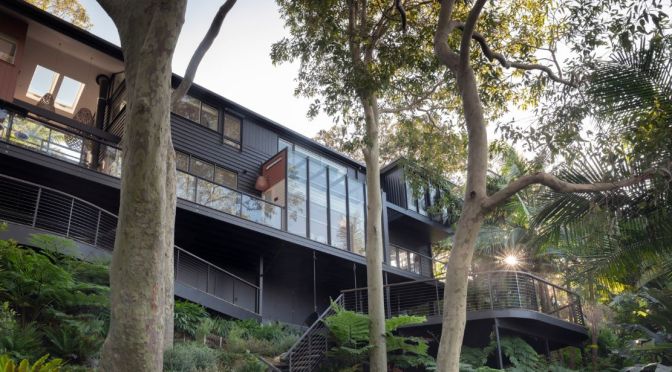
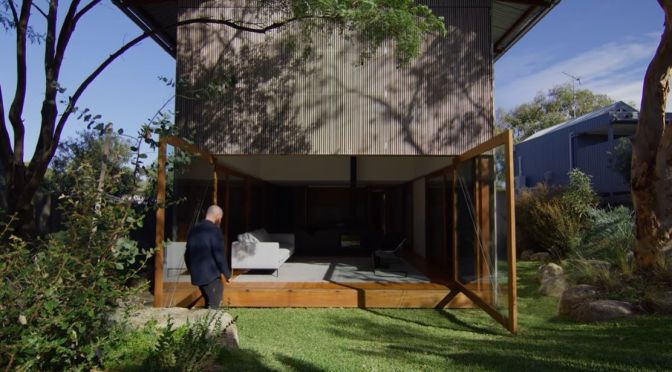
Sitting underneath the eucalyptus trees, a slice of paradise awaits. As an architect’s own home, Jan Juc Studio creates a subtle ease between home and work life, whilst also establishing a humble presence within the surrounding landscape.

Video timeline: 00:00 – Roborock’s S7MaxV Ultra 00:15 – Introduction to Jan Juc Studio 00:41 – The Redevelopment of Jan Juc 01:08 – The Exterior vs. The Interior 01:36 – Creating Openness Through Doors 01:57 – Maximising What’s Available 02:23 – Multifunctional Screens 03:02 – The Materiality of The House 03:51 – Designing on The Move 04:10 – Surveying The Landscape 04:47 – Sun Filtration 05:14 – Architectural Clarity and A Humble Presence 05:52 – Roborock’s S7MaxV Ultra

Eldridge Anderson Architects draws inspiration from the architectural design they saw while travelling through Japan and incorporate nods to the built proportions, finishes and materials they experienced. In establishing an architect’s own home, Eldridge Anderson Architects creates architectural clarity by maximising what already existed.

Surrounding the façade of the home with wide timber screens made of pre-aged wood enables an indoor-outdoor connection. Able to adjust to the changing weather and seasons, the sliding timber screens and opening doors offer a range of different lighting configurations throughout the day.

When opened, the diffusing of light through the bedrooms creates a relaxed start to the day and, by afternoon, the warm golden glow reflects off the blackbutt flooring throughout, creating a gilded living space. Complementing the interior of an architect’s own home, the recycled blackbutt is used for doors and floors which harmonise with the timber façade and the eucalyptus trees surrounding the exterior. Eldridge Anderson Architects engages with an open plan living that allows for an architect’s own home to flow from room to room while optimizing upon liveable space throughout the home.

Encouraging a journey through light diffused halls, Eldridge Anderson’s design emphasises the idea of open plan living with rear doors that slide open to the backdrop of vegetation and landscape of Jan Juc Studio. As the sun dances through the coastal home, timber and humble material choices combine to establish a composed presence.

Striving for architectural clarity, Eldridge Anderson Architects’ Jan Juc Studio presents a refined execution of ideas that were inspired by travelling through Japan, materials that help interchange moods throughout the day and the connection of an architect’s own home to the surrounding landscape.
Tours: ‘Sliding House’ In Suffolk County, England

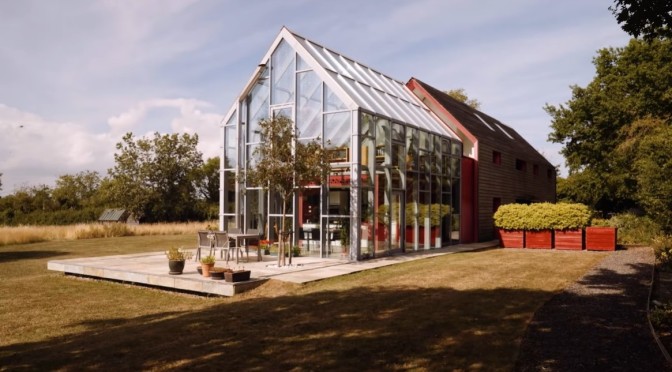
Having spent his formative years working as an actuary, Ross Russell knows a thing or two about calculated risks. As such, there was no better client to commission an experimental house with a 20-tonne sliding shell that can be removed to reveal roofless rooms and a behemoth conservatory-like structure beneath it. Here Ross takes a deep dive into the house’s design and reflects on life in truly versatile living spaces.

The house has been described by drMM as one for all seasons. During the warmer months, the structure can slide over the terrace to give shade to alfresco diners, while in winter it provides as extra insulation. Then there are the adaptable rooms inside the house, designed so they can either be sheltered or open to the sky, depending on the weather. One of the highlights is the bathroom, where people can soak under directly the sun or stars. When guests come to stay the first thing they typically ask, Ross says, is: “Can we have a bath?”

Read more

Architectural Tour: ‘Way House’ In Perth, Australia

An architectural family house, The Way House stands steeped in history. Originally crafted by Darryl Way Architect, the renovated dwelling by vittinoAshe draws upon its architectural heritage in embracing its future.

Video timeline: 00:00 – Introduction to The Way House 00:28 – The History Behind The Way House 01:16 – The Benefits of Open Plan Living 02:01 – Architectural Features of The Way House 02:24 – Creating Space Through Glass 02:37 – A Tribute to the Original House 03:42 – Introducing Artedomus Products 05:26 – The Embodiment of Family

Settled in close proximity to Perth’s Freshwater Bay, The Way House represents a significant family legacy. Built in 1975 by the client’s father – an established architect – the home stands as a labour of love. As an architectural family house, it was important to respect the built narrative of the residence when executing the modern-day renovation. Internally,

The Way House indicates its status as an architectural family house, with old architectural elements effortlessly cohered with the new. The new studio pays homage to the original house through the replication of clean lines, materiality and finishes. Working with Artedomus – esteemed supplier of natural stone and ceramic tiles – DWA Architects highlights The Way House as an architectural family house. Artetech Ombra Carbone porcelain panels are used as a minimal means of ornamenting the kitchen, positioned in striking contrast to red recycled bricks.

In the bathroom, Artedomus INAX tiles communicate a minimal design language to foster a sense of serenity. Crafting a house that embodies a meaningful history, DWA Architects invests in an ongoing residential narrative. An architectural family house, The Way House articulates the important role that architecture plays in family life and provides an inviting space for the next generation.

Home Design: Crane Lodge In Palm Beach, Australia

A luxury getaway home settled on a unique site, Crane Lodge immerses visitors in its natural context. Designed by Secret Gardens, the landscape architecture of the home enhances the sensory experience of the outdoors.

Video timeline: 00:00 – Crane Lodge as an Experience 00:44 – The Client’s Vision 01:05 – The Garden and The Setting 01:58 – Lodged Unusually High 02:21 – The Inclusion of Amenities 02:37 – The Team Involved 03:04 – Major Site Components 03:34 – A Strong Connection to The Outdoors 03:49 – A Natural Watering Hole 04:28 – Sympathetic Materials and Beautiful Features

Located in the Sydney suburb of Palm Beach, Crane Lodge sits on an elevated site. The design brief for the landscape of the luxury getaway home centred on creating a sense of arrival whilst allowing access to the house across the terrain. Employing an inclinator, Secret Gardens instils the arrival process with a sense of anticipation and discovery.

Many endangered species of plant are championed in the landscape design of the luxury getaway home and are designed to appear slightly unkempt. Secret Gardens also includes indigenous plants for cooking and educational purposes. A smattering of boulders surrounds the luxury getaway home, contributing to the impressive character of its external environment.

Secret Gardens purposefully positions the swimming pool adjacent to boulders, creating the impression that the amenity emerged naturally. The materials chosen for the landscape architecture of Crane Lodge express a sympathetic approach to nature. As a result, the luxury getaway home entirely embraces its context, with a landscape design that captures the essence of a bushwalk experience.

Architecture: ‘Plateau Residence’ By Michael Hennessey Architects

MICHAEL HENNESSEY ARCHITECTURE

Plateau Residence

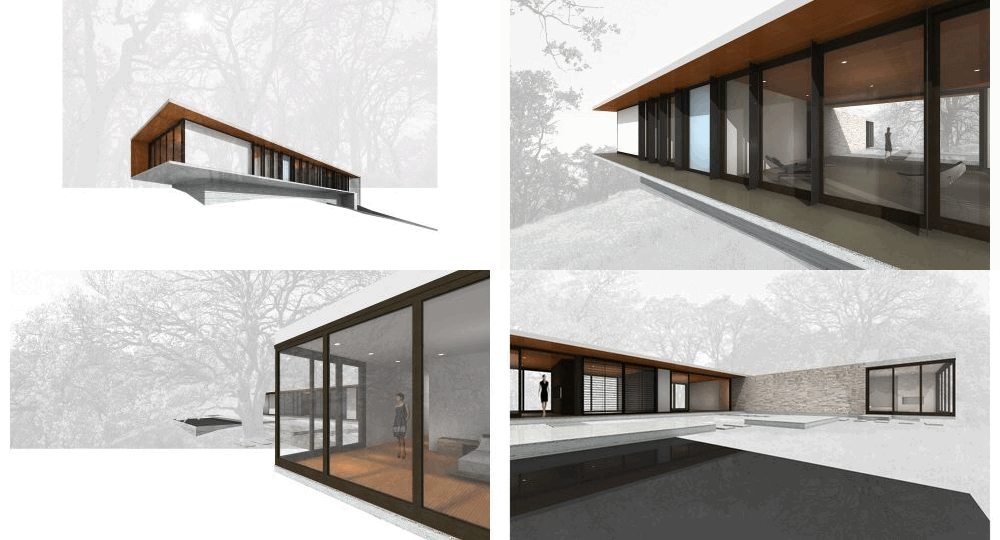
The severe topography and the intense climatic conditions at the site are the two primary factors that influence the design of this single-family residence. The building is situated on a plateau located above a steep, ambitious climb. The massing of the building is kept low to the ground to respect the existing topography below the plateau and to create a direct connection between the interior spaces and the surrounding landscape.

The site experiences relatively severe temperature swings from winter to summer. As a means to mediate a proper climatic response, a strategy is developed to relate the massing and fenestration specifically to the function of the public and private spaces of the residence. The public living spaces are defined with an abundance of glazing that is shaded with deep overhangs, horizontal slats, and vertical fins. Conversely, the private bedroom and bathroom spaces are shielded from the hot afternoon sun by stone walls.

Home Renovations: May House, Malvern, Australia

When an architect designs a house with consideration and care, dwellings such as May House emerge. Taking a playful approach to colour and materiality, Neil Architecture reimagines a 1980s home as a relaxed, modern family residence.

Video timeline: 00:00 – The Local Project’s Print Publication 00:10 – Introduction to the House 00:45 – Complementary Design 01:01 – Exterior Renovations 02:03 – 1980s Materiality 03:12 – Landscape Architecture 04:09 – A House Made for Entertaining 04:42 – Timeliness Rejuvenation 05:17 – Subscribe to The Local Project’s Print Publication

When an architect designs a house, the design brief can often stipulate a complete renovation. However, Neil Architecture recognised the value of the original 1980s construction – settled into the leafy suburb of Malvern – and decided instead to complement the home with architectural additions.

To maintain the strong and simple form of the original structure, Neil Architecture covers the pre-existing truss with a perforated screen. Off-form concrete is used to create the carport, whilst a roughcast concrete render is applied to the fence – in doing so, the architect designs a house that interacts with the local built environment. As an architect designs a house, the intent can be expressed through the finer details of the scheme.

In May House, rusty red and green tones appear in the material palette, paying homage to the colours present in 1980s interior design. May House sees a 1980s residence both celebrated and reimagined, embraced and rejuvenated. Managing the external architecture and interior detail, the architect designs a house that is imbued with a sense of warmth and continuity; a house for the future that is inspired by the past.

Modern Architecture: Rose Bay Duet In Sydney

Harmoniously engaged with its constituent parts and context, Rose Bay Duet is a residential work by Stafford Architecture. Utilizing the interior comforts of Poliform Australia, the two modern homes propose a lifestyle of relaxed family living.

Video timeline: 00:00 – Introduction to the Modern Homes 00:55 – The Client Brief 01:27 – Using Poliform Throughout the Home 03:13 – Materiality 04:40 – The Roof Terrace 05:06 – The Master Bedroom Area 05:35 – What the Architect is Most Proud Of

Named in reference to the Sydney Opera House, Rose Bay Duet is similarly settled on the eastern side of the city. Comprised of two modern homes, the project pays homage to the idea of lyrical, architectural narrative – in particular, the project celebrates the operatic relationship between the two modern homes, the sloping site, the Opera House and the iconic Sydney Harbour Bridge.

Appointing a specific design team to each of the two modern homes, Stafford Architecture creates dual unique outcomes that share select character qualities. Whilst both houses maximise the incredible views available and feature an exterior of simple materiality, one house has feminine characteristics while the other projects a more masculine impression.

Collaborating with Poliform Australia, Stafford Architecture enjoyed a smooth creative process. With access to the entire Poliform range, seeing both modern homes benefit from elegant joinery, textures, finishes and soft furnishings. Rose Bay Duet is a well-considered and intuitive feat of interior design and architecture. Stafford Architecture applies the Poliform Australia collection with enthusiasm and intent, crafting modern homes that rejoice in a sense of connection.

Design Tour: Queens Park House In Sydney, Australia

Queens Park House is an architect’s own minimalist oasis. Designed by Kyra Thomas Architects, the calming suburban home strongly contrasts its previous iteration as a storage warehouse.

Video timeline: 00:00 – The Local Project’s Print Publication 00:10 – Introduction to the Architect’s Own Home 00:49 – Warehouse Conversion 01:23 – The Brief 02:41 – Green Spaces 03:05 – Lighting 03:31 – Materiality 04:15 – The Architect’s Favourite Room 04:43 – The Finished Project 05:06 – Subscribe to The Local Project’s Print Publication

Located in Sydney, Queens Park House was originally a storage warehouse with brick walls built to the boundary of its site. Converting the commercial property into an architect’s own minimalist oasis required opening up the building and rewriting its internal character.

Structurally, turning the warehouse into an architect’s own minimalist oasis involved removing the pre-existing roof and inserting walls into the interior of the building. The brick boundary walls are retained, enabling a sense of privacy within the suburban setting and paying homage to the history of the building. As an architect’s own minimalist oasis, Queens Park House embraces natural light and fresh air.

Four courtyards punctate the spatial plan, creating green space for different aspects of the house to relate to, as well as facilitating internal lighting and ventilation. Responding to the residential needs of the client, Queens Park House stands as an architect’s own minimalist oasis. Custom and considered, the home testifies to the skill of Kyra Thomas Architects in transforming a commercial space.