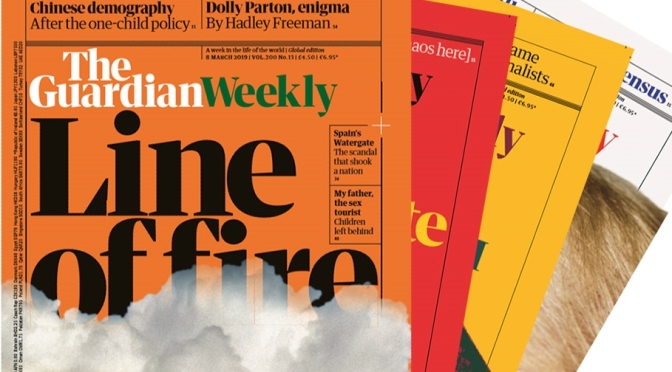
Faragism and Starmerism are fronts in a global struggle between insurgent nationalism and cautious defenders of the old political order. For British democracy to triumph, the prime minister must find his voice
The press lobby is going feral—ignore it
Given the pressures of 24-hour news, lobby journalists cannot plausibly understand policy detail. Their skillset is to nose around and cause trouble
Inside the supply chain: my week on a container ship
Vessels like the Timca are the unnoticed worker ants of our global economy, bringing us the cheap food, clothes and household items we
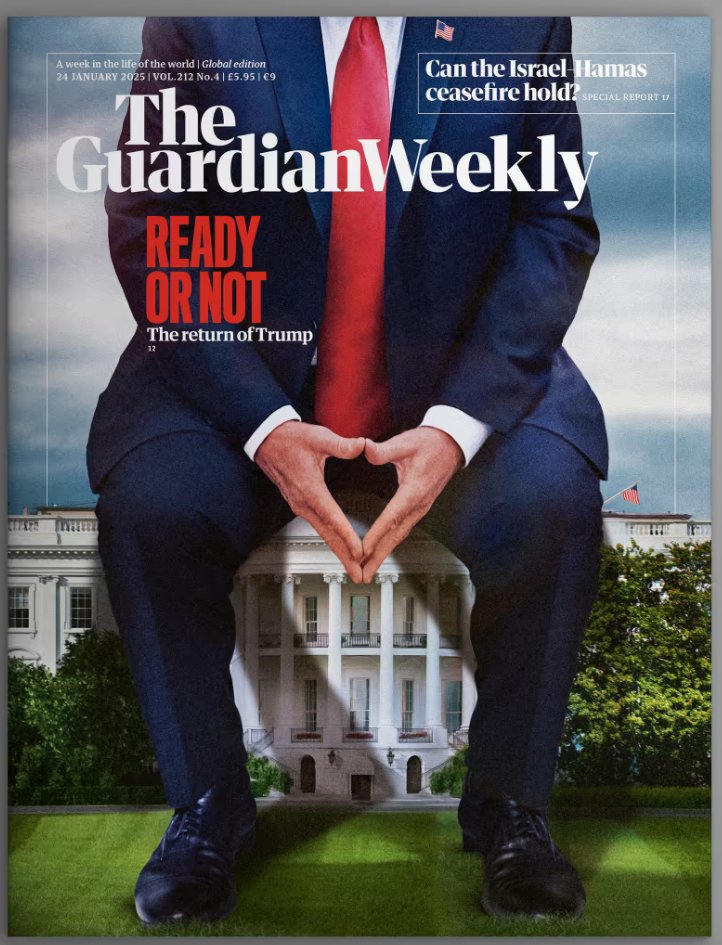
He returned much as he had departed (not that he ever really did), beneath a pall of controversy. In a Capitol ceremony drenched with quasi-religious fervour, Donald Trump was sworn in as the 47th US president, simultaneously pledging a new golden age for America and a radical shake-up of the global order.
Amid a barrage of unnerving executive orders that will surely set the tone for a new era of disruption and division, David Smith was in Washington DC to witness a dark moment for many, while diplomatic editor Patrick Wintour lays out the fears of a world hoping for the best but preparing for the worst.
From the Middle East came a moment of hope. Bethan McKernan’s dispatch on the first day of the Israel-Hamas ceasefire encapsulates the emotion and relief felt by millions. But will it lead to lasting peace? Don’t celebrate too soon, warns Peter Beaumont.
Spotlight | Has South Korea witnessed its own January 6 moment? Protesters who stormed a Seoul court at the weekend may not have worn animal skins, but the similarities are striking, explain Raphael Rashid and Justin McCurry
Environment | Why did LA’s wildfires explode out of control? A combustible combination of factors laid the groundwork for disaster. Will LA learn the lessons from the fires as it moves forward? Gabrielle Canon and Lois Beckett report
Feature | Can the British Museum survive its omni-crisis? Beset by colonial controversy, difficult finances and the discovery of a thief on the inside, Britain’s No 1 museum is in deep trouble. Can it restore its reputation? Charlotte Higgins investigates
Opinion | Trump and Musk have launched a new class war Across the world, societies are reverting to oligarchies. How to resist? Fight for democracy with all we’ve got, argues George Monbiot
Culture | An inside job: the return of Severance Who is in charge? What are they working on? And why is there livestock in the office? Hannah J Davies meets the cast and creator of Apple’s deliciously weird workplace drama
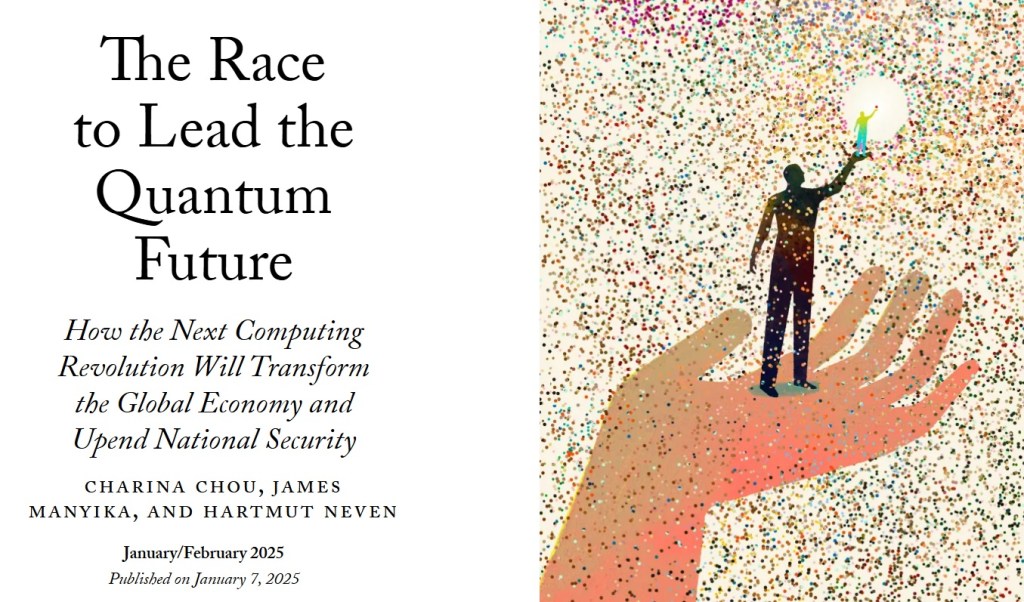
Foreign Affairs Magazine (January 12, 2025): How the Next Computing Revolution Will Transform the Global Economy and Upend National Security
Over the last several years, as rapid advances in artificial intelligence have gained enormous public attention and critical scrutiny, another crucial technology has been evolving largely out of public view. Once confined to the province of abstract theory, quantum computing seeks to use operations based on quantum mechanics to crack computational problems that were previously considered unsolvable. Although the technology is still in its infancy, it is already clear that quantum computing could have profound implications for national security and the global economy in the decades to come.









 Boomers Daily