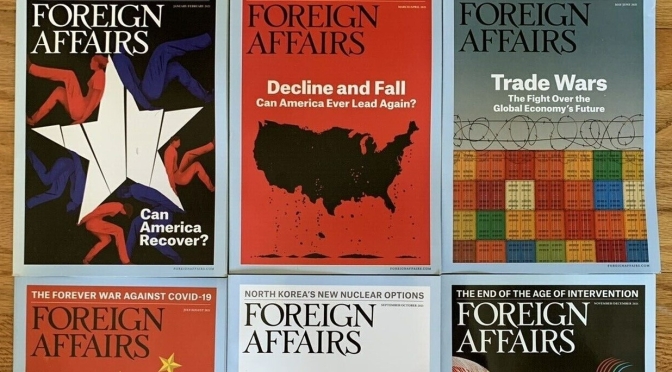
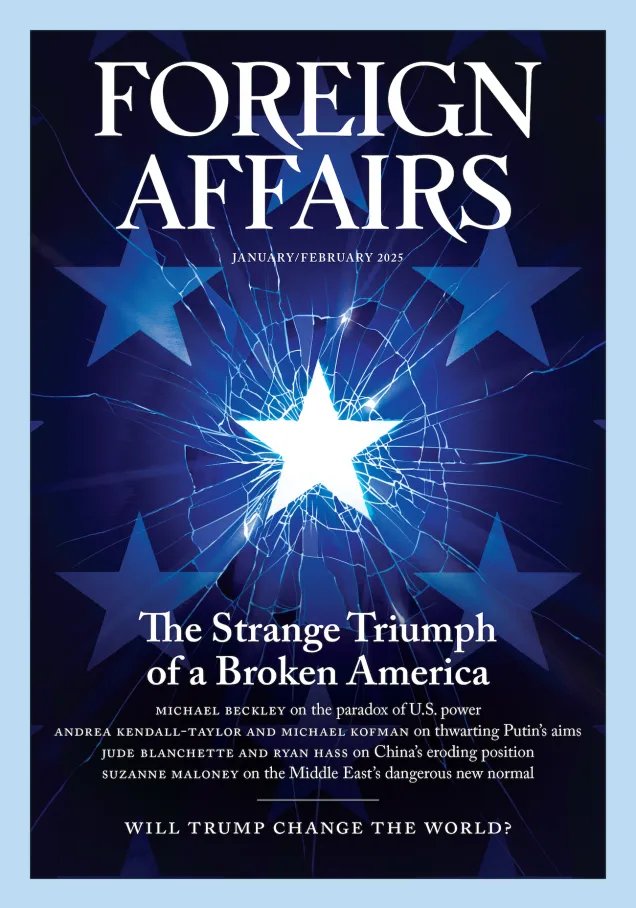
Foreign Policy Magazine(December 8, 2023): The Best of Books 2024 on international politics, economics, and history that were featured in the magazine this year, selected by Foreign Affairs’ editors and book reviewers.
In a revelatory book, Farrell and Newman describe how the United States has turned its control over information networks into a hidden tool of economic domination—and warn of the risks of Washington’s weaponization of data power for ordinary people, as well as for the global financial system.read the review
In a major reconsideration of Cold War history, Radchenko examines the Soviet Union’s competing ambitions for revolution, security, and legitimacy—and how Soviet leadership, blinded by its own hubris and aggression, set the stage for the downfall of the USSR. read the review
Kahan argues that what unifies liberals across the centuries, including those involved in building and defending liberal democracy today, are their efforts to build societies free from the fear of arbitrary power. He sculpts a masterful and beautifully written history of liberalism’s long intellectual journey. read the review
In this sobering study, Levitsky and Ziblatt demonstrate how the United States’ enduring constitutional order—one forged in a pre-democratic age—increasingly thwarts the will of an expanding multicultural majority in favor of a shrinking rural white minority.read the review
Focused on the sophisticated and networked world of autocracy, dictatorship, and tyranny, Applebaum argues that what separates hardcore autocratic states, such as China and Russia, from softer illiberal and authoritarian regimes, such as those in Hungary, India, and Turkey, is the ruthlessness and reach of their dictatorial power and their deep hostility to the Western-led democratic world.read the review
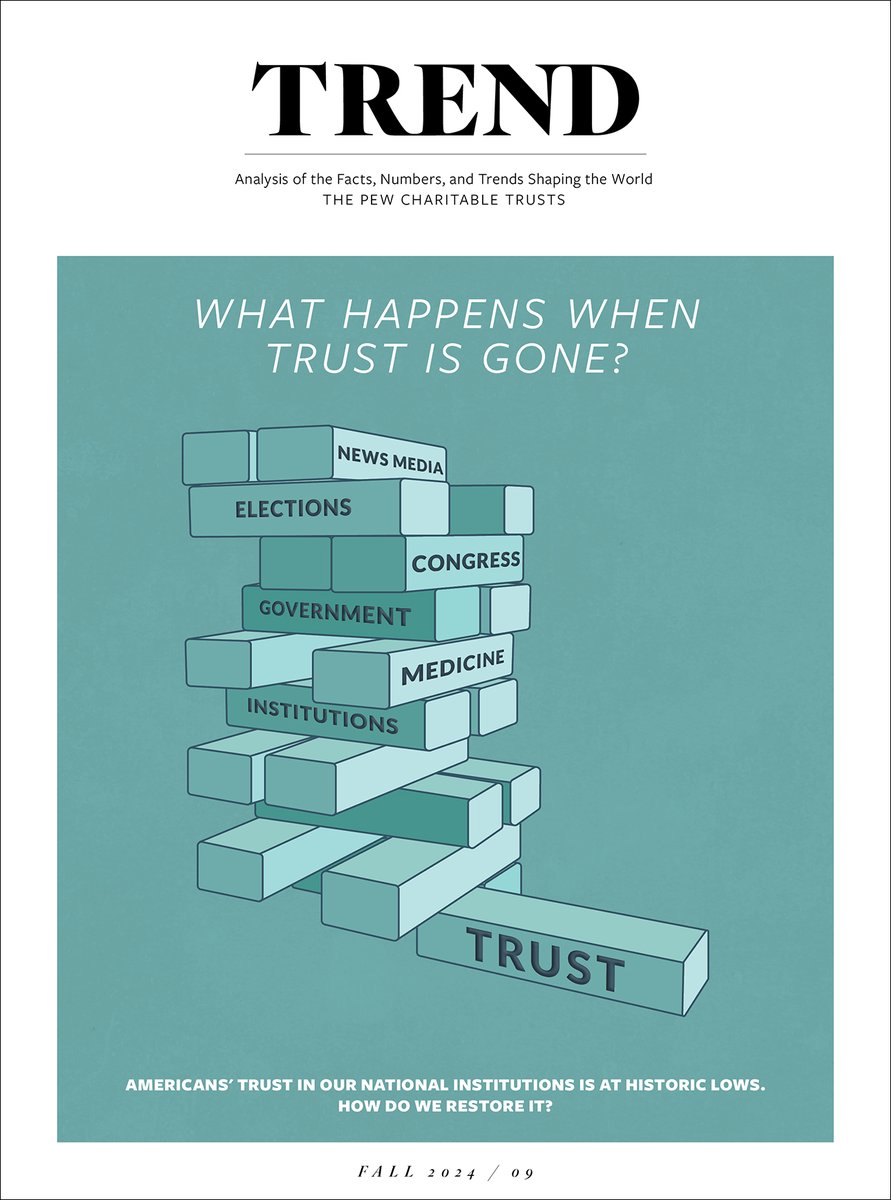
Trust in our nation’s institutions has never been lower. And experts tend to blame our politically polarized society, which certainly contributes to the deep unease that is being felt by a majority of…
If mistrust were a disease, the United States would be facing an epidemic. Over the last half-century, trust in American institutions has steadily declined, and this mistrust has rapidly increased in…
As our nation grapples with growing mistrust of all institutions, including the federal government, it’s important to remember that this is not a new debate, but one that has been embedded in the American…
Only 1 in 5 Americans trust the federal government—so how do we restore public confidence? For more than two decades, the Partnership for Public Service has worked across presidential administrations to…
We root for David, the underdog facing impossible odds, who stands in contrast to Goliath, the big bully. So maybe it’s not surprising that Americans root for small business in contrast to big business.
…the U.S. has been too slow in arming its ally, too restrictive in setting conditions on the use of weapons, and generally too fearful of Vladimir Putin’s threats. The result is that Ukraine, for all its unfathomable courage and boundless ingenuity, has been permitted to fight, but not win, the war. If this keeps up, Ukraine could actually lose.
When I step back a bit, I can see that Zuckerberg isn’t just haplessly begging our forgiveness. He’s trying to save his business. Meta Platforms, the company he controls, contains some of the world’s most widely used and profitable digital brands, including Facebook, Instagram, and WhatsApp. Meta appears to be thriving, with its stock price more than quadrupling since a rocky 2022. But Zuckerberg knows that his company’s brands are built on foundations of sand. Just as a sandbar will move with tides, the user base of any social platform can drift away in a surprisingly short time.
This is Harris’s challenge: She’s the incumbent vice president running for higher office in a change election. She’s an undefined candidate whose positions and job performance are vulnerable to attack. She wants to be seen as a disruptor while remaining loyal to President Biden. And she wants to move away from the far-left views she held as a senator while she continues to proclaim that her values have stayed the same.
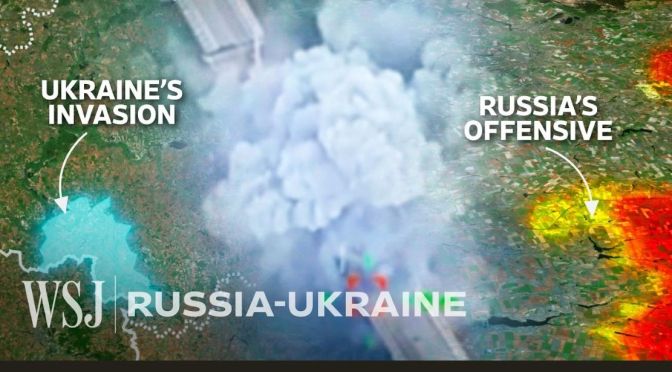
The Wall Street Journal (August 22, 2024): Ukraine’s invasion of Russia was a gamble for Kyiv as they push deeper into the Kursk region. But as Moscow intensifies its offenses on the strategic Ukrainian city of Pokrovsk in the Donetsk region, strategies on both sides are emerging.
Chapters: 0:00 Where the war stands 0:34 Ukraine tactics in Kursk 1:53 Russia’s response 2:53 What’s next?
If Pokrovsk falls, it will be the largest population center taken by the Russian military since Bakhmut in May 2023. WSJ explains the latest developments on how the Kursk invasions steps up the stakes for both Ukraine and Russia.



















 Boomers Daily