
The coronavirus pandemic disrupted the global economy in ways that may affect your 2020 taxes. WSJ tax reporter Richard Rubin shares his tips for this unusual tax season. Photo illustration:Laura Kammermann
Category Archives: Finance
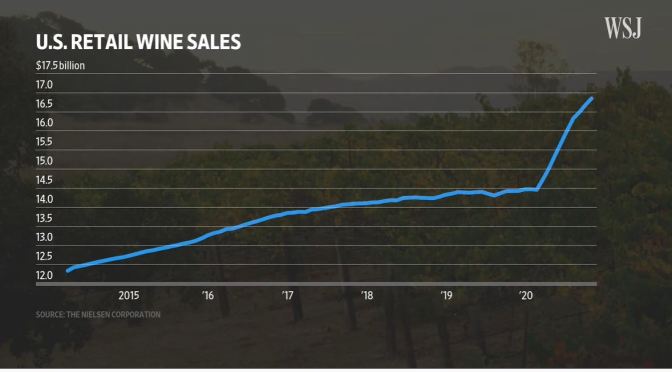
Analysis: Why California Winemakers Go Public
Two California wine companies are going public this spring, the first major wineries to do so since the late 1990s. Winemakers explain the lessons of past stock offerings from wineries like Mondavi and Ravenswood and why they think the time is now right to join the IPO fray. Photo: Jake Nicol/WSJ

Retirement: Paying Less Taxes On Social Security
Social Security benefits are federally taxed at three different tiers. The amounts depend on your income, marriage status and whether you file jointly or separately. Paying less in taxes can come down to how much money you pull out of your retirement accounts in a given year. Watch this video for tips on how to pay less in taxes on your Social Security benefits.

Cryptocurrency: The Challenges Facing New ‘Stablecoins’ (WSJ Video)
Bitcoin’s volatility has limited its adoption for payments, so entrepreneurs created stablecoins: cryptocurrencies pegged to assets such as the U.S. dollar. But the recent settlement of a probe into the most popular stablecoin, tether, shows the need for transparency in the growing industry. Photo illustration: Sharon Shi/WSJ

Retirement: ‘How 401(K) Plans Work’ (Video)
Since 1980, pensions plans have been phased out in favor of 401(k) plans. They now represent nearly one-fifth of the U.S. retirement market. So how did 401(k) plans become such a popular form of retirement savings and how should they be used? Watch the video to find out.
Analysis: Will U.S. Stimulus Checks Cause Inflation?
The IRS sent roughly 90 million stimulus checks to Americans in March. WSJ’s chief economics commentator Greg Ip explains why stimulus checks alone are unlikely to spur inflation. Photo Illustration: Carlos Waters
Stock Market: ‘GameStop & Payment For Order Flow’
Following the GameStop trading frenzy, the SEC is expected to take a fresh look at payment for order flow, a decades-old practice that’s at the heart of how commission-free trading works. WSJ explains what it is, and why critics say it’s bad for investors. Illustration: Jacob Reynolds/WSJ
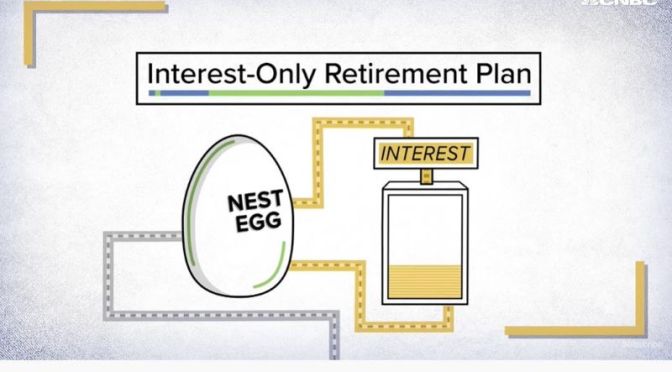
Retirement: How To Get To $75K/Yr In Passive Income
If you can save enough money now, you can fund your retirement by living off of your returns without draining your nest egg. Luckily, with time and dedication, you can make it happen. The official retirement age for most Americans is 67 years old. But that number largely matters for Social Security benefits. If you want to retire early, however, you will need a plan that relies primarily on your own savings and investments. CNBC crunched the numbers, and we can tell you how much you need to save now to safely get $75,000 of passive income every year in retirement. First, some ground rules. The numbers assume you will retire at 45, have no money in savings now and plan to save a substantial amount of income to reach your goal. For investing, we assume an annual 4% return when you are saving. We do not factor in inflation, taxes or any additional income you may get from Social Security and your 401(k). In retirement, we use the “4% rule,” which is a general principle that says you can comfortably withdraw 4% of your portfolio every year. It is important to note with the recent market volatility, there is a risk you’ll have to lower your spending percentage in the future. Check out this video to get a full breakdown of the numbers.
Green Investment: ‘Can It Stop Global Warming?’
A new generation of investors wants to force businesses to become environmentally-friendly. Even climate conservationists know that money talks, but can green investments really save the world? Green investment rewards companies that use sustainable production practices and protect the environment. At the same time, companies that pollute or contribute to global warming are deprived of funds.
The strategy converts the once secondary issue of the environment into hard, cold cash. Antonis Schwarz is 30 years old — and an investor, philanthropist, and activist. His slogan is “cash against climate change.” Schwarz, like many other wealthy millennials, sees climate change as the key variable when it comes to investing money. These people intentionally put their cash into companies and projects that protect the environment. Schwarz believes that those who are well-off have a special responsibility to follow this strategy. He says, “When you are able to change something and you don’t, you’re complicit. We all have to become fully involved, so we can prevent a climate disaster.”
This philosophy can be summed up with the following question: “What’s the point of having loads of money if it becomes worthless because you’re living on a planet that’s becoming increasingly chaotic?” Institutional investors have more money at their disposal than wealthy private individuals do. Their approach is also changing — and not out of pure idealism. Extreme weather events caused by climate change, for example, are bad for business. They can force corporations to write off billions in damages.
This documentary goes behind the scenes to take a closer look at the financial markets. How well does “impact investing” work? Can investors really move large, powerful corporations to change their strategies? Politicians have so far failed to do precisely that.

Anaylysis: China Tests New ‘Digital Currency’ That Replaces Cash (WSJ Video)
China is testing a digital yuan, aiming to accelerate the replacement of cash and increase state control in a society where digital payments via Wechat Pay and Alipay are already the norm. Here’s what Beijing’s new system looks like—and how it would work. Photo credit: Florence Lo/Reuters
 Boomers Daily