Dezeen (March 30, 2023) – An exhibition at Chatsworth House including designers including Michael Anastassiades, Faye Toogood and Formafantasma, features in this video produced by Dezeen for the stately home.
Called Mirror Mirror: Reflections on Design at Chatsworth, the exhibition brings together a collection of furniture and objects displayed throughout and responding to Chatsworth House and its gardens. In total, 16 international designers and artists created pieces that respond to the interiors of the building.
Some responded by sourcing materials from the property itself, while others focussed on themes and ideas taken from decorations within the interiors.
Sotheby’s (March 29, 2023) – In 1962, the late legendary Italian-American art dealer Leo Castelli hosted Roy Lichtenstein’s first solo exhibition at his eponymous gallery in New York City, and subsequently worked with the artist throughout his life.
In this Expert Voices, art historian and Director of Leo Castelli Gallery, Barbara Bertozzi Castelli shares her interpretation of Figures, recalling her memories working with her husband and Lichtenstein whom she felt was a modest and dedicated artist, and among those that changed the path of American art in the postwar period.
A key figure in the Pop art movement and beyond, Roy Lichtenstein (1923–1997) grounded his profoundly inventive career in imitation—beginning by borrowing images from comic books and advertisements in the early 1960s, and eventually encompassing those of everyday objects, artistic styles, and art history itself. Referring to Lichtenstein’s equalizing treatment of the subjects he chose for his art, Richard Hamilton, a fellow Pop artist, wrote in 1968: “Parthenon, Picasso or Polynesian maiden are reduced to the same kind of cliché by the syntax of the print: reproducing a Lichtenstein is like throwing a fish back into water.”
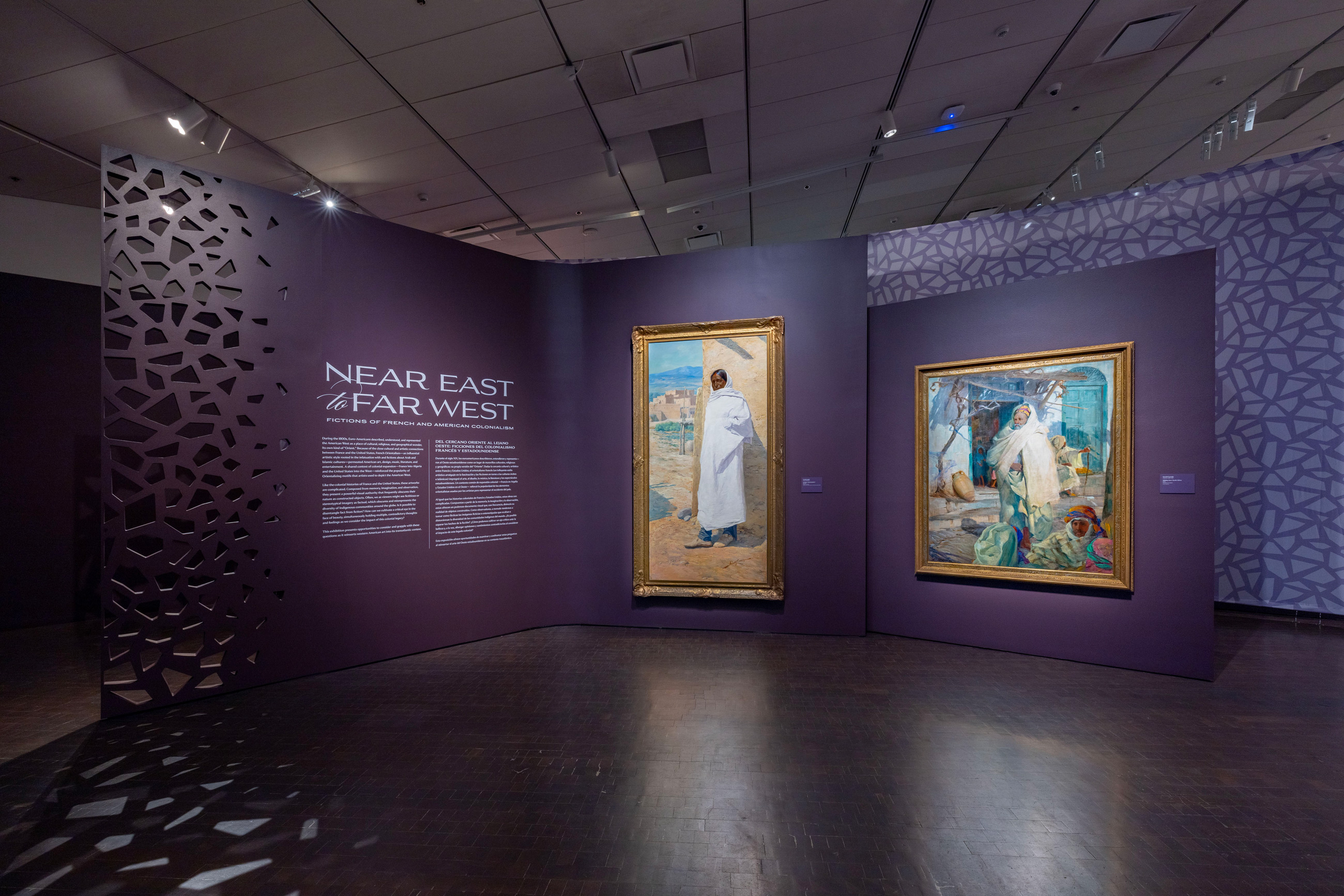
Left to right: Gerald Cassidy, Cui Bono?, about 1911. Collection of the New Mexico Museum of Art: Gift of Gerald Cassidy, 1915 (282.23P). Gerald Cassidy, Midday Sun, North Africa, 1920s.
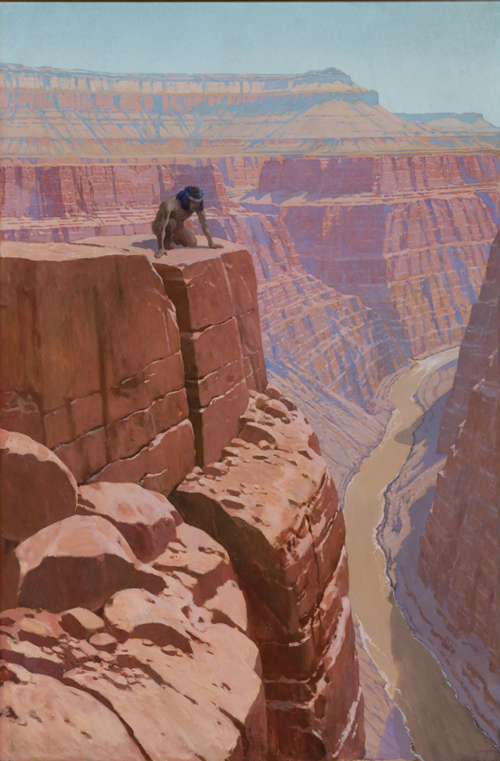
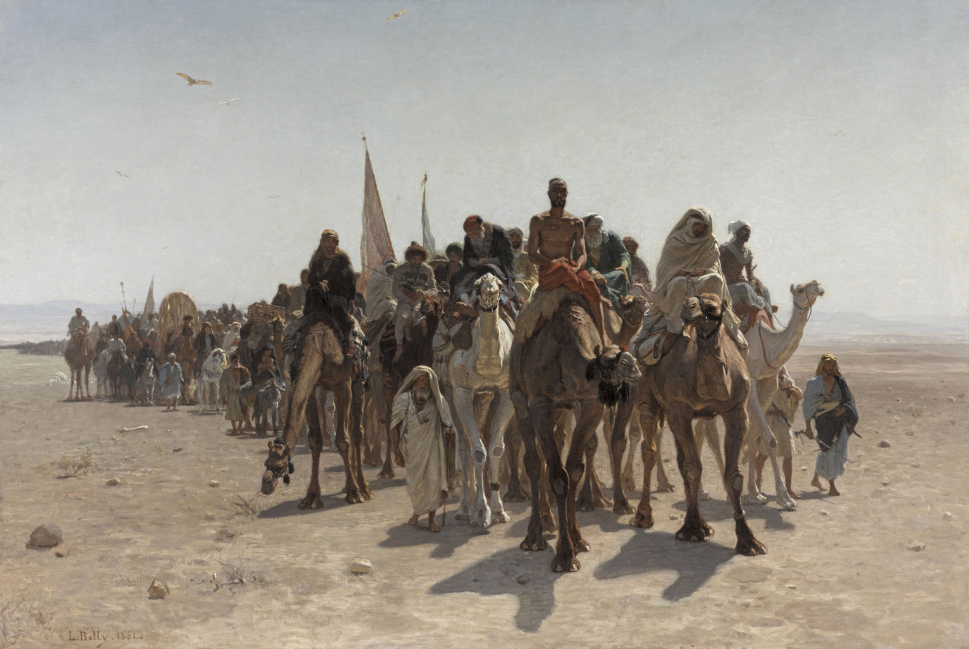
Denver Art Museum (March 27, 2023): Artworks in Near East to Far West: Fictions of French and American Colonialism(through May 29)present a range of representations from sympathetic to stereotyped. Indeed, racialized stereotypes such as the “Noble Savage” and odalisque (a woman in a female-only domestic space, or harem, who is often overly sexualized in European art) circulated throughout French Orientalism and western American art.
Acknowledging the ongoing harm of such representations, we knew that we needed to make space for diverse perspectives: essentially, to make room for the voices too often repressed or ignored in the artwork.
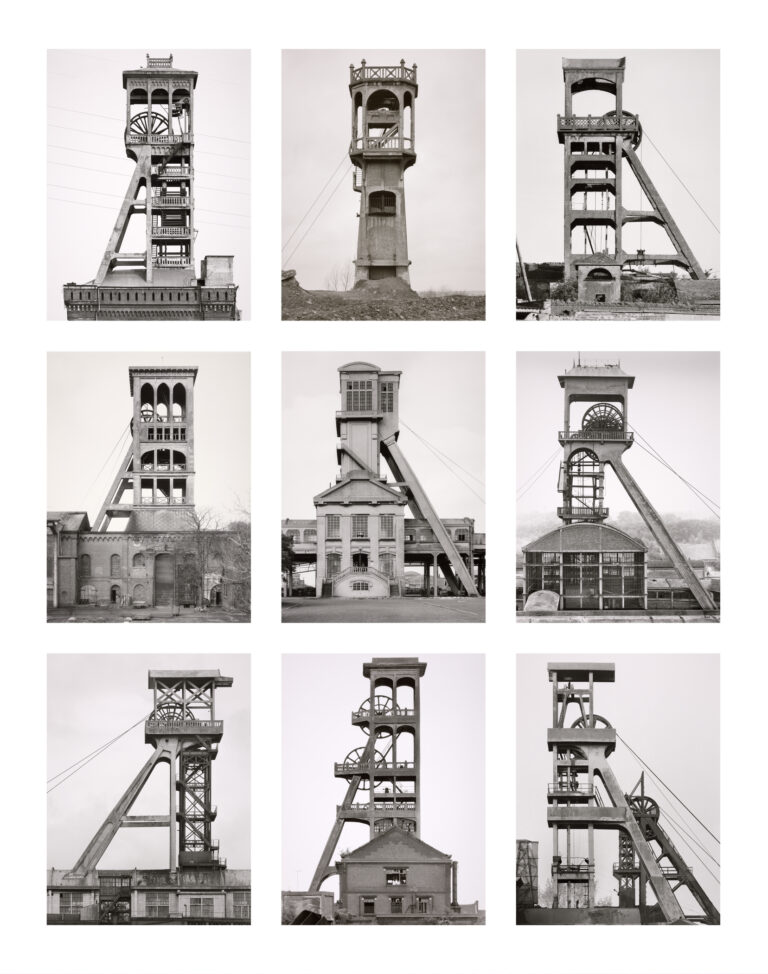
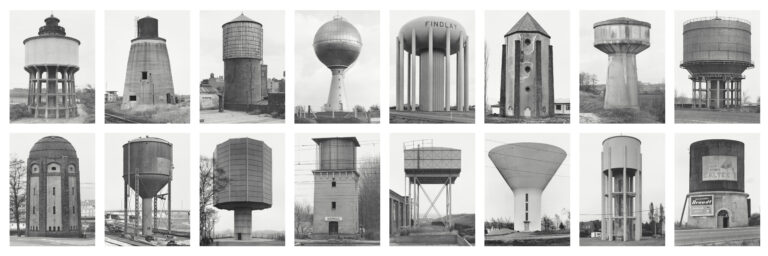
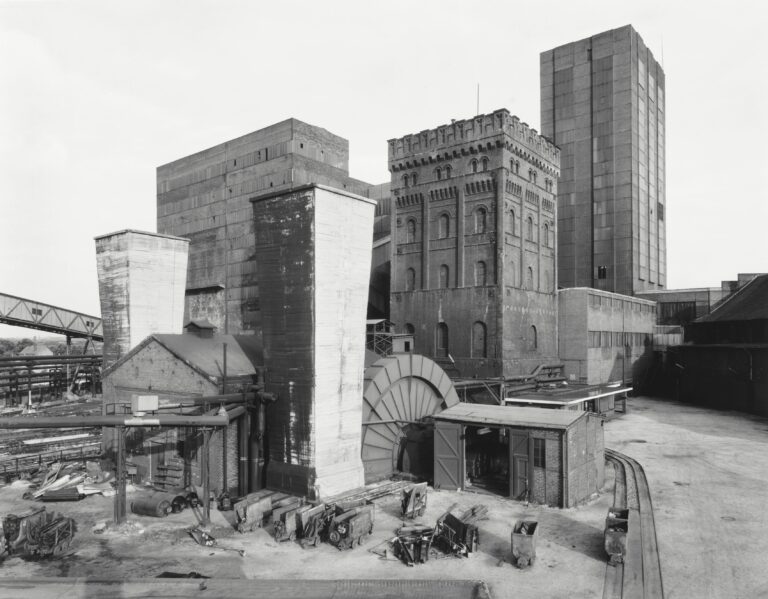
CBS Sunday Morning (March 26, 2023) – To photographers Bernd and Hilla Becher, the rapidly vanishing industrial architecture of Western Europe and North America were works of art. The German couple’s documentary images of transmission towers, gas tanks, blast furnaces and smokestacks – structures that signified the end of an industrial era – are being celebrated in a comprehensive retrospective now at the San Francisco Museum of Modern Art. Lee Cowan offers us a tour.
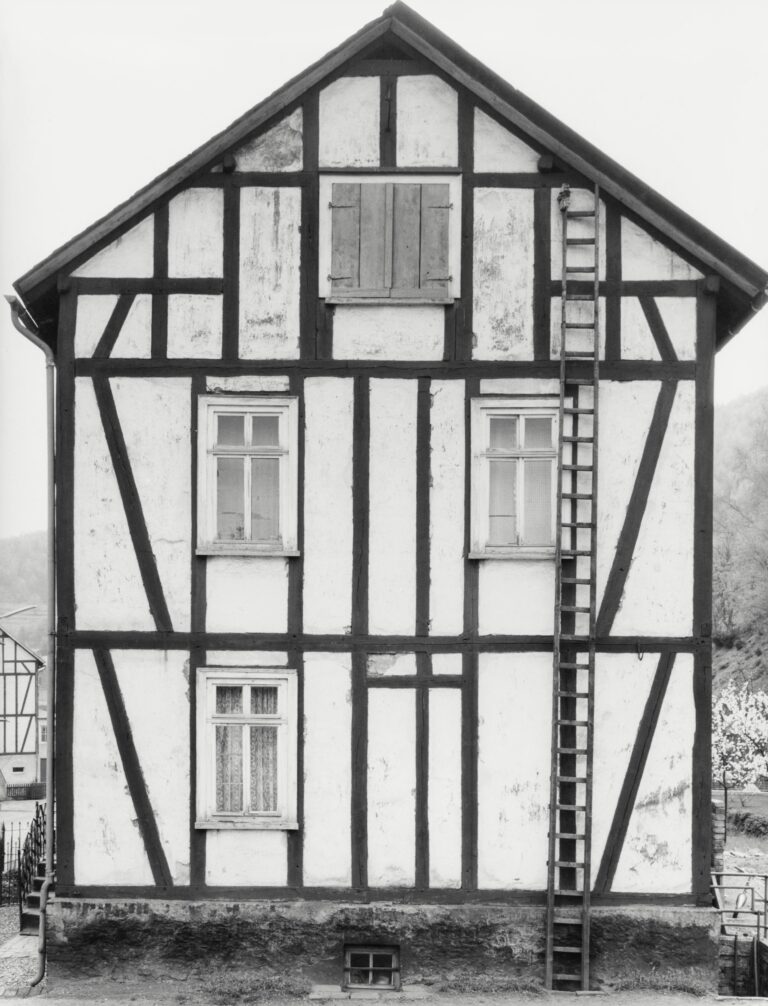
The renowned German artists Bernd and Hilla Becher (1931–2007; 1934–2015) changed the course of late twentieth-century photography. Working as a rare artist couple, they focused on a single subject: the disappearing industrial architecture of Western Europe and North America that fueled the modern era.
Their seemingly objective style recalled nineteenth- and early twentieth-century precedents but also resonated with the serial approach of contemporary Minimalism and Conceptual art. Equally significant, it challenged the perceived gap between documentary and fine art photography.
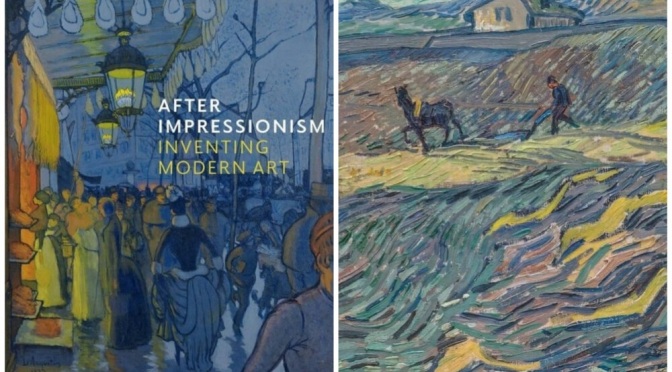
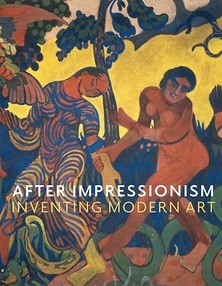
Christie’s (March 24, 2023) – Curator MaryAnne Stevens explains the inspiration for the National Gallery’s new show, which is sponsored by Christie’s. Dominated by Cezanne, Van Gogh, Gauguin and Munch, it also includes lesser-known figures such as Isidre Nonell and Max Slevogt.
Explore a period of great upheaval when artists broke with established tradition and laid the foundations for the art of the 20th and the 21st centuries.
The decades between 1880 and the outbreak of the First World War in 1914 were a complex, vibrant period of artistic questioning, searching, risk-taking and innovation.
The exhibition celebrates the achievements of three giants of the era: Paul Cézanne, Vincent van Gogh and Paul Gauguin and follows the influences they had on younger generations of French artists, on their peers and on wider circles of artists across Europe in Barcelona, Berlin, Brussels and Vienna.
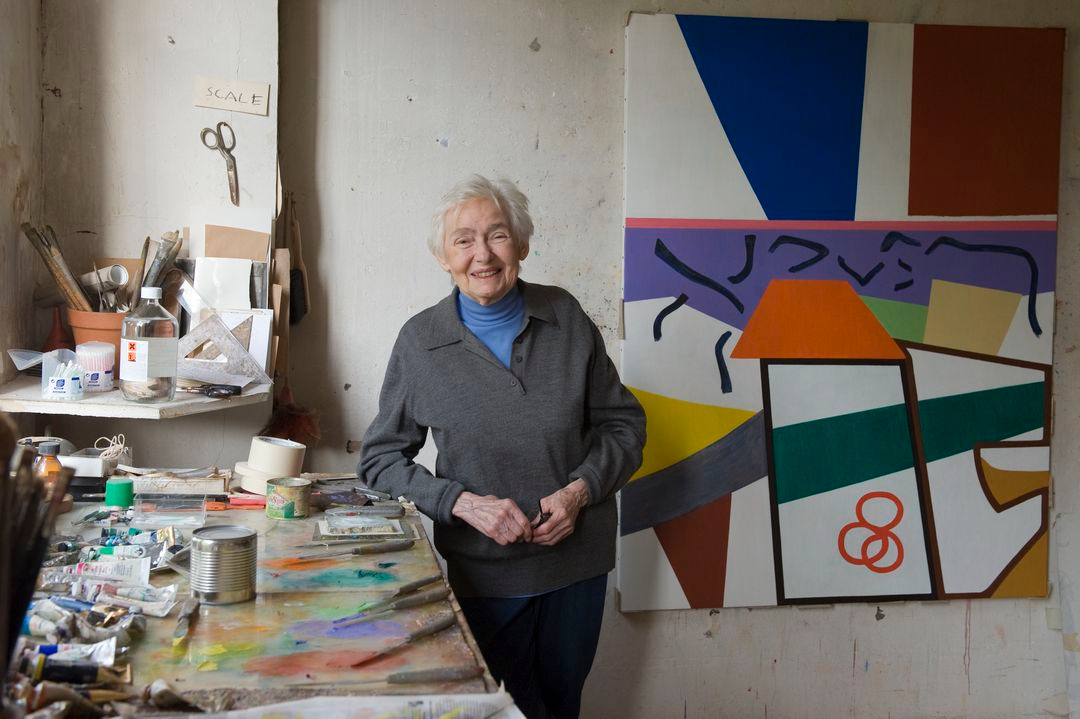
The exhibition at the Kunstmuseum Basel presents 113 works, from Shirley Jaffe’s early abstract expressionist works to the geometric paintings that are characteristic of her late oeuvre.
Born in New Jersey in 1923 as Shirley Sternstein, in 1949, the artist, now Mrs Jaffe, moved to Paris. Following her short-lived her marriage to the journalist Irving Jaffe, the painter decided to remain in France. Having soon established herself in the city, she held regular contact with the American “art expats” Norman Bluhm, Sam Francis, and Joan Mitchell, who had relocated to Paris somewhat later.
Her work dating from this period may be attributed to Abstract Expressionism, a form that sought to draw exclusively from its own resources and which consisted primarily of wildly applied fields of colour and gestures. Although, for the art market at the time, this amounted to a success formula Jaffe nevertheless decided to strike out in a different direction.
March 24, 2023: This week: Art Basel Hong Kong bounces back. After cancellations, delays and two years of restricted fairs, the fair has returned to something like pre-Covid normality.
So, as other Asian art centres like Seoul and Singapore become increasingly influential, what is the atmosphere like in Hong Kong? Gareth Harris, chief contributing editor at The Art Newspaper, joins us to discuss the fair, the M+ museum and more. It is becoming increasingly clear that social media corporations have become self-appointed cultural gatekeepers that decide which works of art can freely circulate, be pushed into the digital margins or even banned.
Our live editor, Aimee Dawson, talks to the artist Emma Shapiro and Elizabeth Larison, the Director of the Arts & Culture Advocacy Program at the National Coalition Against Censorship, about the issue and a project to counter this tendency, called Don’t Delete Art. And this episode’s Work of the Week is Naabami (thou shall/will see): Barangaroo (army of me), a photographic project by Brenda L. Croft, in which she depicts fellow First Nations women and girls.
The work is part of The National 4: Australian Art Now, a survey across multiple venues in Sydney. One of the show’s curators, Beatrice Gralton, tells us about Croft’s epic series.Art Basel Hong Kong, until 25 March.Visit Don’t Delete Art: dontdelete.artThe National 4: Australian Art Now continues until 23 July.
Musée d’Orsay (March 23, 2023) – Édouard Manet (1832-1883) and Edgar Degas (1834-1917) were both key players in the new painting of the 1860s-80s. This exhibition, which brings together the two painters in the light of their contrasts, forces us to take a new look at their real complicity.
Edgar Degas’s Édouard Manet et sa femme (around 1868-69). Manet was unhappy with the “deformation” of his wife Suzanne’s features and cut her face out of the paintingKitakyushu Municipal Museum of Art
It shows what was heterogeneous and conflicting in pictorial modernity, and reveals the value of Degas’s collection, where Manet took a greater place after his death.
A comparison of artists as crucial as Manet and Degas should not be limited to identifying the similarities in their respective bodies of work.
Admittedly, there is no lack of analogies among these key players in the new painting of the 1860s-80s when it comes to the subjects they imposed (from horse races to café scenes, from prostitution to the tub), the genres they reinvented, the realism they opened to other formal and narrative potentialities, the market and the collectors they managed to tame, and the places (cafés, theaters) and circles, whether comprised of family (Berthe Morisot) or friends, where they crossed paths.
SCHIRN KUNSTHALLE FRANKFURT (March 22, 2023) – From March 23 to May 29, 2023, the Schirn Kunsthalle Frankfurt is presenting a major solo exhibition by the Turner Prize winner Elizabeth Price (b. 1966), including both new and recent works that are being shown for the first time in Germany.
The artist creates moving-image works, composing visuals, text, and sound to form spatial installations that restage cultural and sociopolitical events and focus attention on largely unnoticed stories. Price’s moving-image works are grounded in a conceptual approach.
Elizabeth Price (b. 1966) makes the transformation of digital works visible. The artist creates moving images, composing visuals, text, and sound to form spatial installations that restage cultural and sociopolitical events and focus attention on largely unnoticed stories. The SCHIRN is presenting a major solo exhibition of this winner of the Turner Prize, including both new works and others that are being shown for the first time in Germany.
Each of her video works is the result of meticulous research and a wide-ranging examination of archives and collections of material. Over the course of her digital appropriation, Price develops new narratives from art objects and documents of historical events. A recurring topic is the changing world of work as a result of digitalization, the migration of manual work to emerging countries that pay low wages, and the increase in information work, office activities, and administration. The SCHIRN is showing two extensive installations, each with two corresponding videos, as well as four video lectures created during the coronavirus lockdown which provide insight into the artist’s working process. Price’s videos defamiliarize the past until it is no longer recognizable, replacing it with new, seductive, and anarchic energy.