

Category Archives: Environment
Climate Documentary: ‘Colorado River In Crisis’

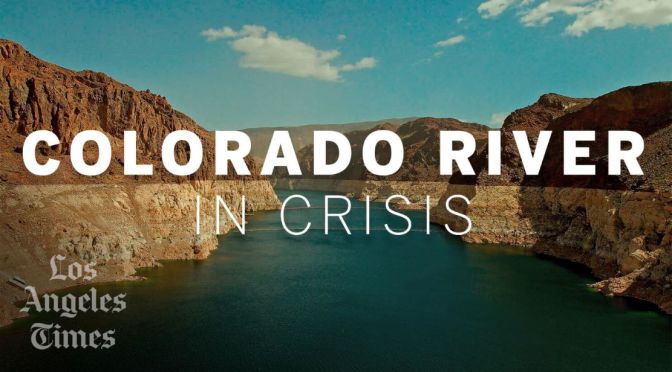
Water drawn from the river flows to millions of people in cities from Denver to Los Angeles and irrigates vast farmlands. For decades, sections of the river have been entirely used up, leaving dusty expanses of desert where water once flowed to the sea in Mexico. Now, chronic overuse and the effects of climate change are pushing the river system toward potential collapse, with depleted reservoirs near the lowest levels since they were filled.
A water reckoning is about to transform the landscape of the Southwest. Colorado River in Crisis follows Los Angeles Times journalists traveling throughout the river’s watershed, from the headwaters in the Rocky Mountains to the river’s dry delta. These stories reveal the stark toll of the river’s decline, responses that have yet to match the scale of the crisis, and voices that are urging a fundamental rethinking of how water is managed and used to adapt to the reality of an overtapped and dwindling river.
This documentary was filmed and produced by Albert Brave Tiger Lee, with reporting by Ian James and other L.A. Times journalists. Consulting producers included Maggie Beidelman, Robert Meeks and Erik Himmelsbach-Weinstein. (46 minutes)
Read the L.A. Times series Colorado River in Crisis: https://www.latimes.com/environment/s…
Environment: The Grand Canyon Is Losing Its River


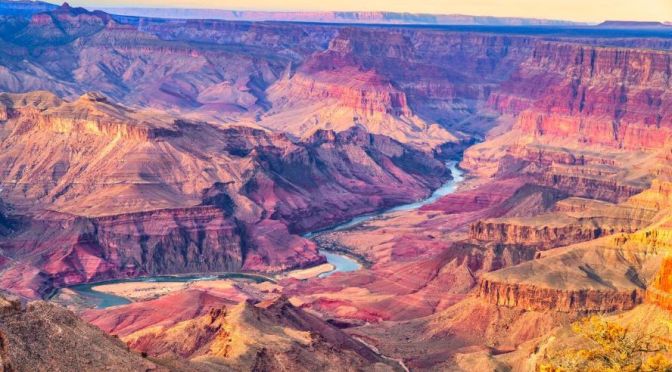
The Grand Canyon, a Cathedral to Time, Is Losing Its River
Written and photographed by Raymond Zhong, who joined scientists on a 90-mile raft expedition through the canyon.

Since 1963, the Glen Canyon Dam has been backing up the Colorado for nearly 200 miles, in the form of America’s second-largest reservoir, Lake Powell. Engineers constantly evaluate water and electricity needs to decide how much of the river to let through the dam’s works and out the other end, first into the Grand Canyon, then into Lake Mead and, eventually, into fields and homes in Arizona, California, Nevada and Mexico.
Spend long enough in the canyon, and you might start feeling a little unmoored from time yourself.

The immense walls form a kind of cocoon, sealing you off from the modern world, with its cell signal and light pollution and disappointments. They draw your eyes relentlessly upward, as in a cathedral.
You might think you are seeing all the way to the top. But up and above are more walls, and above them even more, out of sight except for the occasional glimpse. For the canyon is not just deep. It is broad, too — 18 miles, rim to rim, at its widest. This is no mere cathedral of stone. It is a kingdom: sprawling, self-contained, an alternate reality existing magnificently outside of our own.
And yet, the Grand Canyon remains yoked to the present in one key respect. The Colorado River, whose wild energy incised the canyon over millions of years, is in crisis.

Papua New Guinea Travel: Secrets Of The Sepik River Basin – ‘A Second Amazon’

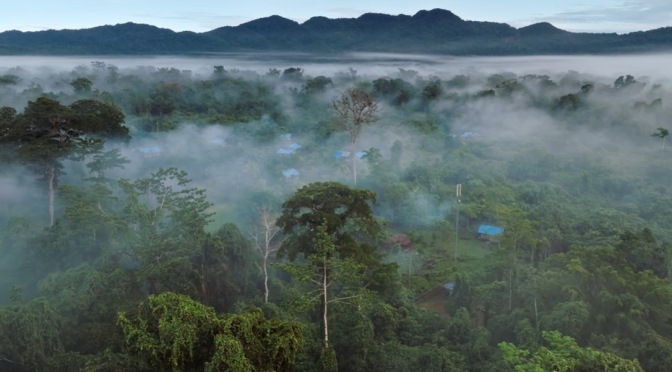
It’s a place few outsiders ever get to see. For some time, PNG correspondent Natalie Whiting has been hearing rumours about what’s going on in the remote areas upriver – claims of a logging land grab, police brutality, even killings. She undertakes the journey far up the Sepik River to see for herself what’s happening. In the rainforest of the Upper Sepik a community is divided.
Logging operations and a proposed massive mine site bring hope of economic prosperity for some. But others fear development of the land by international companies means environmental destruction with little benefit. PNG is the world’s largest exporter of tropical round logs but out of sight in the Sepik region some landowners say the logging is happening without proper consent and there are consequences for those who stand in the way.
With a long history of mistrust of big corporations and the promises they make, many of the locals are angry and ready to do whatever it takes to preserve some of the most unspoilt rainforests and waterways on the planet. Read more here: https://ab.co/3Jr8kWE
Environment: ‘Guardians Of The Glaciers’ In France

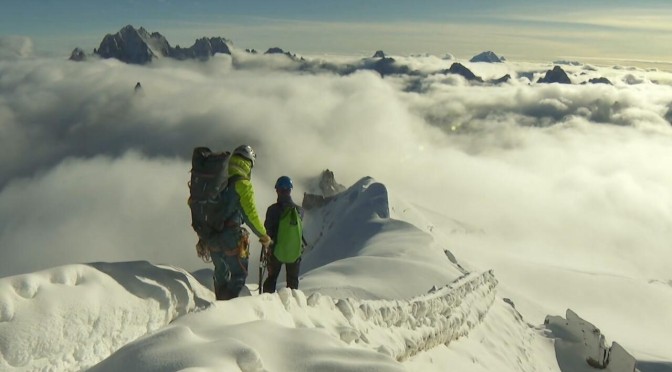
Among the most emblematic glaciers is the Mer de Glace, or Sea of Ice, which retreats a little more each year, under the watchful eye of tourists. Meanwhile, the Bossons glacier reveals aircraft debris that was thought to be lost forever. FRANCE 24 went to meet some of the guardians of the glaciers.
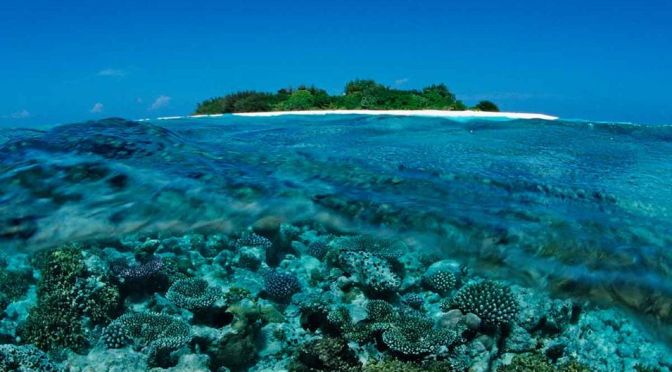
Views: Saving The Maldives From Rising Sea Levels

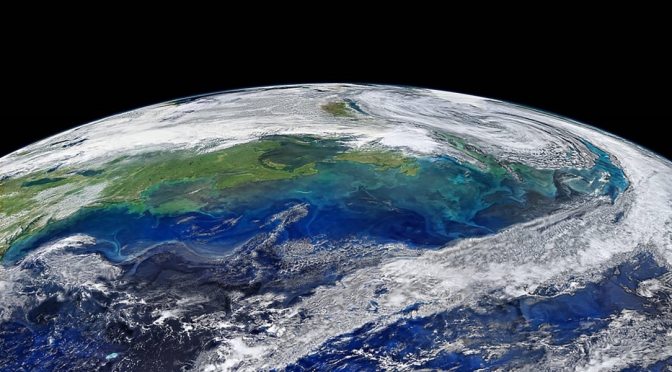
Science: How Advanced Computer Models Project Future Climate Scenarios

Over many decades, researchers at Princeton University have played a leading role in the development of advanced computational models that simulate interactions among these elements to inform an understanding of future climate scenarios under varying conditions.
In this video, climate scientists Gabe Vecchi and Laure Resplandy discuss how computational models are used to project future climate scenarios and inform mitigation strategies.
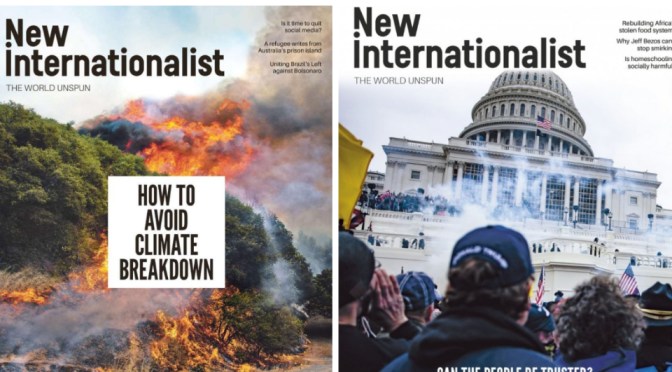
WORLD JOURNALISM: NEW INTERNATIONALIST – NOV ’22


TAKE BACK THE LAND
The land beneath our feet is what sustains us – from it we can produce food, construct shelter and build livelihoods. But, it’s also a cultural marker and a source of identity. Its control has been a long-favoured tool of colonizers, wealth hoarders and polluters, while its fiercest protectors – often Indigenous peoples – are criminalized, violated and dispossessed. This edition hears from struggles to take back the land in Brazil, Bangladesh, Kenya and North America. We also launch our new series ‘Decolonize how?’ which will explore what people are doing to dismantle the impacts – and current realities – of British-linked colonialism.
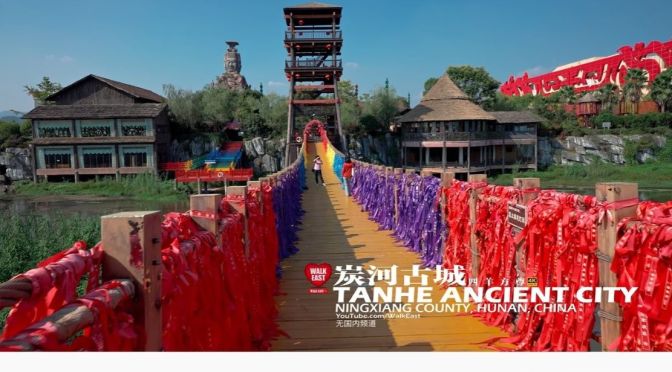
Views: Tahne Ancient City In Southeast China (4K)
Tanhe Ancient City, based on the Tanheli Site, is China’s first park themed on the Zhou Dynasty (c.11th century-256 BC).
The Zhou Dynasty was the source and heyday of the Chinese civilization, and it created a splendid culture. Ningxiang where the Tanhe Ancient City is located is known as the “Hometown of Bronze wares in South China.” It has been the source of a number of important bronze wares, including the Four-ram Zun Vessel, a vessel of the late Shang Dynasty (c. 16th-11th century BC), and the Bronze Ding with human-mask design. It is also the center of ritual and music culture in China.
The cultural genes of the Zhou Dynasty have been passed down from generation to generation, and are influential to this day. The scenic area of the Tanhe Ancient City has simple and solemn palaces and temples as well as noisy and bustling old streets. Chime bells, poems, and rituals here make the life of three thousand years ago come back again, and the civilization from a distant age seems to reappear.

Rainforests Of Africa: The Protectors Of Gabon
Gabon’s soul lies hidden beneath a thick green mantle, the source of most of the Gabonese traditions, medicines, spirituality, and resources. A precious heritage that a small number of men and women protect.
We meet Kombo, a Babongo hunter, and Juste, who is in touch with the forest spirits. In human cultures in general, and perhaps particularly in Africa, the landscape is the first shrine of tradition.
From the sand dunes of Mauritania to the currents of River Senegal, to the Lions of the Beninese savannah to the spirits of the forests of Gabon, this series explores the origin, the nature and the survival of deep links between several populations in West Africa and their habitat.
 Boomers Daily