The Trump Administration has chosen to honor the Semiquincentennial of a nation of immigrants with a vision that sends the country back in time. By Jonathan Blitzer
The neurophysiological disorder is characterized by a severe aversion to sound—and the struggle to convince others of the severity of that aversion. By Sloane Crosley
THE NEW YORK TIMES MAGAZINE:The 6.7.26 Issue features Wesley Morris on the director Steven Spielberg; Adam Iscoe on prediction markets; Juan Arredondo documents a family deported to Colombia; and more.
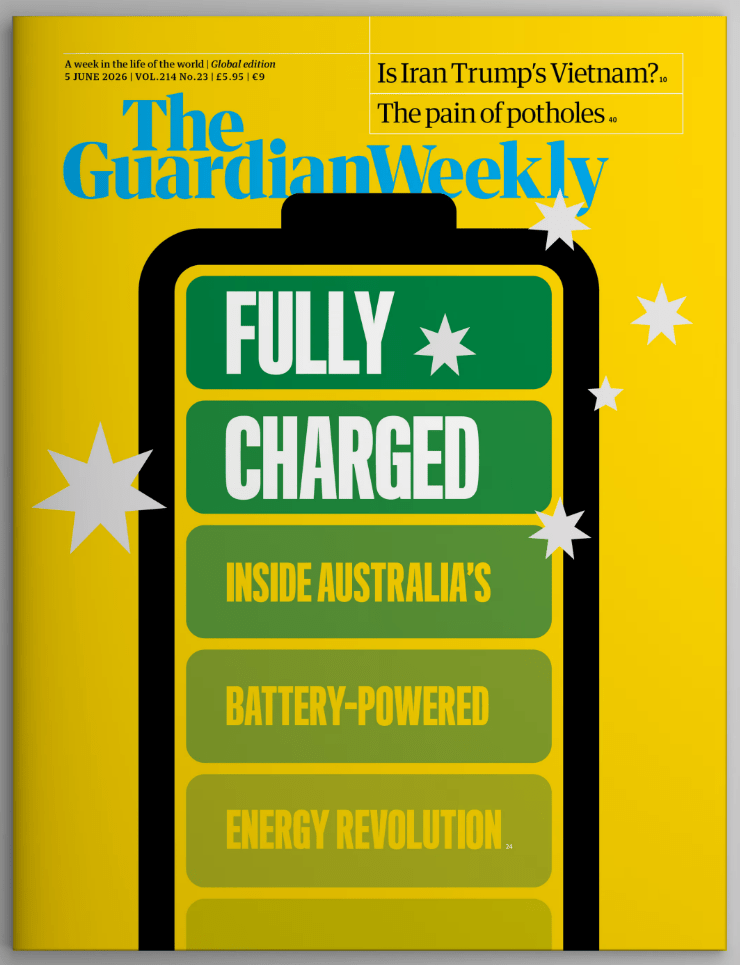
Last week, as the war in Iran continued to choke global oil supplies, the UK government announced a 13% increase in the cap on energy prices. But it was another related story on the other side of the world that caught my eye.
In Australia, the energy minister announced a fall of up to 10% in the benchmark electricity price in parts of the country, driven by record levels of renewables and batteries in the power grid.
Australia was already a world leader in domestic solar power. But with little fanfare, it is also pioneering a revolution in home renewables and battery usage, proving that with the right policy initiatives, profound changes can be made to the ways energy markets work.
Five essential reads in this week’s edition
The big story | Is the Iran war Trump’s Vietnam moment? The current Middle East conflict has been far shorter than the war that defined the 1960s and early 1970s, but it has rapidly revealed the strategic weakness of US firepower in an interconnected world, argues Patrick Wintour
Health | Cancer breakthroughs from the world’s largest oncology conference From groundbreaking genomic tests to tumour-shrinking injections, health editor Andrew Gregory reports from the American Society of Clinical Oncology’s annual meeting in Chicago
Feature | The people fighting back against pothole-riddled roads The dire state of roads has provoked pothole vigilantes and become a political flashpoint from Manchester to Manhattan. How did we get here? Oliver Franklin-Wallis reports
Opinion | If you’re still on Elon Musk’s X, ask yourself this: why? Some argue that quitting the platform formerly known as Twitter cedes the space to malign actors. But it’s an open sewer, beyond redemption, says Jonathan Liew
Culture | Children’s illustrators on the art of storytelling From The Twits to The Gruffalo and an angry bear in search of his hat … famous illustrators talk to Stuart Heritage about how they bring children’s books to life
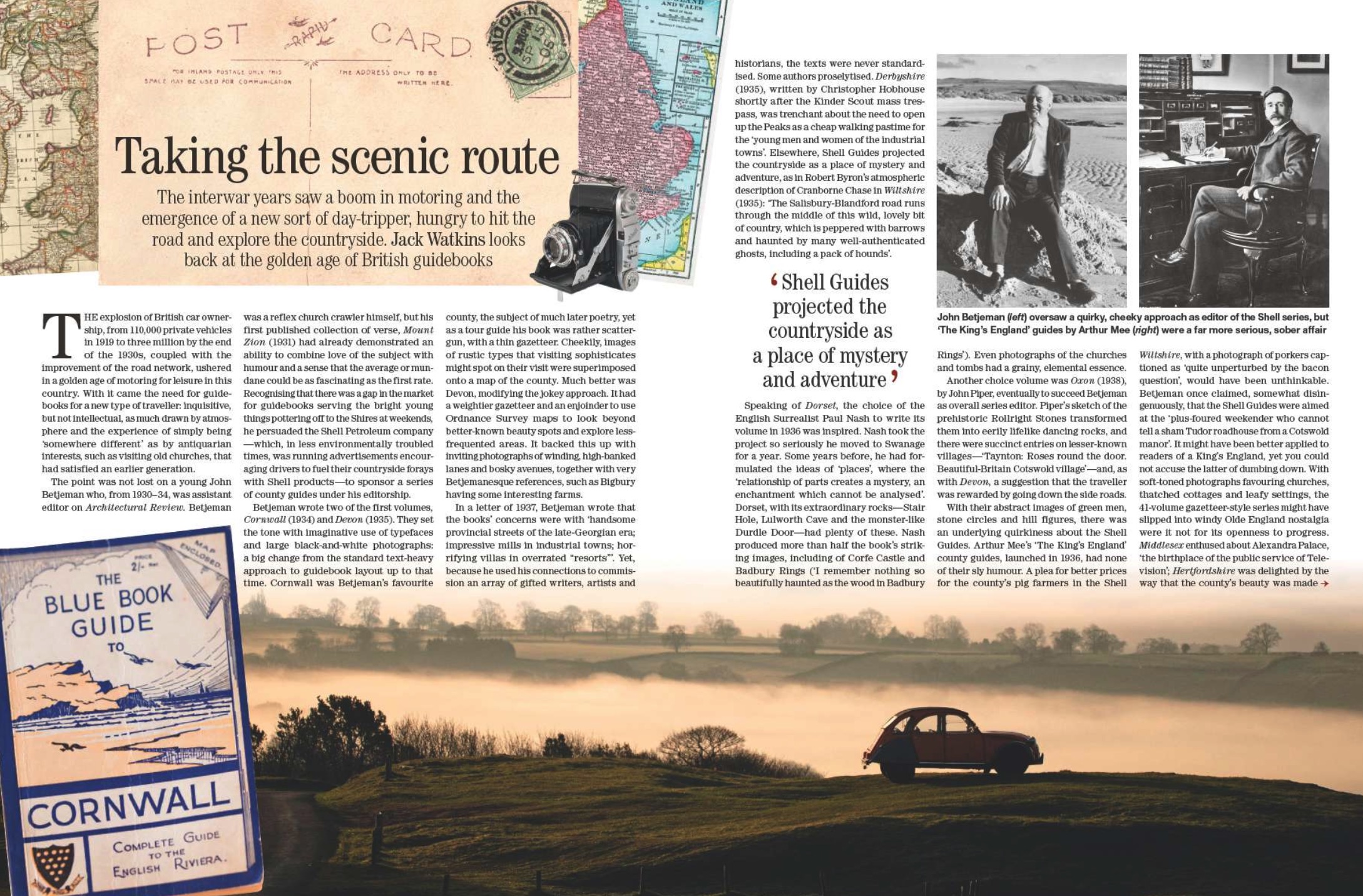
History, hauntings and high-jinx figured in Britain’s first motoring guides, finds Jack Watkins
What a Derby day
Epsom hosts one of racing’s most thrilling spectacles. Jack Watkins picks 10 of the best winners
Monaco
Adam Hay-Nicholls explores the changing face of Monaco, Steven King treads the Prince Rainier III sculpture trail, Arabella Youens seeks out the best properties for sale in the Principality and Mark Hedges cruises serenely into town
His green and pleasant land
John Constable painted places he knew and loved the best. Susan Owens examines how insight influenced his landscapes
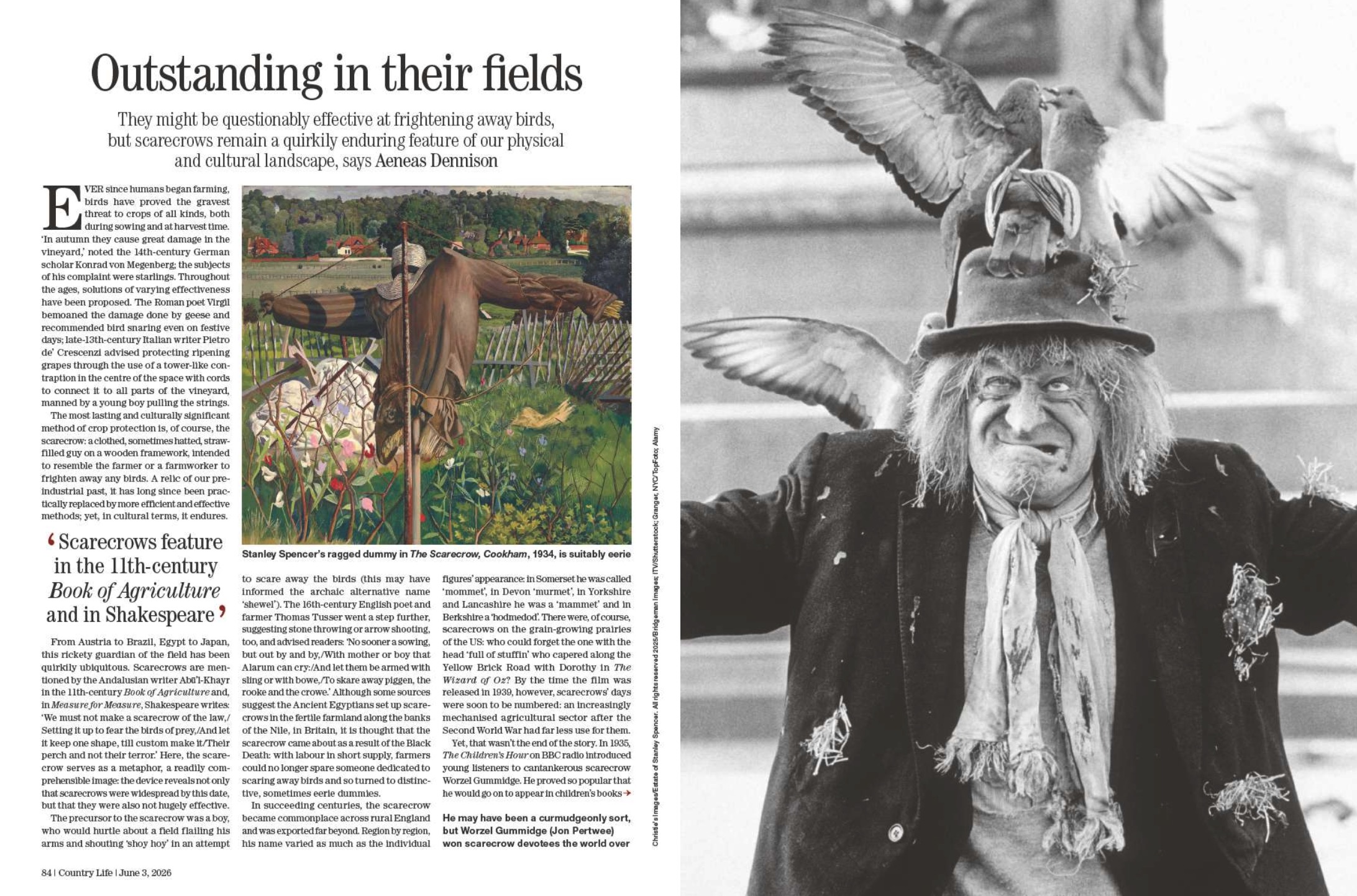
Outstanding in their fields
From ‘shoy hoys’ to Worzel Gummidge, Aeneas Dennison traces the story of scarecrows
Andy Wilman’s favourite painting
The television producer chooses a work that reveals a human response to the brutality of war
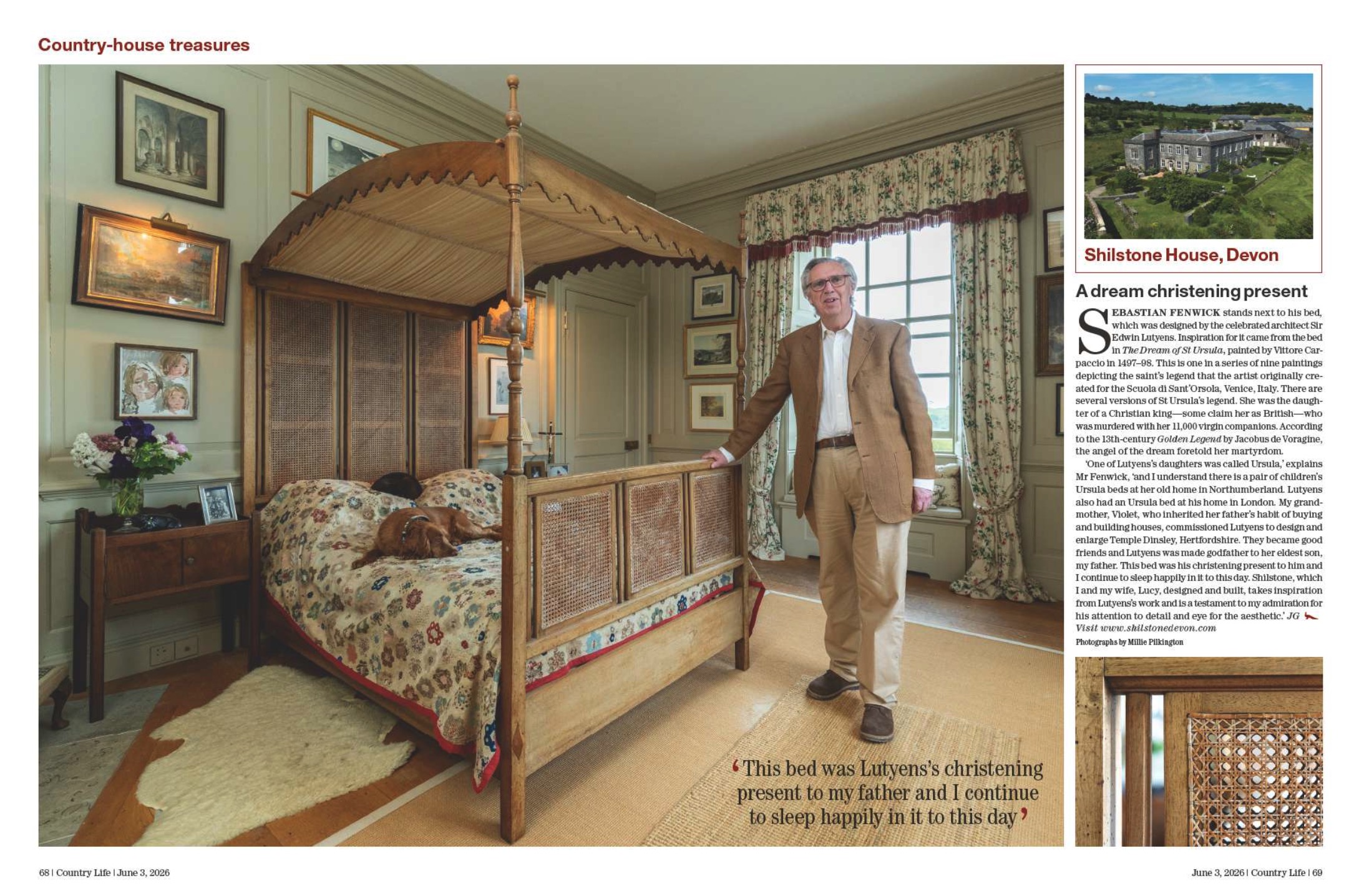
Country-house treasure
A godfatherly gift ensures that Sir Edwin Lutyens and Shilstone House in Devon are happy bed-fellows, discovers John Goodall
Building on the past
In the second of two articles, John Goodall reveals how Elizabethan Doddington Hall is thriving into the 21st century
The legacy
Octavia Pollock profiles Percy Shaw, the inventor of cat’s eyes, the 20th century’s top design
Winging it
The feral pigeon’s modern-day scavenging masks a more valiant history, suggests Mark Cocker
Drawn to the land
Katharine Freeland meets artists who are mapping estates in an echo of traditional landowners
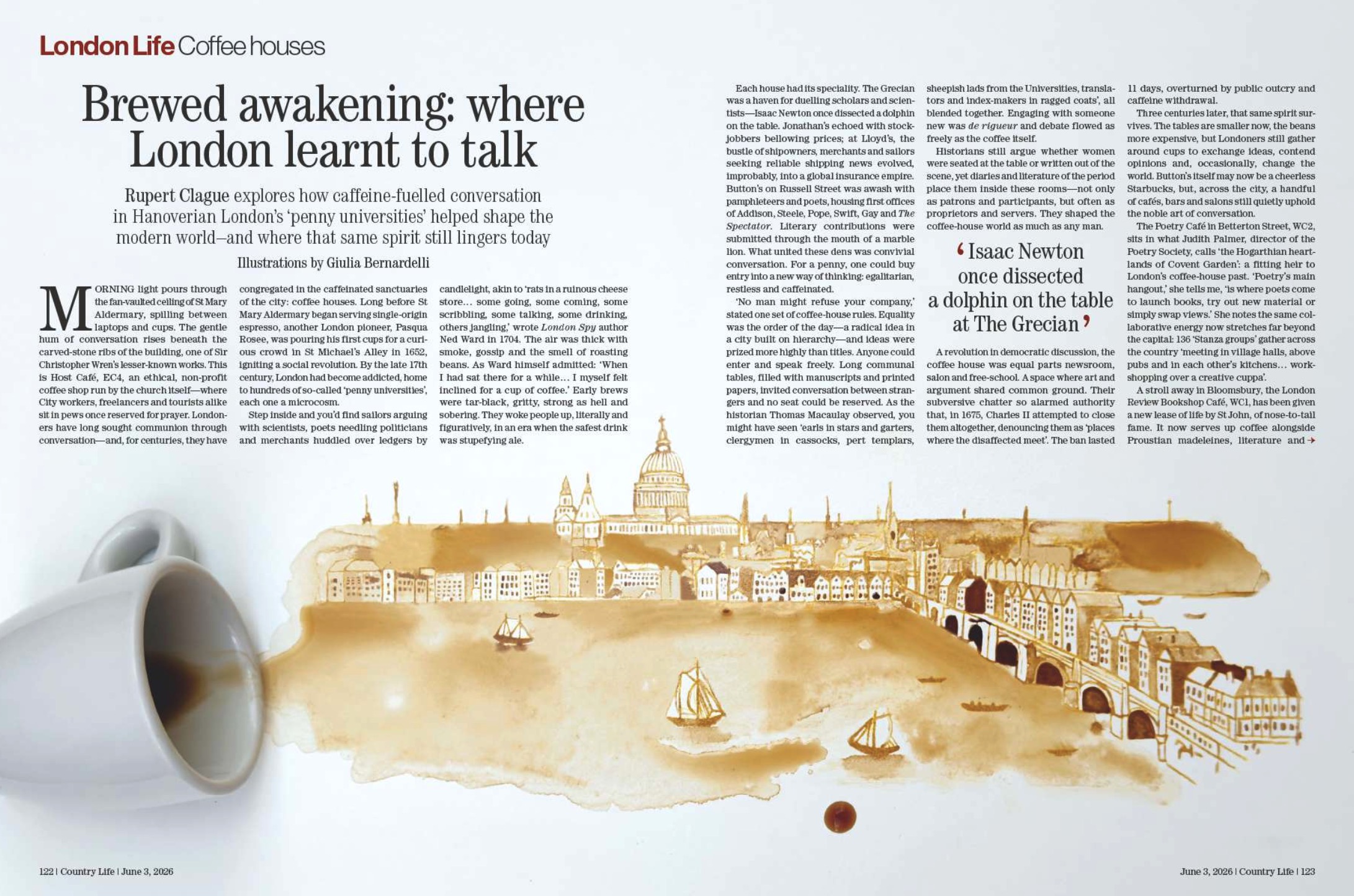
Jack Watkins strolls the streets that became an artist’s muse, our writers have all you need to know this month, Will Hosie shares seven of the best homes on the market and Rupert Clague charts the rise of the capital’s coffee houses
Death, taxes and Tests with New Zealand
What next for England’s Bazball approach, asks James Fisher
Luxury
Amie Elizabeth White is on red alert — and gives pearl a whirl
Interiors
Arabella Youens admires an extended Cotswolds cottage and Giles Kime ponders going it alone
Dreaming of roses
Charles Quest-Ritson shares 1,000 reasons to fall in love with the restored walled garden at Dummer House, Hampshire
Arts & antiques
Rebecca Salter, president of the Royal Academy, outlines her ambitions to Carla Passino
Travel
A mountain-top encounter rings a bell with Pamela Goodman
Why read historical fiction? A new novel by the author of “Hamnet” offers one answer: because it’s fun. By Katy Waldman
Why the American Novel Refused to Grow Up
For the critic Leslie Fiedler, the country’s best and worst fiction was shaped by visions of escape from society—and therefore from maturity. By Becca Rothfeld
The World Cup According to Gianni Infantino
FIFA’s powerful president is remaking global soccer in his own image. Can the sport survive him? By Sam Knight
THE NEW YORK TIMES MAGAZINE:The 5.31.26 Issue features Taffy Brodesser-Akner on the A.I. actress Tilly Norwood; Daniel Waite Perry on sperm racing; Jeffrey Toobin on how to get a pardon in Trump’s Washington; and more.
One reason I love my partner is his sharp mind and critical thinking. Using A.I. for every decision is something I don’t understand. By Kwame Anthony Appiah
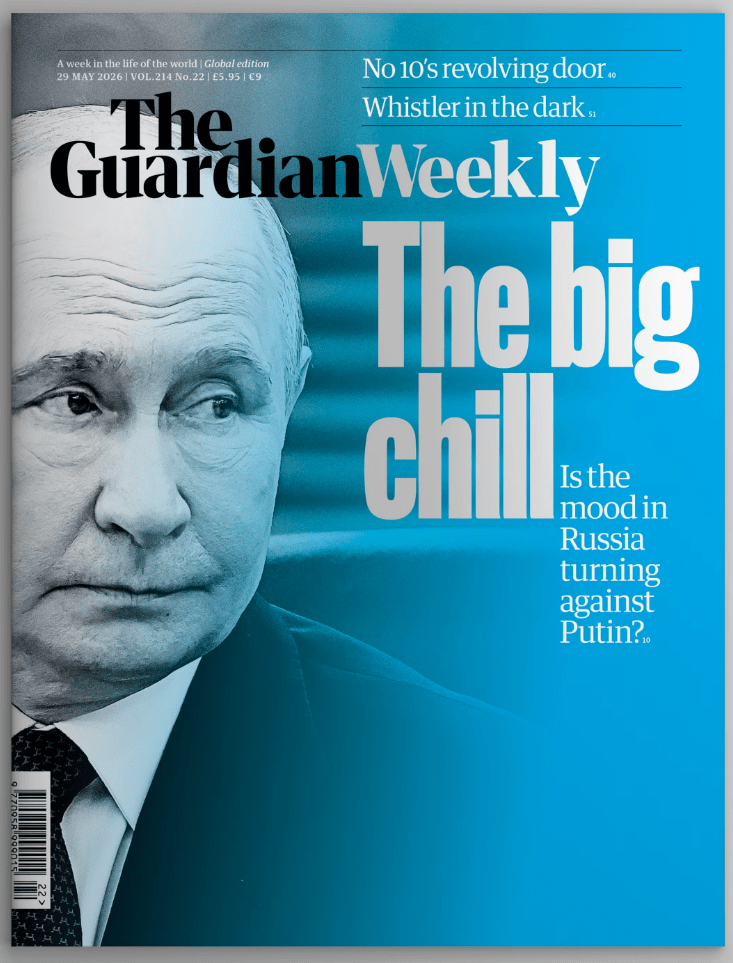
Like the majority of western news organisations, the Guardian has had no correspondent or reporter in Moscow since the invasion of Ukraine. But the Kremlin’s efforts to shut down outside media coverage has not stopped us from taking the political temperature of Russia. Indeed, as Pjotr Sauer and Shaun Walker report, attempts to close off the country have lost Vladimir Putin support among both the elites and ordinary citizens.
Talking to contacts made from many years working inside Russia, Pjotr and Shaun detail a shifting mood as the invasion drags on into its fourth summer with the economic and personal costs being increasingly felt at home. As one insider explains, “there is profound disappointment in Putin”, accompanied by “a growing sense that some kind of catastrophe is looming”.
The narrative of a bunkered ruler surrounded by underlings too scared to tell them the truth historically leads to putsch or revolution but our analysis shows that at present, though the winds may be chilling at home, Putin is far from being frozen out of power.
Spotlight | Ebola: ‘Out of control’ A new strain of virus, aid cuts and conflict in parts of the Democratic Republic of the Congo have hampered efforts to halt the spread of the virus, report Prosper Heri Ngorora in Goma and Carlos Mureithi
Science | Here be monsters An exhibition, Jurassic Oceans, at London’s Natural History Museum, showcases the fearsome creatures that once lurked below the surface – and offers a stark warning about the impact of warming waters on marine ecosystems today. Matthew Pearce dives in
Feature | When the lights went out in Berlin Earlier this year power was cut to a swathe of the German capital. A shadowy organisation, Volcano Group, claimed responsibility. But in the absence of any leads, theories of eco-terrorism, Russian meddling and far-right activity have flourished, discovers Ben Knight
Opinion | Victory doesn’t happen overnight Arsenal’s careful planning to regain the Premier League title is a lesson in long-term thinking that the Labour party, and Arsenal fan Keir Starmer, should pay attention to, argues Jonathan Freedland
Culture | Back to black with Whistler What does restoring Arrangement in Grey and Black No 1, or Whistler’s Mother, teach you about the artist who heralded a century of great American artists and about the craft of painting colour? Sarah Walden uncovers it all
The outbreaks of hantavirus and Ebola expose the shortsightedness of America’s retreat, under the Trump Administration, from its role as a global-health leader. By Dhruv Khullar
The Trump-Epstein Files: Look but Don’t Touch
The Donald J. Trump and Jeffrey Epstein Memorial Reading Room, in Tribeca, housed three and a half million bound files, along with a handy time line charting the ickiness. By Charlotte Goddu
How Problematic Is Patriotism?
National pride in America has plummeted in the Trump era. Is it worth trying to salvage? By Arthur Krystal
THE NEW YORK TIMES MAGAZINE:The 5.24.26 Issue features Azeen Ghorayshi on testosterone and a new male ideal; Avraham Z. Cooper on the interstitium; M.H. Miller on the Venice Biennale; and more.
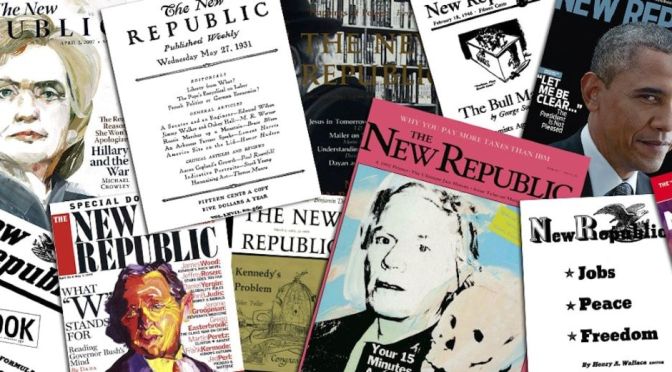
THE NEW REPUBLIC MAGAZINE: The latest issue features a cover story analyzing the president’s mental fitness alongside reporting on administration impacts on higher education, energy, and agriculture. The issue also explores social issues, including the anti-abortion movement, the rise of digital misogyny, and cultural critiques of television and literature.
His recent tirades confirmed what more than half of America now believes: The president is mentally unfit. How will we survive two and a half more years of this? And what’s he got in store for us?
The president has long been operating under the assumption that he is immune from prosecution. His latest scheme, however, may be a step too far.
Losing It
Seriously – 2 1/2 more years of this?
The Election Fraudsters Who Will Follow in Tina Peters’s Footsteps
We can debate all day whether Colorado Governor Jared Polis should have commuted her sentence. Meanwhile, state and local officials are openly preparing to meddle in the midterm elections.
Why Trump Is So Afraid of Stephen Colbert, Jimmy Kimmel, and The View
Political scientist Meredith Conroy says that late-night shows are still politically relevant in as their audiences shrink.
News, Views and Reviews For The Intellectually Curious













 Boomers Daily