
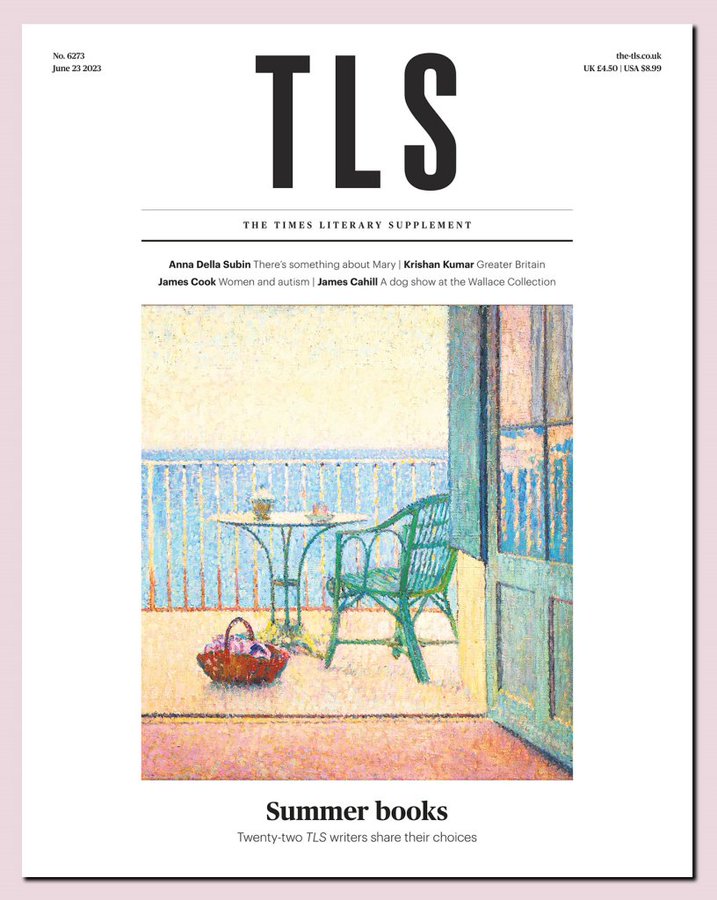
Times Literary Supplement (June 23, 2023): Twenty-two TLS writers’ choices for best Summer 2023 Books, Anna Della Subin on Mary Magdalene; Kojo Koram on global capitalism; Zachary Leader on Joyce and Léon and illustrating Victorian classics

Times Literary Supplement (June 23, 2023): Twenty-two TLS writers’ choices for best Summer 2023 Books, Anna Della Subin on Mary Magdalene; Kojo Koram on global capitalism; Zachary Leader on Joyce and Léon and illustrating Victorian classics
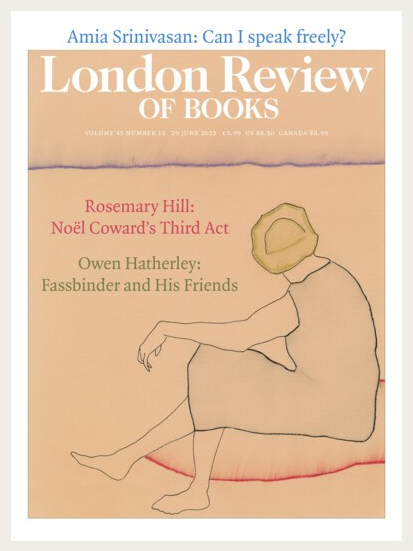
Noël Coward’s Third Act; Fassbinder and His Friends; Marx’s Literary Style by Ludovico Silva, and more…

Marx’s Literary Style
by Ludovico Silva, translated by Paco Brito Núñez.
Working on Capital in the British Museum, plagued by creditors and carbuncles, Karl Marx complained not only that nobody had ever written so much about money and had so little of it, but that ‘this economic crap’ was keeping him from writing his big book on Balzac. His work is studded with allusions to Homer, Sophocles, Rabelais, Shakespeare, Cervantes, Goethe and scores of other authors, though he was less enthralled by ‘Elizabeth’s arse-kissing poet’ Edmund Spenser, an advocate of state terror in Ireland.
Most of us would find it horrible to be told that we aren’t worth engaging with, that our views are socially unacceptable or merely a function of demography. But that it is painful to be on the receiving end of such remarks doesn’t mean that one’s own rights to ‘free speech’ are thereby imperilled; it might simply be a reminder that speech can wound.


Killingly by Katharine Beutner
In 1897 Bertha Mellish, a student at Mount Holyoke College in Massachusetts, disappeared. She was never found. Katharine Beutner uses this real-life mystery as the foundation for her second novel, Killingly (Corvus £14.99). Her focus is on those who were left behind, making what sense they can of Bertha’s exit from their lives. Agnes, her closest friend on campus, harbours knowledge she has vowed not to reveal; Florence, Bertha’s much older sister, is also keeping secrets from the past that have shaped her life; Henry Hammond, an arrogant medical man who believes he was destined to marry Bertha, uncovers truths for which he is unprepared. Beutner creates an impressive, multistranded story of pain, loss, and women’s struggle to escape the restrictions that are imposed on them.
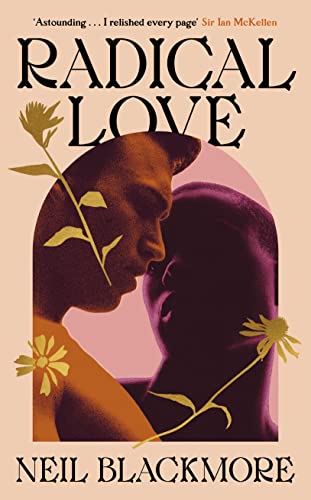
Radical Love by Neil Blackmore
Neil Blackmore’s Radical Love (Hutchinson £16.99) also takes a historical event — the Vere Street Coterie of 1810, which resulted in the hanging and pillorying of gay men — as the basis for its story. The narrator, John Church, is a minister who believes that love of all kinds should be religion’s motivating force. He takes this message to a molly house in Vere Street, where he offers same-sex marriages to the drag queens and rent boys who gather there. At the same time, he is driven by his own passion for Ned, a young former slave. Both a celebration of the erotic lives of long-dead gay Londoners and a lament for past persecutions, Radical Love is a powerful story of desire flourishing amid danger.

The Fascination by Essie Fox
The Fascination (Orenda £16.99) is the fifth novel by Essie Fox, in which she once again makes skilful use of the tropes of Victorian gothic fiction. Keziah Lovell, 15, is an unwilling accomplice in her father’s schemes to sell his quack elixir to gullible punters. She is assisted by her twin sister, Tilly, a petite beauty who stopped growing at the age of five. Then their father sells them to an enigmatic Italian man known only as “Captain”. Surrounded by the “freaks” of his tribe, they face unexpected threats in a story of society’s outsiders seeking acceptance and redemption.

Morgan Is My Name by Sophie Keetch
There has been no shortage recently of feminist retellings of Greek myths. New versions of the Arthurian stories have been less common, but Sophie Keetch’s Morgan Is My Name (Magpie £16.99) is the first volume of a promised trilogy that has Morgan Le Fay as its narrator. Usually cast as the villain in the Arthurian tradition, here she is a fiery, intelligent woman who refuses to play the roles expected of her and determines to take control of her life. Turning the legends on their heads, Keetch finds new potential in them.
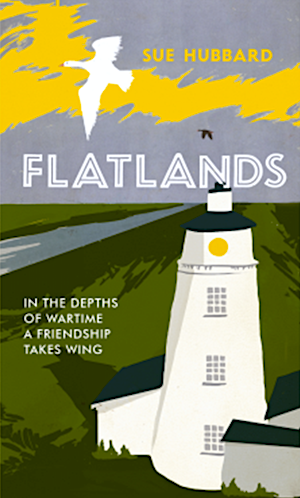
Flatlands by Sue Hubbard
Taking its inspiration from Paul Gallico’s novella The Snow Goose, Sue Hubbard’s Flatlands (Pushkin £16.99) explores the wartime relationship that develops between Freda, a 12-year-old evacuee from the East End of London, and Philip Rhayader, a troubled conscientious objector, who are both exiled to the East Anglian fenlands. Precise in its historical detail and admirable in its evocation of the large skies and isolation of its setting, this is a moving study of an unlikely friendship and the healing power of the natural world.
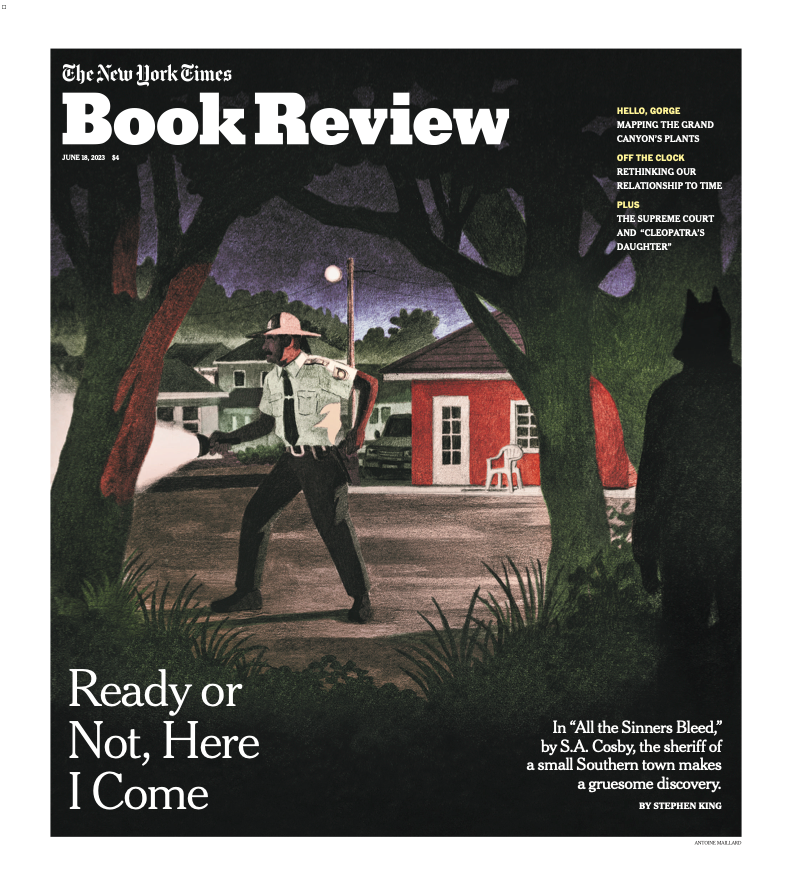

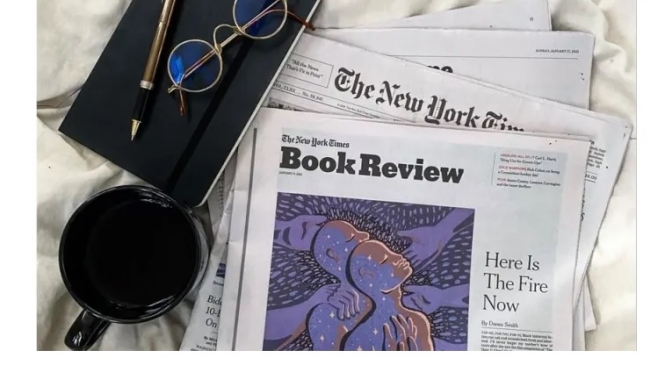
THE NEW YORK TIMES BOOK REVIEW – JUNE 18, 2023: Stephen King reviews of S. A. Cosby’s blistering new Southern gothic, “All the Sinners Bleed,” which graces our cover this week. Also featured are John Vaillant’s chillingly prescient book about a 2016 Canadian wildfire; a history that pieces together a botany expedition in the Grand Canyon some 85 years ago; and the spiky, percussive, heavy-metal-infused novel “Gone to the Wolves.”

Stephen King reviews S.A. Cosby’s latest novel, “All the Sinners Bleed.”
Titus Crown is an ex-F.B.I. agent who gets a sheriff’s job, almost by accident, in a rural Virginia community. He’s Black. Mr. Spearman teaches geography and wears a coat of many countries on Earth Day. He’s white. Given the name of the town and county where these two live — Charon — one can expect bad things to happen, and they certainly do. As in S.A. Cosby’s previous two novels, “Blacktop Wasteland” and “Razorblade Tears,” the body count is high and the action pretty much nonstop.

In Melissa Sevigny’s “Brave the Wild River,” we meet the two scientists who explored unknown terrain — and broke barriers.
Let’s start this story on a sun-blistered evening in August 1938. A small band of adventurers had just concluded a 43-day journey from Utah to Nevada — although perhaps “journey” is too tame a description for a trip that had required weeks of small wooden boats tumbling down more than 600 miles of rock-strewn rivers. The goal was twofold. First, to simply survive. And then, to chart the plants building homes along the serrated walls of the Grand Canyon.
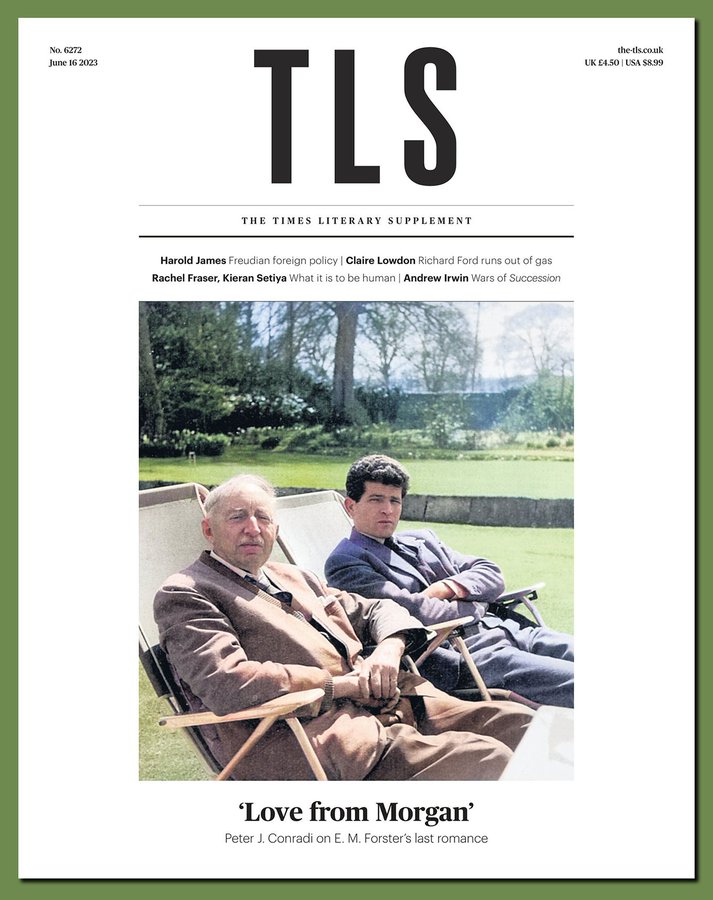
Times Literary Supplement (June 16, 2023): E.M. Forester’s last romance; Freudian foreign policy; Richard Ford runs out of gas; What it is to be human and Wars of succession…
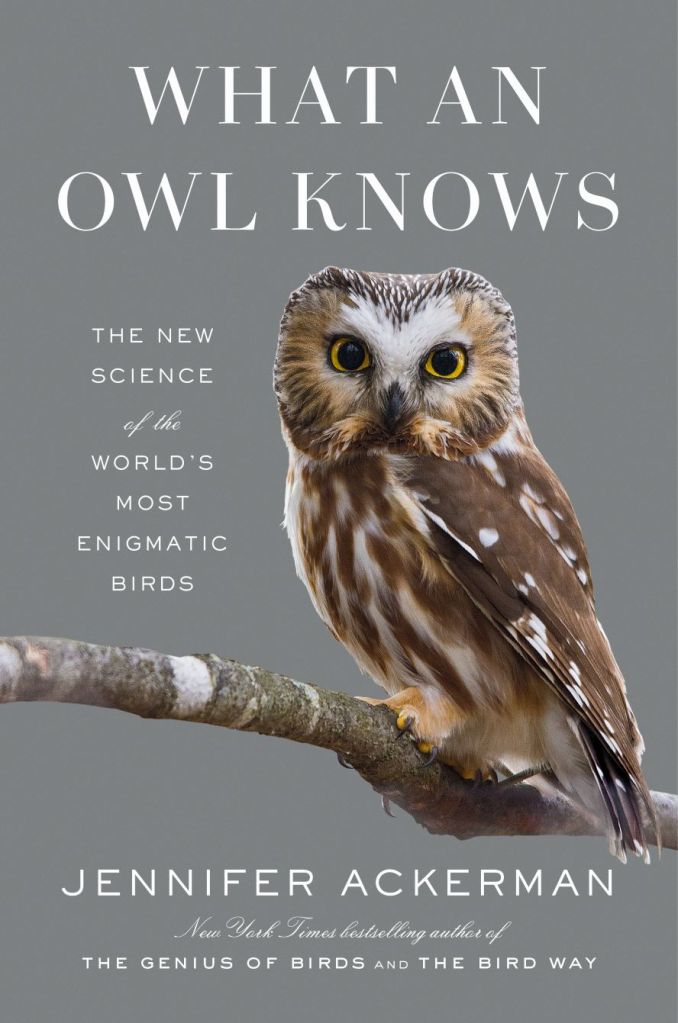
With their unnerving stare and eerie ways, it is small wonder that owls provoke superstition—and flights of fancy, as in the owl who sails with the pussycat in Edward Lear’s poem. In myths, stories and art, “owls speak of wisdom and luck, of misfortune and malevolence”, the author writes. They were associated with Athena, Greek goddess of wisdom.

Ms Ackerman is a natural-history writer who specialises in the avian world. In “What an Owl Knows” she offers an absorbing ear-tuft-to-tail appreciation of the raptor that Mary Oliver, a poet, called a “god of plunge and blood”. Owls, it seems, know a lot. Ms Ackerman draws on recent research to explain what and how.
To begin with, she stresses, there is no generic owl, but rather a diversity of some 260 species found on every continent bar Antarctica. They stretch from the fire-hydrant-sized Blakiston’s Fish Owl to the Elf Owl, which could fit in your palm. Most, but not all, are nocturnal.
Jennifer Ackerman has been writing about science and nature for almost three decades. Her most recent book, What an Owl Knows: The New Science of the World’s Most Enigmatic Birds, explores recent findings on the biology, behavior, and conservation of owls. Her previous book, The Bird Way: A New Look at How Birds Talk, Work, Play, Parent, and Think, was a finalist for the PEN/E. O. Wilson Literary Science Writing Award. Her New York Times bestselling book, The Genius of Birds, has been translated into twenty-five languages and was named one of the best nonfiction books of 2016 by The Wall Street Journal, a Best Science Book by NPR’s Science Friday, and a Nature Book of the Year by The Sunday Times.

The American Scholar (June 9, 2023): The idea of “Western civilization” looms large in the popular imagination, but it’s no longer taken seriously in academia.

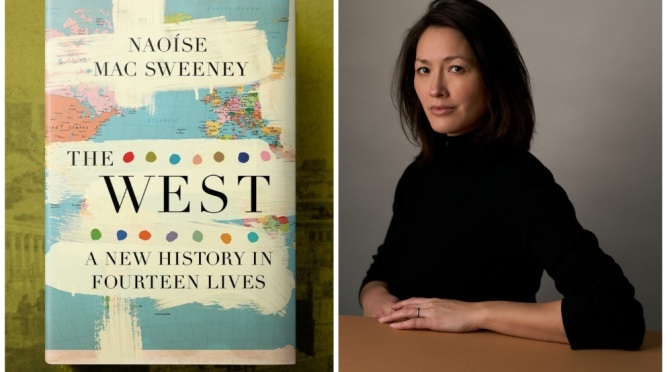
In her new book, The West: A New History in Fourteen Lives, historian Naoíse Mac Sweeney examines why the West won’t die and, in the process, dismantles ahistorical concepts like the “clash of civilizations” and the notion of a linear progression from Greek and Roman ideals to those of our present day—“from Plato to NATO.”
Through biographical portraits of figures both well-known and forgotten—Herodotus and Francis Bacon, Livilla and Phyllis Wheatley, Tullia d’Aragona and Abu Yusuf Yaqub ibn Ishaq al-Kindi—Mac Sweeney assembles a history that resembles less of a grand narrative than a spiderweb of influence. Successive empires (whether Ottoman, Holy Roman, British, or American) built up self-mythologies in the service of their expansionist, patriarchal, or, later, racist ideologies.
Mac Sweeney joins the podcast to talk about why the West has been such a dominant idea and on what values we might base a new vision of contemporary “western” identity.Go beyond the episode:Naoíse Mac Sweeney’s The West: A New History in Fourteen LivesWe have covered Greece and Rome in previous episodes, as well as Njinga of AngolaIn our Summer 2023 issue, Sarah Ruden considers how modern biographers distort VergilTune in every week to catch interviews with the liveliest voices from literature, the arts, sciences, history, and public affairs; reports on cutting-edge works in progress; long-form narratives; and compelling excerpts from new books.
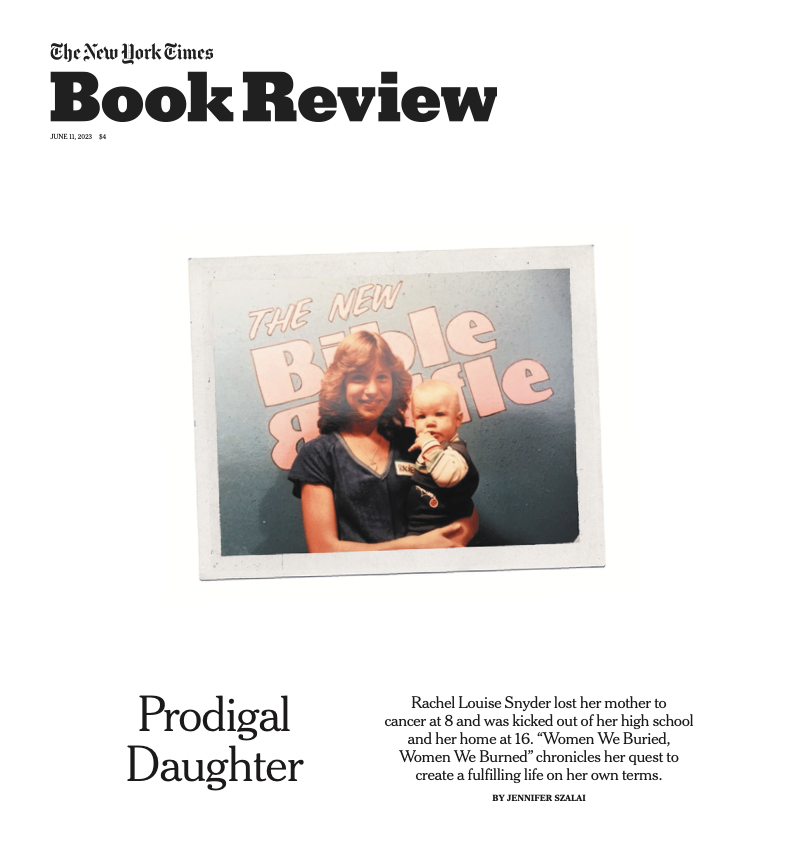
THE NEW YORK TIMES BOOK REVIEW – JUNE 11, 2023: This week’s issue brims with even more books to add to your teetering nightstand pile: talky new novels by Brandon Taylor, R.F. Kuang and Luis Alberto Urrea; a wistful ode to a beloved neighborhood bar; the latest crime fiction; even some Martin Amis titles you’ve always meant to pick up, plucked from A.O. Scott’s beautiful appraisal of the late British writer.

Our critic assesses the achievement of Martin Amis, Britain’s most famous literary son.
By A.O. Scott
On May 6, at the age of 74, Charles III was crowned king of England. A few weeks later, at 73, Martin Amis died at his home in Florida. One event seemed almost comically belated, the other tragically premature. Charles took over the family business well past normal retirement age, while Amis was denied the illustrious dotage that great writers deserve.

Brandon Taylor’s novel circulates among Iowa City residents, some privileged, some not, but all aware that their possibilities are contracting.
Reading Brandon Taylor’s new novel, “The Late Americans,” I thought more than once of the Bad Sex in Fiction Award that the English magazine Literary Review gave to decades of authors, many esteemed, before showing mercy in pandemic-chilled 2020. Not because the sex in Taylor’s novel is described badly, but because — described well! — so much of it is bad.

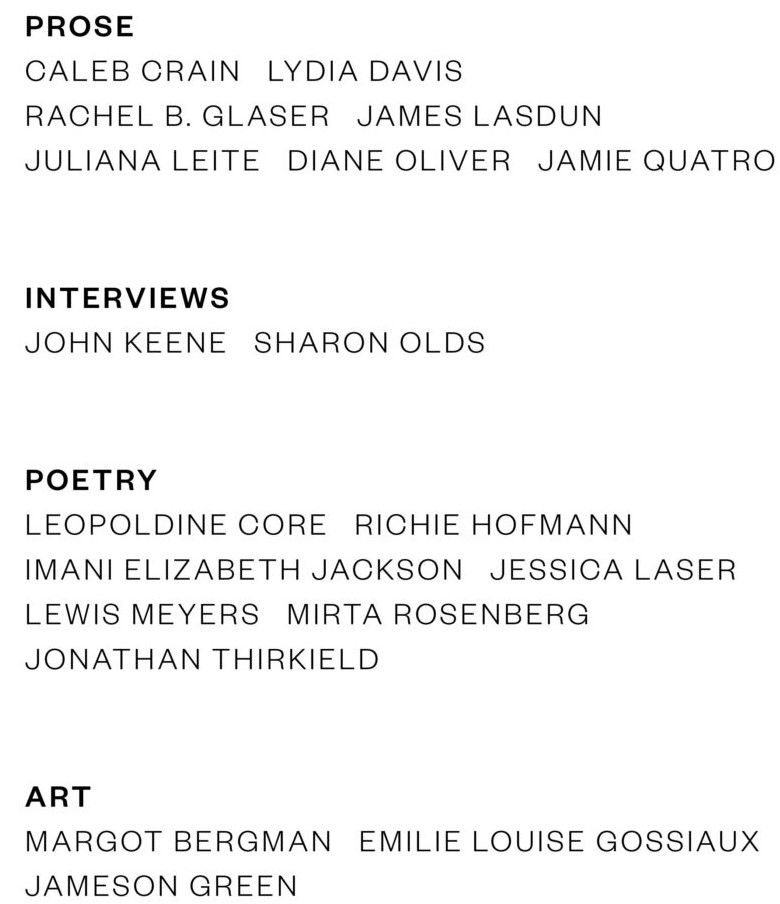
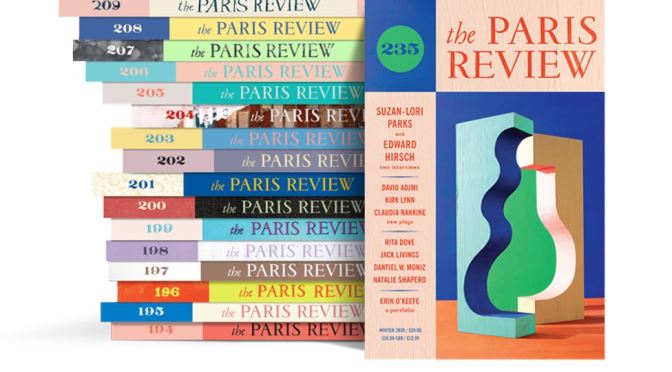
In the issue, Lydia Davis shares selections from her 1996 journal, and they often read like warm-up scales for her exquisitely off-kilter stories. (“For lunch—a huge potato and a glass of milk.”) You’ll also find masterful uses of the diary as a fictional device. The Brazilian writer Juliana Leite’s “My Good Friend,” translated by Zoë Perry, is an elderly widow’s apparently unremarkable Sunday-evening entry—“About the roof repair, I have nothing new to report”—that turns into a story of mostly unspoken decadeslong love. And James Lasdun’s “Helen” features excerpts from the journal of a woman who lives in what the narrator describes as a “state of incandescent, almost spiritual horror,” and whose crippling self-consciousness doesn’t protect her from humiliations the reader can see coming.
Also in issue no. 244, John Keene, in an Art of Fiction interview with Aaron Robertson, describes how blogging heralded his recovery as a writer after losing drafts of several of the stories that eventually became Counternarratives. And Sharon Olds, in an Art of Poetry interview, tells Jessica Laser about the need to keep one’s art and biography separate, especially when they are clearly not. Keeping a diary might be therapeutic, Olds explains, but “writing a poem to understand yourself better would be like making a cup with no clay, or maybe like having the clay but not making the cup.” She concludes, “If I had to choose between a poem being therapeutic and it being a better poem, I’d want it to be a better poem.”
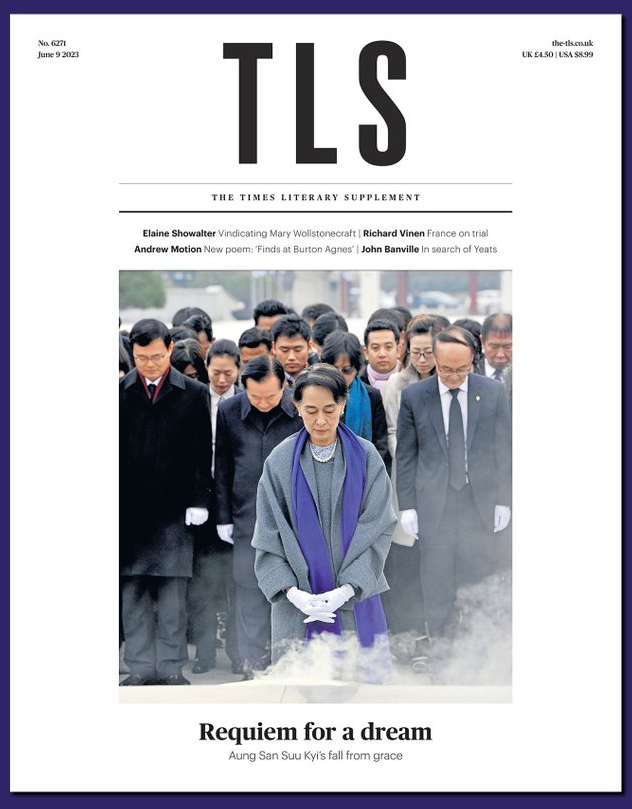
Times Literary Supplement (June 9, 2023): Requiem for a dream – Aung San Suu Kyi’s fall from grace; Vindicating Mary Wollstonecraft; France on Trial; In search of Yeats, and more…

This short biography explains why the West misunderstood the Myanmar leader. Review by Richard Lloyd Parry
In humanity’s long history of toppled heroes, shattered reputations and honour besmirched, it is difficult to think of a more extreme case than that of Aung San Suu Kyi. A decade ago, the Myanmar leader was among the most adored and respected figures in the world — winner of the Nobel peace prize, long-term political prisoner, an emblem of peaceful, uncompromising democratic struggle. Her ascension to the national leadership felt like the vindication of precious hopes and principles; today, “the Lady”, as she used to be known, is face down in the mud.

 Boomers Daily