Category Archives: Books

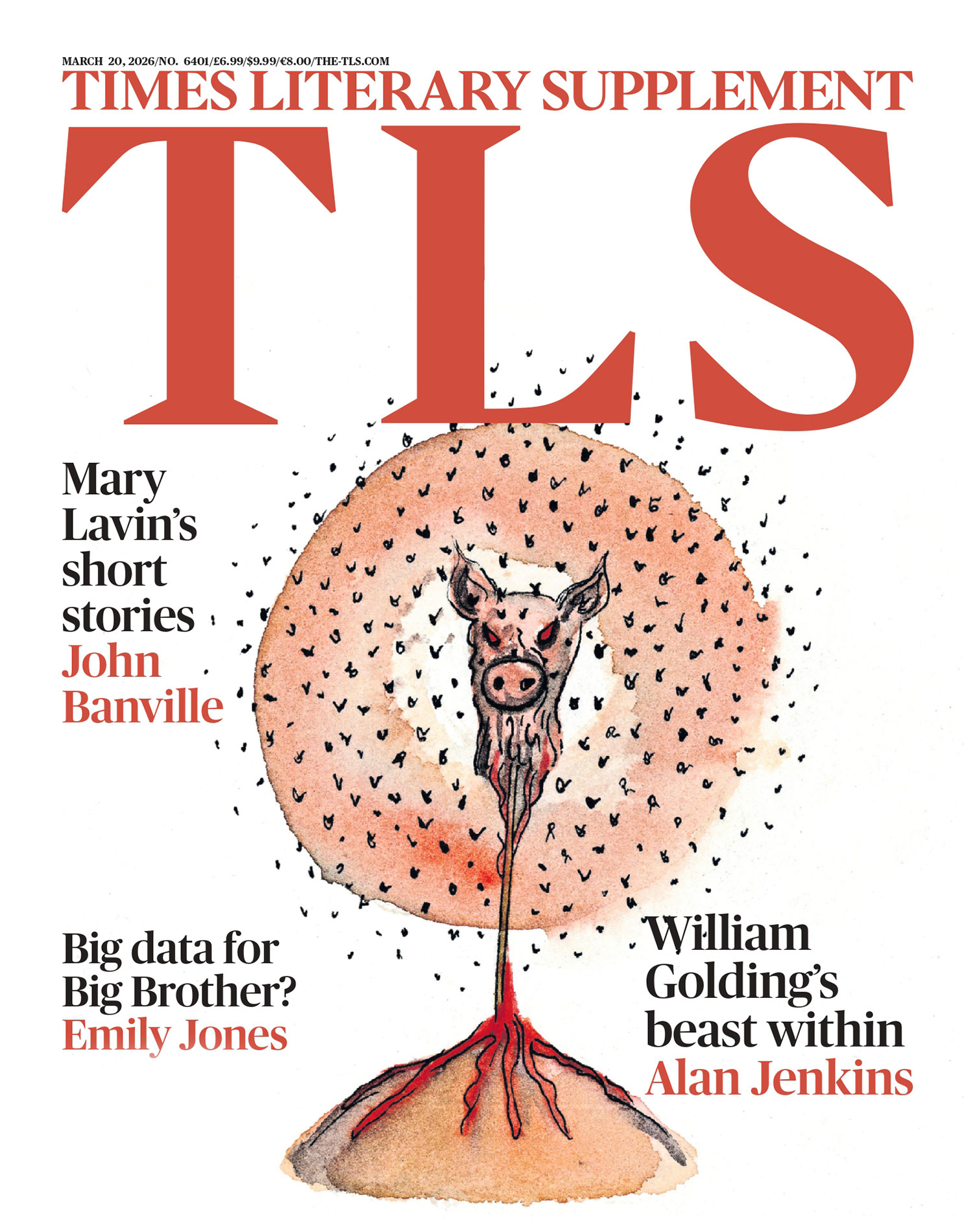
TIMES LITERARY SUPPLEMENT – JANUARY 9, 2026 PREVIEW

TIMES LITERARY SUPPLEMENT: The latest issue features ‘Constable vs Turner’ by Ferdinand Mount….

As unalike as ever

Turner is on our banknotes, Constable in our hearts By Ferdinand Mount

Coming out of Tate Britain just before noon on Budget Day, you are blinded by a blistering white sun behind Vauxhall Cross. The steepling glass towers south of the river are washed in an opal mist, the ziggurats of the MI6 HQ eclipsed to a ruined beige. Vauxhall Bridge gleams in the scarlet and yellow of a Turner sunset. J. M. W. would have rushed to the Embankment, whipped out his sketchbook, then worked up the whole shimmering scene into a six-footer and called it something like “The End of England”. John Constable would probably have turned away to catch the next coach to Hampstead Heath to paint Branch Hill Pond again.

‘One day, they’ll find me out’

How the young Dylan Thomas repeatedly stole from others By Alessandro Gallenzi

Mother was always right

A love-hate relationship recalled by France’s ‘greatest living writer’ By Marie Darrieussecq

The notebook fallacy

Why stylish stationery won’t change your life By Ian Sansom

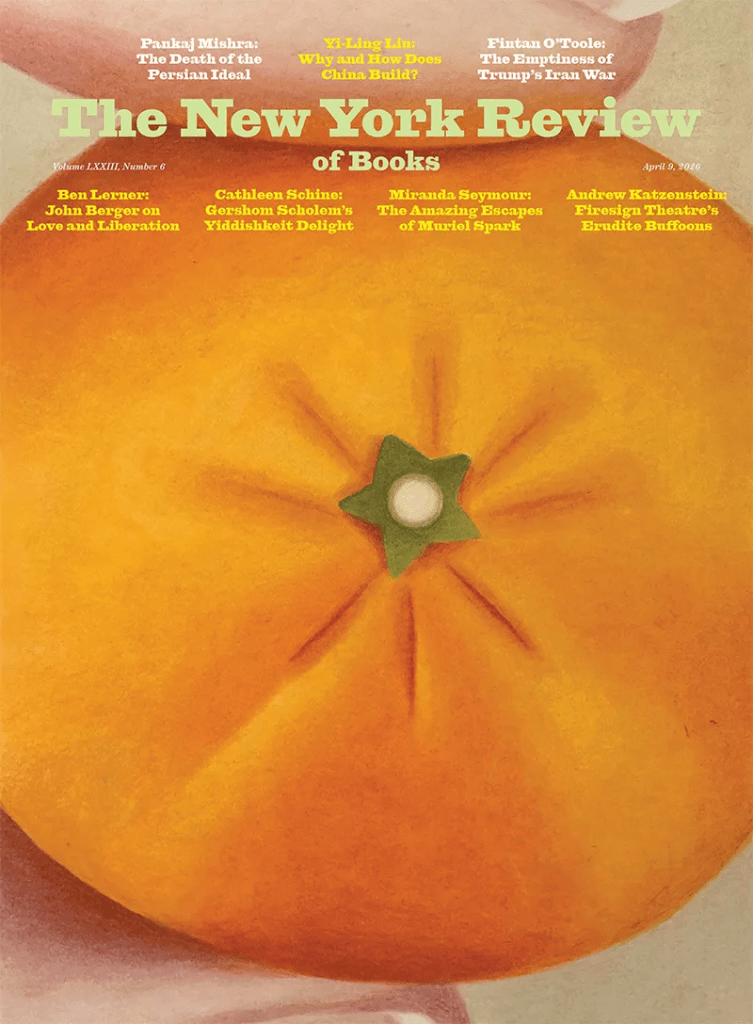
THE NEW YORK REVIEW OF BOOKS – JANUARY 15, 2026

THE NEW YORK REVIEW OF BOOKS: The latest issue features Susan Tallman – Fairness for the Dispossessed; Kevin Power – David Szalay’s Wretched Men; Jeremy Donk – How Erik Satie Freed the Notes…

‘Minimum Victory’

Weary of war and staring down the likelihood of an unjust peace, Ukrainian intellectuals are plotting out a road map for the future. 

East Side Story

Josh Safdie’s new film, starring Timothée Chalamet, is both a character study of monomania and a moving fable of how the American century of table tennis was lost.

L’Affaire Carlson

Concern over antisemitism on the right has split the conservative world in two—and GOP gatekeepers have lost the ability to contain it.

‘They Killed Our People’

More than a century after white mobs in Elaine, Arkansas, murdered hundreds of black sharecroppers in 1919, the massacre’s memory remains contested. 

‘The Ancient and Long-Forgotten Language of Cinematography’

If the movies are dead, why does Bi Gan’s Resurrection feel so alive?

THE NEW YORK TIMES BOOK REVIEW – DECEMBER 21, 2025

THE NEW YORK TIMES BOOK REVIEW: The latest issue features ‘Fight The Power’

John Darnielle: ‘Polish Literature Is a Whole Wondrous World!’

The novelist and musician is a voracious reader of books in translation. In “This Year,” he annotates the literary lyrics to 365 of his own songs.

Joan Didion and Kurt Vonnegut Had Something to Say. We Have It on Tape.

Rare recordings of E.E. Cummings, Mary Oliver and more offer a tour through literary history led by authors in their own words — and voices. Take a listen.

Once a Year the French Literary Scene Goes to the Dogs (Cats, Too)

It’s the day the “Animal Goncourt” is awarded. “Who better,” a judge says, “to talk about the fabulous relationship between animals and men than writers and philosophers?”

The New Criterion – January 2026 Preview

About | The New Criterion

THE NEW CRITERION: The latest issue features

Reflections on the revolution: an introduction

On George Washington’s Farewell Address of 1796. by Roger Kimball

Conceived in liberty

On revolution and counterrevolution in America. by Myron Magnet

Burke’s revolutionary reflection

On the Gordon riots of 1780. by Dominic Green

The great divorce

On the causes of the American Revolution. by Andrew Roberts

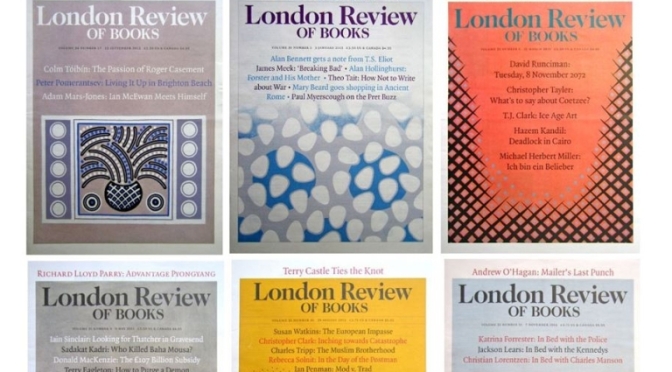
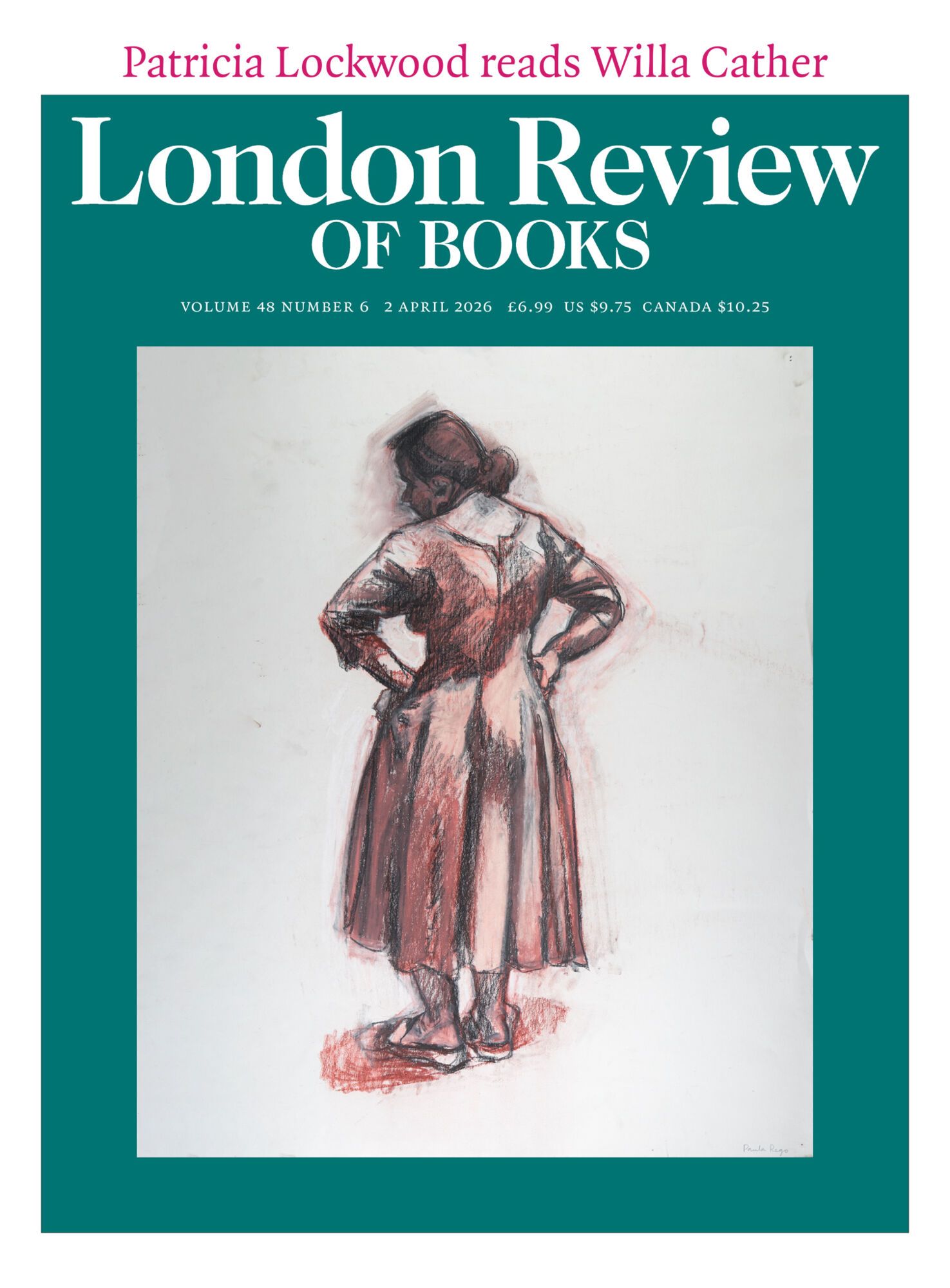
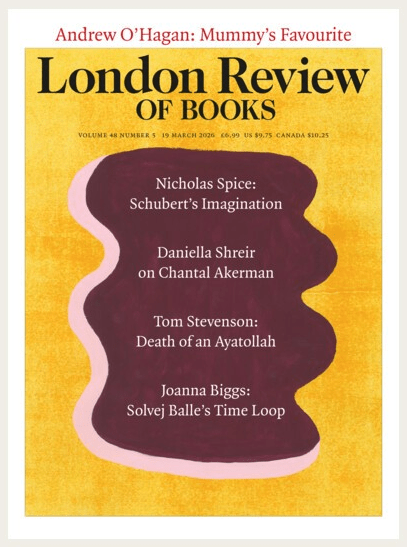
LONDON REVIEW OF BOOKS – DECEMBER 25, 2025 PREVIEW

LONDON REVIEW OF BOOKS: The latest issue features ‘Will the AI Bubble burst?’


Walter Lippmann: An Intellectual Biography 
by Tom Arnold-Forster


The Thinking Machine: Jensen Huang, Nvidia and the World’s Most Coveted Microchip 
by Stephen Witt

The Nvidia Way: Jensen Huang and the Making of a Tech Giant by Tae Kim

Empire of AI: Inside the Reckless Race for Total Domination by Karen Hao

Supremacy: AI, ChatGPT and the Race that Will Change the World by Parmy Olson


Alchemy: 
An Illustrated History of Elixirs, Experiments and the Birth of Modern Science by Philip Ball

Cover: Claremont Review Of Books – Winter 2026

Claremont Review of Books: The latest issue features ‘Special Anniversary Double Issue’….

Palace Intrigues

by Barry Strauss

The Lives of the Caesars

Imagine sitting near the apex of power in an empire and then being shown the door. You might want to write a tell-all book about it. If so, however, you would be advised to proceed with caution. Now, imagine what would barely be conceivable today: that you undertook to write your exposé while you were still in office. You would need all the finesse of a tightrope walker. 

The Lives of the Caesars

One Score and Five

by Charles R. Kesler

This essay is adapted from remarks delivered at the Claremont Review of Books 25th anniversary gala, held at the Metropolitan Club in New York City on November 6, 2025.

Radical Republican

by Randy E. Barnett

Charles Sumner: Conscience of a Nation

Charles Sumner: Conscience of a Nation

In the early hours of March 11, 1874, word spread around Washington that Charles Sumner was on the brink of death. The 63-year-old senator from Massachusetts had suffered a massive heart attack the previous evening. By 9 a.m., a crowd of several hundred had gathered in front of his home on Lafayette Square. “Colored men and women mingled with white in knots about his home,” wrote The New-York Tribune. Government workers, merchants, shopmen, waiters, and even “old colored women with baskets and bundles on their arms” stood together. Many were crying and begging to be let inside. They were stopped by one of Sumner’s friends and two policemen standing guard at the front door.

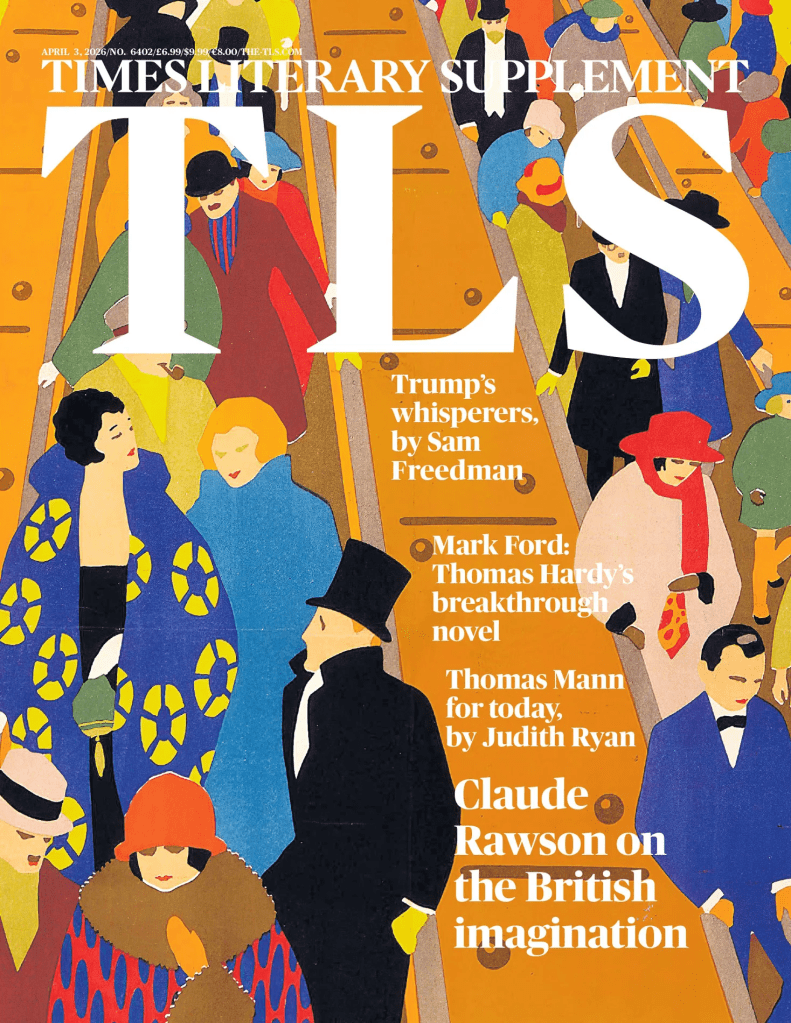
TIMES LITERARY SUPPLEMENT – DECEMBER 12, 2025

The TLS front page from the issue dated . Issue number

TIMES LITERARY SUPPLEMENT: The latest issue features ‘A Snail’s Tale – An unpublished story by Sylvia Townsend Warner…

Prince of the printed word

Tactful notes from a literary self-promoter By Nicola Shulman

Object of attention

Marking the 250th anniversary of Jane Austen’s birth By Devoney Looser

Wise fools

Irritating professors for the ages By Peter Thonemann

The Pursuit and the End

An unpublished story by Sylvia Townsend Warner, with a commentary by Peter Swaab By Sylvia Townsend Warner

THE PARIS REVIEW ———- WINTER 2025/2026

THE PARIS REVIEW : The latest issue features Art of Criticism, Art of Poetry, Prose, Poetry and Art…

Hélène Cixous on the Art of Criticism: “There’s a feminist discourse that women can’t do it all. This is what many women experience, and it’s very difficult. But I am not like that.”

Alice Oswald on the Art of Poetry: “You come at poetry with the momentum of having failed. It’s only when other communication is absolutely impossible that a poem has to exist.”

Prose by Eve Babitz, Marlene Morgan, Alec Niedenthal, Gwendoline Riley, and Elias Rodriques.

Poetry by Millicent Borges Accardi, Monzer Masri, Alice Oswald, Jana Prikryl, and Ed Roberson.

Art by Ali Banisadr, Pippa Garner, Joan Jonas, and Mieko Meguro; cover by Adebunmi Gbadebo.

LOS ANGELES REVIEW OF BOOKS – WINTER 2025-2026

LOS ANGELES REVIEW OF BOOKS: The latest issue of LARB features ‘Security’…

A Mole in MAGA’s Midst

Alexandre Lefebvre reads “Furious Minds: The Making of the MAGA New Right” by Laura K. Field.

The Secessionists of Shasta County

Nevin Kallepalli investigates political resentment in rural California, in an essay from LARB Quarterly no. 47: “Security.”

Is Justice Barrett Listening?

Leah Litman prosecutes Justice Amy Coney Barrett’s new legal memoir, “Listening to the Law: Reflections on the Court and Constitution.”

An Emergency Born of Prosperity

Zoe Adams considers “There Is No Place for Us: Working and Homeless in America” by Brian Goldstone.

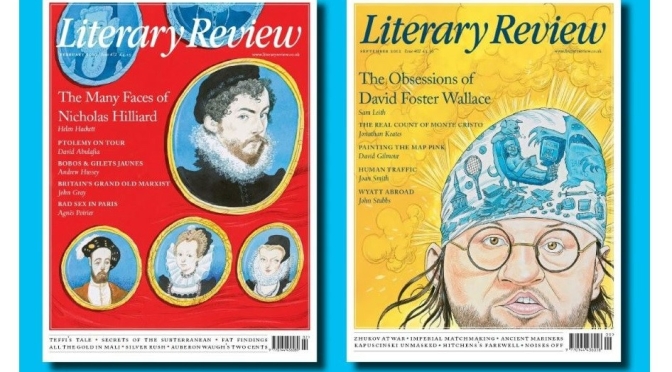
LITERARY REVIEW – DECEMBER 2025

LITERARY REVIEW : The latest issue features  Peter Marshall on Holbein * Joanna Kavenna on Camus * Sophie Oliver on Margaret Atwood * Dorian Lynskey on George Orwell * Daisy Dunn on Clodia of Rome * David Andress on Jean-Paul Marat * John Foot on the Spanish Civil War * Jerry White on high-rise buildings * Edward Shawcross on Mexico * Daniel A Bell on the Chinese examination system * Anna Reid on Russian women * Charles Darwent on Barnett Newman * Robert Crawford on T S Eliot * Ian Sansom on William Golding * Mark Lawson on John Updike * Charles Shaar Murray on musicians * Patrick Porter on NATO * Thomas Morris on Renaissance diagrams * Diane Purkiss on palmistry *  Nigel Andrew on penguins * John Mullan on pedants * Molly Pepper Steemson on Anthony Bourdain * Mark Ford on Helen Vendler * Emma Smith on book

Holbein: Renaissance Master By Elizabeth Goldring

It’s an irony to savour: the man who invented the Tudors was a German. If Henry VIII, his wives and courtiers exercise a stronger hold on the public imagination than their Plantagenet precursors or Stuart successors, it is because we can all picture them so clearly. That, in turn, is due to an extraordinary sequence of portraits and drawings produced between the late 1520s and early 1540s by Hans Holbein of Augsburg (c 1497–1543), many of which have become instantly recognisable. 

Doublethink & Doubt

Orwell: 2+2=5 By Raoul Peck (dir)

George Orwell: Life and Legacy By Robert Colls

Nobody under the age of seventy-five has heard George Orwell’s voice. The only extant video footage is in a silent movie of the Eton Wall Game. None of his many wartime recordings for the BBC Eastern Service has survived. By all accounts his voice, damaged by a bullet to the throat during the Spanish Civil War, was thin, flat and weak. In fact, the controller of the BBC Overseas Service complained that putting on ‘so wholly unsuitable a voice’ made the BBC appear ‘ignorant of the essential needs of the microphone and of the audience’.