Category Archives: Books

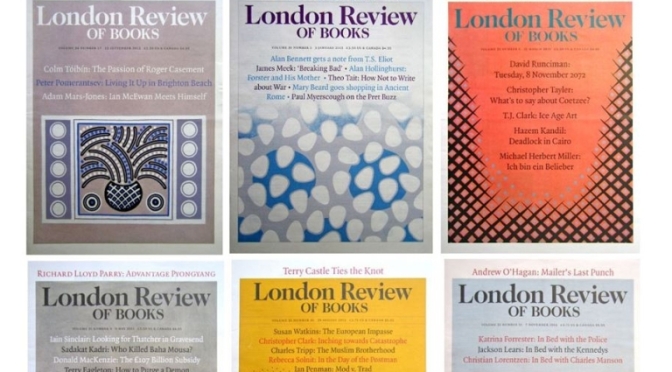
LONDON REVIEW OF BOOKS – MAY 7, 2026 PREVIEW

LONDON REVIEW OF BOOKS: The latest issue features ‘Who Owns The Arctic?’ by Laleh Khalili; De Kooning in Cuba by T.J. Clark; Politics on Speed by William Davies…

Who owns the Arctic?

Laleh Khalili

From the 16th century onwards, as European powers feverishly colonised the world, the possibility of a Northern Sea Route connecting the Atlantic to the Pacific, from Scandinavia to the Bering Strait, tantalised the Dutch and the British as an alternative to the southern routes to Asia and the Americas, which were dominated by Portugal and Spain. But the route only became a reality in the Soviet era, after investments in scientific, economic, industrial and military infrastructure in Siberia. 

Politics on Speed

William Davies

This is what distinguishes hyperpolitics from the mass democracy of the mid-20th century. Symbolic political gestures are now commonplace, but paid membership of organisations and parties has plummeted. The left has failed to find a replacement for trade unions as a basis for collective action in civil society. Political movements are easy to join, and just as easy to leave. 

De Kooning in Cuba

T.J. Clark

De Kooning’s Suburb in Havana is a counter-revolutionary painting. Well, of course. It is counter-revolutionary because it is counter everything, versus everything, lost in suburbia. It wants to show us how hard it had to work to get precisely nowhere. Why nowhere was where it wished to get to is a question it leaves to the viewer. 

Orbán’s Fall

Jan-Werner Müller

Can there be poetic justice in politics? Perhaps once in a lifetime. In 1989, a young Viktor Orbán bravely told the crowds in Budapest’s Heroes’ Square that it was time for the Russians to go home, just as protesters had demanded in 1956; almost four decades later, he was heckled on the campaign trail with the same words.

THE NEW YORK REVIEW OF BOOKS – MAY 14, 2026

THE NEW YORK REVIEW OF BOOKS: The latest issue features Jed Perl on the Whitney Biennial, Fintan O’Toole on the president’s precarious sanity, Nicole Rudick on June Leaf’s unique vision, Clare Bucknell on know-it-alls, Julian Bell on Joseph Wright of Derby, Dennis Lim on low-resolution cinema, Elaine Blair on the Guerrilla Girls, Mark O’Connell on a death in London, Martin Filler on David Adjaye’s demons, Nick Laird on the complete Seamus Heaney, Rosa Lyster on the evaporating salt lakes, Susan Tallman on Manet and Morisot, poems by Paul Muldoon and Fiona Sze-Lorrain, and much more.

‘The Right Amount of Crazy’

In Trump’s strategy of feigning madness to get what he wants, there is no longer any border between pretense and actual irrationality. By Fintan O’Toole

Charlatans & Bores

The profile of the pedant has changed surprisingly across time periods and cultures, but what’s constant is that nobody wants to be called one.

On Pedantry: A Cultural History of the Know-It-All by Arnoud S.Q. Visser

‘The Music of What Happens’

Seamus Heaney’s complete poems, following on editions of his letters, prose, and translations, confirm the extent of his achievement.

The Poems of Seamus Heaney edited by Rosie Lavan and Bernard O’Donoghue, with Matthew Hollis

Manet and Morisot: Game On

An important exhibition showcases a painterly repartee that altered the trajectory of the two artists’ work and, by extension, modern art itself.

Manet and Morisot – an exhibition at the Legion of Honor, San Francisco, October 11, 2025–March 1, 2026, and the Cleveland Museum of Art, March 29–July 5, 2026

The New Criterion ———- MAY 2026 Preview

THE NEW CRITERION: The latest issue features ‘ Western Decline’ by Victor Davis Hanson; Stoppard & Stopparianism by Jonathan Gaisman; The hector’s veto by Simon Heffer; The metaphysics of murder by Theodore Dalrypmple and New poems by Alfred Corn, Michael Homolka and Sunil Iyengar…

LONDON REVIEW OF BOOKS – APRIL 23, 2026 PREVIEW

LONDON REVIEW OF BOOKS: The latest issue features

At the National Gallery: Holbein and Henry James

The Language Puzzle: How We Talked Our Way out of the Stone Age by Steven Mithen

Surf’s Up: Brian Wilson and the Beach Boys by Peter Doggett

Kingmaker: Pamela Churchill Harriman’s Astonishing Life of Seduction, Intrigue and Power by Sonia Purnell

Indira Gandhi and the Years that Transformed India by Srinath Raghavan

TIMES LITERARY SUPPLEMENT – APRIL 17, 2026 PREVIEW

TIMES LITERARY SUPPLEMENT: The latest issue features ‘The many faces of Shakespeare’….

History lessons?

China, America and the danger of war By Philip Zelikow

A man of property

Discovering exactly what Shakespeare owned By Lucy Munro

Go deeper

Blake Morrison’s guide to life writing By Joyce Carol Oates

Out of sheer intention

Writing about others as a means to write about yourself By Catherine Taylor

THE NEW YORK REVIEW OF BOOKS – APRIL 23, 2026

THE NEW YORK REVIEW OF BOOKS: The latest issue features a dispatch from Tehran, Jed Perl on Morgan Meis’s funky kind of art criticism, Francine Prose on MAGA fiction, Caroline Fraser on the dump, Michael Gorra on Civil War diaries, David Cole on the constitutional guarantee of birthright citizenship, Hermione Lee on Virginia Woolf’s letters, Trevor Jackson on American “retirement,” Kathryn Hughes on Tennyson’s cosmos, Colm Tóibín on Irish reunification, a collage by Lucy Sante, poems by Andrea Cohen and Timmy Straw, and much more.


From the Rooftops of Tehran

We in Iran own our grief, mourning all by ourselves.

Living Through the Civil War

George Templeton Strong’s diaries provide the North’s best record of daily passions and woes during its struggle against the South.

George Templeton Strong: Civil War Diaries edited by Geoff Wisner

‘A Vast Symphony of Stone’

In his renovation of Notre-Dame, Eugène Viollet-le-Duc projected his own Romantic vision of the Middle Ages onto the Gothic cathedral.

Viollet-le-Duc: Drawing Worlds an exhibition at the Bard Graduate Center Gallery, New York City, January 28–May 24, 2026

The Aging Class

Retirement, like so much of the American economy, is a broken system that benefits private interests and exploits the most vulnerable people.

Golden Years: How Americans Invented and Reinvented Old Age by James Chappel

Work, Retire, Repeat: The Uncertainty of Retirement in the New Economy by Teresa Ghilarducci, with a foreword by E. J. Dionne Jr.

TIMES LITERARY SUPPLEMENT – APRIL 3, 2026 PREVIEW

TIMES LITERARY SUPPLEMENT: The latest issue features Claude Rawson on the British Imagination; ‘Trump’s Whisperers; Hardy’s breakthrough novel; Thomas Mann today…

Cultural superpower?

An argument for ‘British is best’

The argument of Peter Watson’s hugely ambitious The British Imagination: A history of ideas from Elizabeth I to Elizabeth II is that “The essential arc of British history – intellectual and creative history, just as much as political, economic and military history – is of a small, indeed tiny, country sequestered on the north-west coast of Europe that over the centuries would forge the largest and most unlikely empire the world has seen”. It may seem odd to be reading this in the present depressed state of the nation, although Watson stresses from the outset that the concept of “the British imagination” embraces its hospitality to foreign influences and eventually to the power of a wider “Anglosphere”.

English virtue battles the pagan

The genesis of Far from the Madding Crowd

The texture of etcetera

What smartphones can’t record

Freeing Thomas Mann

Modern English translations that do justice to the work

LITERARY REVIEW MAGAZINE – APRIL 2026 PREVIEW

Relative Failures: The Lives of Willie Wilde, Mabel Beardsley and Howard  Sturgis by Matthew Sturgis - review by Thomas W Hodgkinson
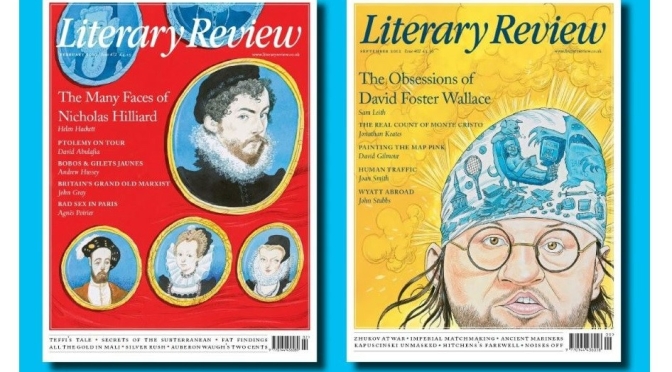
LITERARY REVIEW : The latest issue features Piers Brendon on Jan Morris * Richard Norton-Taylor on the Cambridge Five * Jane O’Grady on Wittgenstein * Wendy Holden on royal fashion * Martin Vander Weyer on Patrick Radden Keefe * Jeremy Treglown on Shakespeare in translation….

Jan Morris: A Life By Sara Wheeler

The subject of this excellent biography wished to be remembered as Jan ‘Empire’ Morris, author of the great imperial trilogy Pax Britannica, but she correctly predicted that the valedictory headlines would read ‘Sex Change Author Dies’. As James Morris, he had won early fame as the Times reporter who broke the news of the conquest of Everest on Coronation Day, 1953. And Morris’s real distinction, as Sara Wheeler affirms, was as a travel writer. It was a term she loathed. (Wheeler follows Morris’s own lead in using male pronouns for the author’s early life and female ones after 1970, when transition was nearing completion.) But as a young man James had immersed…

Stalin’s Apostles: The Cambridge Five and the Making of the Soviet Empire By Antonia Senior

It may be thought that the notorious Cambridge spies – the majority of them members of the Apostles, that university’s secretive, elitist society – had been written out. But, as Stalin’s Apostles makes clear, such is not the case. Most of the books on what the KGB later called their ‘Magnificent Five’ – Kim Philby, Guy Burgess, Donald Maclean, Anthony Blunt and John Cairncross – have dwelt …

We Know You Can Pay a Million: Inside the Dark Economy of Hacking and Ransomware By Anja Shortland

Not so long ago, stories about powerful computer viruses apparently spreading around the world and threatening to bring modern life to a halt regularly filled the news. These days, cybercrime rarely makes the headlines, and most of us have become inured to warnings that our passwords have been found in a data leak. Yet ..

THE NEW YORK REVIEW OF BOOKS – APRIL 9, 2026

THE NEW YORK REVIEW OF BOOKS: The latest issue features geopolitical analyses of the Iran conflict by Fintan O’Toole and Pankaj Mishra, alongside cultural explorations of literature and art. Key contributions include discussions on the economic dualities of Shenzhen, China, and critiques of historical narratives regarding the Allied firebombing of Japan. 

A Bitter Education

In its quiescence to the West’s war on Iran, India is squandering a precious legacy.

Shenzhen Express

In Shenzhen, the successes and failures of China’s remarkable new economy are on full display.

Breakneck: China’s Quest to Engineer the Future by Dan Wang

House of Huawei: The Secret History of China’s Most Powerful Company by Eva Dou

Who Built France?

A new history explores France’s empire from the perspective of the indigenous and enslaved people who participated, willingly or not, in its creation.

By Flesh and Toil: How Sex, Race, and Labor Shaped the Early French Empire by Mélanie Lamotte

A Man-Made Disaster

There has never been a moral and historical reckoning with the horrors inflicted by the Allied firebombing of Japan during World War II.

Black Snow: Curtis LeMay, the Firebombing of Tokyo, and the Road to the Atomic Bomb by James M. Scott

The Bomber Mafia: A Dream, a Temptation, and the Longest Night of the Second World War by Malcolm Gladwell

LONDON REVIEW OF BOOKS – APRIL 2, 2026 PREVIEW

Contents · Vol. 48 No. 6 · 02 April 2026

LONDON REVIEW OF BOOKS: The latest issue features ‘Patricia Lockwood on Willa Cather, Tom Johnson on early modern work, various political analyses, reviews, poetry, and a diary entry on Serbian student movements. 

The Bright Edges of the World: Willa Cather and Her Archbishop by Garrett Peck

Death Comes for the Archbishop by Willa Cather


The Experience of Work in Early Modern England 
by Jane Whittle, Mark Hailwood, Hannah Robb and Taylor Aucoin


Caillebotte: 
Painting Is a Serious Game by Amaury ChardeauGustave Caillebotte: Painting Men edited by Scott Allan, Gloria Groom and Paul Perrin