Plus: the fallout continues from the Kakhovka dam blast, the Japanese military reconsiders its tattoo ban and the toad species that is wreaking havoc in Australia.
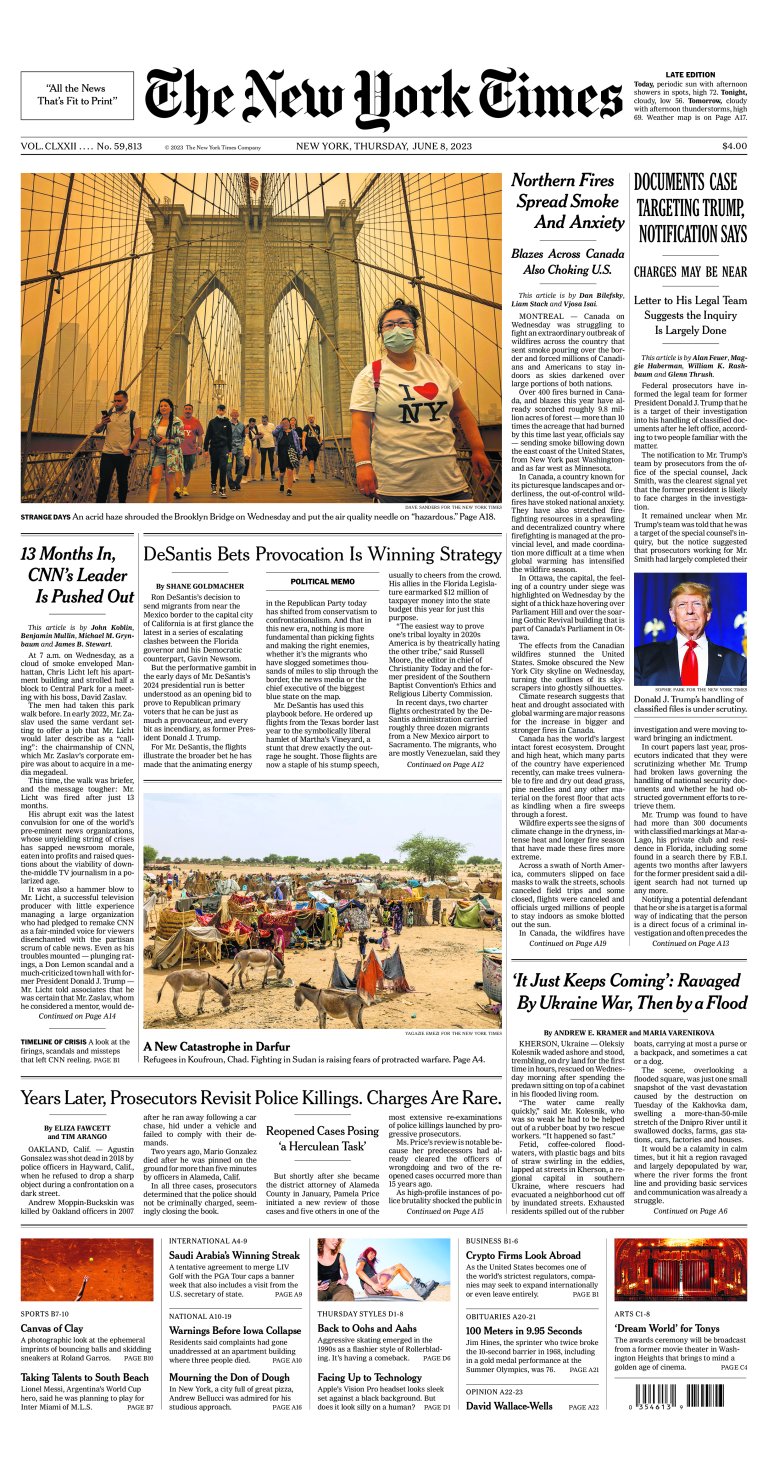
The notice from the office of the special counsel Jack Smith suggested that an indictment was on the horizon in the investigation into the former president’s handling of classified documents.
Massive plumes of smoke from hundreds of Canadian fires, enveloped millions in smoke, triggering dangerous air quality warnings in both countries and turning skies an ashen orange.
The flights to California illustrate the broader bet Gov. Ron DeSantis has made that the animating energy in the G.O.P. has shifted from conservatism to confrontationalism.
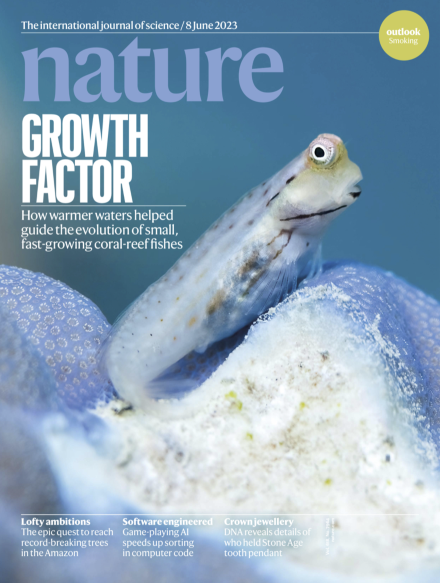
nature Magazine – June 8, 2023 issue: Coral reef fishes, such as the blenny Ecsenius stictus pictured on the cover, are diverse, abundant and grow quickly. In this week’s issue, Alexandre Siqueira and his colleagues investigate the evolutionary history of these fishes to find out how growth has shaped life on coral reefs.
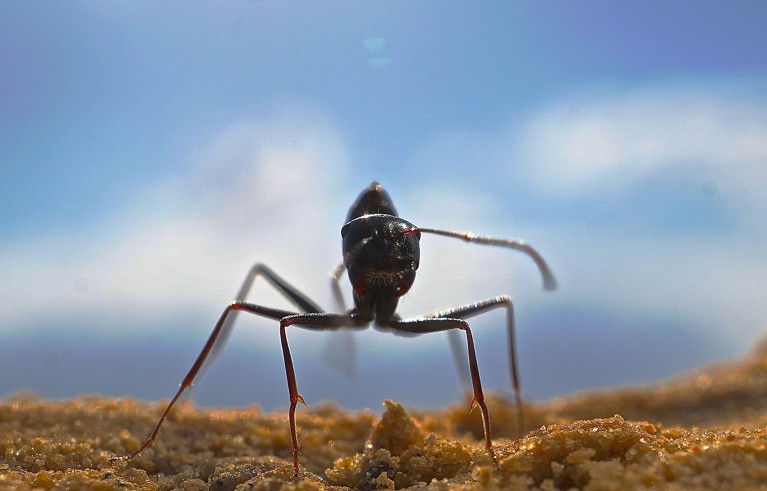
Ants living on the sprawling salt pans of Tunisia use DIY markers to find their way home.
The desert ant Cataglyphis fortis lives in Tunisia’s arid salt flats, and can travel more than a kilometre from its underground nest in search of food. Now scientists have found that these ants build tall hills on top of their nests that help the insects to find their way home across the vast, featureless landscape1.
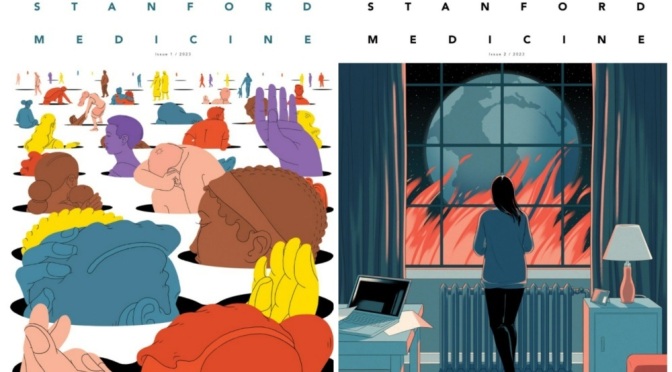
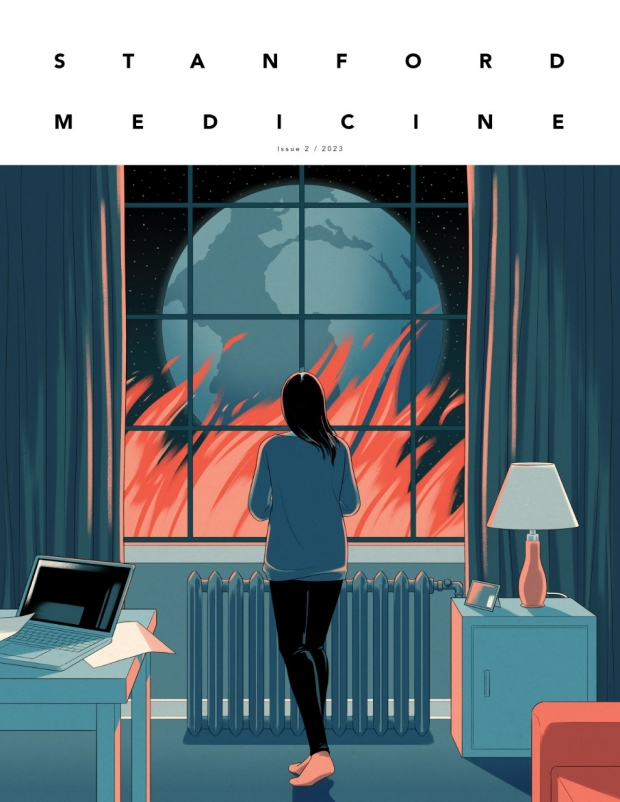
Stanford Medicine Magazine (Summer 2023) – The new issue of Stanford Medicine magazine explores how the environment and health interact — and ways to counter negative impacts.
The COVID-19 pandemic, from which we’re still struggling to emerge, has expanded our working vocabulary, gifting the public lexicon with new, if admittedly mostly gloomy, words and concepts. (Examples: spike protein, intubation, N95, rapid antigen test.) We may not flood our speech with these terms, but we’re at least passingly familiar with them now.
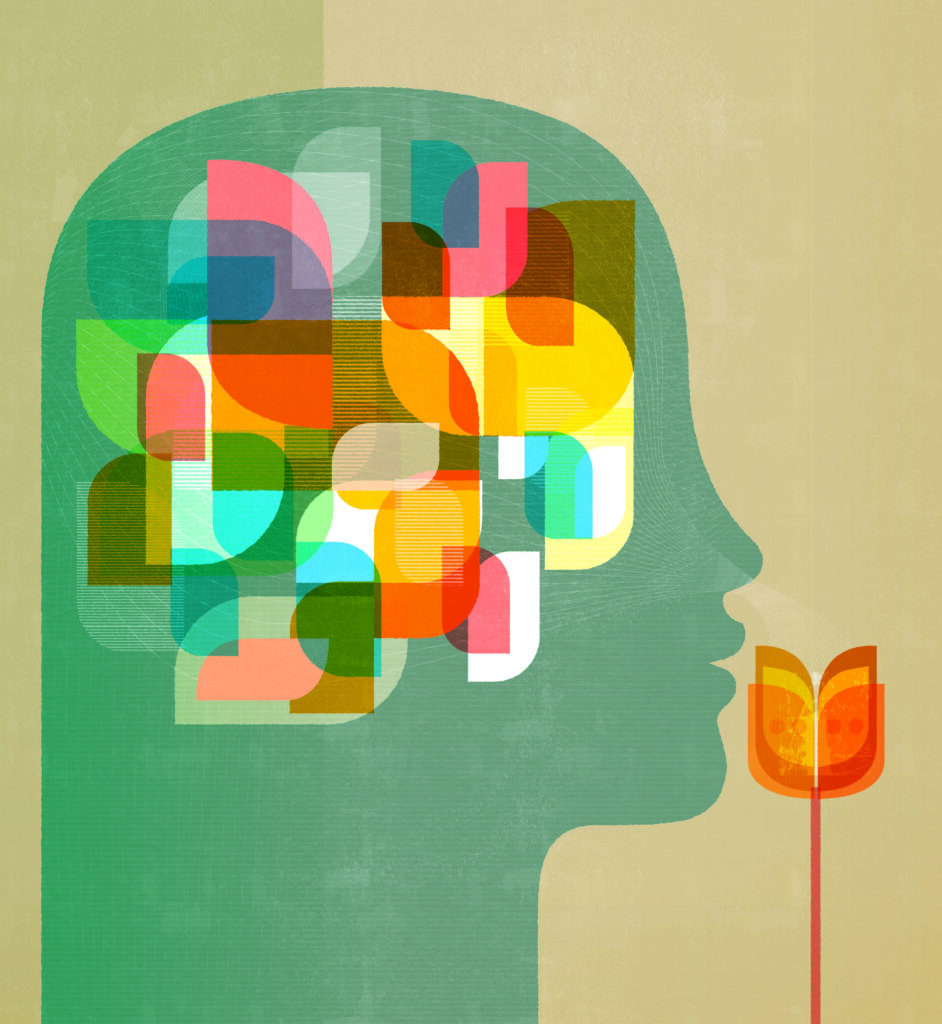
Among the human senses, smell — or more formally, olfaction — is often considered the most dispensable. In a recent survey, 1 in 6 college students said they would rather lose their sense of smell than their little left toe, and 1 in 4 would forgo their sense of smell to keep their phone.
But for people who’ve found themselves suddenly unable to smell — a more common predicament since the COVID-19 pandemic — the loss can be surprisingly, profoundly devastating.
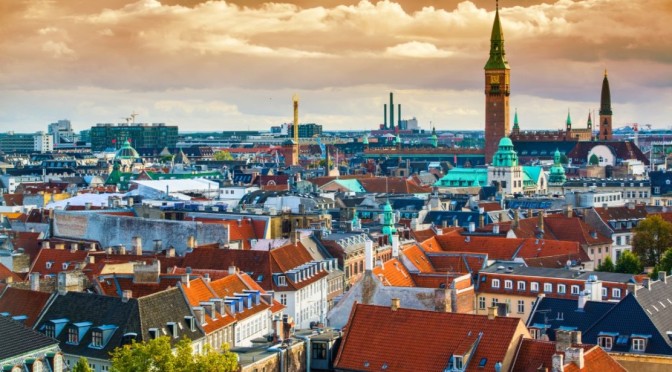
DW Travel (June 7, 2023) – Did you know that Copenhagen is one of the greenest cities in the world? Transport, urban planning, food – the Danish capital is committed to sustainability in all areas. DW’s Aisha Sharipzan shows how your next trip to Copenhagen can be sustainable AND tons of fun.
Video timeline:00:00 Intro 00:40 Rent a bike 01:42 Public Transport 02:13 Free kajak tour at the harbour, collecting trash 04:19 Vesterbro and Nørrebro 04:48 BaneGaarden 05:40 Kødbyen 06:19 Harbour in Nordhavn 07:07 Danish Architecture Center 10:25 CopenHill 10:37 Park’N’Play 11:36 Reffen Street Food Market
Copenhagen, Denmark’s capital, sits on the coastal islands of Zealand and Amager. It’s linked to Malmo in southern Sweden by the Öresund Bridge. Indre By, the city’s historic center, contains Frederiksstaden, an 18th-century rococo district, home to the royal family’s Amalienborg Palace. Nearby is Christiansborg Palace and the Renaissance-era Rosenborg Castle, surrounded by gardens and home to the crown jewels
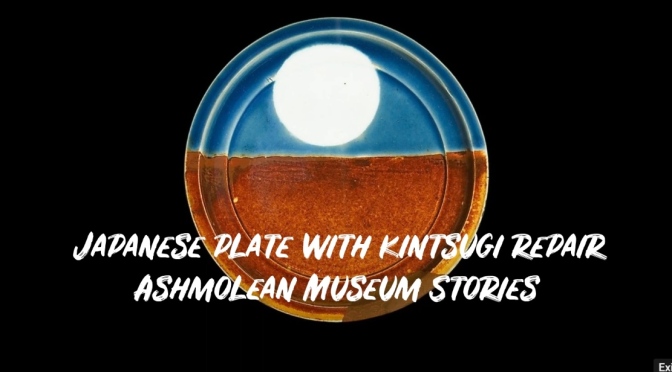
Ashmolean Museum (June 7, 2023): Here, animator Charlie Black brings the poetic story behind this beautifully broken 17th-century Japanese plate to life.
The Japanese collection is now best known for its ceramics, in particular the collection of seventeenth- and eighteenth-century export porcelain which is one of the most comprehensive collections in the world. Ceramics for the Japanese market are also well represented, including fine examples of Arita, Nabeshima and Hirado porcelain, tea ceremony wares and Kyoto earthenwares.
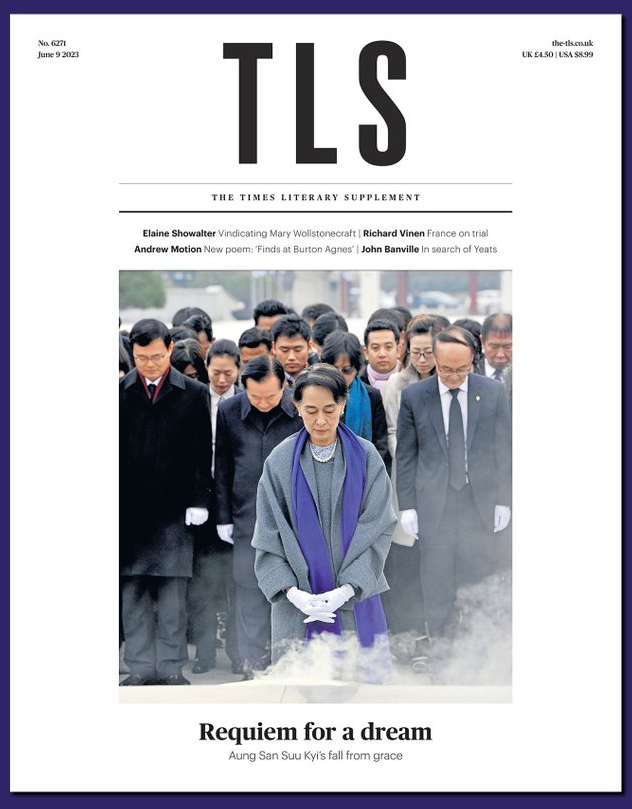
Times Literary Supplement (June 9, 2023): Requiem for a dream – Aung San Suu Kyi’s fall from grace; Vindicating Mary Wollstonecraft; France on Trial; In search of Yeats, and more…
This short biography explains why the West misunderstood the Myanmar leader. Review by Richard Lloyd Parry
In humanity’s long history of toppled heroes, shattered reputations and honour besmirched, it is difficult to think of a more extreme case than that of Aung San Suu Kyi. A decade ago, the Myanmar leader was among the most adored and respected figures in the world — winner of the Nobel peace prize, long-term political prisoner, an emblem of peaceful, uncompromising democratic struggle. Her ascension to the national leadership felt like the vindication of precious hopes and principles; today, “the Lady”, as she used to be known, is face down in the mud.
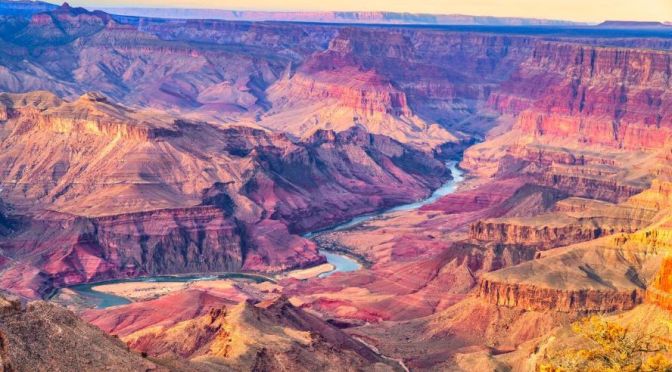
The New York Times (June 6, 2023) – Down beneath the tourist lodges and shops selling keychains and incense, past windswept arroyos and brown valleys speckled with agave, juniper and sagebrush, the rocks of the Grand Canyon seem untethered from time. The oldest ones date back 1.8 billion years, not just eons before humans laid eyes on them, but eons before evolution endowed any organism on this planet with eyes.
Written and photographed by Raymond Zhong, who joined scientists on a 90-mile raft expedition through the canyon.
Since 1963, the Glen Canyon Dam has been backing up the Colorado for nearly 200 miles, in the form of America’s second-largest reservoir, Lake Powell. Engineers constantly evaluate water and electricity needs to decide how much of the river to let through the dam’s works and out the other end, first into the Grand Canyon, then into Lake Mead and, eventually, into fields and homes in Arizona, California, Nevada and Mexico.
Spend long enough in the canyon, and you might start feeling a little unmoored from time yourself.
North Canyon, and a spring at Vasey’s Paradise.
The immense walls form a kind of cocoon, sealing you off from the modern world, with its cell signal and light pollution and disappointments. They draw your eyes relentlessly upward, as in a cathedral.
You might think you are seeing all the way to the top. But up and above are more walls, and above them even more, out of sight except for the occasional glimpse. For the canyon is not just deep. It is broad, too — 18 miles, rim to rim, at its widest. This is no mere cathedral of stone. It is a kingdom: sprawling, self-contained, an alternate reality existing magnificently outside of our own.
And yet, the Grand Canyon remains yoked to the present in one key respect. The Colorado River, whose wild energy incised the canyon over millions of years, is in crisis.
Plus: US secretary of state Antony Blinken visits Saudi Arabia, Brazil says goodbye to a bossa nova legend and why the French military working with science-fiction writers.
News, Views and Reviews For The Intellectually Curious














 Boomers Daily