
The Economist Magazine presents a selection of three essential articles read aloud from the latest issue of The Economist. This week, Xi Jinping is reinventing state capitalism (10:20), Belarus’s sham election (14:25), and the decline of the office romance.
Audio

World News Podcast: Hong Kong And Belarus Protests, Covid-19 Surge

DW Radio News 24/7 reports: Recently arrested Hong Kong media CEO Jimmy Lai vow that pro-democracy protests against China will continue, Belarus protests, and WHO reports 300,000 new Covid-19 cases in last 24 hours.

Morning News Podcast: Politics Of Post Office Changes, Iowa Outages, California Blackouts

NPR News Now reports: The political issues surrounding operational changes at the Post Office, Iowa power outages after this week’s storms and California blackouts.
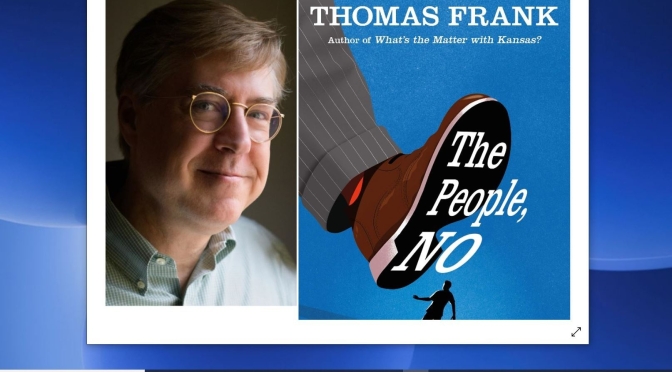
Top Podcast Interviews: Thomas Frank, Author Of “The People, No: A Brief History Of Anti-Populism”
Lewis H. Lapham speaks with Thomas Frank, author of “The People, No”, an eye-opening account of populism, the most important―and misunderstood―movement of our time.
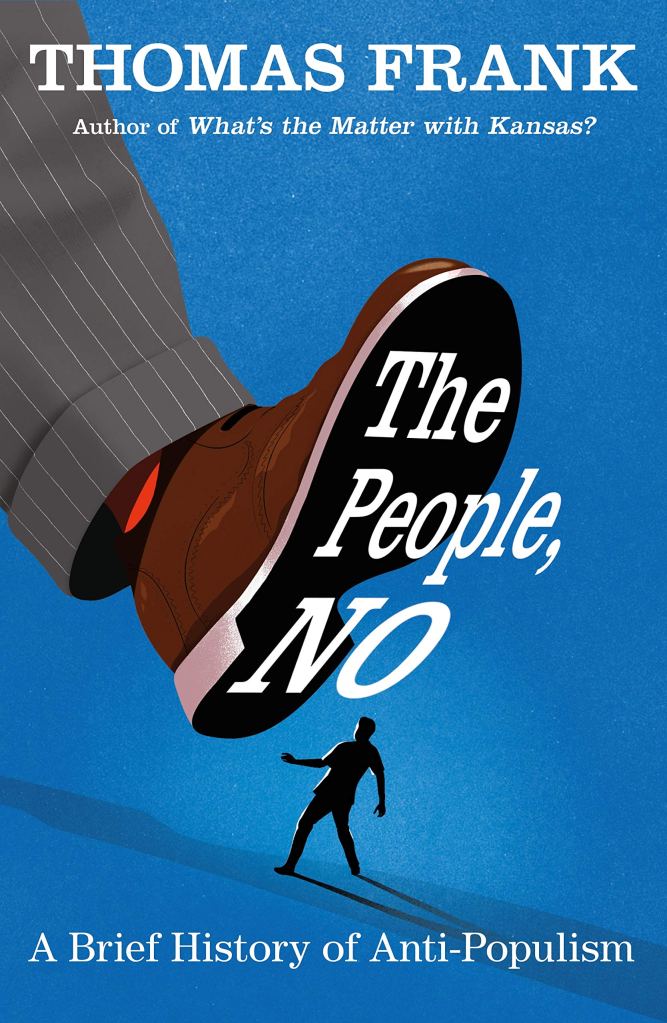
Rarely does a work of history contain startling implications for the present, but in The People, No Thomas Frank pulls off that explosive effect by showing us that everything we think we know about populism is wrong. Today “populism” is seen as a frightening thing, a term pundits use to describe the racist philosophy of Donald Trump and European extremists. But this is a mistake.
The real story of populism is an account of enlightenment and liberation; it is the story of American democracy itself, of its ever-widening promise of a decent life for all. Taking us from the tumultuous 1890s, when the radical left-wing Populist Party―the biggest mass movement in American history―fought Gilded Age plutocrats to the reformers’ great triumphs under Franklin Roosevelt and Harry Truman, Frank reminds us how much we owe to the populist ethos. Frank also shows that elitist groups have reliably detested populism, lashing out at working-class concerns. The anti-populist vituperations by the Washington centrists of today are only the latest expression.
Frank pummels the elites, revisits the movement’s provocative politics, and declares true populism to be the language of promise and optimism. The People, No is a ringing affirmation of a movement that, Frank shows us, is not the problem of our times, but the solution for what ails us.
World News Podcast: Stimulus Bill Battles, UAE Discusses Israel Ties
NPR News Now reports: Congress and the White House battle over a new stimulus bill, UAE in talks to normalize relations with Israel, Afghanistan and Taliban prisoners, and other world news.
TOP NEW SCIENCE PODCASTS: NEW COVID-19 TESTING, HOW SPORTS BUILDS BONDS

Staff Writer Robert Service talks with host Sarah Crespi about a different approach to COVID-19 testing that might be useful in response to the high numbers of cases in the United States. To break chains of transmission and community spread, the new strategy would replace highly accurate but slow polymerase chain reaction (PCR) tests with cheaper, faster tests that are less accurate but can be administered frequently.
Such tests cost between $1 and $3 compared with more than $100 for diagnostic PCR tests and give results in less than 30 minutes instead of days. Read all of our coronavirus coverage here. Also this week, Salma Mousa, a postdoctoral fellow at Stanford University, joins Sarah to talk about an experiment that added Muslim players to teams in a Christian soccer league in northern Iraq. The goal of the study was to see whether this type of social contact would change how the Christians—a threatened minority in the region—behaved toward Muslims, on and off the field.
Morning News Podcast: Facebook Improvements, Kamala Harris & Thailand
 NPR Up First reports: Facebook is launching a tool to help users register to vote. Kamala Harris’ ethnicity will be important to voters of color. And, Thai students protest the military’s involvement in Thai politics.
Top New Science Podcasts: Locust Swarm Triggers & Covid-19 Antibodies
 This week’s Nature Podcast looks at: Triggering swarming behaviour in locusts, antibody therapies as a bridge to Covid-19 vaccine, and new insights into how humans synchronize.
In this episode:
01:56 Understanding swarming behaviour
Swarms of migratory locusts regularly devastate crops across the world, but why these swarms form has been a mystery. Now, a team of researchers have identified a compound that causes solitary locusts to come together in their billions – a finding that could have practical applications for preventing this behaviour. Research article: Guo et al.; News & Views: Catching plague locusts with their own scent
08:48 Coronapod
We discuss the role that monoclonal antibodies may have as therapeutics to treat COVID-19. Although promising, there are numerous hurdles to overcome before these drugs can be used. News: Antibody therapies could be a bridge to a coronavirus vaccine — but will the world benefit?
15:30 Research Highlights
A satellite’s fecal find reveals that Antarctica’s emperor penguin population is much larger than previously thought, and changing how genes are named to avoid Excel’s autocorrect. Research Highlight: Satellites find penguins by following the poo; Research article: Bruford et al.
17:49 An out-of-sync arts project
A collaborative art-science project featuring a network of connected violinists has given new insights into how humans synchronize. Research article: Shahal et al.
23:51 Briefing Chat
We take a look at some highlights from the Nature Briefing. This time we find out about the odd immune system of the anglerfish, and the beetle that can pass through a frog’s digestive system without coming to harm. Wired: The Anglerfish Deleted Its Immune System to Fuse With Its Mate; Research paper: Sugiura

Morning News Podcast: Will Joe Biden & Kamala Harris Have Chemistry?
 Last night, Joe Biden made the most important decision in his campaign with a historic pick of Senator Kamala Devi Harris as his vice-presidential candidate. But it’s the next 48 hours that are truly crucial for the campaign to prove they have the chemistry to win the presidency.
- Plus, how the coronavirus has pulled the plug on college sports.
- And, where to look for the best meteor shower of the year.
Guests: Axios’ Hans Nichols and Jeff Tracy
World News Podcast: New Arrests In Hong Kong, Satellite Attack Risks
It’s been about a month since the Chinese Communist Party forced a national security law on Hong Kong. This new law made it illegal for anyone anywhere in the world to promote democratic reform in the region. Recent arrests of top media and political figures have made it clear that Hong Kong’s relatively free political system is over.
- Plus, the risk of space attacks against U.S. satellites is growing.
- And, some hopeful pandemic parenting advice from Dr. Sanjay Gupta.
Guests: Axios’ Bethany Allen-Ebrahimian, and Miriam Kramer and special thanks to Dr. Sanjay Gupta and the Asian American Journalists Association.
 Boomers Daily