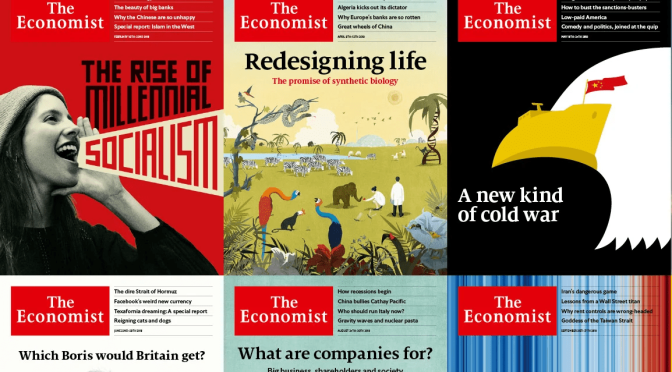
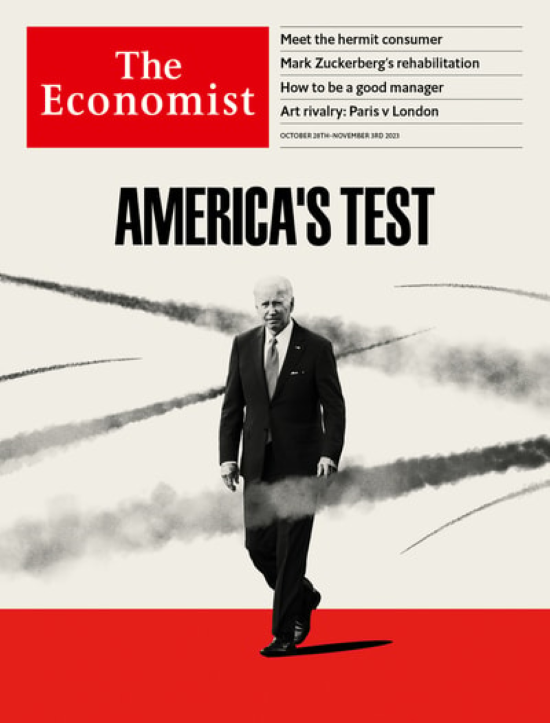
The Economist Magazine (October 28, 2023):The latest issue features America’s Test – How will it manage the Israel-Hamas war?; Argentina’s troubling election result; Should governments be ‘policing’ AI? and the ‘Art Rivalry’ between Paris and London….
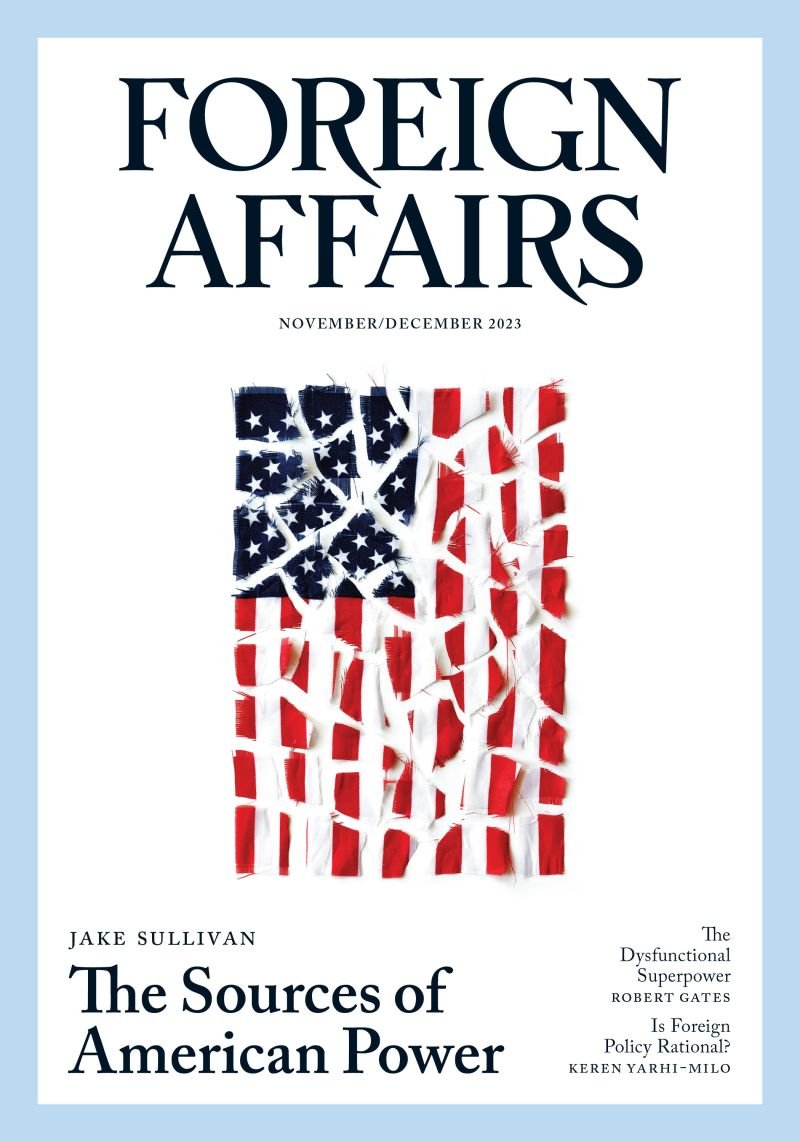
Nothing in world politics is inevitable. The underlying elements of national power, such as demography, geography, and natural resources, matter, but history shows that these are not enough to determine which countries will shape the future. It is the strategic decisions countries make that matter most—how they organize themselves internally, what they invest in, whom they choose to align with and who wants to align with them, which wars they fight, which they deter, and which they avoid.
The United States now confronts graver threats to its security than it has in decades, perhaps ever. Never before has it faced four allied antagonists at the same time—Russia, China, North Korea, and Iran—whose collective nuclear arsenal could within a few years be nearly double the size of its own. Not since the Korean War has the United States had to contend with powerful military rivals in both Europe and Asia. And no one alive can remember a time when an adversary had as much economic, scientific, technological, and military power as China does today.
The Economist Magazine (October 21, 2023):The latest issue features ‘Where will this end?’ – Only America can pull the Middle East back from the brink; Are American CEO’s overpaid?; The holes in export controls; Argentina’s radical option, and more….
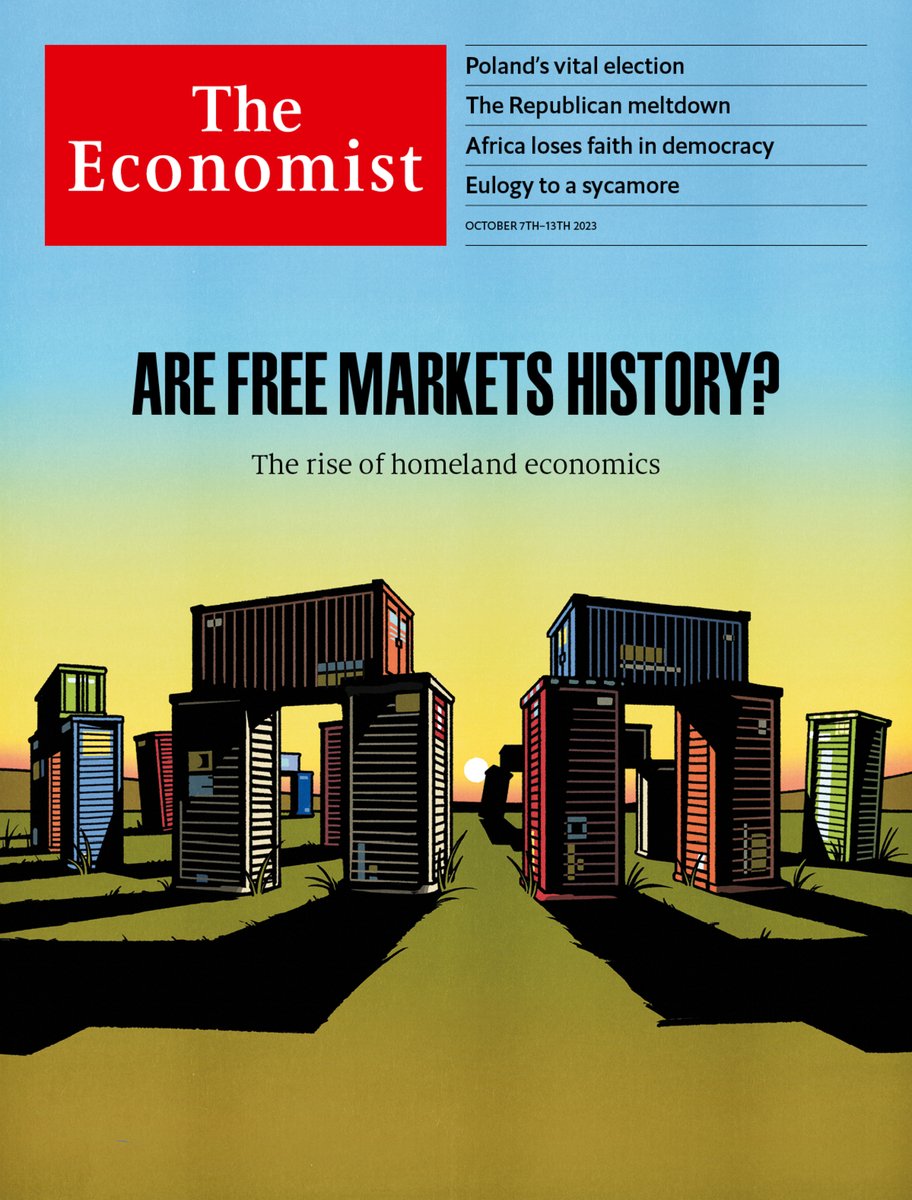
The Economist Magazine (October 7, 2023): The latest issue features Governments jettisoning the principles of free markets; Africans losing faith in democracy and how the ousting of House Speaker Kevin McCarthy is bad for America and worse for Ukraine….
“Xi’s sense of personal destiny entails significant risk of war…”
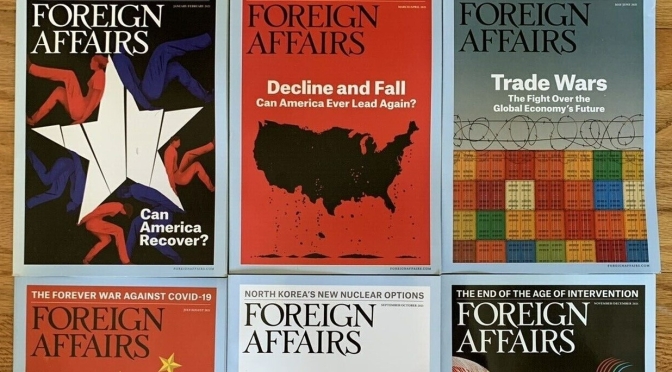
Foreign Affairs (September 29, 2023):The United States now confronts graver threats to its security than it has in decades, perhaps ever. Never before has it faced four allied antagonists at the same time—Russia, China, North Korea, and Iran—whose collective nuclear arsenal could within a few years be nearly double the size of its own. Not since the Korean War has the United States had to contend with powerful military rivals in both Europe and Asia. And no one alive can remember a time when an adversary had as much economic, scientific, technological, and military power as China does today.
The problem, however, is that at the very moment that events demand a strong and coherent response from the United States, the country cannot provide one. Its fractured political leadership—Republican and Democratic, in the White House and in Congress—has failed to convince enough Americans that developments in China and Russia matter. Political leaders have failed to explain how the threats posed by these countries are interconnected. They have failed to articulate a long-term strategy to ensure that the United States, and democratic values more broadly, will prevail.
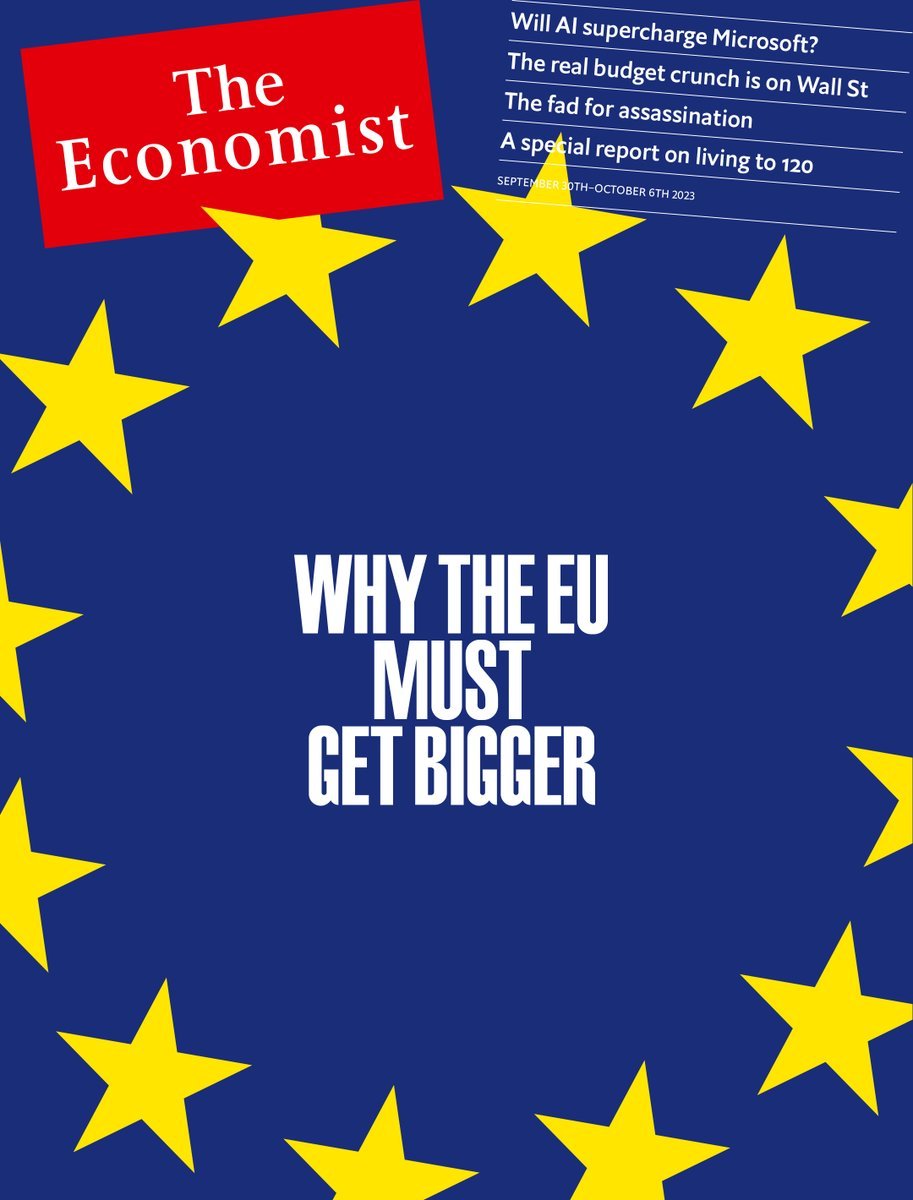
The Economist Magazine (September 30, 2023): The latest issue features The war in Ukraine is a powerful reason to enlarge—and improve—the EU; Why fear is spreading in financial markets; A humanitarian disaster is under way in Nagorno-Karabakh…
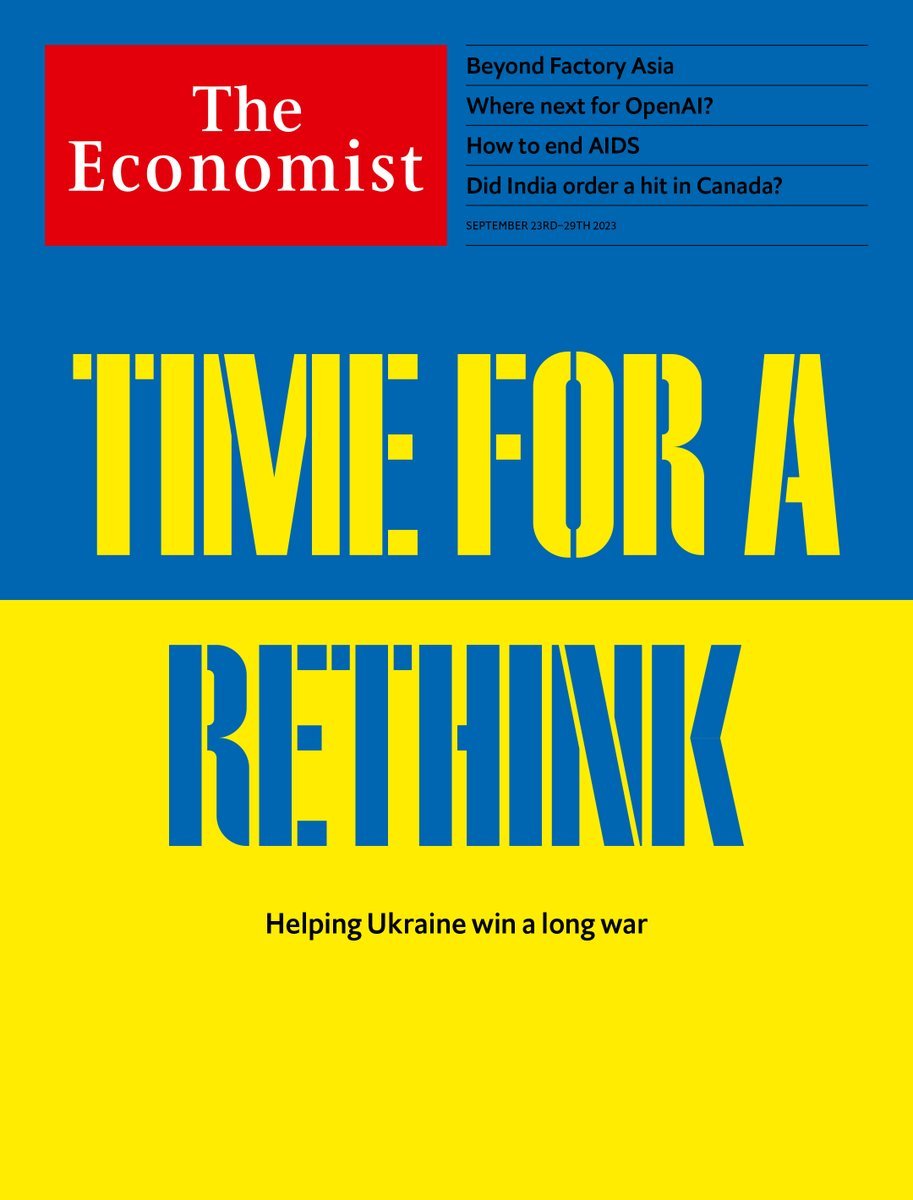
The Economist Magazine (September 23, 2023): The latest issue features ‘Ukraine faces a long war’ – A change of course is needed; Its backers should pray for a speedy victory—but plan for a long struggle.
Its backers should pray for a speedy victory—but plan for a long struggle
The war in Ukraine has repeatedly confounded expectations. It is now doing so again. The counter-offensive that began in June was based on the hope that Ukrainian soldiers, equipped with modern Western weapons and after training in Germany, would recapture enough territory to put their leaders in a strong position at any subsequent negotiations.
Western countries have for too long acquiesced to the Indian government’s abuses
For years, India objected to Western strategists lumping it together with its violent and chaotic neighbour in the phrase “Indo-Pakistan”. Now recognised as a fast-growing giant and potential bulwark against China, India claims to have been “de-hyphenated”. Yet the explosive charge aired this week by Justin Trudeau suggests that diplomatic recalibration may have gone too far. Canada’s prime minister alleges that Indian agents were involved in the murder in Vancouver of a Canadian citizen sympathetic to India’s Sikh separatist movement.
The Economist Magazine (September 16, 2023): The latest issue reviews How AI can revolutionize science; Donald Trump will “never” support Putin, says Volodymyr Zelensky; The hard right is getting closer to power all over Europe, and more…
Debate about artificial intelligence (ai) tends to focus on its potential dangers: algorithmic bias and discrimination, the mass destruction of jobs and even, some say, the extinction of humanity. As some observers fret about these dystopian scenarios, however, others are focusing on the potential rewards. ai could, they claim, help humanity solve some of its biggest and thorniest problems. And, they say, ai will do this in a very specific way: by radically accelerating the pace of scientific discovery, especially in areas such as medicine, climate science and green technology.
In the next decade regional tensions will build in India
The world has been seeing the bright side of India. In August it landed a spacecraft on the Moon. In the latest quarter gdp grew at an annual rate of 7.8%, making it the world’s perkiest big economy. Narendra Modi, the prime minister, has just hosted a g20 summit where other leaders, including Joe Biden, courted Asia’s rising behemoth. Yet inside India the talk has turned to whether Mr Modi’s hunger for power and dreams of national renewal could lead him to bend the constitution.
The Economist Magazine (September 9, 2023): The new Middle East has more money and less mayhem. For now…; America’s Supreme Court should adopt new ethics standards How artificial intelligence will affect the elections; Javier Milei would be a danger for democracy in Argentina….
Economies are booming and wars are fading. But climate change is looming
If you thought the Middle East was stagnant, think again. The Gulf economies are among the richest and most vibrant on the planet, helped by a Brent crude oil price that rose back to over $90 per barrel this week. A $3.5trn fossil-fuel bonanza is being spent on everything from home-grown artificial intelligence models and shiny new cities in the desert, to filling the coffers of giant sovereign-wealth funds that roam the world’s capital markets looking for deals.
Next term will be agonising for the Supreme Court. Some combination of voters and courts will determine whether Donald Trump becomes president again and whether he goes to prison. President Joe Biden’s son has a case before the courts. Dozens of states have changed their voting laws since 2020 and the nine justices on the Supreme Court may be asked to look at them. If the presidential election in 2024 is close, the court may have to step in and adjudicate. With so much at stake, America needs a Supreme Court that is broadly seen as legitimate and, ideally, impartial. Regrettably, trust in the court is at its lowest point since pollsters began asking about it.
News, Views and Reviews For The Intellectually Curious














 Boomers Daily