
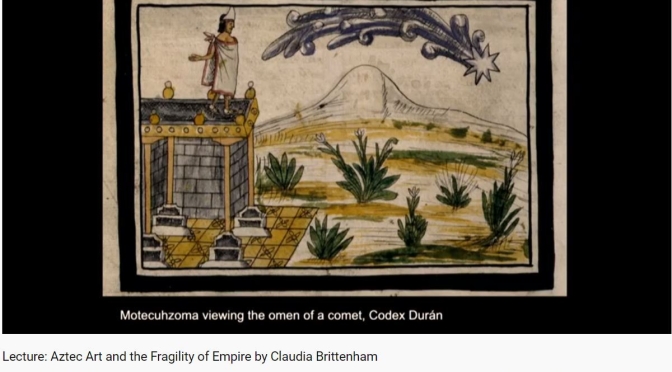
Aztec art drew on the Mesoamerican past, citing works from the ancient cities of Teotihuacan and Tula to lend authority and legitimacy to the new empire. But this engagement with the past also provoked reflection on the inevitable end of empire and the cyclicality of time, themes that resonate as the five hundredth anniversary of the Spanish invasion of Mexico unfolds this year. In this illustrated lecture, Claudia Brittenham, University of Chicago, discusses how Aztec art reflects this engagement with this historical past. This lecture delivered on October 31, 2019, was generously sponsored by the Boshell Foundation Lecture Fund.




 It’s a simple question to ask, but seems impossible to answer: What causes one nation to succeed and another to fail? What exactly are the origins of global inequality?
 There are few people who have spent more time trying to answer this question than Prof. James Robinson. Robinson’ first book, Why Nations Fail, was an international best-seller. It laid out in clear and stark terms what the origins of prosperity and poverty really are. Now, he’s written a sequel, The Narrow Corridor, which further explains what ingredients you need to create a prosperous nation.
 Three-quarters of a century later, at age 97, Goodenough will become the oldest person


 Boomers Daily