CBS Sunday Morning (June 29, 2025): Explore things to see and do in Glacier National Park. Established as a National Park in 1910 it is a land of mountain ranges carved by prehistoric ice rivers. It features alpine meadows, deep forests, waterfalls, about 25 glistening glaciers and 200 sparkling lakes. The vistas seen from Going-To-The-Sun Road are breathtaking, a photographer’s paradise. Relatively few miles of road exist in the park’s 1,600 square miles of picturesque landscape, thus preserving its primitive and unspoiled beauty.
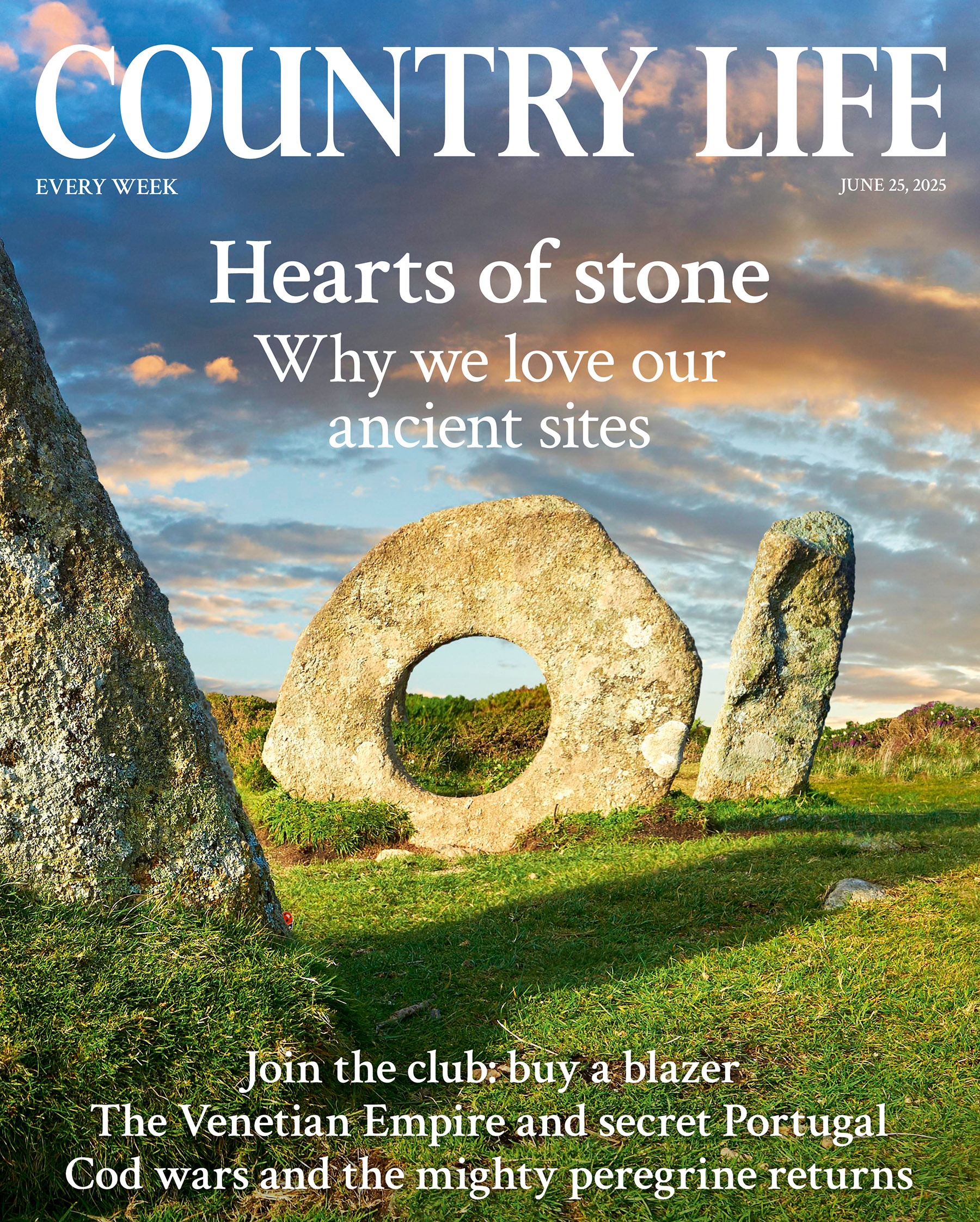
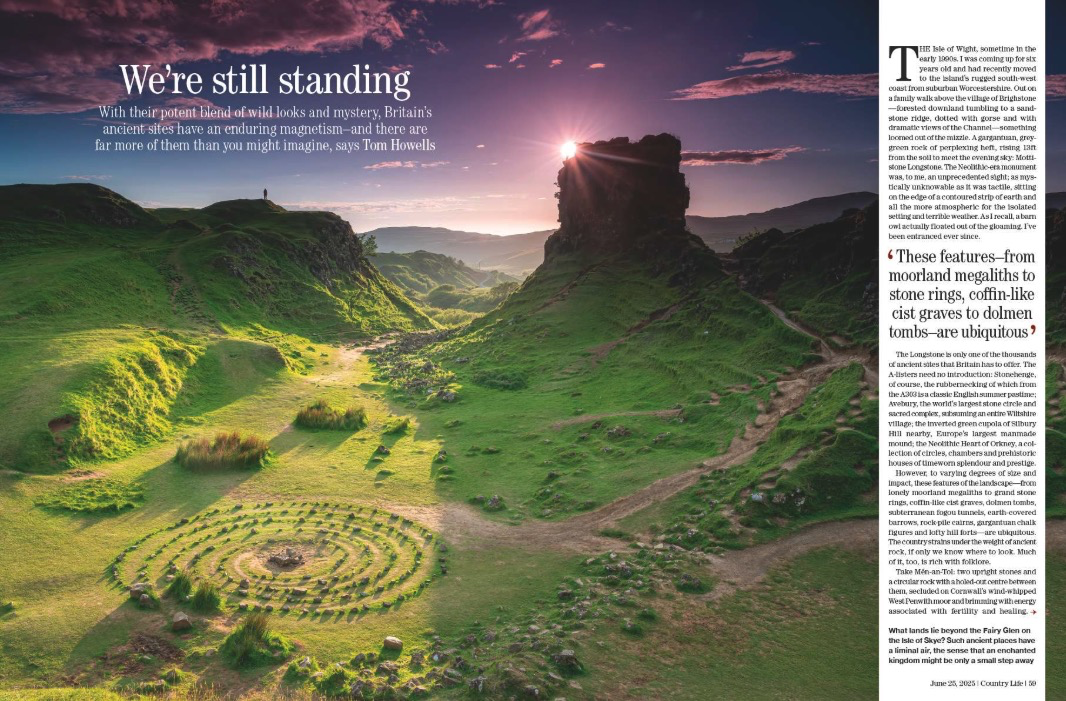
Tom Howells explores the mystery and magnetism of the thousands of ancient British monoliths and monuments, from Cornwall to the Orkneys
Going down in a blazer of glory
It is a favourite of royalty and rowers, worn from Augusta to the Oscars — can there be a more versatile jacket than the blazer, asks Harry Pearson
Country Life International
• Russell Higham uncovers the secret society of Cascais • Holly Kirkwood finds the age of chivalry alive and well in Valletta • Matthew Dennison searches for traces of the Venetian Empire in Greece • Tom Parker Bowles savours superb Spanish dishes • Eileen Reid tracks the influence of two intellectual giants of Avignon
Winging it
Mark Cocker welcomes the renaissance of the peregrine falcon, a raptor that stoops to conquer at up to 240mph
New series: Scale model
Overfishing threatens the very existence of the cod, but Gadus morhua remains a monster of the deep for David Profumo
Dick Bird’s favourite painting
The stage designer chooses a monumental example of early-19th-century political art
The virtues of history
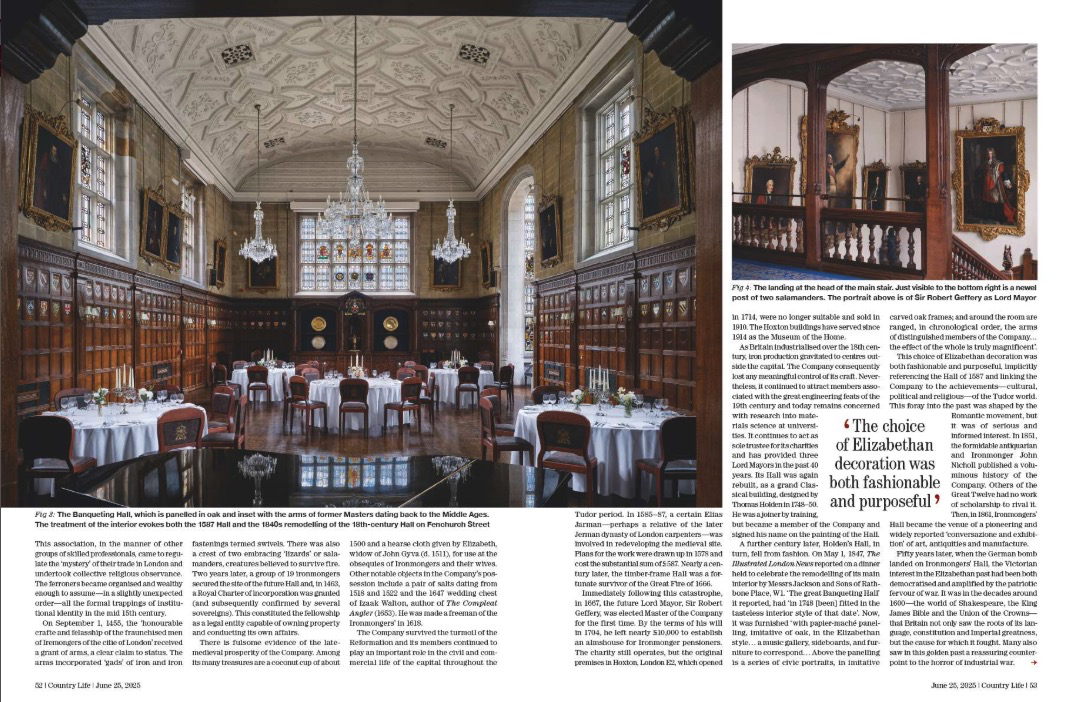
John Goodall celebrates 100 years of the headquarters of the Worshipful Company of Ironmongers, one of London’s Great Twelve City Livery Companies
The legacy
Leslie Hore-Belisha created a beacon of hope for road users everywhere, finds Kate Green
Luxury
Anniversary jewels and Art Deco delights with Hetty Lintell, plus Willow Crossley’s favourite things
Interiors
Arabella Youens admires the kitchen of a house in the Scottish Borders and considers the earthly pleasures of terracotta
Laying ghosts to rest
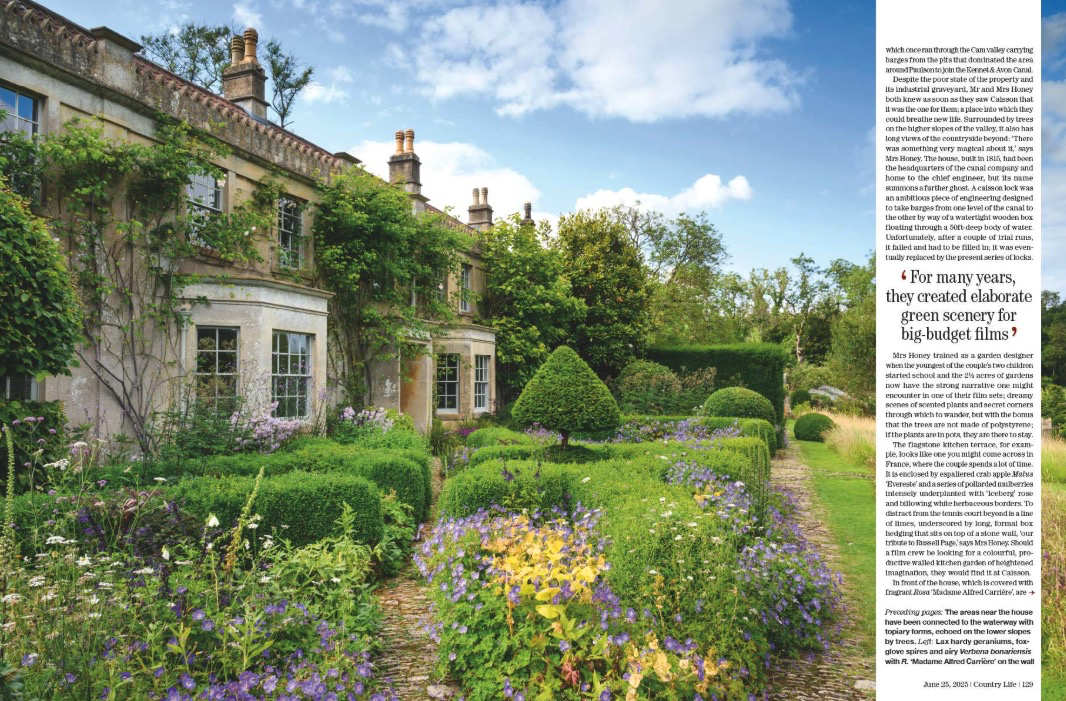
A spectacular garden now graces the grounds of the old Somerset-shire Coal Canal Company HQ, as Caroline Donald discovers
Water, water everywhere
John Lewis-Stempel delves into the depths of a field pond, mesmerised by the seemingly endless variety of aquatic life
Arts & antiques
A quartet of journeys with The King raised the profile of plein-air artist Warwick Fuller, who talks Royal Tours with Carla Passino
Making an impression
French Impressionism was a slow burner in Britain as Monet and Pissarro gradually influenced our art scene, reveals Caroline Bugler
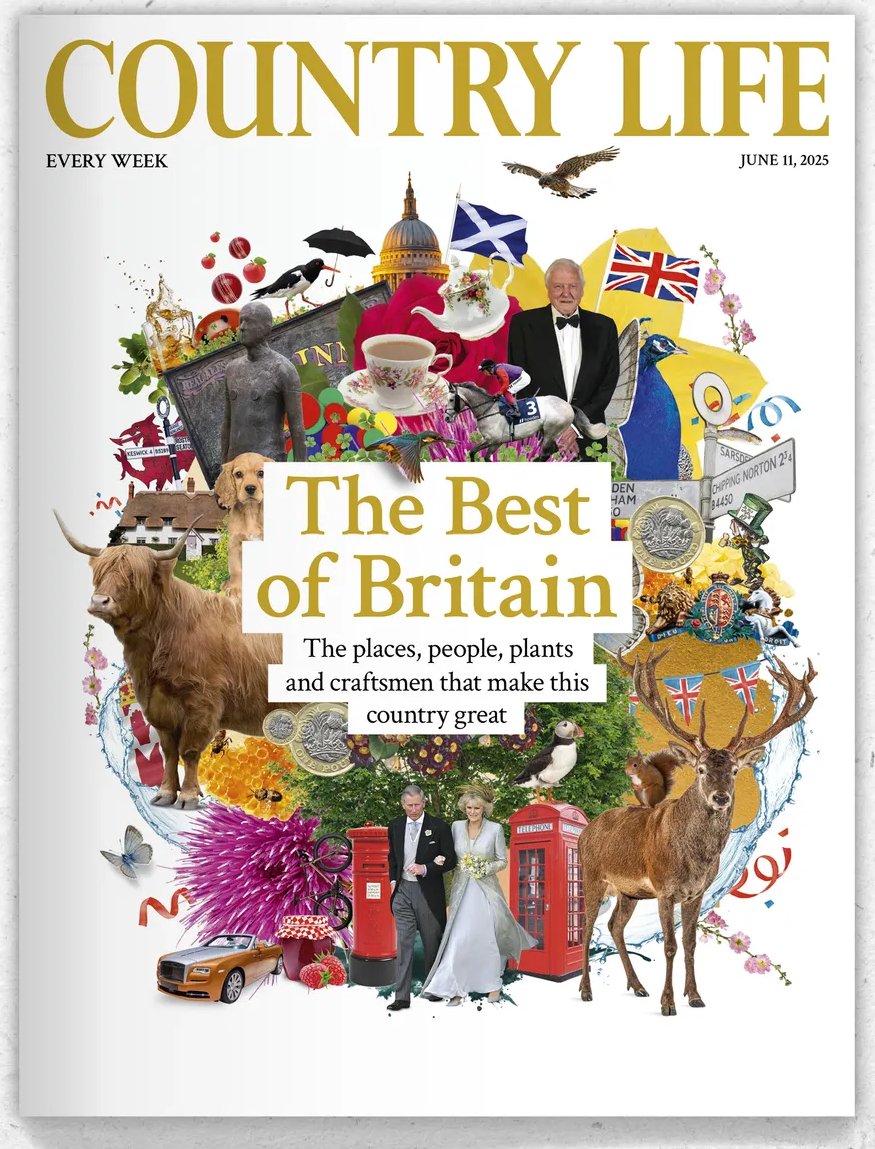
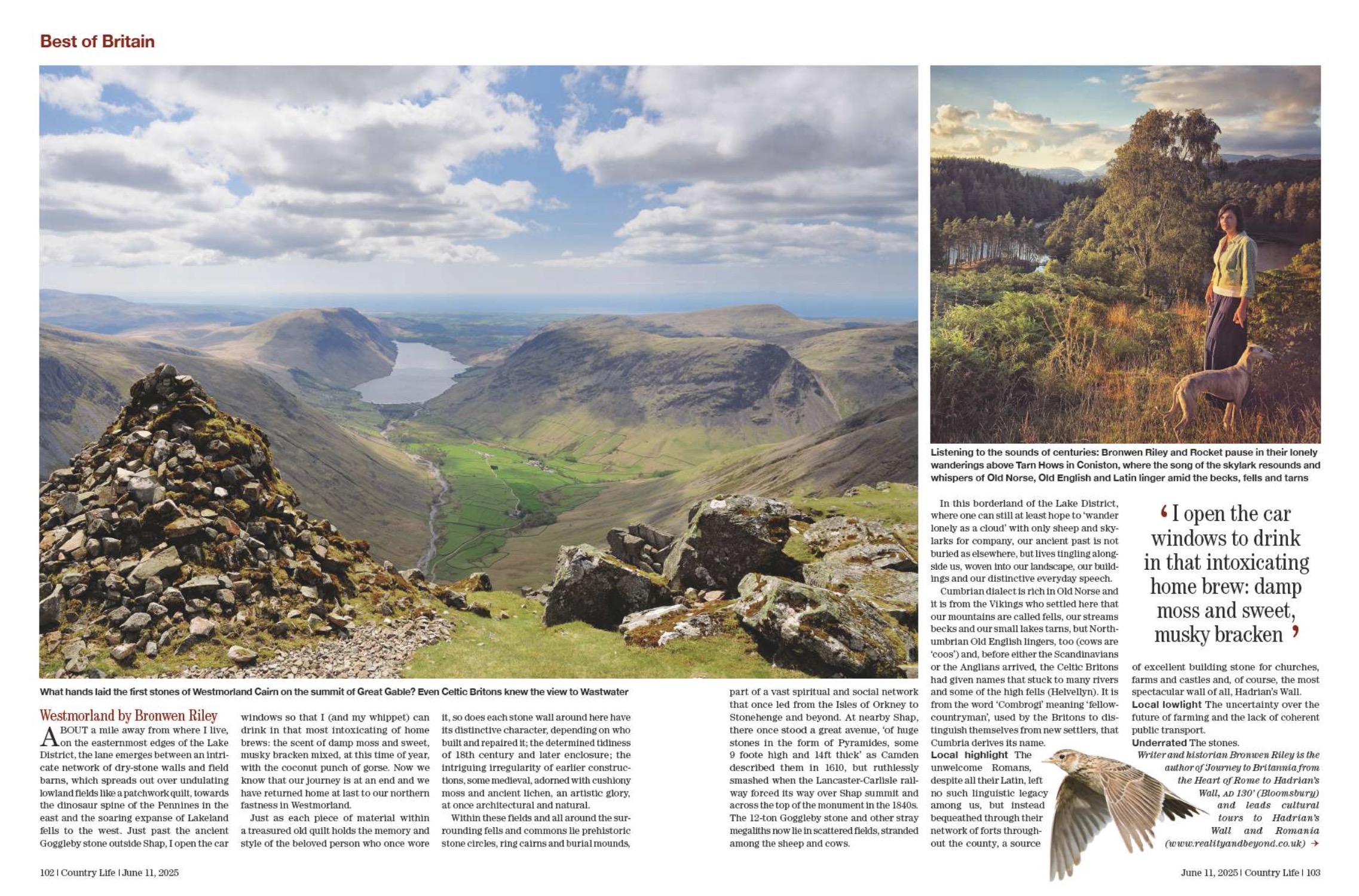
From Belvoir to Belfast, the Exe to the Itchen and Holkham to Herefordshire, 11 friends of Country Life reveal what makes their beloved little corner of the British Isles stand out from the crowd
All hail the new Carolean age
A host of Charles III’s creative subjects are echoing the artistic achievements of the Restoration. Kate Green, John Goodall and Carla Passino investigate
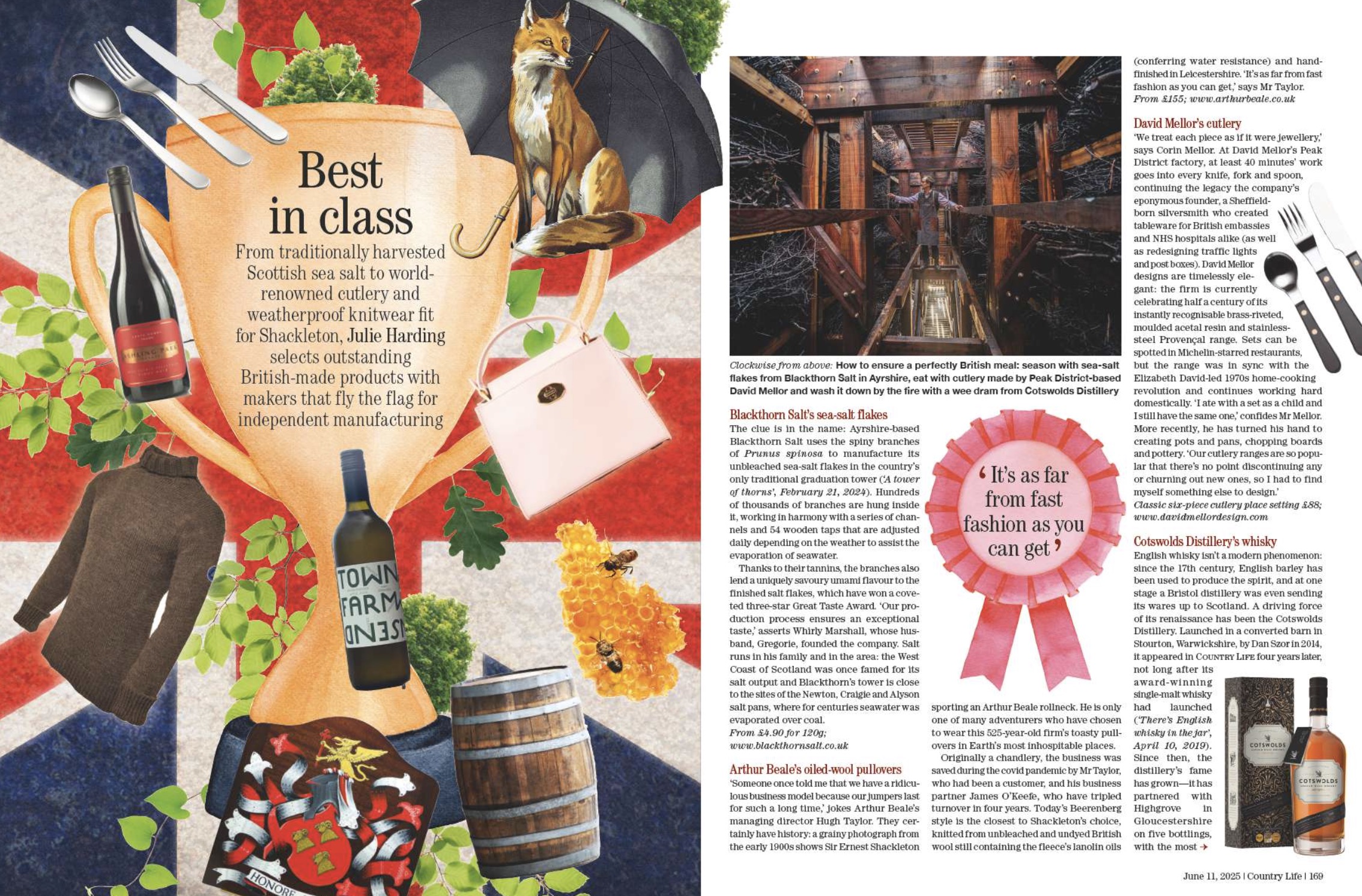
Best in class
Julie Harding showcases the British-made products that are the embodiment of excellence both at home and abroad
Blooming brilliant
Charles Quest Ritson meets the dedicated custodians of our precious plant heritage
Susan Owens’s favourite painting
The art historian and author chooses a coastal masterpiece that brings the elements to life
The legacy
‘We’re doomed’—Kate Green salutes the hapless Captain Mainwaring and his motley, but much-loved Dad’s Army troops
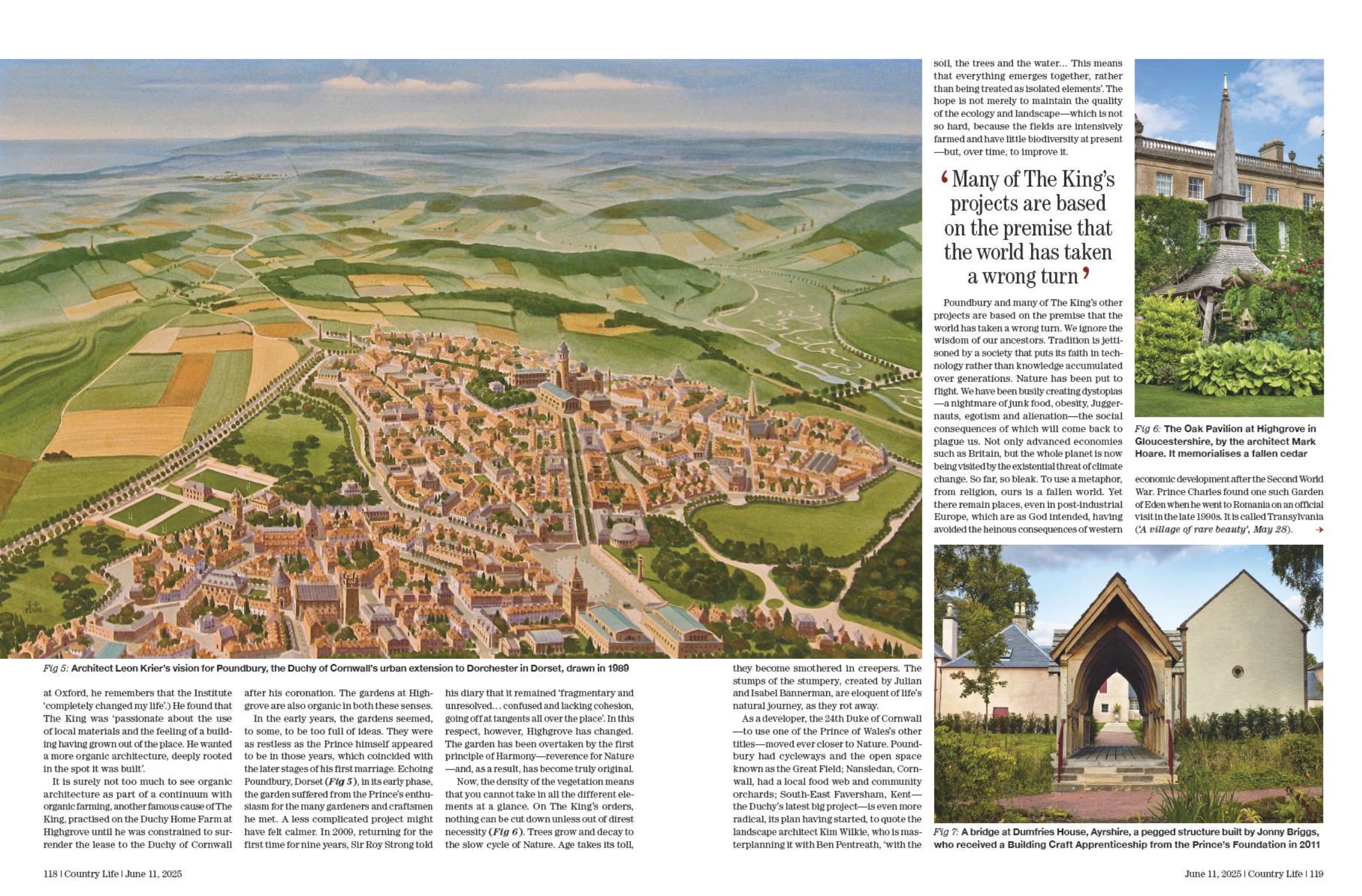
Enthroning harmony
The King’s decades-long quest for harmony shines through in his architectural ventures, as Clive Aslet discovers
Trunk call
Julie Harding reveals how The King is backing efforts to save our majestic oaks, the arboreal icons of the British landscape
Winging it
Mark Cocker hails the original ‘jump jet’, the heady hen harrier
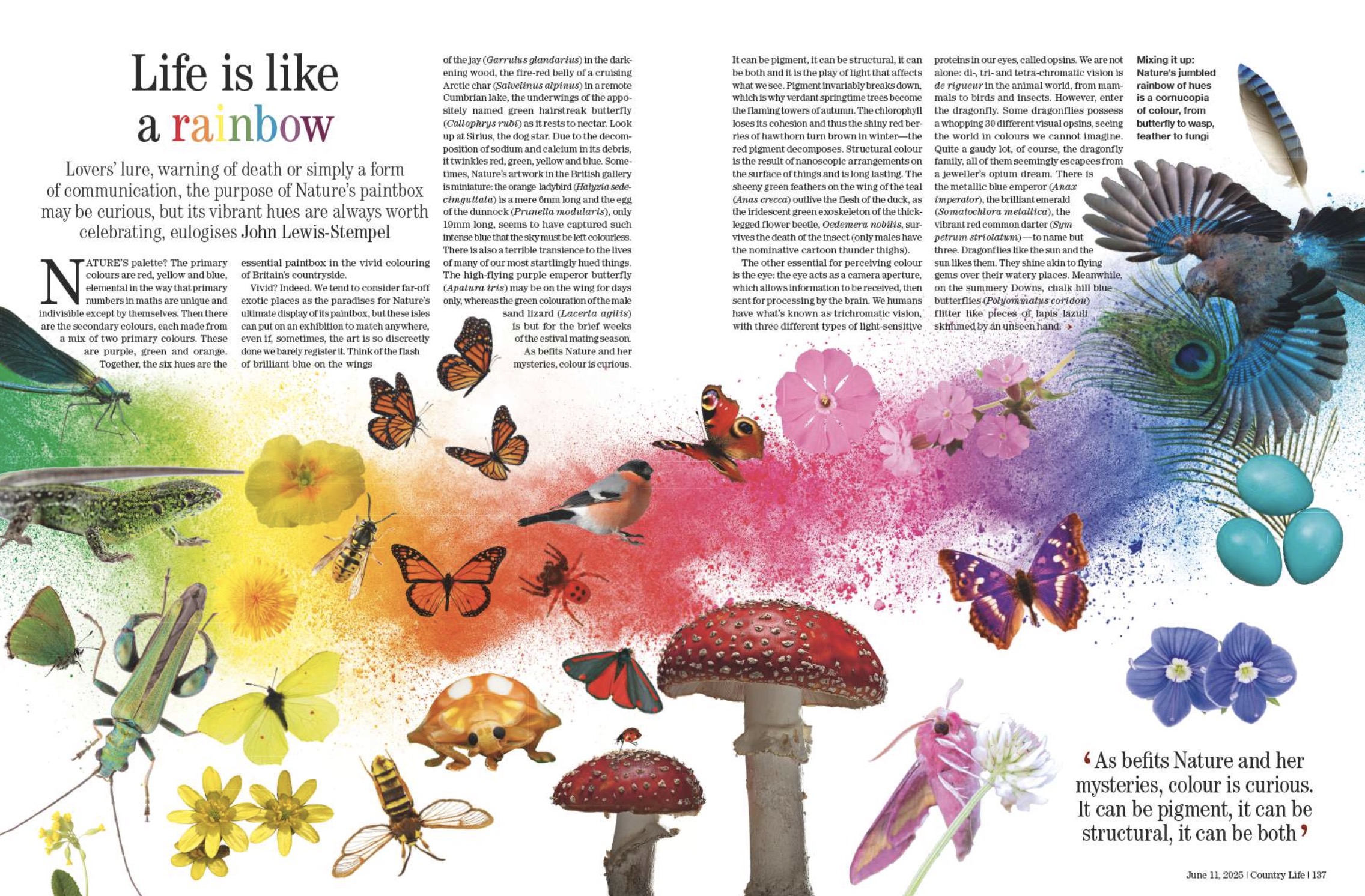
Life is like a rainbow
The vibrant hues of Nature’s paint palette are the daubs of warning, mating and more, suggests John Lewis-Stempel
Wink and you’ll miss it
There’s nothing tame about tiddly-winks, finds Amie Elizabeth White
Penny for your thoughts
Does familiarity breed contempt for Matthew Dennison as he delves into enduring proverbs?
Heritage threads
Hetty Lintell heads into the countryside to celebrate the very best of British fashion
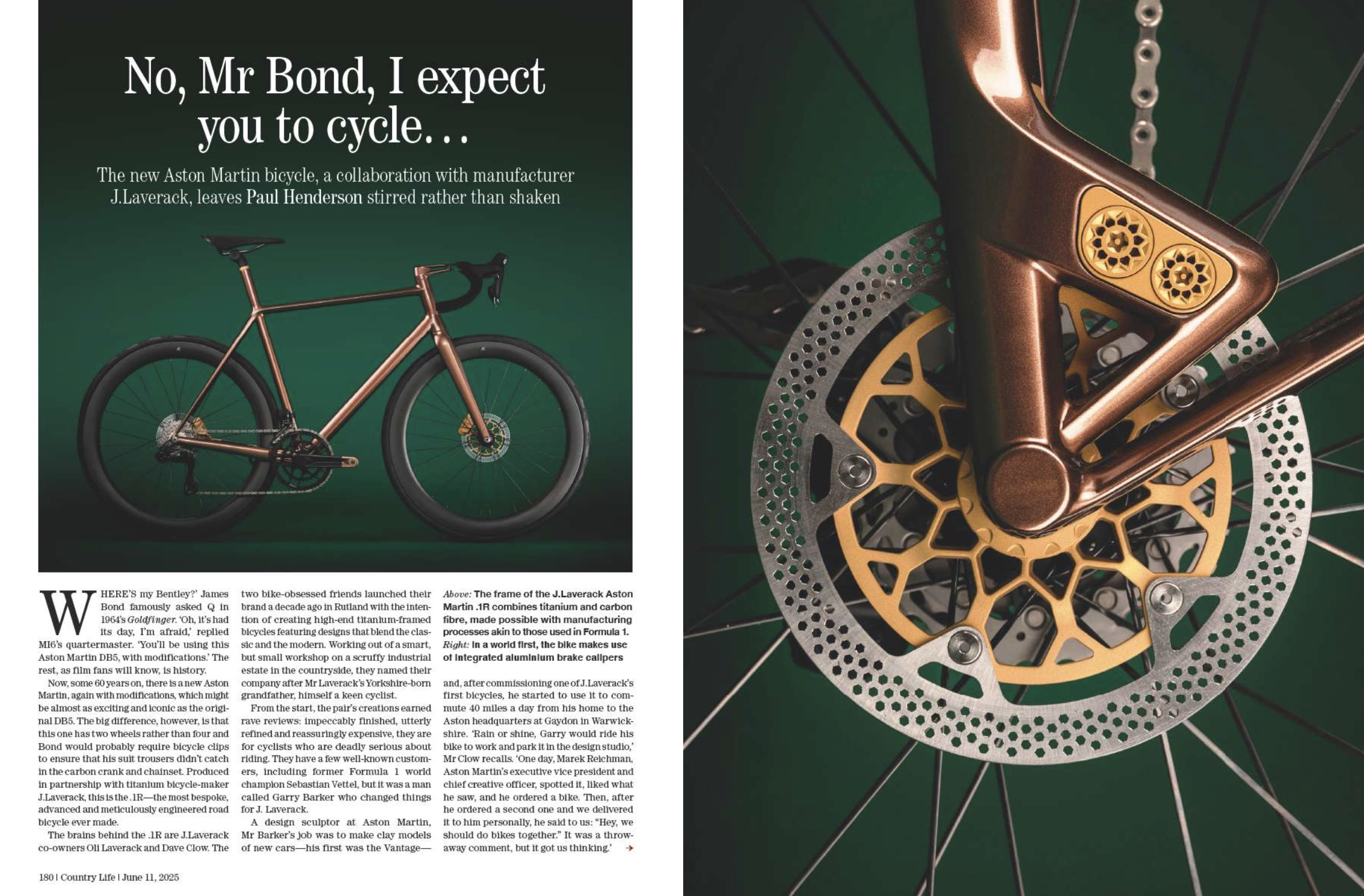
No, Mr Bond, I expect you to cycle…
Paul Henderson joins the Q for Aston Martin’s top two-wheeler
Interiors
Giles Kime is wowed as the WOW!house opens its doors
A phoenix rises
Tiffany Daneff admires the revival of the historic gardens at Bledhow House in Buckinghamshire
A storm in a teacup
Jonathon Jones shares the dos and don’ts of brewing up
Arts & antiques
The politics, passions and portaits of wealthy American heiresses, with Carla Passino
Do judge the book by its cover
Carla Passino toasts the British illustrators who gave life to the worlds of Winnie-the-Pooh, Alice in Wonderland and Peter Rabbit
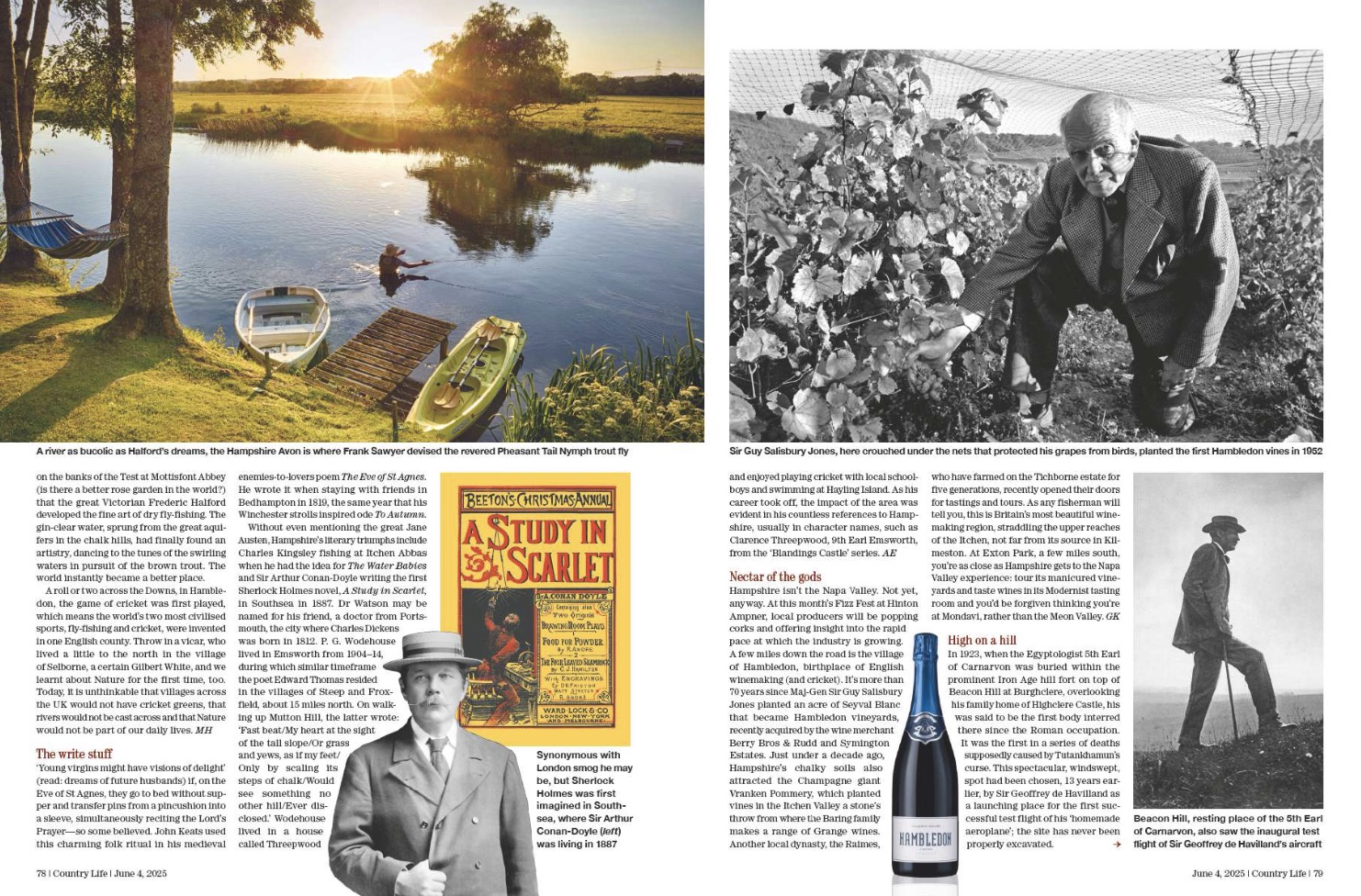
From trout to treasure and wine to witches, it’s the county that has it all. Country Life writers present 13 tales tall and true from Hampshire’s rich history.
The legacy
Kate Green salutes Edward, 3rd Baron Montagu of Beaulieu and his matchless motoring collection
A room with a view
Adam Rattray visits the rented lodgings where Jane Austen spent her final days and reveals secrets recently uncovered in the house in Winchester, Hampshire
City of legend
Winchester is a place of kings and cobbles. Jason Goodwin visits our venerable one-time capital and finds it ageing well
London Life
Will Hosie welcomes top-class women’s tennis back to The Queen’s Club and washes down burgers with martinis to mark the return of the high-low restaurant, plus our writers have all you need to know this month
Travel
Emma Love has all the latest news, from Arles to Antwerp, Steven King hails the revival of Madrid and Pamela Goodman learns to love camels
Into the Goodwood
The West Sussex estate’s fresh focus on art and education is heralded with an exhibition of Dame Rachel Whiteread’s work
Nishat Khan’s favourite painting
The composer and musician chooses a fascinating scene that you could almost step into
The good stuff
Hetty Lintell strides into summer with bold red-and-white stripes
Interiors
A copper-topped kitchen catches the eye of Arabella Youens
Shape shifters
Non Morris is mesmerised by the tiered grass amphitheatre sculpted by Kim Wilkie in the garden of The Holt in Hampshire
Winging it
Mark Cocker hails the majestic merlin, the favoured hunting foil of Mary, Queen of Scots
Arts & antiques
Mollie Dent-Brocklehurst tells Carla Passino why she’ll never part with a remarkable drawing of a little girl with her hair ablaze
Jubilation and bittersweet tears greeted the end of hostilities in 1945, reports Octavia Pollock.
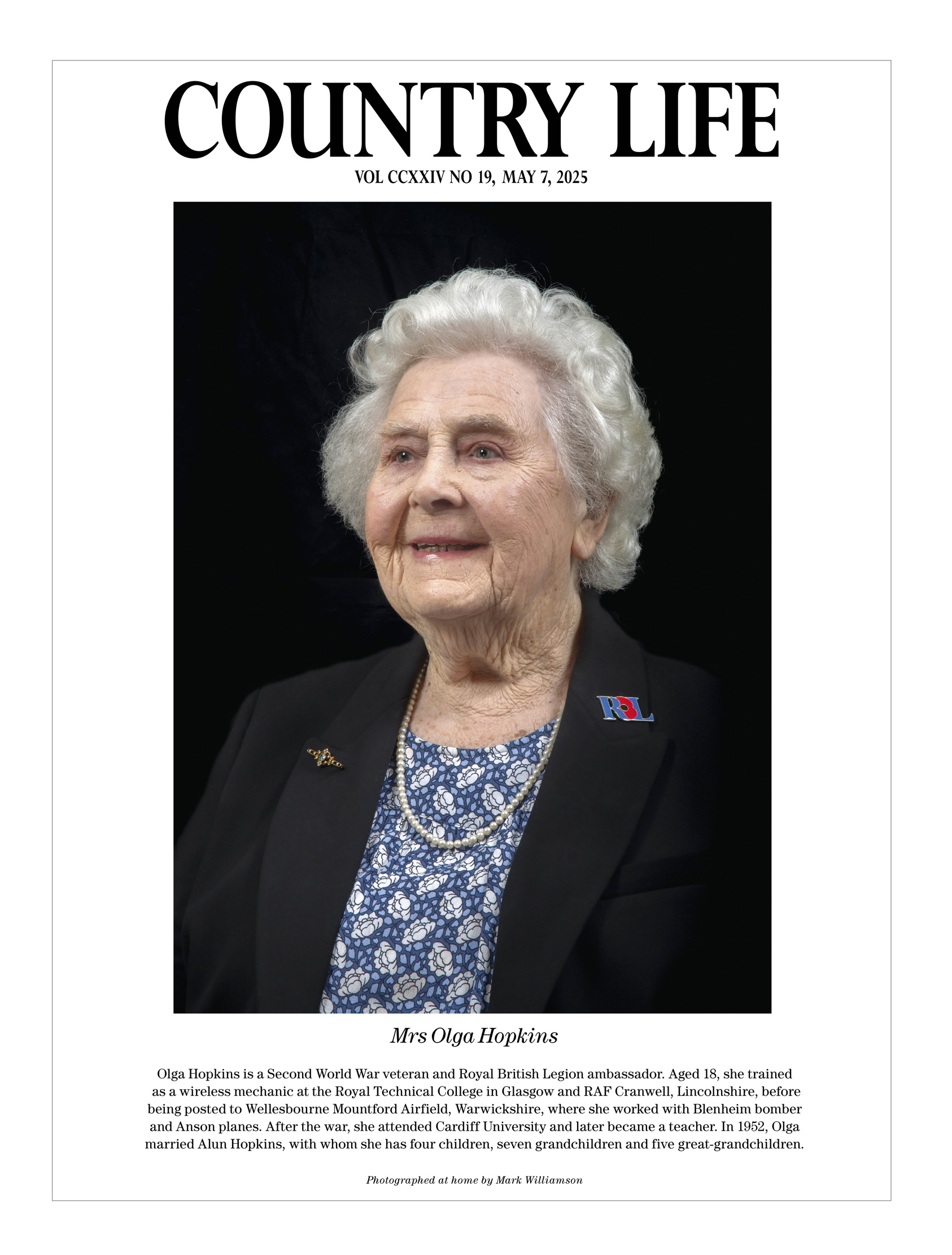
Mrs Olga Hopkins, Second World War veteran, takes centre stage on this week’s Frontispiece.
The carver, the baker and fancy shoemaker
Jane Wheatley meets some of the craftspeople enhancing the Cotswolds’ standing as a hive of creativity.
‘I am the Marquis of marmite’
Laurence Llewelyn-Bowen is applying his trademark swagger to a new passion for painting, reveals James Fisher.
Nothing lasts forever
Laura Parker reveals in those ‘blink and you’ll miss it’ moments that only Nature can provide.
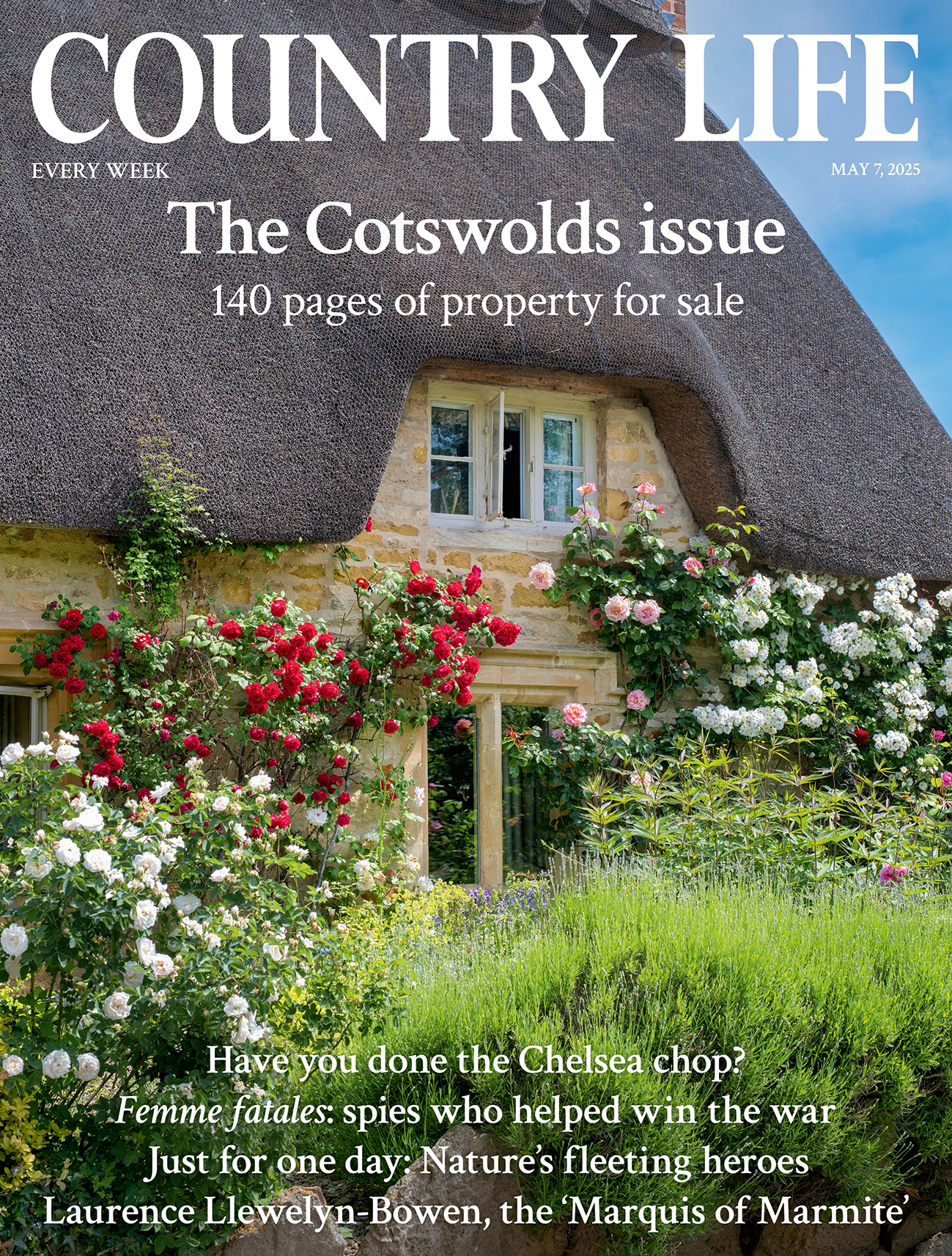
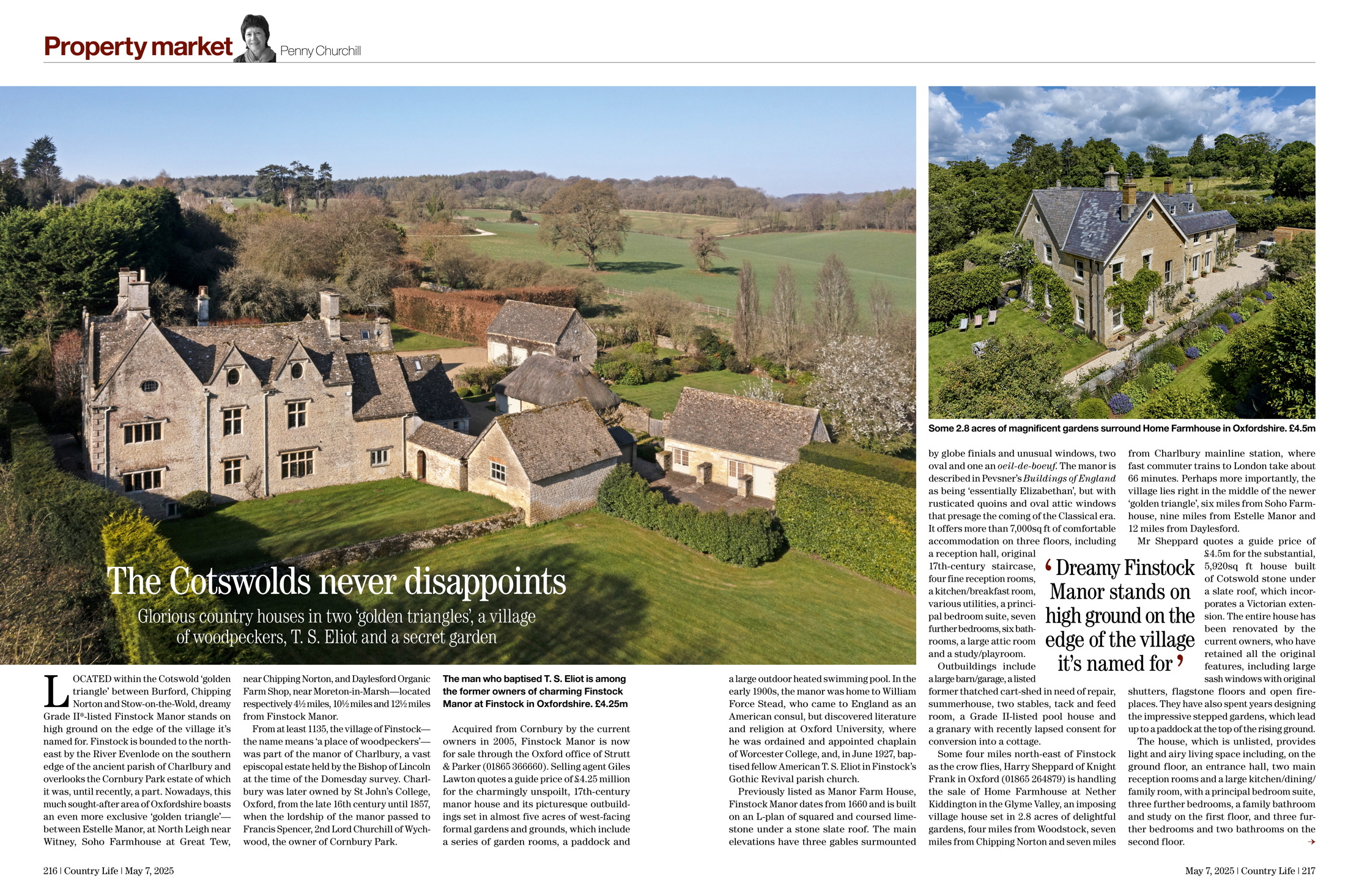
The Cotswolds never disappoints (above)
Penny Churchill showcases glorious country houses for sale in two ‘golden triangles’.
All set for the Chelsea chop?
This it the time to prune our late-flowering herbaceous perennials — join John Hoyland in wielding the secateurs.
Martina Froth’s favourite painting
The Yale Centre for British Art Director chooses a work tinged with a melancholy sadness.
An estate made public
John Goodall investigates the gradual architectural revolution of Bowood in Wiltshire, a house that boasts a remarkable history.
The legacy
Kate Green pay tribute to Alan Turing, the code cracker who curtailed the Second World War.
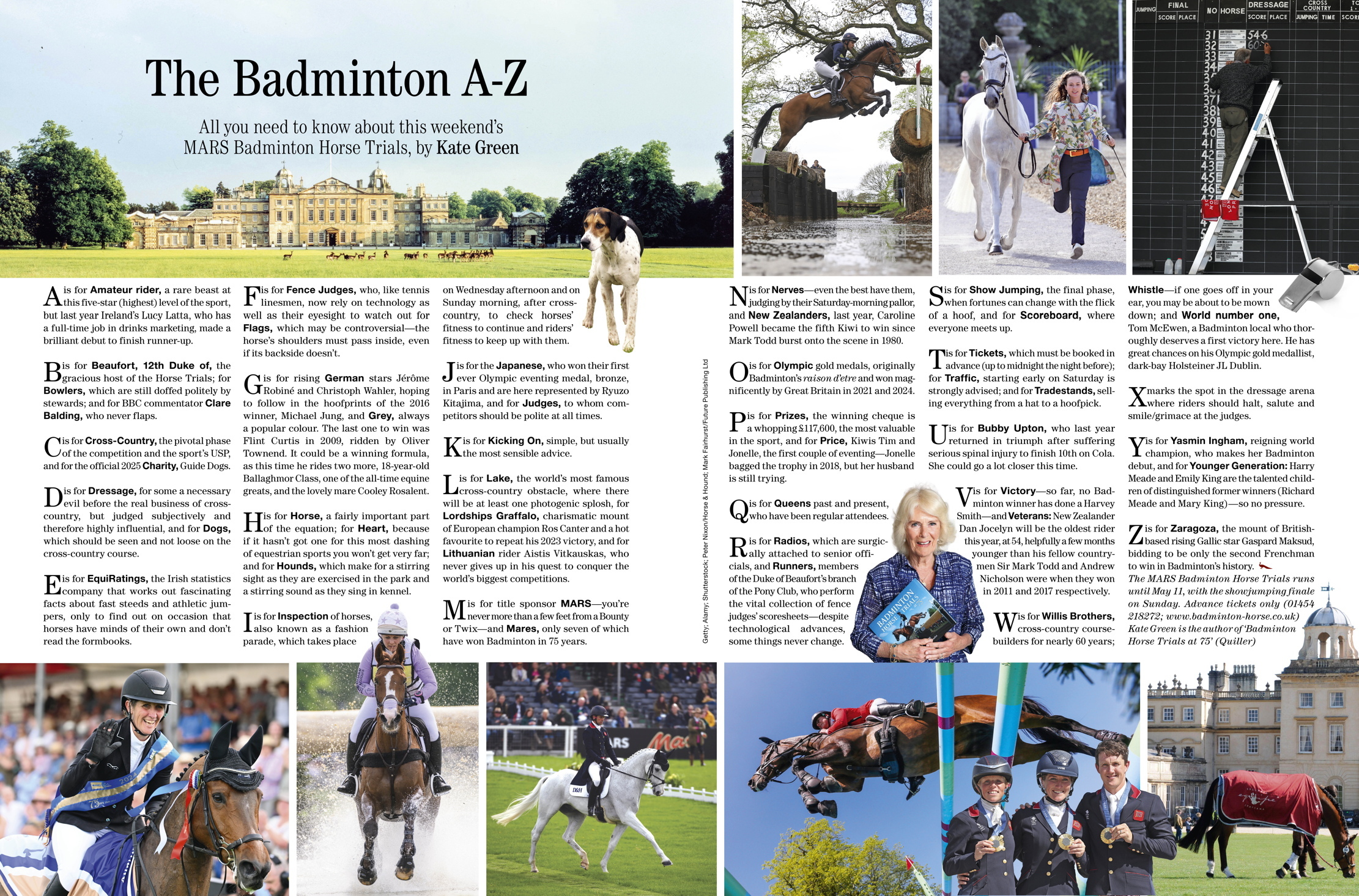
The Badminton A-Z (above)
From amateur riders to Zaragoza, Kate Green guides you through the world-class eventing action.
New series: Winging it
The elegant hobby is capable of snatching swallows in flight — Mark Cocker is rapt by raptors.
The good stuff
Hetty Lintell is wowed by watches.
Interiors
Restful bedroom furniture and accessories, with Amelia Thorpe.
London Life
Rosie Paterson reveals how bees are creating a buzz in the capital, our writers have all your need to know this month and Selina Cadell shares her on-stage experiences of the Theatre Royal Drury Lane.
A soft touch
Tiffany Daneff marvels at the flower-filled paradise of Hampnett House in Gloucestershire.
Travel (above)
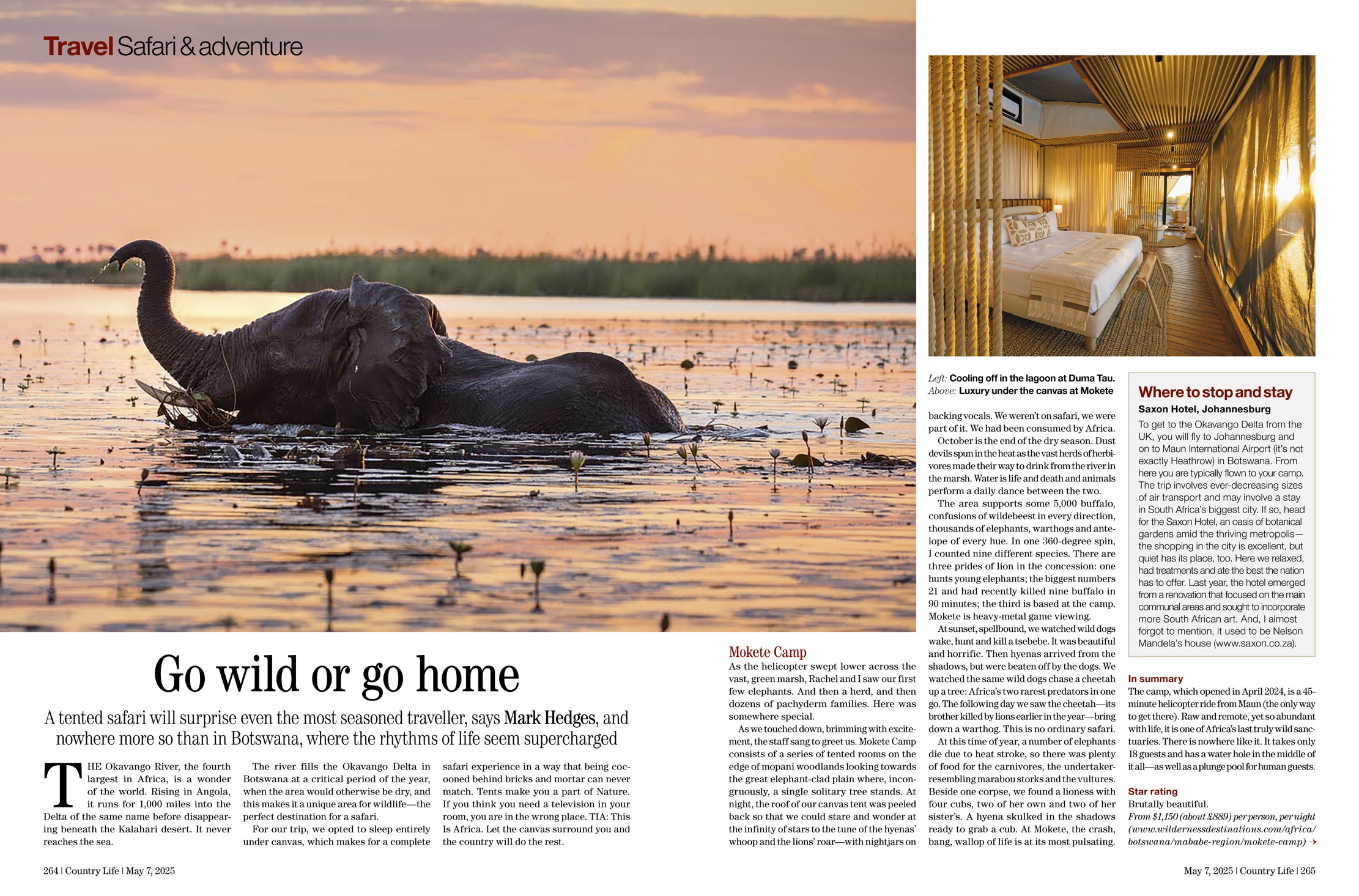
Emma Love has an eye for adventure, Mark Hedges goes wild on safari in Botswana, Rosie Paterson hits the walking trail in Sri Lanka and Pamela Goodman hail’s Giubbilei’s gardens.
Art and antiques
Simon Finch tells Carla Passino he will not part with his £1 note signed by a Great Train Robber.
One king to rule them all
Mary Miers explores the artistic and cultural legacy of James I.
NATIONAL GEOGRAPHIC TRAVELLER MAGAZINE (May 1, 2025): The latest issue features the pintxos bars of San Sebastián to exploring the artists’ studios of Barcelona, the June issue of National Geographic Traveller (UK) invites you to discover mainland Spain’s most breathtaking cities through the eyes of locals.
Kenya: In the southern safari regions, humans and wildlife have a fragile coexistence Faroe Islands: In search of shapeshifters and sea trolls in this elemental archipelago in the Atlantic Biarritz: On France’s Basque coast, this nostalgic town is revered by surfers and gourmands alike Croatia:Hop from beach clubs to medieval monasteries with these island itineraries Cartagena: Local designers and bartenders are giving this Colombian city a shake-up Trentino: Mediterranean and Northern European cultures collide in this mountainous Italian province Chengdu:In Sichuan’s provincial capital, teahouses are attracting a new generation of travellers Prague: The Czech capital’s hotel scene is a feast for design aficionados
Plus, our pick of this month’s most exciting travel news; celebrating 200 years of Berlin’s Museum Island; a look at the flavours of Burgundy; exploring Galloway, Scotland, on two wheels; an architectural tour of Casablanca; the best summer music festivals; a dose of Victorian whimsy on the Isle of Wight; independent bookshops worth travelling for; and essential kit for festivalgoers.
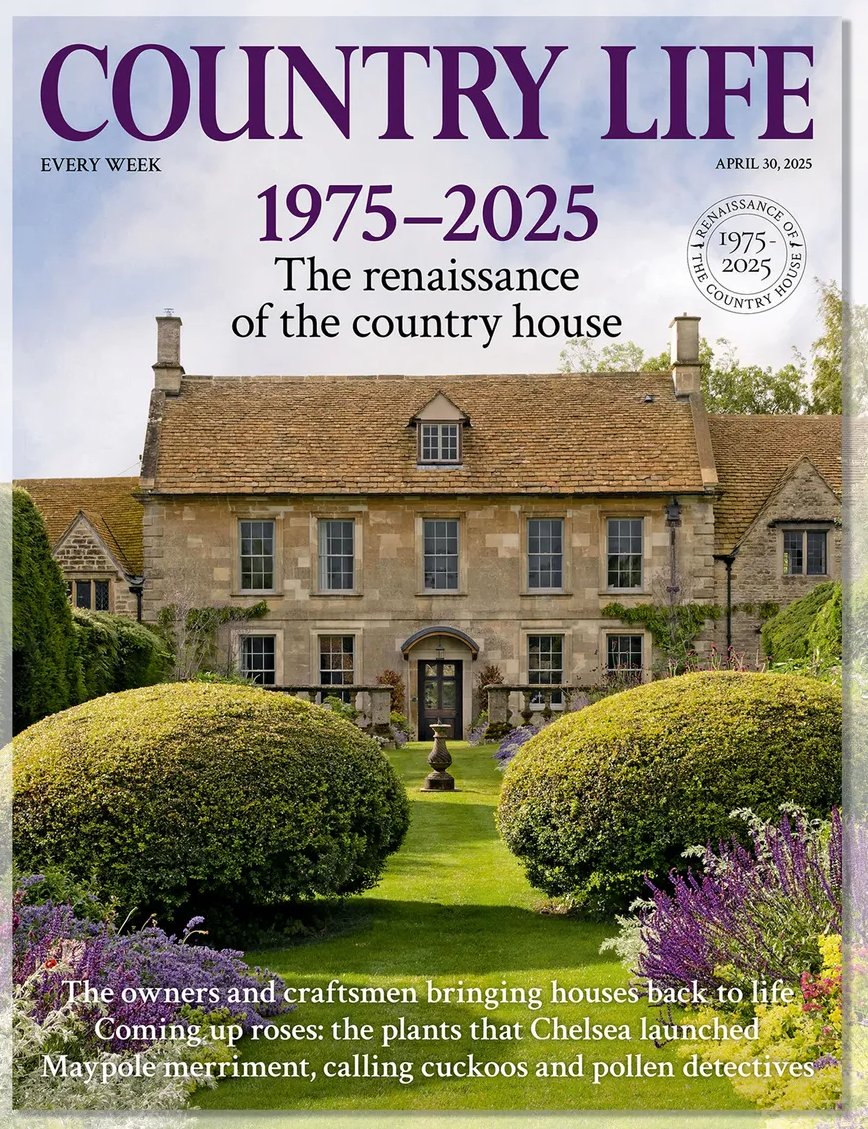
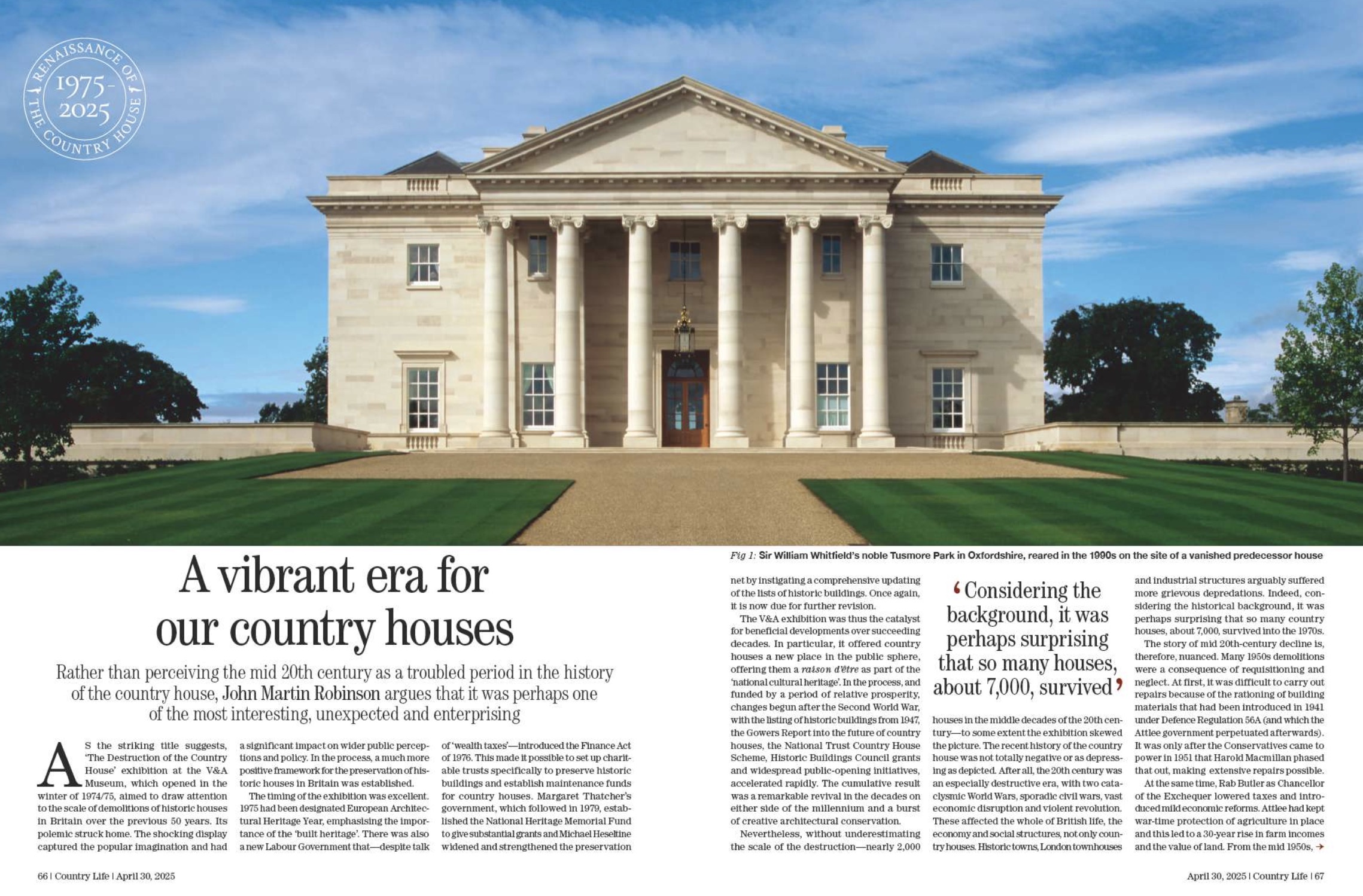
The seeds of a renaissance for the British country house were sown in the mid 20th century, argues John Martin Robinson
Bringing ‘beauty’ back
Lord Deben assesses his 1997 ‘Gummer’s Law’, conceived to aid the creation of new houses
Radbourne Hall
John Goodall hails the revival of the 1740s Derbyshire house
Sign up for the Country Life Newsletter
Exquisite houses, the beauty of Nature, and how to get the most from your life, straight to your inbox.Contact me with news and offers from other Future brandsReceive email from us on behalf of our trusted partners or sponsorsBy submitting your information you agree to the Terms & Conditions and Privacy Policy and are aged 16 or over.
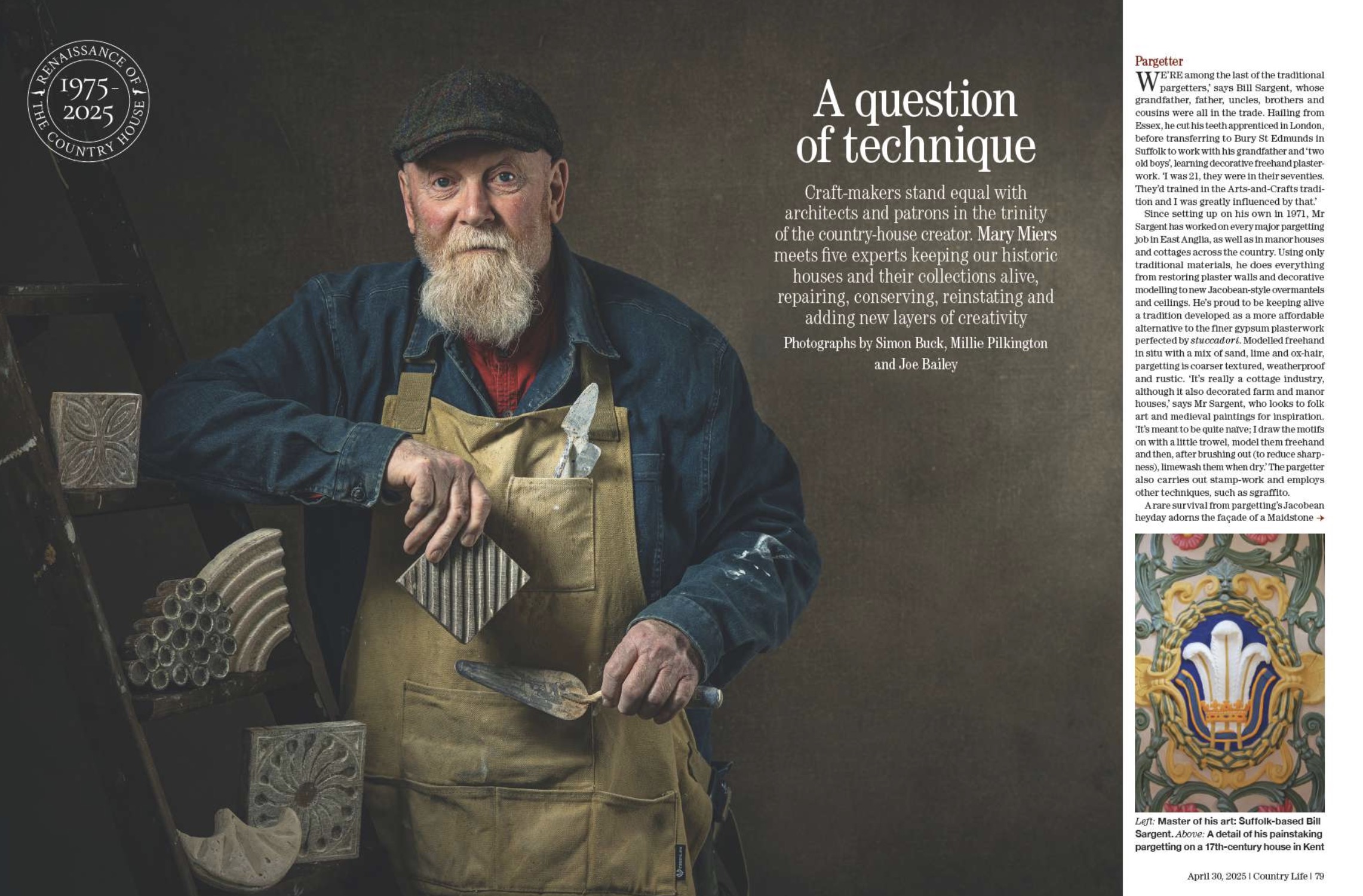
A question of technique
Mary Miers meets the experts keeping country houses and their collections in working order
Chillingham Castle
The Northumberland landmark lives on, discovers John Goodall
1975 and now
What a difference 50 years make
Asleep no more
Tiffany Daneff celebrates the designers bringing our leading country gardens back to life
Knowsley Hall
John Goodall finds the Lancashire home restored to its former glory
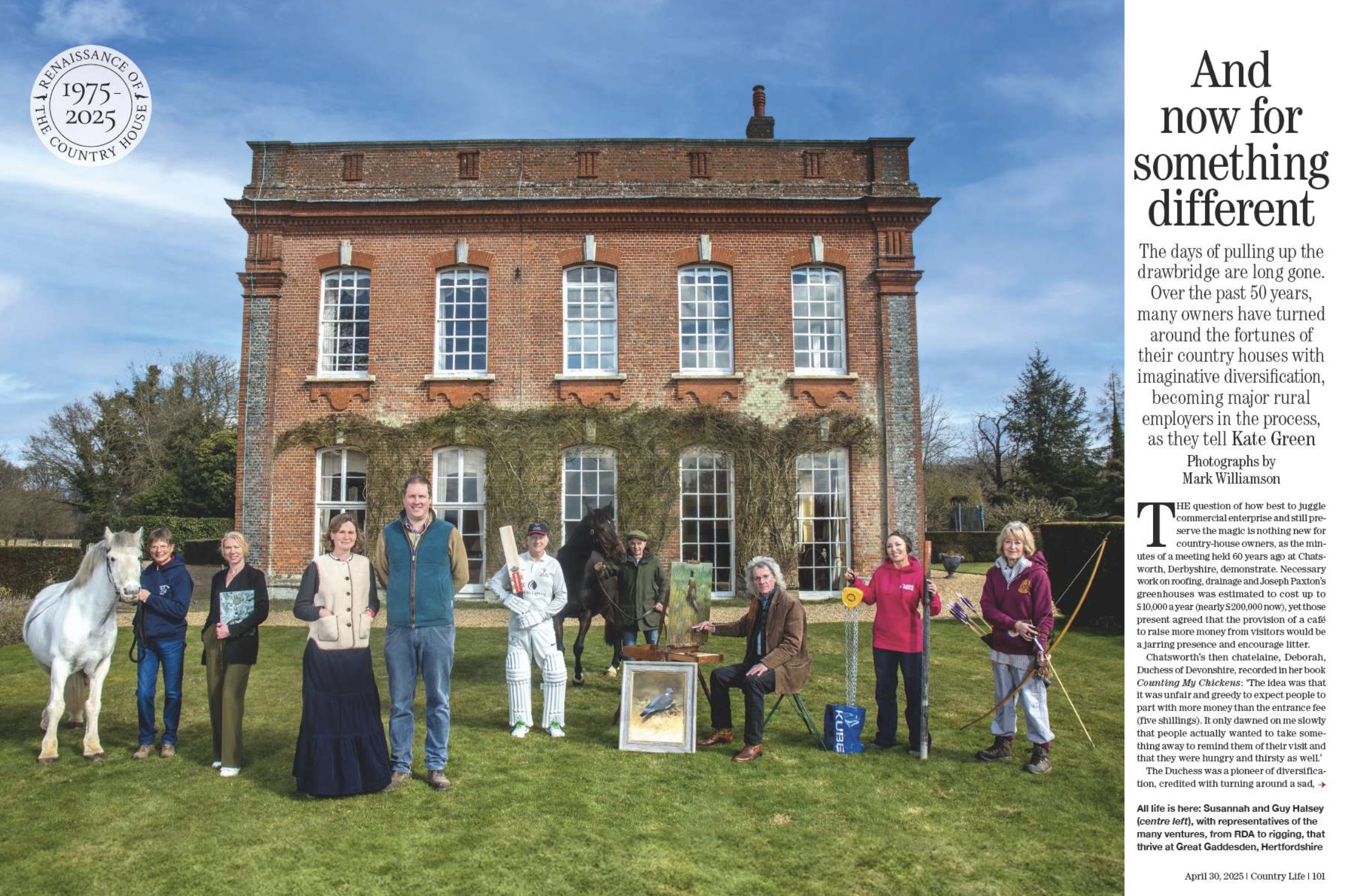
And now for something different
Diversification has revived the fortunes of many an estate in the past 50 years, reveals Kate Green
What’s on at the big house
This year’s country-house events
Stowe
John Goodall charts the survival of this Buckinghamshire gem
Ready for anything
Arabella Youens examines how owners are equipping their houses to thrive for the next 100 years
Wimborne St Giles
John Goodall lauds this award-winning restoration in Dorset
You saw it here first
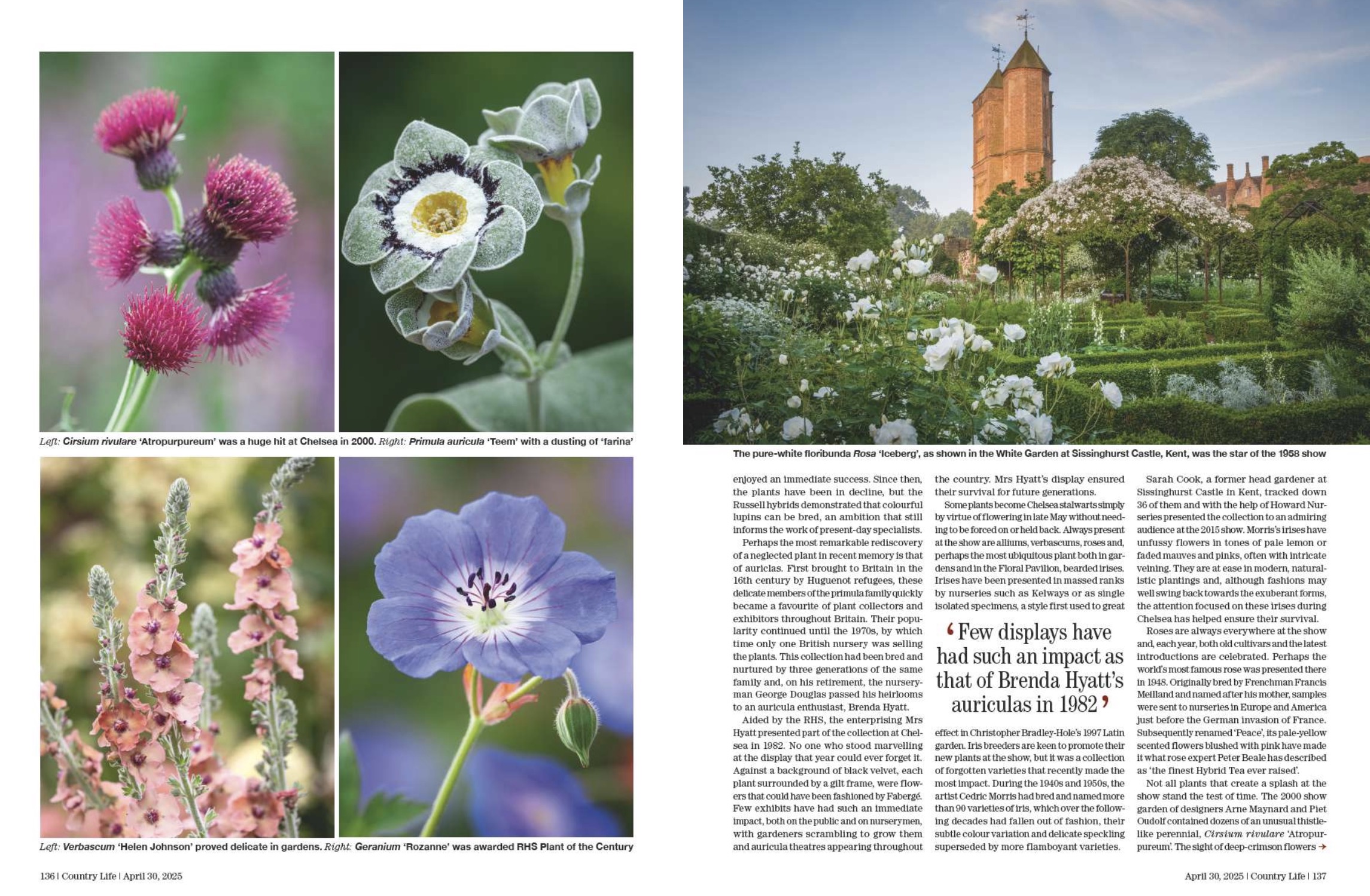
It’s not all about the gardens — John Hoyland profiles some of the plants that made their name at the RHS Chelsea Flower Show
In cloud cuckoo land
The evocative, echoing cuckoo’s call reverberating across the meadows heralds the arrival of spring for John Lewis-Stempel
Today’s pollen account
Hayfever sufferers may not agree, but Ian Morton argues that pollen’s contribution to life on earth is not to be sneezed at
A rainbow of ribbons
The maypole has been the source of merriment and mayhem for centuries, as Deborah Nicholls-Lee reveals
Stuart Procter’s favourite painting
The Beaumont Mayfair hotel CEO chooses an intriguing work with an air of mystery
The legacy
Amie Elizabeth White reveals how Constance Spry revolutionised flower-arranging a century ago
Interiors
Digital printing and panoramic wallpapers offer endless possibilities, learns Arabella Youens
Foraging
Poetry inspires John Wright, as he seeks out the saccharine, aniseed smack of sweet cicely
Arts & antiques
Carla Passino is captivated by the calming 19th-century landscapes of Utagawa Hiroshige, an artist who continues to inspire today
Lanzarote: The Spanish island’s volcanic landscapes are beloved by artists, winemakers and hikers Sierra Leone: Stunningly biodiverse, the West African nation is finally opening up to travellers Brazil:In search of jaguars on the meandering waterways of the Brazilian Pantanal The Alps: Classic itineraries taking in the mountain range’s forests and fast-flowing streams Bangkok: Find peace away from the crowds in Thailand’s storied capital Panama City: The sparkling high-rises of this Central American metropolis conceal a fascinating history River Shannon: Village pubs and flower-filled meadows pepper this Irish waterway Portland, Maine: Innovative farmers are driving this coastal hub’s dining scene Lisbon: From pilgrims to party people, the Portuguese capital has stays for all types of visitor
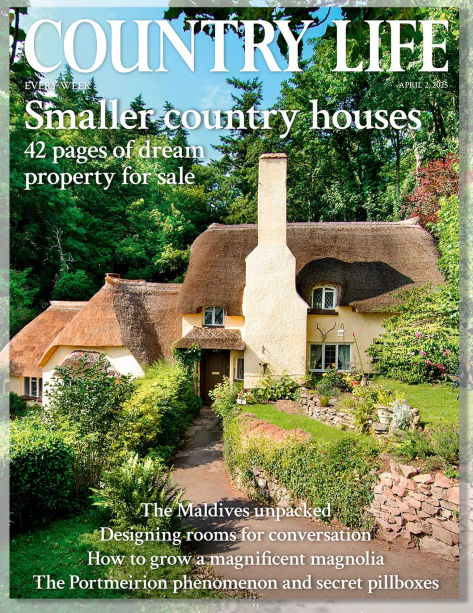
The art of conversation can be aided by a carefully configured drawing room, says Emma Burns of Sibyl Colefax & John Fowler
All ‘Clough-ed up’
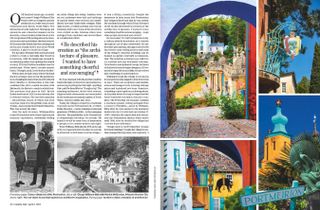
Ben Lerwill marks 100 years of Portmeirion in North Wales, the outlandish architectural creation of Sir Clough Williams-Ellis
Property market
Arabella Youens casts her eye over compact country estates in Dorset, Devon and Hertfordshire
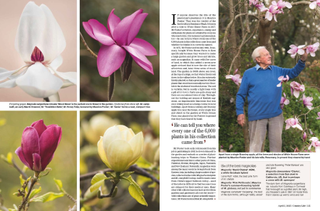
A prince among plantsmen
Charles Quest-Ritson is wowed by the memorable magnolias among the 6,000 plants in the Kent garden of Maurice Foster
Travel
Libby Brodie and Rosie Paterson explore the magnificent Maldives and Pamela Goodman shares not so fond memories of cheese fondue
Zoë Wanamaker’s favourite painting
The actress chooses a vibrant work bursting with the light, colour and energy of spring
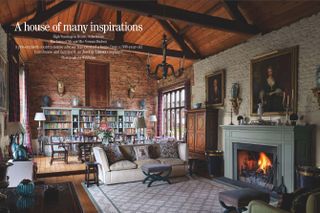
A house of many inspirations
Jeremy Musson marvels at the amazing transformation of 300-year-old farm buildings at High Wardington House, Oxfordshire
The legacy
Kate Green pays tribute to Joe Henson, a ‘true gentleman’ who led the way in safeguarding some of our favourite native breeds
From this slumber you shall wake
Numbers have plummeted in the past 20 years, but plans are afoot to revive the fortunes of the hazel dormouse, reveals Jack Watkins
The good stuff
Immortalise your beloved pet in a beautiful piece of bespoke jewellery, suggests Hetty Lintell
London Life
Amie Elizabeth White embarks on the capital’s Big Egg Hunt, Country Life writers present all the titbits you need to know this month and Huon Mallalieu takes a trip down memory lane as he recalls the colourful characters of Booksellers’ Row
Foraging
John Wright lauds elderflower for its ‘scent beyond compare’
Arts & antiques
Carla Passino delves into the beauty, birds and beasts in the kingdom of J. M. W. Turner
Close to your chest
Huon Mallalieu investigates how the chest of drawers has gradually made itself at home in every room of the house
A song of the four seasons
Henrietta Bredin applauds the fusing of poetry and music in the exquisite song cycle ‘Seasons’
News, Views and Reviews For The Intellectually Curious











 Boomers Daily