

Startups, governments and nonprofits are racing to create so-called “vaccine passports,” or digital health passes aimed at helping people travel and safely move around in public. WSJ explains what it would take to get a global digital health pass system off the ground. Illustration: Zoë Soriano
Tag Archives: Technology

Tech Reviews: Apple AirTag Lost-Item Tracker (Video)
Can a drug-detection dog beat Apple’s U1 chip? Attach a $29 Apple AirTag to your stuff and you can use your iPhone to locate it when it goes missing. WSJ’s Joanna Stern put the new gadget up against a drug-detection dog and other lost-item trackers, like the Tile Pro, in a series of indoor and outdoor challenges. Photo illustration: Laura Porat for The Wall Street Journal

Digital Currencies: Could They Be The End Of Banks?
Cryptocurrencies like Bitcoin have been billed as a major disruptor to finance. But digital currencies issued by governments might be even more radical—they may even threaten the future of traditional banking.

Analysis: Why Demand For Armed-Drones Is Surging
Armed drones are growing in military importance as conflicts around the world have proven the utility of these effective tools of war. Companies in China, Turkey, and Russia, among others, have developed advanced remotely piloted aircraft that can use guided weapons on and off the battlefield.
The widespread use of drones in Iraq and Afghanistan by the United States to target and kill insurgents jump started a new chapter in the history of conflict. These high flying and remotely piloted aircraft could engage targets with impunity while the operators were safely working in a ground control station. Keeping the crews out of danger also made the drones politically cheap to use over dangerous skies.
Now more and more countries are gaining this military capability for their own purposes. “At the moment, we’ve seen over 100 states worldwide using military drones and that number is growing significantly” said Wim Zwijnenburg, Project leader, Humanitarian Disarmament at PAX. “We have over 20 states that are using armed drones in conflicts or outside of armed conflicts.”
Although larger and more complex drones, like the General Atomics MQ-9 Reaper are not cheap to develop or operate, smaller drones are becoming more ubiquitous in conflict zones. Limiting the proliferation of these smaller drones, and the ability to weaponize them, is a regulatory nightmare for government agencies around the world.
“Drones are just model airplanes with great sensors on them. And all of these are dual use and have been used in the civilian realm” said Ulrike Franke, a Senior Policy Fellow at the European Council on Foreign Relations. “And in fact, drones have risen enormously in the civilian realm over the last five to 10 years. And so controlling their export is really difficult.”

Analysis: How China Came To Dominate Rare Earth Minerals (WSJ Video)
Neodymium is critical to making the wheels of a Tesla spin or creating sound in Apple’s Airpods, and China dominates the mining and processing of this rare-earth mineral. So the U.S. and its allies are building their own supply chain. Photo illustration: Clément Bürge/WSJ
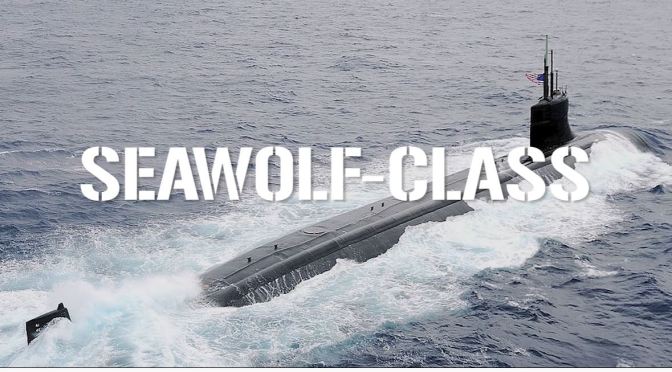
Naval Warfare: ‘Seawolf Class Submarines’ (Video)
The Seawolf class is a class of nuclear-powered fast attack submarines (SSN) in service with the United States Navy. The class was the intended successor to the Los Angeles class, and design work began in 1983. A fleet of 29 submarines was to be built over a ten-year period, but that was reduced to 12 submarines.

Future Driving: Wireless Electric Vehicle Charging
Cornell is pioneering an innovative approach for the wireless charging of electric vehicles, forklifts and other mobile machines, while they remain in motion.

Inside Views: ‘USS Gerald R. Ford’ Aircraft Carrier
As the world’s largest aircraft carrier in the world’s dominant navy, the USS Gerald R. Ford is gargantuan. The aircraft carrier took eight years to build, several more years to test, and is large enough to tower over the biggest building in plenty of large towns. Named for the 38th President of the United States, the Gerald Ford is the lead ship of the US navy. It clocks in at over 1,000ft or nearly three American football fields in length, and nearly 250 feet high. Contained in that massive space, the aircraft carrier also has a whopping 25 decks. The massive ship, which can house over 4,500 people and carry over 75 aircraft, is powered by two nuclear reactors, and fully-loaded, weighs in at over 100,000 tonnes. That makes her the largest warship ever constructed. The total building cost is estimated at over 17 billion dollars, including 5 billion spent on research alone. After several delays it came in at 22% over the intended budget.

E-Commerce: How China Reined In Ant & Alibaba
In less than six months, Chinese entrepreneur Jack Ma’s Ant IPO, which could have been the world’s largest, was scuttled and his companies brought in line by regulators. The U.S. is also taking aim at big tech, but here’s how China moves faster. Photo illustration: Sharon Shi

Analysis: How Do Video Games, Smartphones & Computers Affect Brains
Smartphones, computers, gaming consoles or digital tablets are now givens in our daily lives. The electronic intrusion is causing controversy and collective hysteria. This documentary asks: Are we damaging our brains with all these screens? How will unprecedented exposure to screens impact humanity?
To find out, the filmmakers examine how science has been applied to distinguish between truth and falsehoods, and explore the suspected side-effects of screen exposure. The documentary travels through the US and Europe to meet and speak to researchers who are leaders in this field.
 Boomers Daily