
Tag Archives: Technology

World Economic Forum: Top Stories – May 13, 2024

World Economic Forum (May 13, 2024) – The top stories of the week include:

0:15 Banking uplifts women in Pakistan – Pakistan has a large gender gap in financial inclusion. 47% of men have at least one registered financial account but just 13% of women. Even for those with an account, banking can be prohibitively time-consuming, especially for women who are running a business alongside a household. Now a new kind of digital banking service is helping to close this gap.

2:23 World’s busiest airports revealed – The world’s busiest airports in 2023 were dominated by the United States, with five airports cracking the top 10. Overall, global airports saw a significant rebound in 2023, handling a total of 8.5 billion trips.

4:39 WMO: Asia hardest hit by climate – In 2023, Asia saw a wave of extreme weather events from floods to cyclones. World Economic Forum Head of Climate Adaptation Eric White explains why climate change is making extreme weather more likely.

7:07 Saving Earth with space science – Simonetta Di Pippo says that space is already helping tackle the greatest challenges on Earth. Satellite connectivity is improving our management of disasters and powering digital transformation. Which is revolutionizing sectors from healthcare to education, retail and communication.

Politics: The Guardian Weekly – May 10, 2024

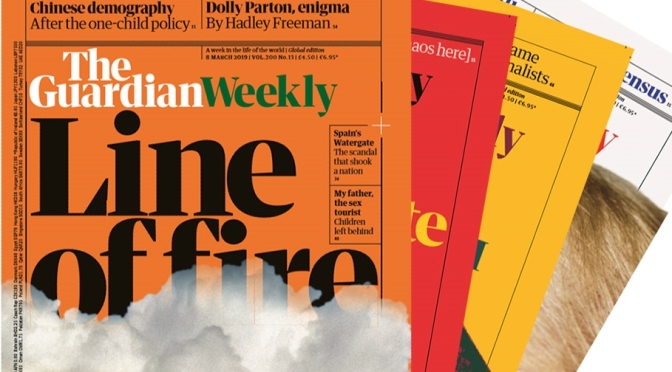
The Guardian Weekly (May 8, 2024) – The new issue features ‘Nowhere to call home’ – Inside Europe’s housing crisis…

Elections for the European parliament are less than a month away and far-right parties are predicted to make significant gains in many of the bloc’s 27 member states. The dire shortage of housing, leading to rising rents and property prices, is becoming a unifying focus for voters’ discontent with their current political leaders.

The issue has sparked protests from Amsterdam to Prague and Milan, as the Guardian’s Europe correspondent, Jon Henley, reports. The data is undeniably worrying as young Europeans spend up to 10 times an average salary on rent and mortgage payments, and big cities from the Baltic states to the Iberian peninsula have registered average property price rises of close to 50%. As a result more EU residents live with their parents for longer and put off life-decisions later into adulthood.

While housing does not fall within MEPs’ remit, it is a visible locus for the sense of social unease that has beset the whole bloc and has become a pivot for the far right to turn on racialised minorities. But as European community affairs correspondent Ashifa Kassam discovers, it is those communities that are doubly penalised through discrimination from landlords who, research has shown, turn away potential renters with “foreign” surnames. The political and social ramifications of the housing crisis in Europe is mirrored elsewhere across the globe and is a subject we will return to in the Guardian Weekly in this year of elections.

Preview: MIT Technology Review – May/June 2024

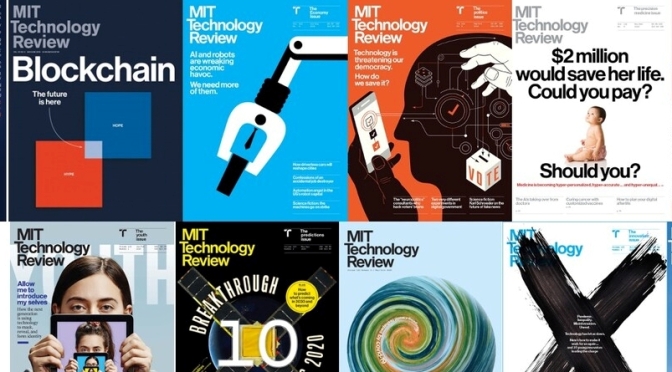
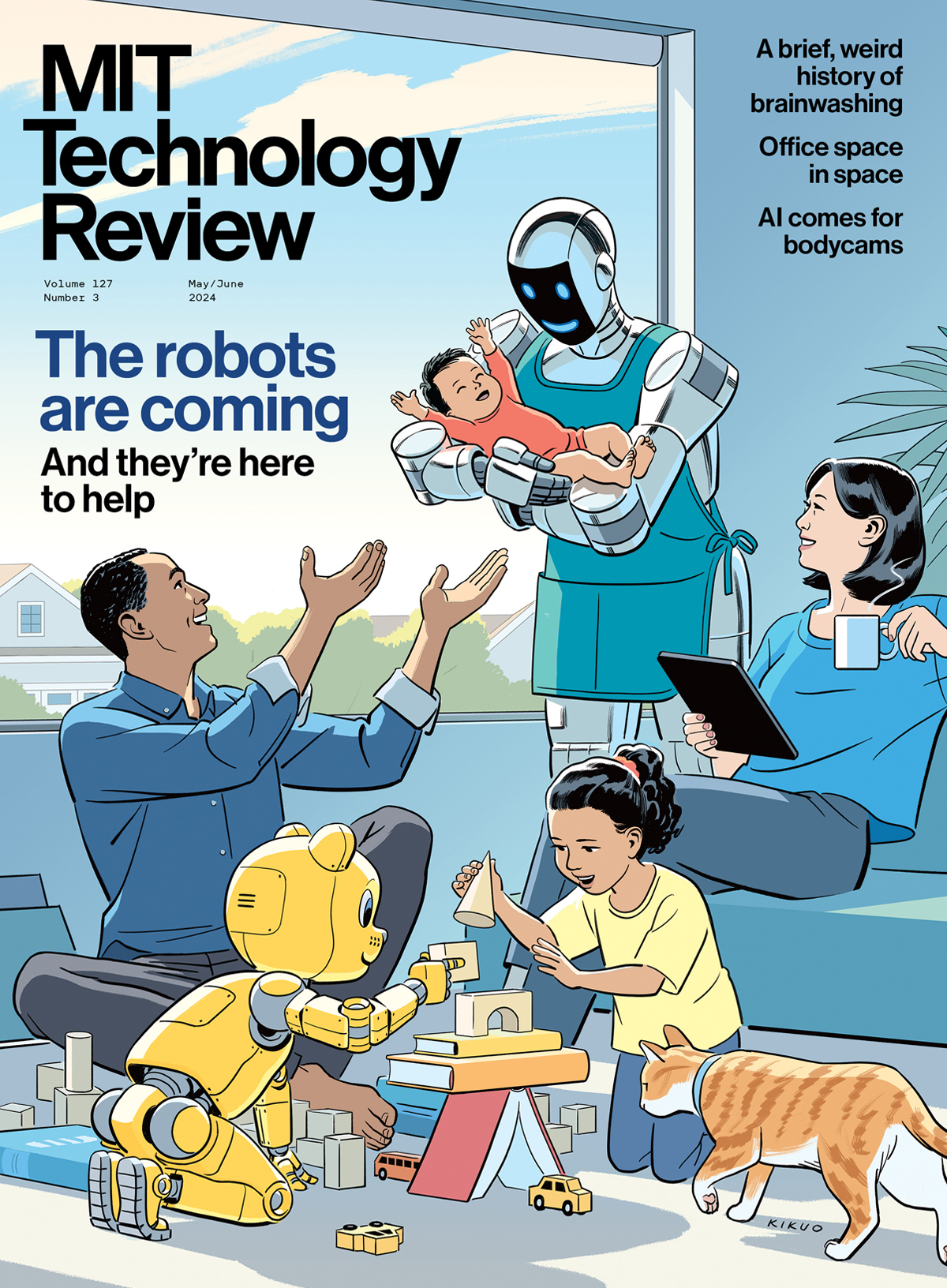
MIT Technology Review (April 29, 2024): The new issue features ‘The Robots Are Coming’ – And they’re here to help; A brief, weird history of brainwashing; Office space in space; AI comes for bodycams…

The Build issue

Who says we can’t still build things? In this issue: a look at the robots we’ve always wanted; a new model for space exploration; and efforts to flood-proof Louisiana’s coastline. Plus a wild, weird history of brainwashing; designing cheese with AI; and glow-in-the dark petunias.

Is robotics about to have its own ChatGPT moment?

Researchers are using generative AI and other techniques to teach robots new skills—including tasks they could perform in homes.Stretch Robot Presents Rose in its gripper

Politics: The Guardian Weekly – April 5, 2024

Image

The Guardian Weekly (April 5, 2024) – The new issue features ‘Lone Star’ – Have the UN vote and questions about its conduct in Gaza left Israel isolated?; Liz Truss bids for political resurrection; Will IS strike again?; Nick Cave’s devilish change of direction…

Spotlight | IS affiliates could launch new wave of terror on the west

Islamic State has stalled in Iraq and Syria but officials believe it has been planning new attacks on the west for years, reports Jason Burke; while Angelique Chrisafis writes that France’s interior minister has met intelligence services to assess the terrorist threat to the country ahead of this summer’s Olympic Games

Environment | True cost of a city built from scratch

Nusantara is billed as a state-of-the-art capital city that will coexist with nature – but not all residents of Borneo’s Balikpapan Bay are happy, find. By Rebecca Ratcliffe and Richaldo Hariandja

Feature | 49 days later

Liz Truss trashed the economy as Britain’s shortest-serving prime minister. But she is back, launching a new conservative movement and spreading her ideology across the world. You just can’t keep a bad politician down, argues David Runciman

Culture | The devil in the details

In the past nine years, Nick Cave has lost two sons – an experience he explores in a deeply personal new ceramics project. He discusses mercy, forgiveness, making and meaning with Simon Hattenstone

Architecture | A Māori-built environment

A new wave of Indigenous architects are behind a series of stunning buildings embracing tribal identity in Aotearoa New Zealand, Oliver Wainwright discovers

Technology Quarterly: ‘Health And AI’ (April 2024)

Technology Quarterly: A new prescription

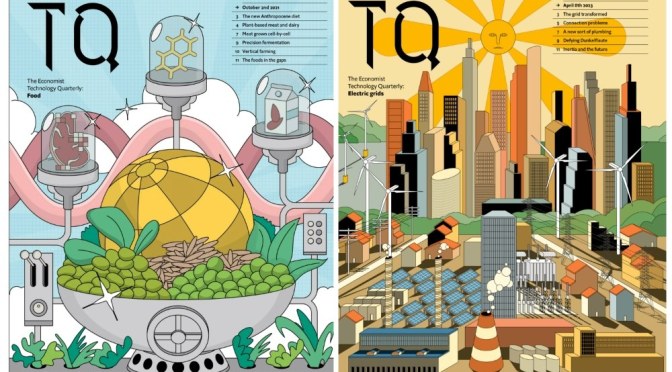
The Economist (April 1, 2024): The latest issue of THE ECONOMIST TECHNOLOGY QUARTERLY is focused on:

A new prescription

AIs will make health care safer and better, reports Natasha Loder. It may even get cheaper too

AIs will make health care safer and better

Artificial intelligence has long been improving diagnoses

Medical AIs with human faces are on their way

Artificial intelligence is taking over drug development

Can artificial intelligence make health care more efficient?

Read full report

Commentary Magazine – April 2024 Opinion Preview

Image

Commentary Magazine (March 15, 2024) The latest issue features ‘The Elite War On The American Middle Class…And How To End It’; The Big Lies about Israel’s Big Bombs…

The Elite War on the American Middle Class—and How to End It

by Christine Rosen

Being middle class in America used to mean something—something socially transformative, something even revolutionary. The American middle class represented a form of national social order never before seen on this earth—cultural domination not by the very rich and very educated, or the political domination either by tyrants or the mob, but by a mass of people, relatively well-to-do, who felt themselves fortunate in their circumstances. That was what made the American middle class different from the French or English bourgeoisie. Its members believed, and the country believed, that they were the nation’s backbone, its true governing class, and its moral compass.

The Four Questions of 2024

by Matthew Continetti

President Joe Biden and former president Donald Trump squared off four years ago and are on track for the first major-party rematch since 1892. Biden and Trump are the oldest presidential candidates in history, and each man has an established political brand. Biden first won federal office in 1972, and it’s been over a decade since the GOP nominated someone other than Donald Trump. The 2024 election is like all the SIRIUS XM oldies stations—Classic Vinyl, Classic Rewind, Rock and Roll Hall of Fame Radio—rolled into one.

The Hateful Candace Owens

by Christine Rosen

If you had never heard of Candace Owens until recently, you aren’t alone. Less than a decade ago, she was an unknown college dropout working as a marketing professional in New York, writing pieces for her company’s website about the “bat-s—t crazy antics of the Republican Tea Party.” Then, suddenly, she claimed to have experienced a political conversion. She told the libertarian political commentator Dave Rubin in 2017, “I became a conservative overnight. . . . I realized that liberals were actually the racists. Liberals were actually the trolls.”

Politics: The Guardian Weekly – March 8, 2024

Image

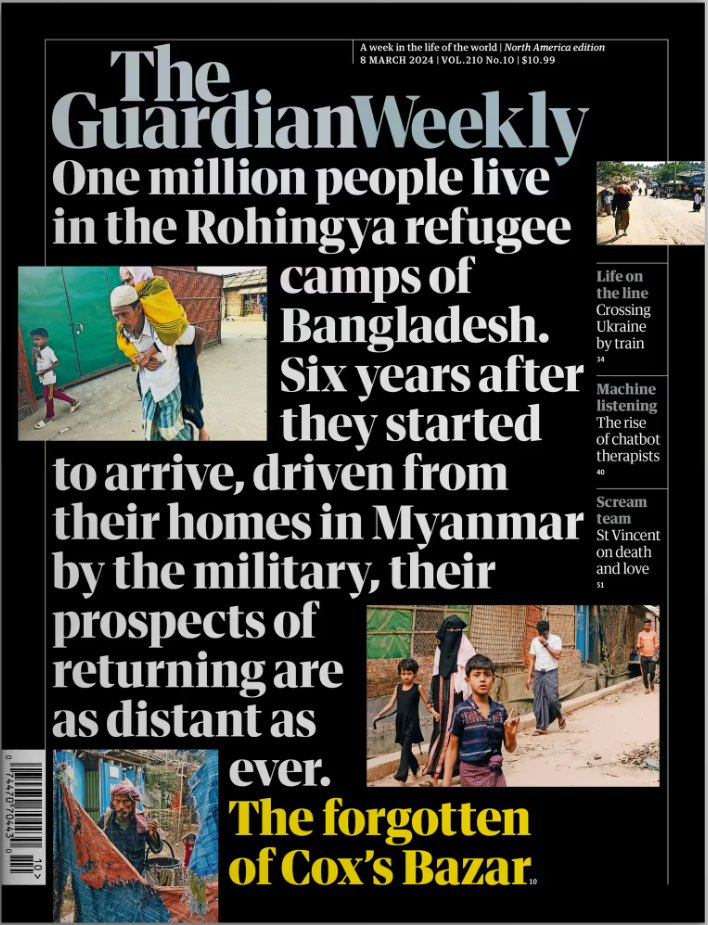
The Guardian Weekly (March 7, 2024) – The new issue features Faint hope of return for Rohingya people. Plus: a journey through Ukraine

It was August 2017 when the world really started to take note of Myanmar’s Rohingya people. Descendants of Arab Muslims who speak a different language to most other people in Myanmar, the Rohingya had up to that point lived mainly in the northern Rakhine state, coexisting uneasily alongside the majority Buddhist population.

But the Rohingya were reviled by many as illegal immigrants and treated by the then government as stateless people. In 2017, when violence broke out in the north of the state, security forces supported by Buddhist militia launched a “clearance operation” that forced more than 1 million Rohingya people to flee their homes and the country, actions that many onlookers saw as ethnic cleansing. Most Rohingya were driven into vast refugee camps in the Cox’s Bazar region of Bangladesh, where they have remained ever since.

The Guardian global development reporter Kaamil Ahmed has been covering the Rohingya crisis for almost a decade, making multiple trips to the region. For this week’s Big Story, Kaamil returned to Cox’s Bazar where, in two moving reports, he details how disease and illness are widespread in the ramshackle camps, and how the desperation to escape has resulted in rich business for people traffickers.

And, with Myanmar now controlled by a military junta and introducing a deeply unpopular conscription drive (as Rebecca Ratcliffe and Aung Naing Soe report), the prospect of any Rohingya people being able to return home to Rakhine state remains as distant as it did in 2017.

Preview: MIT Technology Review – March/April 2024

Image

MIT Technology Review (February 29, 2024): The new issue features ‘The Hidden Worlds Issue’ – Is Anybody Out There? Using technology to explore and expose hidden worlds, from enabling deeper dives into ocean depths to journeying to one of Jupiter’s orbiting bodies to pushing the boundaries of particle physics. Plus: wearables for wildlife, Wi-Fi sensing, and a reconsideration of Luddites.

The search for extraterrestrial life is targeting Jupiter’s icy moon Europa

NASA’s Europa Clipper mission will travel to one of Jupiter’s largest moons to look for evidence of conditions that could support life.

Inside the hunt for new physics at the world’s largest particle collider

The Large Hadron Collider hasn’t seen any new particles since the discovery of the Higgs boson in 2012. Here’s what researchers are trying to do about it.

Meet the divers trying to figure out how deep humans can go

Figuring out how the human body can withstand underwater pressure has been a problem for over a century, but a ragtag band of divers is experimenting with hydrogen to find out.

Politics: The Guardian Weekly – February 23, 2024

Image

The Guardian Weekly (February 22, 2024) – The new issue features ‘Ukraine’s Lonely Road’ – After two years, is there a way out of Putin’s war?…

Shaun Walker reports on this week’s big story, the fall of the strategic town of Avdiivka to Russian troops has come at a grim time for Ukraine’s president, Volodymyr Zelenskiy. While the army is struggling to hold ground, war fatigue is setting in among parts of the population and disagreements among the leadership have been spilling into the open.

At the same time, the death of the jailed Russian critic Alexei Navalny last week – widely seen as another political assassination – appears to emphasise the strengthening hand of Vladimir Putin, who is expected to secure another six-year term as Russia’s president in tightly controlled elections next month. Amid a familiar wave of international outrage, our Russia affairs reporter Pjotr Sauer asks what Putin might do next.

Coupled with the possibility of a Donald Trump victory in the US elections later this year, it all makes for a deeply worrying outlook for Ukraine, reflected in the Kyiv-based illustrator Sergiy Maidukov’s haunting cover artwork for the magazine this week.

“This war is the hardest test of my life, similar to an endless ultramarathon,” writes Sergiy. “It is good to try to not think about the finish when running long distance. This is important knowledge to endure.”