

From a Harvard Joint Center for Housing Studies report:
As both the number and share of older households in the United States increase to unprecedented levels, inequalities are becoming more evident. Within the 65-and-over age group, most recent income gains have gone to the highest earners, and the number of households with housing cost burdens has reached an all-time high. Ensuring that middle- and lower-income households in this age range have the means to live affordably and safely in their current homes or move to other suitable housing will be a growing challenge.
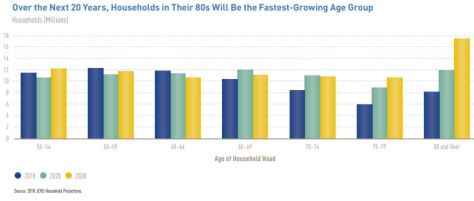
Meanwhile, many households in the 50–64 year-old age group have not recovered from the Great Recession, leaving them with lower incomes and homeownership rates than their predecessors at similar ages. For the nearly 10 million households in this age group that are cost burdened, ensuring financial and housing security in retirement will be a struggle.
https://www.jchs.harvard.edu/sites/default/files/Harvard_JCHS_Housing_Americas_Older_Adults_2019.pdf

 The irony is


 In summary, dietary fructose, but not glucose, supplementation of HFD impairs mitochondrial size, function, and protein acetylation, resulting in decreased fatty acid oxidation and development of metabolic dysregulation.
 …a new
 …the optimal strategy when faced with two propositions is to sum up the values associated with the memories you have of each choice, then calculate the difference between these two sums (do I have more positive memories linked to chocolate eclairs or macaroons?). The decision is made when this difference reaches a threshold value, fixed in advance, which determines the time taken in making the decision. This model leads to rapid decision-making when the values of the two possibilities are very far apart. But when two choices have almost the same value, we need more time, because we need to draw on more memories so that this difference reaches the decision threshold.
 Our findings suggest that higher adherence to a Mediterranean diet is associated with better cognitive performance, and therefore less cognitive decline, in older but not middle-aged individuals.
 “While we always believed that high levels of uric acid might be bad for kidneys and that patients with gout may have a higher risk of kidney failure, we were quite surprised by the magnitude of the risk imposed by gout in these patients. We were particularly interested in the risk of advanced kidney disease, as these patients in general have a higher risk of kidney failure and death.
 The use of n-3 FA (4 g/d) for improving atherosclerotic cardiovascular disease risk in patients with hypertriglyceridemia is supported by a 25% reduction in major adverse cardiovascular events in REDUCE-IT (Reduction of Cardiovascular Events With EPA Intervention Trial), a randomized placebo-controlled trial of EPA-only in high-risk patients treated with a statin.
 2 years of moderate calorie restriction significantly reduced multiple cardiometabolic risk factors in young, non-obese adults. These findings suggest the potential for a substantial advantage for cardiovascular health of practicing moderate calorie restriction in young and middle-aged healthy individuals, and they offer promise for pronounced long-term population health benefits.
 Boomers Daily