Since 2010, Social Security’s cash flow has been negative, meaning that the agency does not collect enough money through taxes to cover what it is paying out. Even though there was still this vast trust fund behind Social Security, they started tapping that fund’s interest.
Starting in 2021, they will have to dip into the trust fund itself to cover those benefit payments, and even that pool of cash has an expiration date. Trustees of the fund expect that by 2035 it will not be enough to cover full benefit payments. Due to COVID-19, that date may come years sooner than expected, which has some retirees seriously worried about their future.
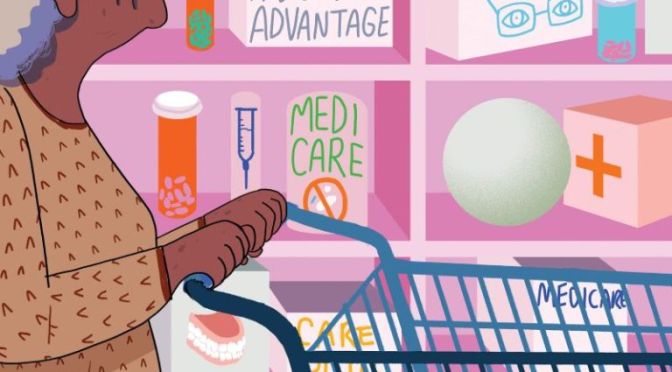
If you’re enrolled only in original Medicare with a Medigap supplemental plan, and don’t use a drug plan, there’s no need to re-evaluate your coverage, experts say. But Part D drug plans should be reviewed annually. The same applies to Advantage plans, which often wrap in prescription coverage and can make changes to their rosters of in-network health care providers.
“The amount of information that consumers need to grasp is dizzying, and it turns them off from doing a search,” Mr. Riccardi said. “They feel paralyzed about making a choice, and some just don’t think there is a more affordable plan out there for them.”
Is there another way?
November 13, 2020
When creation of the prescription drug benefit was being debated, progressive Medicare advocates fought to expand the existing program to include drug coverage, funded by a standard premium, similar to the structure of Part B. The standard Part B premium this year is $144.60; the only exceptions to that are high-income enrollees, who pay special income-related surcharges, and very low-income enrollees, who are eligible for special subsidies to help them meet Medicare costs.
“Given the enormous Medicare population that could be negotiated for, I think most drugs could be offered through a standard Medicare plan,” said Judith A. Stein, executive director of the Center for Medicare Advocacy.
“Instead, we have this very fragmented system that assumes very savvy, active consumers will somehow shop among dozens of plan options to see what drugs are available and at what cost with all the myriad co-pays and cost-sharing options,” she added.
Advocates like Ms. Stein also urged controlling program costs by allowing Medicare to negotiate drug prices with pharmaceutical companies — something the legislation that created Part D forbids.
HARVARD MAGAZINE (SEPT – OCT 2020): From the book EXERCISED: Why Something We Never Evolved to Do Is Healthy and Rewarding by Daniel E. Lieberman, to be published on September 8, 2020 by Pantheon Books:
‘….many of the mechanisms that slow aging and extend life are turned on by physical activity, especially as we get older. Human health and longevity are thus extended both by and for physical activity.’
What Happens When We Exercise? The graph breaks total energy expenditure (TEE) into two parts: active energy expenditure, and resting metabolism. Resting metabolism remains elevated for hours even after exercise ceases, burning additional calories in a phase known as excess post-exercise oxygen consumption (EPOC).
Exercise is like scrubbing the kitchen floor so well after a spill that the whole floor ends up being cleaner. The modest stresses caused by exercise trigger a reparative response yielding a general benefit.
In order to elucidate the links between exercise and aging, I propose a corollary to the Grandmother Hypothesis, which I call the Active Grandparent Hypothesis. According to this idea, human longevity was not only selected for but was also made possible by having to work hard during old age to help as many children, grandchildren, and other younger relatives as possible survive and thrive. That is, while there may have been selection for genes (as yet unidentified) that help humans live past the age of 50, there was also selection for genes that repair and maintain our bodies when we are physically active.
Daniel E. Lieberman is a paleoanthropologist at Harvard University, where he is the Edwin M Lerner II Professor of Biological Sciences, and Professor in the Department of Human Evolutionary Biology. He is best known for his research on the evolution of the human head and the evolution of the human body.
The 65-and-older population is the fastest-growing age group in the world. In this video, Stony Brook experts discuss the challenges facing this burgeoning population and their caregivers, and the technology that can facilitate happy, healthy and safe aging.
A unit at the Clare costs an average one-time entrance fee of $800,000 or so, along with around $5,500 monthly fees. The entrance fee is refunded when a resident dies or moves out. Entrance fees at a typical senior living facility is around $369,000.
The 53-story Clare tower on Chicago’s Magnificent Mile has sold for $105 million, a sign that luxury senior living facilities hold huge upside in today’s market.
Fundamental Advisors LP sold the luxury seniors-only tower for twice what the private equity firm paid for the 334-unit tower in 2012, according to the Wall Street Journal.
“Research suggests that as we age, Americans will spend more of our hard-earned retirement assets on health care, such as insurance, prescription drugs, in-home care and other services that help us remain independent,” says NRMLA’s President Steve Irwin. “A retirement plan that includes the responsible use of home equity may be the best option that can help ensure healthcare spending doesn’t become a financial burden for many retired couples.”
(December 17, 2019) – Homeowners 62 and older saw their housing wealth grow by 0.3 percent or $24 billion in the third quarter to a record $7.19 trillion from Q2 2019, the National Reverse Mortgage Lenders Association reported today in its quarterly release of the NRMLA/RiskSpan Reverse Mortgage Market Index.
The RMMI rose in Q3 2019 to 259.19, another all-time high since the index was first published in 2000. The increase in senior homeowners’ wealth was mainly driven by an estimated 0.5 percent or $40.7 billion increase in senior home values, offset by a one percent or $16.5 billion increase of senior-held mortgage debt.
“Today, most of the seniors we serve are utilizing easy-to-use mobile phone products and connected devices that are tailored for seniors and come with a range of relevant services,” Best Buy CEO Corie Barry said during an earnings call Nov. 26, according to a transcript from Seeking Alpha.
“We also expect to advance our commercial business where the services we provide for seniors are paid for by insurance providers. This includes services such as remote monitoring based solutions that provide meaningful insights to improve timely care and reduce the cost to serve frail seniors,” she said.
Best Buy is known as the largest specialty electronics retailer in the U.S., and a key part of its growth strategy is centered on digital health initiatives.
In the past year, Best Buy has spent roughly $1 billion on acquisitions to expand its healthcare services, according to Forbes. The company’s expansion into healthcare has helped it overcome broader declines in consumer electronic sales, according to Bloomberg.









 “Research suggests that as we age, Americans will spend more of our hard-earned retirement assets on health care, such as insurance, prescription drugs, in-home care and other services that help us remain independent,” says NRMLA’s President Steve Irwin. “A retirement plan that includes the responsible use of home equity may be the best option that can help ensure healthcare spending doesn’t become a financial burden for many retired couples.”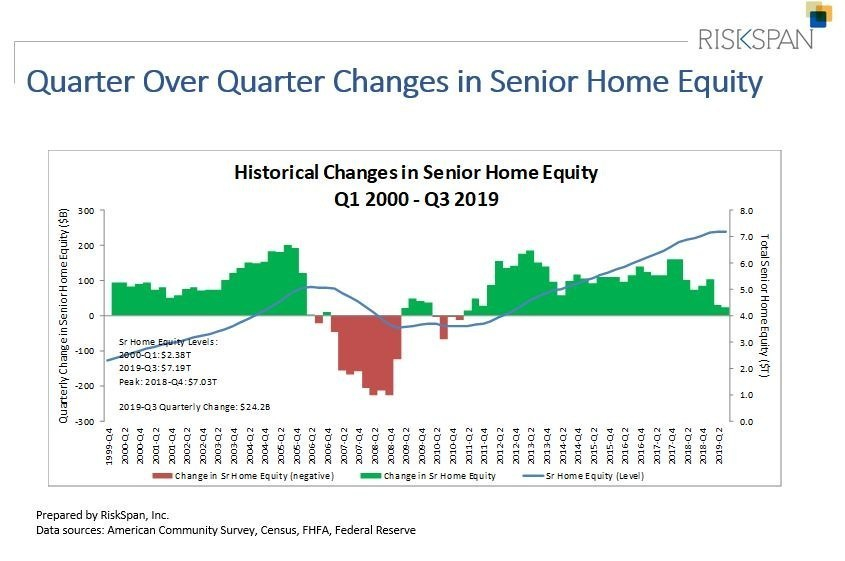

 “Today, most of the seniors we serve are utilizing easy-to-use mobile phone products and connected devices that are tailored for seniors and come with a range of relevant services,” Best Buy CEO Corie Barry said during an earnings call Nov. 26, according to a transcript from
  Boomers Daily