


 Contributing Correspondent Kai Kupferschmidt talks with host Sarah Crespi about countries planning a comeback from a coronavirus crisis. What can they do once cases have slowed down to go back to some sort of normal without a second wave of infection?
Contributing Correspondent Lizzie Wade joins Sarah to talk about water management and the downfall of the ancient Wari state. Sometimes called the first South American empire, the Wari culture successfully expanded throughout the Peruvian Andes 1400 years ago.
Also this week, Yon Visell of the University of California, Santa Barbara, talks with Sarah about his Science Advances paper on the biomechanics of human hands. Our skin’s ability to propagate waves along the surface of the hand may help us sense the world around us.
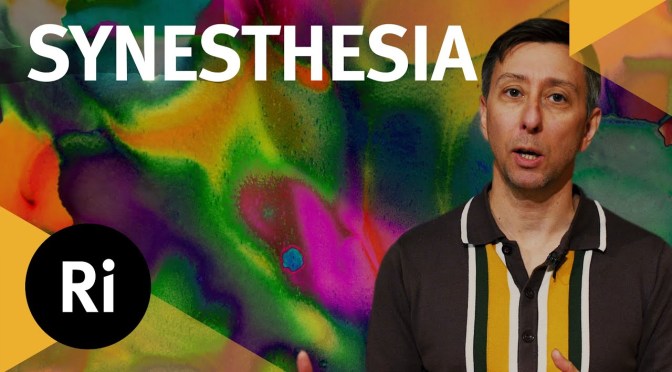
Can you imagine if each word had its own colour, or you could ‘see’ different types of music?
Synesthetes can experience the ordinary world in some pretty extraordinary ways. In this video Jamie Ward explains the variety of different ways in synesthesia can manifest itself, and what is happening in the brains of those who experience it.
Jamie Ward is Professor of Cognitive Neuroscience at the University of Sussex. He has written books a number of books about neuroscience and synesthesia.
Synesthesia is a perceptual phenomenon in which stimulation of one sensory or cognitive pathway leads to involuntary experiences in a second sensory or cognitive pathway. People who report a lifelong history of such experiences are known as synesthetes. Awareness of synesthetic perceptions varies from person to person.[7] In one common form of synesthesia, known as grapheme–color synesthesia or color–graphemic synesthesia, letters or numbers are perceived as inherently colored. In spatial-sequence, or number form synesthesia, numbers, months of the year, or days of the week elicit precise locations in space (for example, 1980 may be “farther away” than 1990), or may appear as a three-dimensional map (clockwise or counterclockwise). Synesthetic associations can occur in any combination and any number of senses or cognitive pathways.
From Wikipedia
 On this week’s show, Staff Writer Robert Service talks with host Sarah Crespi about a new National Academy of Sciences report that suggests the novel coronavirus can go airborne, the evidence for this idea, and what this means for the mask-wearing debate.
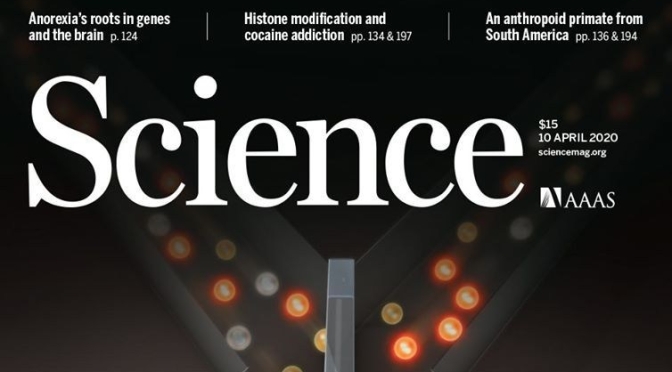
Also this week, Staff Writer Jennifer Couzin-Frankel joins Sarah to talk about a burgeoning understanding of the biological roots of anorexia nervosa—an eating disorder that affects about 1% of people in the United States. From genetic links to brain scans, scientists are finding a lot more biology behind what was once thought of as a culturally driven disorder.
Neil deGrasse Tyson details how and why Bees communicate through math and coordinates.
 This week, a new enzyme speeds up the breakdown of plastic bottles, and a method to cool molecules to a fraction above absolute zero.
In this episode:
01:18 A PET recycling enzyme
Researchers have engineered an enzyme that effectively breaks down the plastic PET into its constituent monomers. This could allow for more complete recycling of bottles and clothes. Research Article: Tournier et al.
06:41 Research Highlights
The shocking lengths humans will go to to satisfy their curiosity, and the reasons for elevated methane emissions at Oktoberfest. Research Highlight: Humans opt to brave electric shock to satisfy their curiosity; Research Highlight: Munich’s Oktoberfest is a real gas
09:15 Supercool molecules
Researchers have used a technique called ‘collision cooling’ to chill molecules to a few millionths of a degree above absolute zero, which could allow observations of difficult-to-study quantum mechanics. Research Article: Son et al.
14:46 Research Highlights
Neither supermassive, nor super small, the mystery of the elusive intermediate sized black-hole has been solved. Research Highlight: Elusive middle-weight black hole is caught shredding a star
 Rupert Beale talks again to Thomas Jones about his work at the Francis Crick Institute, where he’s helping to set up a testing lab for Covid-19.
He talks about the challenges of creating a scalable process, explains why a successful antibody test could be hard to achieve, and finds some reasons to be hopeful.
You can find a full transcript of this episode HERE.
 On this week’s show, Contributing Correspondent Kai Kupferschmidt talks with host Sarah Crespi about modeling coronavirus spread and the role of forecasts in national lockdowns and other pandemic policies. They also talk about the launch of a global trial of promising treatments.
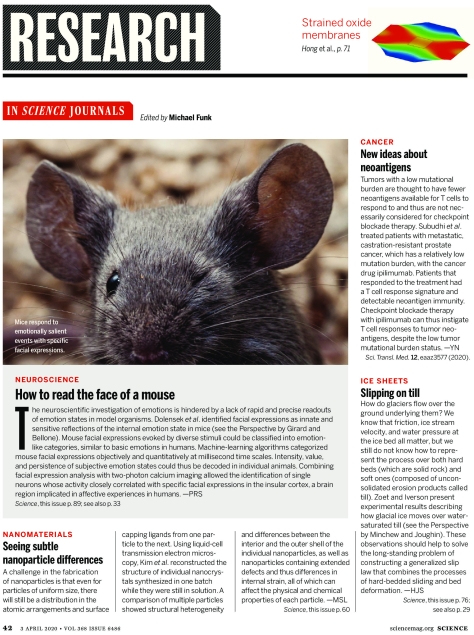
Also this week, Nadine Gogolla, research group leader at the Max Planck Institute of Neurobiology, talks with Sarah about linking the facial expressions of mice to their emotional states using machine learning.


 Boomers Daily