


 This week, crafting an artificial eye with the benefits of a human’s, and understanding how disk-galaxies formed by peering back in time.
In this episode:
00:45 Biomimetic eye
Researchers fabricate an artificial eye complete with a human-like retina. Research Article: Gu et al.; News and Views: Artificial eye boosted by hemispherical retina
09:27 Research Highlights
Dazzling elephant seals to avoid predation, and helping blind people ‘see’ through brain stimulation. Research Highlight: Mighty seals humbled by prey that flickers and flashes; Research Highlight: Blind people ‘read’ letters traced on their brains with electricity
11:36 Early disk-galaxy
There’s an open question about how disk-galaxies form, but now new observations are pointing to an answer, from the very early Universe. Research Article: Neeleman et al.; News and Views: Galaxy disk observed to have formed shortly after the Big Bang
17:47 Pick of the Briefing
We pick our highlights from the Nature Briefing, including a HIV ‘vaccine’, and incredibly hardy bacteria. Science: Long-acting injectable drug prevents HIV infections; Quanta Magazine: Inside Deep Undersea Rocks, Life Thrives Without the Sun
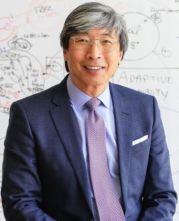 Colin Cowherd talks with Dr. Patrick Soon-Shiong who is not only a Doctor helping to fight Covid-19 but also owns the LA Times and is a minority owner of the Lakers. Dr. Shiong talks about the things we are learning about the disease and why it is so much more dangerous than previous pandemics.
Dr Patrick Soon-Shiong is a South African-American billionaire surgeon, businessman, media mogul, and bioscientist. He is the inventor of the drug Abraxane, which became known for its efficacy against lung, breast, and pancreatic cancer.

 Contributing Correspondent Lizzie Wade talks with host Sarah Crespi about the role of inequality in past pandemics. Evidence from medical records and cemeteries suggests diseases like the 1918 flu, smallpox, and even the Black Death weren’t indiscriminately killing people—instead these infections caused more deaths in those with less money or status.
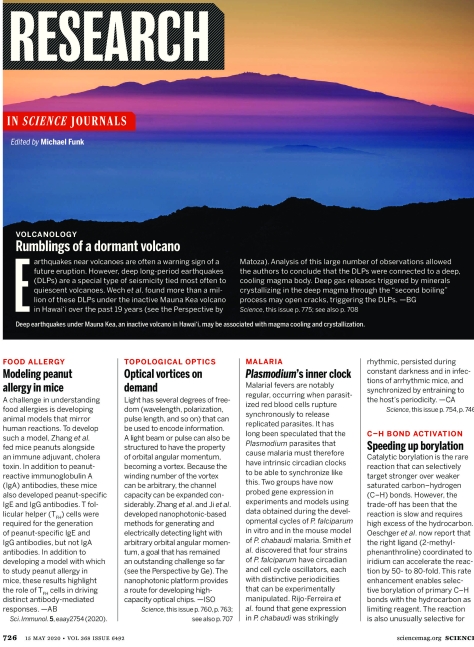
Also this week, Aaron Wech, a research geophysicist for the U.S. Geological Survey at the Alaska Volcano Observatory, joins Sarah to talk about recordings of more than 1 million earthquakes from deep under Hawaii’s Mauna Kea volcano, which hasn’t erupted in 4500 years. They discuss how these earthquakes, which have repeated every 7 to 12 minutes for at least 20 years, went undetected for so long.
This week, Elisabeth Bik tells us about her work uncovering potential image manipulation, and a new route for particulate pollution formation.In this episode:
00:45 Seeing double
Elisabeth Bik spends her days identifying duplicated images in science papers. She tells us about her efforts, and why they’re important. Feature: Meet this super-spotter of duplicated images in science papers; News: Publishers launch joint effort to tackle altered images in research papers
08:11 Research Highlights
New insights on the mysterious Tully Monster, and how football fans can stoke air pollution. Research Highlight: Unmasking the Tully Monster: fossils help to tackle a decades-old mystery; Research Highlight: The meaty link between a city’s football matches and its foul air
10:29 Understanding air pollution
Particulate pollution is a serious threat to human health, but the way that new particles form is poorly understood. This week, new research suggests a new mechanism for it to happen. Research article: Wang et al.; News and Views: Airborne particles might grow fast in cities
15:09 Pick of the Briefing
We pick some highlights from the Nature Briefing, including the closest discovered black hole to Earth, and how wriggly worms are helping physicists model microscopic processes. National Geographic: Closest black hole to Earth found ‘hiding in plain sight’; Physics: Worm Viscosity
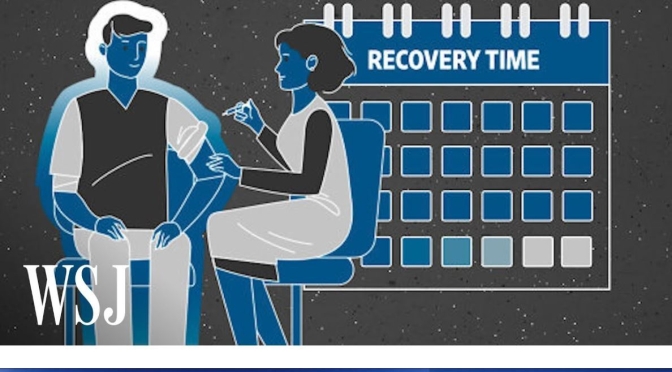
Understanding how the body clears the new coronavirus is becoming more important as the U.S. begins to reopen. WSJ’s Daniela Hernandez explains how the body fights infection and why feeling better doesn’t equal being virus-free.
Photo illustration: Laura Kammermann

W
 Boomers Daily