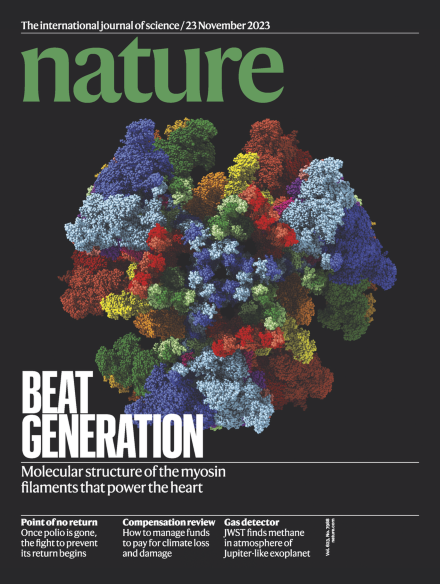
Nature Magazine – November 23, 2023: The latest issue cover features how cryo-electron microscopy can reveal the structure of motor protein myosin filaments, which power the heart via muscle contraction.
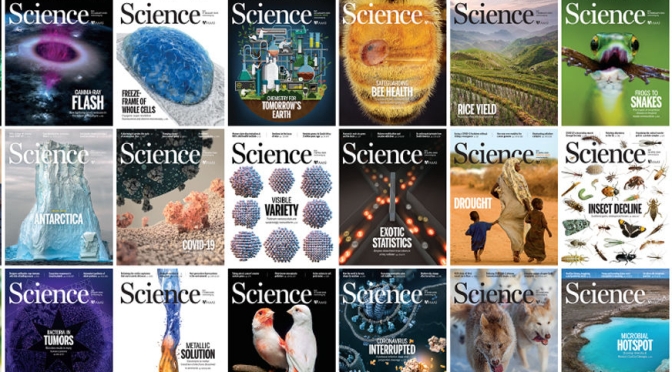
Science Magazine – November 17, 2023:The new issue features Heaps of Warming – Municipal solid waste emits large amounts of greenhouse gases; AI is set to revolutionize weather forecasts; Rewriting DNA in the body lowers cholesterol, and more….
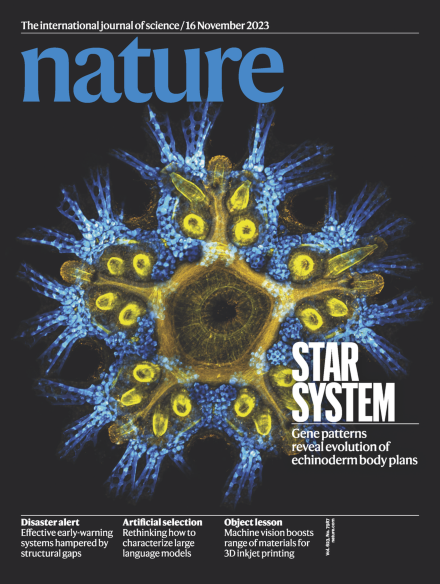
Nature Magazine – November 16, 2023: The latest issue cover features how echinoderms such as starfish and sea urchins have evolved five-fold symmetry, with five limbs radiating from a central mouth.
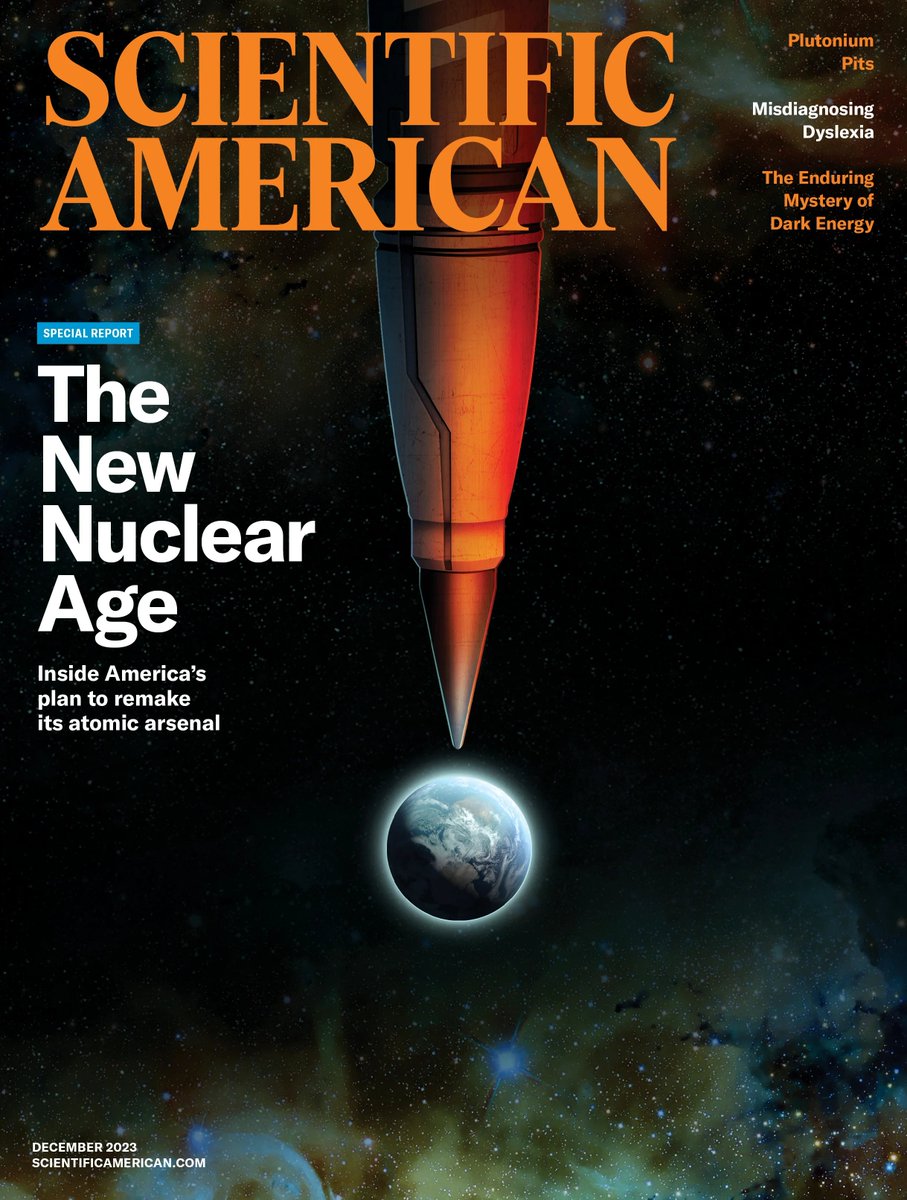
Scientific American – November 2023: The issue features The New Nuclear Age – Inside America’s plan to remake its atomic arsenal; The Most Shocking Discovery in Astrophysics Is 25 Years Old – Scientists are still trying to figure out dark energy; Behind the Scenes at a U.S. Factory Building New Nuclear Bombs – The U.S. is ramping up construction of new “plutonium pits” for nuclear weapons….
One afternoon in early 1994 a couple of astronomers sitting in an air-conditioned computer room at an observatory headquarters in the coastal town of La Serena, Chile, got to talking. Nicholas Suntzeff, an associate astronomer at the Cerro Tololo Inter-American Observatory, and Brian Schmidt, who had recently completed his doctoral thesis at the Center for Astrophysics | Harvard & Smithsonian, were specialists in supernovae—exploding stars. Suntzeff and Schmidt decided that the time had finally come to use their expertise to tackle one of the fundamental questions in cosmology: What is the fate of the universe?
The point of the thing was to forever change our concept of power. When the U.S. military assembled a team of scientists, led by physicist J. Robert Oppenheimer, to build a nuclear bomb during World War II with the hope of beating the Nazis to such a terrible creation, many of those involved saw their efforts as a strange kind of civic destiny. The Manhattan Project, wrote Richard Rhodes, Pulitzer-winning author of The Making of the Atomic Bomb, was “compelled from the beginning not by malice or hatred but by hope for a better world.” Oppenheimer himself once said, “The atomic bomb was the turn of the screw. It made the prospect of future war unendurable. It has led us up those last few steps to the mountain pass; and beyond there is a different country.”
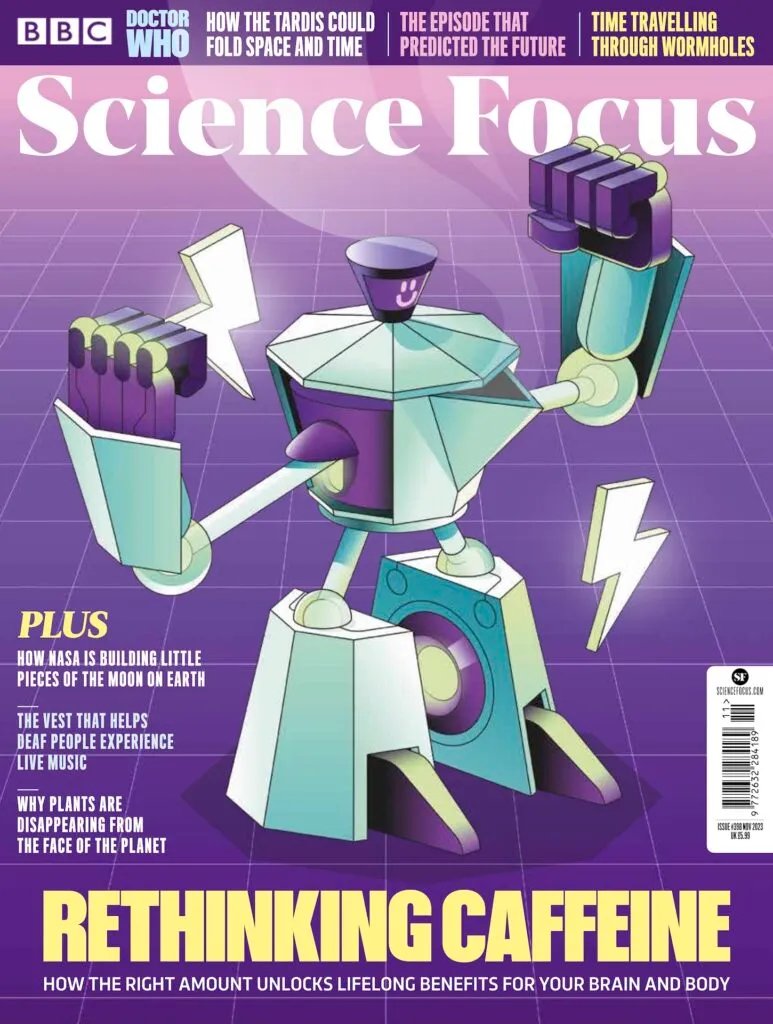
At 60 years old, Doctor Who, the BBC show following the adventures of the regenerating Time Lord, continues to be highly enjoyable fiction. But it’s science fiction. The Gallifreyan takes science seriously… so we take a closer look at some of the science of Doctor Who, from time travel and the TARDIS to invading Cybermen and rogue planets.
How to make the Moon on Earth
The expense and prestige involved in sending landers and rovers to the Moon means you can’t afford for them not to work when they get there. But the lunar landscape is like nothing here on Earth. So how, and where do you test equipment that’s bound for the Moon?
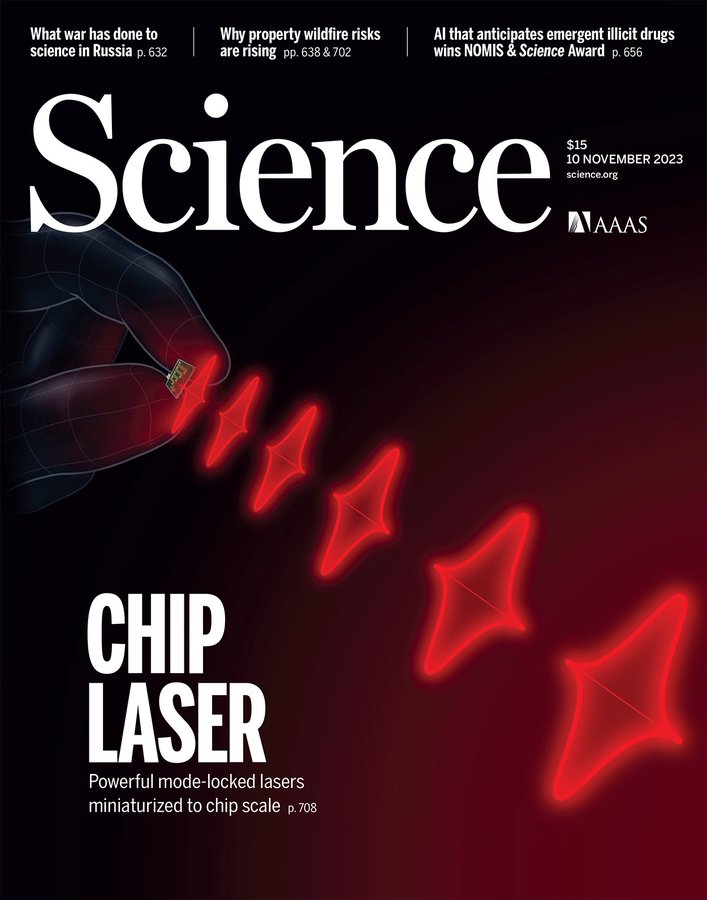
Science Magazine – November 10, 2023:The new issue features Mode-locked “chip lasers” generating intense ultrashort pulses of light have been the backbone of ultrafast sciences and technologies.
In thinking about the challenge of getting artificial intelligence (AI) to understand our complex world, I recalled a Twitter post from a user of Tesla’s self-driving system. The user tweeted that his car kept stopping abruptly at a particular location for no apparent reason. Then he noticed a billboard advertisement on the side of the road, featuring a sheriff holding up a stop sign. The car’s vision system had interpreted this as an actual stop sign, and slammed on the brakes.
Though it lies in ruins on the northeast coast of England, Kilton Castle was once an imposing stone fortress, home to several noble families, and—it appears—at least eight cats. Archaeological excavations in the 1960s uncovered a well, at the bottom of which lay the bones of several felines dating back to the 14th century. The animals were an odd mix: Some were domestic cats, but other, larger specimens appeared to be European wildcats, a fierce, burly species that has inhabited the continent for hundreds of thousands of years.
TEDx Talks (November 9, 2023) – Competition is a core part of human nature, and it can drive us to extraordinary feats. But when it goes wrong, the results can be devastating.
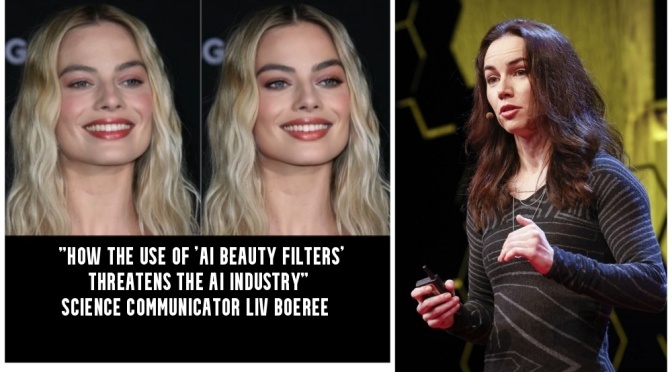
Poker champion and science communicator Liv Boeree introduces us to the dark force of game theory driving many of humanity’s biggest social problems — a force that’s now threatening to derail the AI industry.
Olivia “Liv” Boeree is a British science communicator, television presenter and former professional poker player. She is a World Series of Poker and European Poker Tour champion, and is the only female player in history to win both a WSOP bracelet and an EPT event.
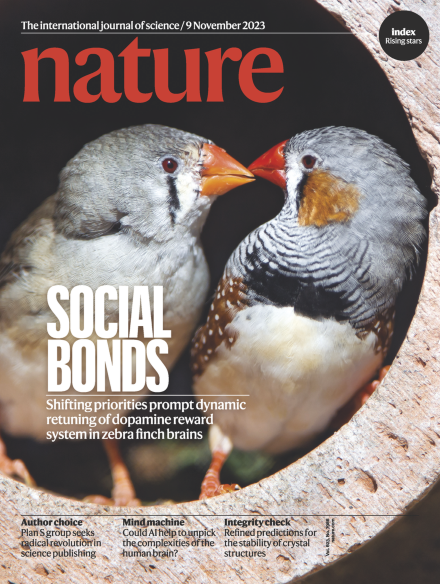
nature Magazine – November 9, 2023:The latest issue cover features the changes in dopamine signals in male zebra finches (depicted on the cover), as they engage in activities such as drinking, song evaluation and courting. The researchers found that dopamine responses are dynamically adjusted based on the birds’ current priorities.
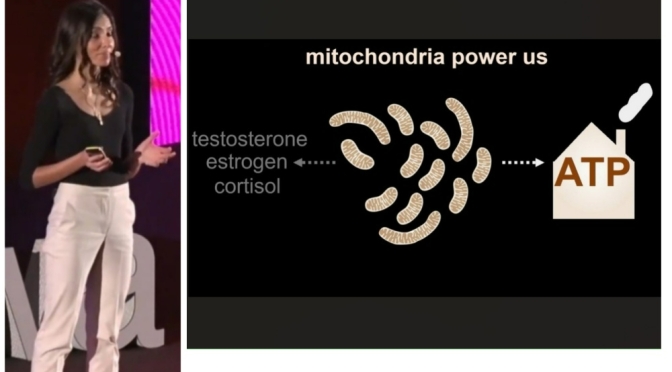
TEDx Talks (November 4, 2023) – Approximately 1.5 billion years ago, a lone bacterium found its way into a larger cell. The exchanges that transpired between the two are considered to have driven the evolution of this bacterium into the organelle we now call the mitochondrion.
Emerging research suggests that mitochondria are not simply the ‘powerhouses’ of the cell, but also function as cellular guardians against microbial intruders. Consequently, maintaining mitochondrial health is not only vital for our well-being, but may serve to protect us against infectious disease.
Dr. Lena Pernas started as a Max Planck Research Group Leader at the MPI Biology for Ageing (Cologne, Germany) in late 2018, where her lab investigates the organelle and metabolic dynamics of the host-pathogen interaction. Her lab will open its doors at UCLA in the Metabolism Research Theme in 2023.
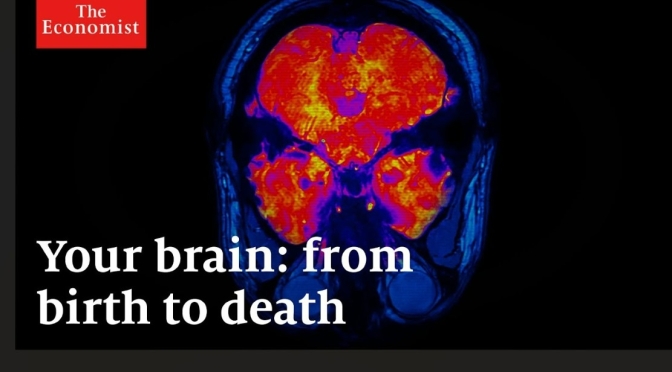
The Economist (November 2, 2023) – As the most complex organ in your body, your brain changes radically throughout your life. Starting from before birth and continuing even after you’ve died. This is what happens to your brain as you age.
Video timeline:00:00 – What happens to your brain when you age? 00:32 – In the womb 01:03 – Childhood 03:19 – Teenage years 04:48 – Early adulthood 05:27 – Middle age 07:04 – Later life 07:36 – Death
News, Views and Reviews For The Intellectually Curious










 Boomers Daily