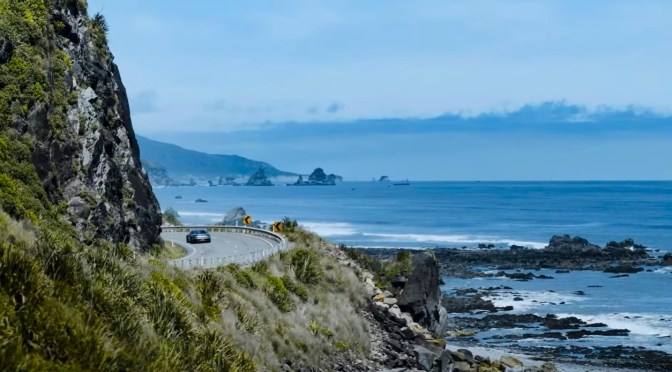
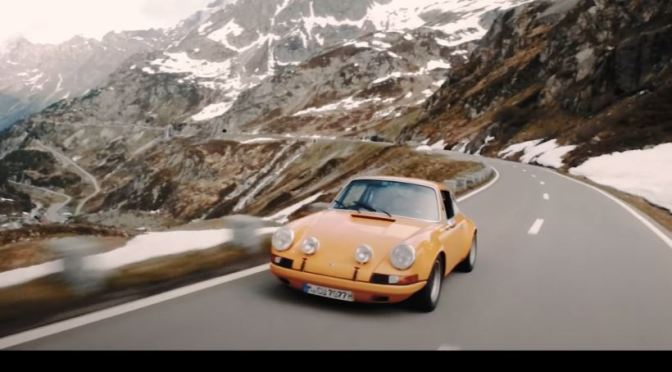
Curves Magazin (December 26, 2023) – A epic road trip through the southern island of New Zealand celebrating the 60th birthday of the Porsche 911.
The South Island of New Zealand is renowned for its mountains, lakes and glaciers. The Southern Alps, home to 3,724m-high Aoraki Mt. Cook, run along the entire length of the island. In the southwest is Fiordland National Park, with steep-sided Milford Sound. In the north is Abel Tasman National Park, known for its trails and ocean kayaking. Queenstown is famed for adventure sports like bungee jumping and skiing.
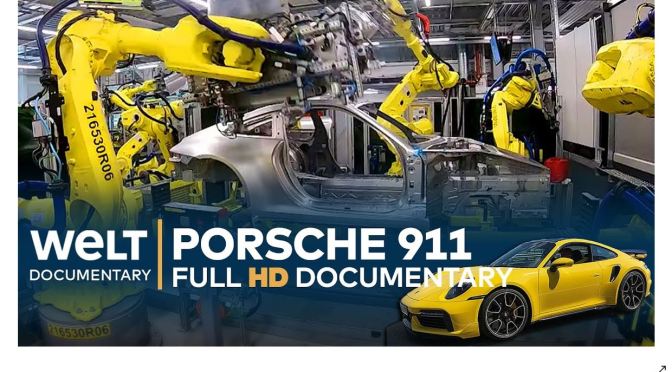
Porsche 911 – the world’s most successful sports car. Its rear-mounted boxer engine and classic styling are unmistakable. It combines sportiness and everyday functionality like no other vehicle. A street-legal race car. For almost 70 years the 911 has stood for sportiness, elegance and quality. The latest version, the Porsche 992, is equipped with almost 400 hp in the basic version and costs almost a quarter of a million euros. In this documentary, racing legend Hans-Joachim Stuck takes you through the world of what is perhaps the most famous sports car.
When Ferdinand Alexander Porsche entered the family business in 1958, he filled an unknown vacuum. An experimental visionary who wanted to challenge tradition, he elevated the design legacy of this famous German brand. From working in the engineering office to craftily creating an icon amongst sportscars, writer Ulf Porschardt reveals how Ferdinand Alexander’s sketches evolved to become a cultural symbol.
Count Goertz designed a prestigious, muscular sports car for the Zuffenhausen-based company that was more reminiscent of a Ferrari or a Maserati…
The Goertzian design was in love with the grand gesture. The same year Roland Barthes declared the car to be the equivalent of the great Gothic cathedrals, and in his popular and shamelessly cited work Mythologies, considered it a major creation of the epoch, passionately conceived by numerous nameless artists. In the style of pop art, Barthes enacted an intellectual and cultural upgrading of the automobile, without the hyper-modern pathos of the futurists.


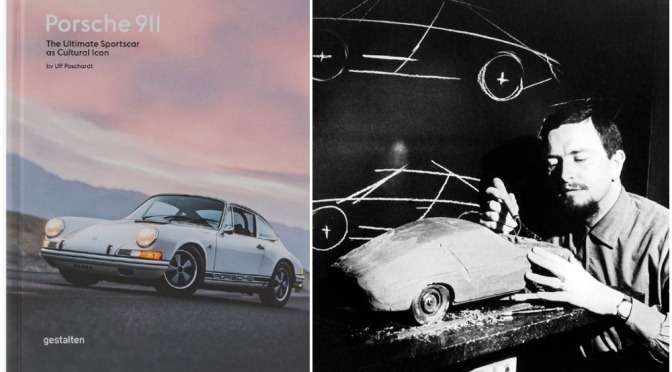
 When Ferdinand Alexander Porsche entered the family business in 1958, he filled an unknown vacuum. An experimental visionary who wanted to challenge tradition, he elevated the design legacy of this famous German brand. From working in the engineering office to craftily creating an icon amongst sportscars, writer Ulf Porschardt reveals how Ferdinand Alexander’s sketches evolved to become a cultural symbol.
 Boomers Daily