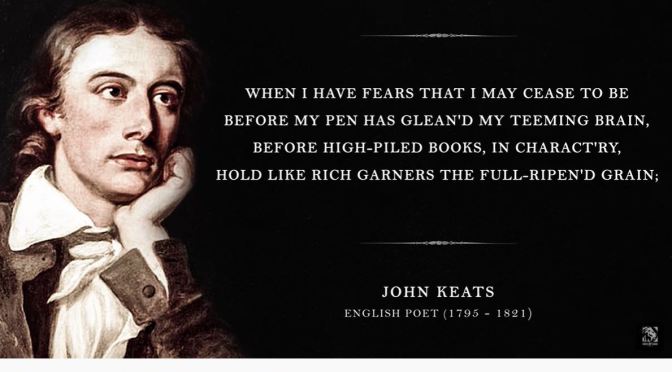
Read by James Smillie – John Keats was a revered English poet who devoted his short life to the perfection of poetry.
John Keats was an English Romantic poet. He was one of the main figures of the second generation of Romantic poets, along with Lord Byron and Percy Bysshe Shelley, despite his works having been in publication for only four years before his death from tuberculosis at the age of 25.
A short poem told from the perspective of a traveler who stops to watch the snow fall, and, in doing so, reflects on the conflict between man and nature and the wishes and obligations we face in our lives.
“Je Viens” is a Cinematic Poem Short Film In Tignes, France Directed by Franck Pinel.
Filmed, Edited and Directed by: Franck Pinel (FKY)
Music by: Steven Gutheinz Written by: Samuel Revol Narrated by: Siméon Revol & Laure Revol English Translation by: Madeleine Barter
“Between the desert peaks and the wild plains, Itinerary of the man alone; poisoned, in love, alive.”
I invite you on the trails of Tignes in Savoie, under the August sun, to breathe the fresh air! A little vastness, horizons blurred to forget for a few moments our confined lives.
A first FKY / Srevol collaboration, with a text written for the film, and read by a young Simeon with a rocky voice.
I Approach
Tightrope walking earthling Lying heavily on rock I look for your softness Your suspended caresses
In my solitude, I approach
My bones follow your tracks Along smoke-filled banks, Burns under your sun My masterful soul
In my solitude, I approach
My wings poisoned by oily molecules accept my sorrow my ghostly pardon
In my solitude, I approach
Tightrope walking earthling With smoky soul, I approach I burn in your softness Masterful earth
—————————————
Je viens
Funambule terrien, Aimanté à la roche, Je cherche tes douceurs, Tes caresses suspendues.
Dans ma solitude, je viens
Mes os suivent ta piste, Aux rivages enfumés Je brûle sous ton soleil Mon âme de capitaine
Dans ma solitude, je viens
mes ailes empoisonnées de molécules pétroliennes accepte mon désolé mon pardon fumigène
Dans ma solitude, je viens
Funambule terrien, A l’âme enfumée je viens Je brûle dans ta douceur, Terre capitaine
Tignes is a group of villages that form a high-altitude ski resort in the French Alps, near the Italian border. With nearby Val d’Isère, it’s part of the Espace Killy ski area, linked by a network of lifts. Val Claret and Tignes Le Lac villages are lively hubs, with restaurants and shops. In summer, the area offers trails, golf and a bike park, plus ski runs on the Grande Motte glacier.
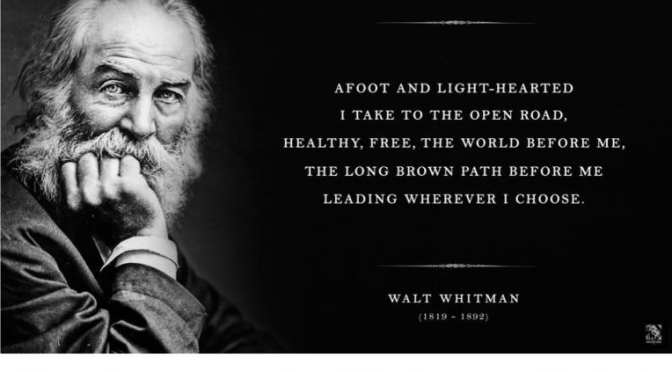
Walt Whitman is America’s world poet – a latter-day successor to Homer, Virgil, Dante, and Shakespeare, whose verse collection ‘Leaves of Grass’ marked a new era in the history of American literature.
Within Leaves of Grass, Whitman’s ‘Song of the Open Road’ engages with important themes of freedom, the self and nature. The poem begins with the speaker setting out on a long brown path “Afoot and light-hearted,” for he is done with the routines, customs, and safe behaviours of his previous life, “done with indoor complaints, libraries, querulous criticisms.”
Here, Whitman renounces a life devoted to the conventional pursuit of material success and embarks on the open road, the world before him. –
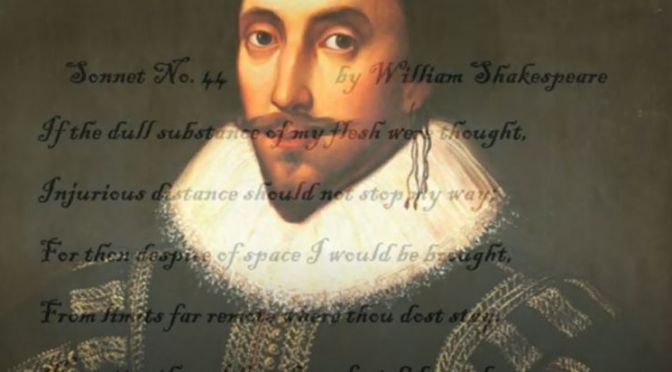
Sonnet 44 is one of 154 sonnets written by the English playwright and poet William Shakespeare. It is a member of the Fair Youth sequence, in which the poet expresses his love towards a young man. Sonnet 44 is continued in Sonnet 45.
Sonnet XLIV
If the dull substance of my flesh were thought, Injurious distance should not stop my way; For then despite of space I would be brought, From limits far remote, where thou dost stay. No matter then although my foot did stand Upon the farthest earth removed from thee; For nimble thought can jump both sea and land As soon as think the place where he would be. But ah! thought kills me that I am not thought, To leap large lengths of miles when thou art gone, But that, so much of earth and water wrought, I must attend time’s leisure with my moan, Receiving nought by elements so slow But heavy tears, badges of either’s woe.
‘We are fond of tracing the resemblance between Poetry and Painting,’ wrote William Wordsworth(1770–1850) in the famous ‘Preface’ to Lyrical Ballads (1800), ‘and, accordingly, we call them Sisters.’ To speak of the ‘sister arts’ was indeed a critical platitude of the age, though as it happens Wordsworth’s attitude towards painting wasn’t normally very sisterly.
When, in 1840 or so, a well-meaning houseguest called Margaret Gillies made a drawing of the 70-year old Mrs Wordsworth, everyone agreed that it was an excellent likeness; but her kind act was rewarded with a testy and somewhat ungracious sonnet from the sitter’s husband. He preferred to visualise Mary in her salad days: ‘’tis a fruitless task to paint for me, / Who, yielding not to changes Time has made, / By the habitual light of memory see / Eyes unbedimmed, see bloom that cannot fade, / And smiles that from their birth-place ne’er shall flee / Into the land where ghosts and phantoms be’.
.
All she possesses, as a painter, is the outward eye: ‘that inward eye’ is the poet’s hallmark, as of course Miss Gillies would have known from Wordsworth’s most famous poem, the one about the daffodils – ‘They flash upon that inward eye / Which is the bliss of solitude’. By chance we know (because Wordsworth left it on record, saying they were the best thing in the poem) that those two lines were actually contributed by Mary, so the uxoriousness of the thing is double: not only does she evade the merely visual but she also possesses the innate genius to be able to name the imaginative power that so transcends it.
Letters of John Keats to His Family and Friends by John KEATS (1795 – 1821) and Sidney COLVIN (1845 – 1927)
Read by: Nemo and Eva Davis
Chapters: 00:00:00 – 00 – Preface 00:21:11 – 01 – Letter 1 – to Charles Cowden Clarke 00:22:21 – 02 – Letter 2 – to Benjamin Robert Haydon 00:24:06 – 03 – Letter 3 – to Benjamin Robert Haydon 00:25:00 – 04 – Letter 4 – to Charles Cowden Clarke 00:26:57 – 05 – Letter 5 – to John Hamilton Reynolds 00:28:25 – 06 – Letter 6 – to John Hamilton Reynolds 00:29:52 – 07 – Letter 7 – to George and Thomas Keats 00:34:17 – 08 – Letter 8 – to John Hamilton Reynolds 00:42:14 – 09 – Letter 9 – to Leigh Hunt 00:50:13 – 10 – Letter 10 – to Benjamin Robert Haydon 01:00:31 – 11 – Letter 11 – to Messrs. Taylor and Hessey 01:03:50 – 12 – Letter 12 – to Messrs. Taylor and Hessey 01:06:07 – 13 – Letter 13 – to Mariane and Jane Reynolds 01:10:34 – 14 – Letter 14 – to Fanny Keats 01:18:27 – 15 – Letter 15 – to Jane Reynolds 01:26:44 – 16 – Letter 16 – to John Hamilton Reynolds 01:34:49 – 17 – Letter 17 – to Benjamin Robert Haydon 01:37:39 – 18 – Letter 18 – to Benjamin Bailey 01:43:58 – 19 – Letter 19 – to Benjamin Bailey 01:51:33 – 20 – Letter 20 – to Benjamin Bailey 01:54:19 – 21 – Letter 21 – to Charles Wentworth Dilke 01:55:20 – 22 – Letter 22 – to Benjamin Bailey 02:05:23 – 23 – Letter 23 – to John Hamilton Reynolds 02:11:23 – 24 – Letter 24 – to George and Thomas Keats 02:16:25 – 25 – Letter 25 – to George and Thomas Keats 02:26:06 – 26 – Letter 26 – to Benjamin Robert Haydon 02:28:19 – 27 – Letter 27 – to John Taylor 02:29:30 – 28 – Letter 28 – to George and Thomas Keats 02:35:45 – 29 – Letter 29 – to John Taylor 02:37:09 – 30 – Letter 30 – to George and Thomas Keats 02:45:42 – 31 – Letter 31 – to Benjamin Bailey 02:53:40 – 32 – Letter 32 – to John Taylor 02:55:38 – 33 – Letter 33 – to John Hamilton Reynolds 03:00:19 – 34 – Letter 34 – to John Hamilton Reynolds 03:09:32 – 35 – Letter 35 – to John Taylor 03:10:23 – 36 – Letter 36 – to George and Thomas Keats 03:14:06 – 37 – Letter 37 – to John Hamilton Reynolds 03:20:52 – 38 – Letter 38 – to George and Thomas Keats 03:25:16 – 39 – Letter 39 – to John Taylor 03:28:39 – 40 – Letter 40 – to Messrs. Taylor and Hessey 03:29:39 – 41 – Letter 41 – to Benjamin Bailey 03:39:27 – 42 – Letter 42 – to John Hamilton Reynolds 03:46:04 – 43 – Letter 43 – to Benjamin Robert Haydon 03:51:10 – 44 – Letter 44 – to Messrs. Taylor and Hessey 03:52:54 – 45 – Letter 45 – to James Rice 03:58:59 – 46 – Letter 46 – to John Hamilton Reynolds 04:06:50 – 47 – Letter 47 – to Benjamin Robert Haydon 04:12:07 – 48 – Letter 48 – to John Hamilton Reynolds 04:17:53 – 49 – Letter 49 – to John Hamilton Reynolds 04:20:39 – 50 – Letter 50 – to John Taylor 04:24:29 – 51 – Letter 51 – to John Hamilton Reynolds 04:29:41 – 52 – Letter 52 – to John Hamilton Reynolds 04:46:49 – 53 – Letter 53 – to Benjamin Bailey 04:52:06 – 54 – Letter 54 – to Benjamin Bailey 04:57:26 – 55 – Letter 55 – to John Taylor 04:59:14 – 56 – Letter 56 – to Thomas Keats 05:08:57 – 57 – Letter 57 – to Fanny Keats 05:18:23 – 58 – Letter 58 – to Thomas Keats 05:28:49 – 59 – Letter 59 – to Thomas Keats 05:39:49 – 60 – Letter 60 – to John Hamilton Reynolds 05:48:19 – 61 – Letter 61 – to Thomas Keats 06:01:55 – 62 – Letter 62 – to Benjamin Bailey 06:16:12 – 63 – Letter 63 – to Thomas Keats 06:30:05 – 64 – Letter 64 – to Thomas Keats 06:43:57 – 65 – Letter 65 – to Mrs. Wylie 06:50:42 – 66 – Letter 66 – to Fanny Keats 06:53:45 – 67 – Letter 67 – to Fanny Keats 06:55:12 – 68 – Letter 68 – to Jane Reynolds 06:56:23 – 69 – Letter 69 – to Charles Wentworth Dilke
These are the letters of John Keats, as written to family, close friends and others during his brief, eventful years as an artist. (However, the editor chose to exclude love letters to Fanny Brawne, respecting their private nature.) The celebrated Keats letters were written between 1816-1820, and include those colorful entries penned during his 44-day tour with Charles Brown as they rambled through England, Ireland and Scotland. Also included are the famous, lengthy ‘journal letters,’ written to his brother George and sister-in-law in America. Not only a poetic genius, Keats shines in epistolary form. His letters brim with the emotion, wit and intelligence he routinely shared with intimates. – Summary by NemoR
LIVRARIA LELLO OPENS THE FIRST “DRIVE-THRU BOOKSELLER” IN THE WORLD
From April 1st, between 10 am and 12 noon, from Monday to Friday, Livraria Mais Bela do Mundo will offer one book from its “The Collection” per day to all readers who subscribe the day before to which they intend to address the “Drive-Thru” of Livraria Lello.
.
The same should be done until 6 pm, to the email info@livrarialello.pt , sending your personal data (name, address, email and telephone contact).
. On the day of the survey, the reader will only have to stop the car in front of Livraria Lello and the delivery will be made by a collaborator directly through the window.
.
This is a true act of “Love in the Times of Cholera” by Livraria Lello and her team towards their readers, their city, which is their world. A way to give the community some comfort and some encouragement in these difficult times.


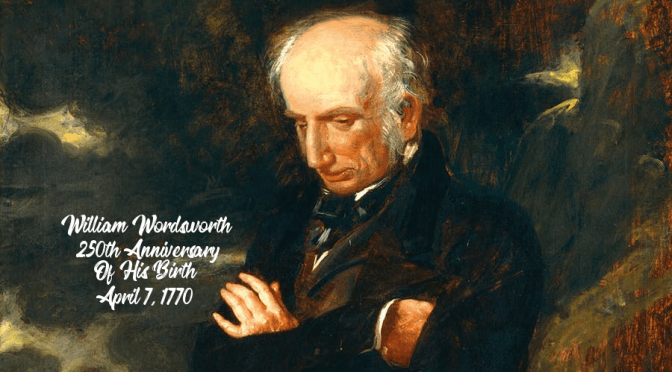
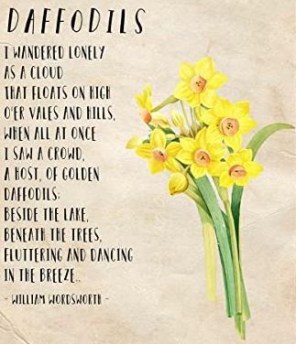 ‘We are fond of tracing the resemblance between Poetry and Painting,’ wrote William Wordsworth
 When, in 1840 or so, a well-meaning houseguest called Margaret Gillies made a drawing of the 70-year old Mrs Wordsworth, everyone agreed that it was an excellent likeness; but her kind act was rewarded with a testy and somewhat ungracious sonnet from the sitter’s husband. He preferred to visualise Mary in her salad days: ‘’tis a fruitless task to paint for me, / Who, yielding not to changes Time has made, / By the habitual light of memory see / Eyes unbedimmed, see bloom that cannot fade, / And smiles that from their birth-place ne’er shall flee / Into the land where ghosts and phantoms be’.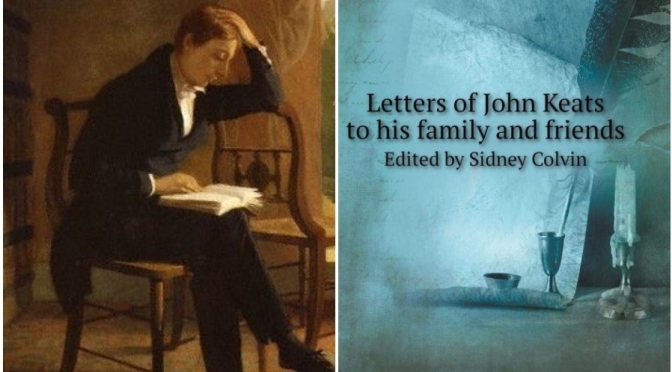


 Bela do Mundo will offer one book from its “The Collection” per day to all readers who subscribe the day before to which they intend to address the “Drive-Thru” of Livraria Lello.
 This is a true act of “Love in the Times of Cholera” by Livraria Lello and her team towards their readers, their city, which is their world. A way to give the community some comfort and some encouragement in these difficult times.
 Boomers Daily