
 A selection of three essential articles read aloud from the latest issue of The Economist. This week, Amazon is essential, but vulnerable; (10:35) pandemic politics in Britain; (18:15) and the United Nations after 75 years.
Tag Archives: Podcasts

Top New Science Podcasts: Universities Post-Covid And Drones Fighting Mosquito-Borne Disease
 Senior Correspondent Jeffrey Mervis joins host Sarah Crespi to talk about how universities are dealing with the financial crunch brought on by the coronavirus. Jeff discusses how big research universities are balancing their budgets as federal grants continue to flow, but endowments are down and so is the promise of state funding.
Mosquito-borne infections like Zika, dengue, malaria, and chikungunya cause millions of deaths each year. Nicole Culbert and colleges write this week in Science Robotics about a new way to deal with deadly mosquitoes—using drones. The drones are designed to drop hundreds of thousands of sterile male mosquitoes in areas with high risk of mosquito-borne illness. The idea is that sterile male mosquitoes will mate with females and the females then lay infertile eggs, which causes the population to decline. They found this drone-based approach is cheaper and more efficient than other methods of releasing sterile mosquitoes and does not have the problems associated with pesticide-based eradication efforts such as resistance and off-target effects.
Top New Science Podcasts: Tougher Diamonds, Whale Hideouts & Ancient Incest
 This week, researchers make diamonds tough, and evidence of incest in a 5,000 year old tomb.
In this episode:
00:51 Tough versus hard
Diamonds are famed for their hardness, but they are not so resistant to fracture. Now, researchers have toughened up diamonds, which could open up new industrial applications. Research Article: Yue et al.
06:07 Research Highlights
A spacecraft helps physicists work out the lifespan of a neutron, and the icy hideaway of an endangered whale. Research Highlight: The vanishing-neutron mystery might be cracked by a robot in outer space; Research Highlight: A secluded icy fortress shelters rare whales
08:33 Ancient inbreeding
Analysis of the genomes of humans buried in an ancient Irish tomb has uncovered many surprises, including evidence of incest amongst the elite. Research Article: Cassidy et al.; News and Views: Incest uncovered at the elite prehistoric Newgrange monument in Ireland
21:13 #ShutdownSTEM
Nature reporter Nidhi Subbaraman joins us to talk about the #ShutdownSTEM movement, and anti-black racism in academia. Editorial: Note from the editors: Nature joins #ShutDownSTEM; News: Grieving and frustrated: Black scientists call out racism in the wake of police killings; News: Thousands of scientists worldwide to go on strike for Black lives; News: How #BlackInTheIvory put a spotlight on racism in academia
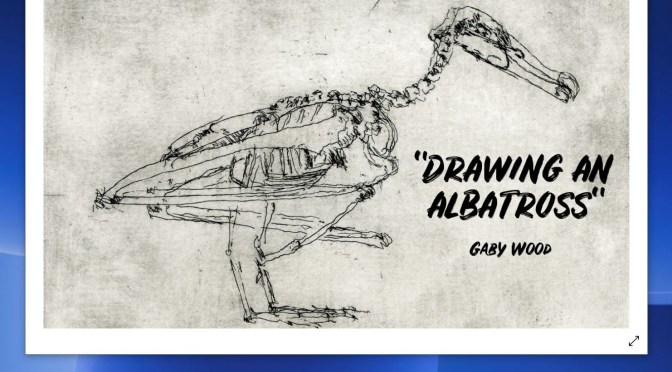
Podcasts: “Drawing An Albatross With A Camera Lucida” By Gaby Wood (LRB)
Gaby Wood reads her diary from the latest issue of the LRB, in which she tries to draw an albatross using a camera lucida.
 By the time I used the camera lucida in the museum, I’d spent several months grappling with the strange proposition offered by its prism. I’d read that the image was sharper if you held it over a dark drawing surface, but that didn’t make any sense to me until the smoked metal etching plate was beneath my hand. Suddenly the albatross skeleton appeared on it: bright, spectral. The process was different from the way I’d imagined it. There was a drag, almost a dance, under the needle – a tiny jump of resistance in the copper. Without seeing what you were doing, you could feel it more keenly. It wasn’t like ice-skating at all.
 A camera lucida is an optical device used as a drawing aid by artists. The camera lucida performs an optical superimposition of the subject being viewed upon the surface upon which the artist is drawing. The artist sees both scene and drawing surface simultaneously, as in a photographic double exposure.
Top New Science Podcasts: “Neutron Star Interior Composition Explorer”
An instrument on the International Space Station is providing new insights into some of the Universe’s most baffling objects. Neutron stars have puzzled scientists for decades. It’s known that these ultra-dense objects are born from the remnants of supernovae, yet what’s under their surface, and what processes that go on within them, remain a mystery.
Now, an instrument called the Neutron Star Interior Composition Explorer is providing new information to help answer these questions, ushering in a new era of research into these strange stars.
This is an audio version of our feature: The golden age of neutron-star physics has arrived
Global: The Power Of Protest, Great Cities Post-Covid & Bartleby Columns
 A selection of three essential articles read aloud from the latest issue of The Economist. This week, the power of protest and the legacy of George Floyd; (11:07) life in great cities after the pandemic; (17:55) and the lessons from one hundred Bartleby columns on work and management.

Travel Podcast: “What Will The Airline Business Look Like Post-Covid” (WSJ)
 The Wall Street Journal looks at how air travel will change and what it will be like to fly after the pandemic.
New Science Podcasts: Coronavirus Contact Tracing Apps, Sea Otters
 Staff Writer Kelly Servick joins host Sarah Crespi to talk about the ins and outs of coronavirus contact tracing apps—what they do, how they work, and how to calculate whether they are crushing the curve.
Edward Gregr, a postdoctoral fellow at the Institute for Resources, Environment, and Sustainability at the University of British Columbia, Vancouver, talks with Sarah about the controversial reintroduction of sea otters to the Northern Pacific Ocean—their home for centuries, before the fur trade nearly wiped out the apex predator in the late 1800s. Gregr brings a unique cost-benefit perspective to his analysis, and finds many trade-offs with economic implications for fisheries For example, sea otters eat shellfish like urchins and crabs, depressing the shellfishing industry; but their diet encourages the growth of kelp forests, which in turn provide a habitat for economically important finfish, like salmon and rockfish.
Top New Science Podcasts: Quantum States In Space Lab, Barcode Bacteria
 This week, the spaceborne lab that allows investigation of quantum states, and the debate surrounding how mountain height is maintained.
In this episode:
01:18 Space lab
Scientists have built a lab on the international space station, allowing them to remotely investigate quantum phenomena in microgravity. Research Article: Aveline et al.; News and Views: Quantum matter orbits Earth
08:37 Research Highlights
Trackable ‘barcode’ bacteria, and physicists simulate near light speed cycling. Research Highlight: ‘Barcode’ microbes could help to trace goods — from lettuce to loafers; Research Highlight: What Einstein’s theory means for a cyclist moving at almost light speed
10:48 Maintaining mountain height
For a long time many researchers have thought that mainly erosion controls the height of mountains, but new research suggests that tectonic forces play a bigger role. Research Article: Dielforder et al.; News and Views: Mountain height might be controlled by tectonic force, rather than erosion
16:12 Pick of the Briefing
We pick our highlights from the Nature Briefing, including how sleep deprivation kills, and a monumental Maya structure hidden in plain sight. Quanta Magazine: Why Sleep Deprivation Kills; National…

Podcast Interviews: Filmmaker Jon Wilkman On “Screening Reality”
New Books in History talks to Professional filmmaker Jon Wilkman, who draws on his own experience, as well as the stories of inventors, adventurers, journalists, entrepreneurs, artists, and activists who framed and filtered the world to inform, persuade, awe, and entertain.
Screening Reality: How Documentary Filmmakers Reimagined America (Bloomsbury, 2020) is a widescreen view of how American “truth” has been discovered, defined, projected, televised, and streamed during more than one hundred years of dramatic change, through World Wars I and II, the dawn of mass media, the social and political turmoil of the sixties and seventies, and the communications revolution that led to a twenty-first century of empowered yet divided Americans.
 Boomers Daily