A.M. Edition for Aug. 25. WSJ’s Charity Scott discusses the fallout as restaurants indicate their vaccination policies on Yelp.
The House passes a $3.5 trillion budget blueprint. Goldman Sachs will require Covid-19 vaccinations for employees and visitors. U.S. companies rush to cash in on soaring stock prices. And, the growing popularity of video résumés. Marc Stewart hosts.
We discuss the emergency G7 meeting called to determine the group’s policy on the Taliban and a looming migration crisis. Plus, why Sweden’s prime minister is stepping down and the Paralympics in Tokyo.
A.M. Edition for Aug. 23. WSJ’s Karina Shah looks at where different countries stand with youth vaccination rates. The Pentagon orders U.S. airlines to help evacuate Americans and Afghan partners from the country.
At least 21 people are dead after flash flooding in Tennessee. Tropical Depression Henri makes landfall. Bitcoin miners go elsewhere amid a crackdown in China. And, blue-light glasses: a fashion accessory or a necessity?
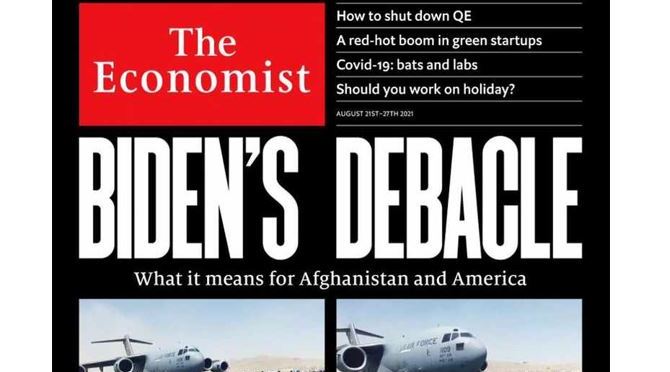
A selection of three essential articles read aloud from the latest issue of The Economist. This week: the fiasco in Afghanistan is a grave blow to America’s reputation, Bartleby asks whether you should work (a little) on your holiday (10:00) and, 700 years on, how Dante can still help people find hope amid adversity (15:40)
Tyler Brûlé covers the weekend’s biggest news stories with panellists Juliet Linley and Benno Zogg, as well as our friends and contributors in London, Amsterdam and Bangkok.
Georgina Godwin and our regular guest and newspaper reviewer Vincent McAviney on the weekend’s biggest topics. Plus, Monocle editor in chief Andrew Tuck’s column.
A.M. Edition for Aug. 20. WSJ’s Costas Paris discusses the latest supply-chain issues in China and the broader slowdown in shipping goods around the world.
Tesla CEO Elon Musk reveals plans for a humanoid robot using artificial intelligence. Online sports-merchandise retailer Fanatics reorders the trading-card world. Oil prices decline. And, why using your credit card could cost more. Marc Stewart hosts.
Contributing Correspondent Michael Price joins host Sarah Crespi to discuss the newest Mars analog to be built on the location of the first attempt at a large-scale sealed habitat, Biosphere 2 in Arizona.
Next, William Brady, a postdoctoral researcher in the psychology department at Yale University, talks with Sarah about using an algorithm to measure increasing expressions of moral outrage on social media platforms.
A team is creating bespoke words for scientific terms in African languages, and the sustainability of the electric car boom.
00:46 Creating new words for scientific terms
Many words that are common to science have never been written in some African languages, or speakers struggle to agree what the right term is. Now a new project aims to change that, by translating 180 research papers into six languages spoken by millions of people across the continent of Africa.
11:48 Research Highlights
A rainbow of biodegradable inks derived from brown seaweed, and the enormous centipede that preys on baby birds.
As electric cars become more ubiquitous, manufacturers will have to up the production of batteries needed to power them. But that begs the question – can they be mass produced in a sustainable way?
We discuss some highlights from the Nature Briefing. This time, how a tusk-based ‘chemical GPS’ revealed details of a mammoth’s enormous journeys , and why the Perseverance rover’s first efforts to collect a Mars rock sample didn’t go according to plan.
We look to Brussels to hear how the EU plans to approach an Afghan migration crisis, and discuss New Zealand’s latest lockdown. Plus: a review of the morning papers and the headlines from the Balkans.






 Boomers Daily