

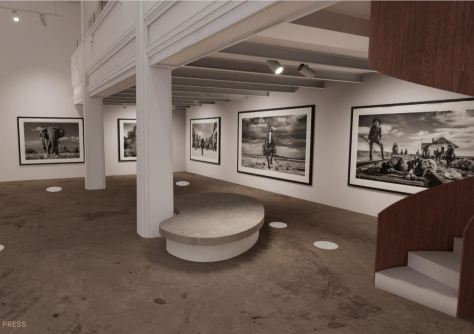
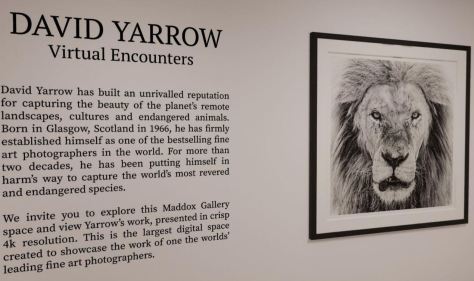
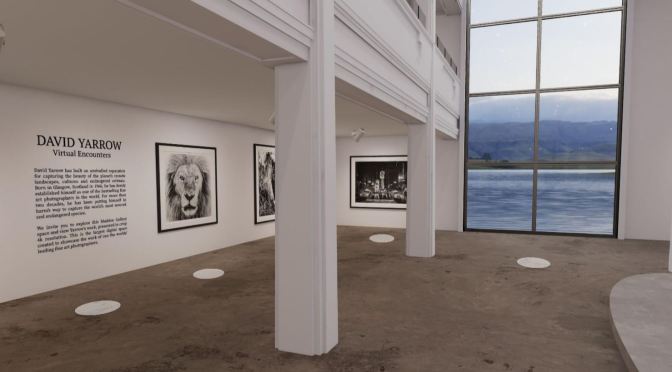
David Yarrow is a British fine-art photographer, conservationist and author. He has travelled to isolated locations to capture images of wildlife, indigenous communities and landscapes. He currently lives in London.
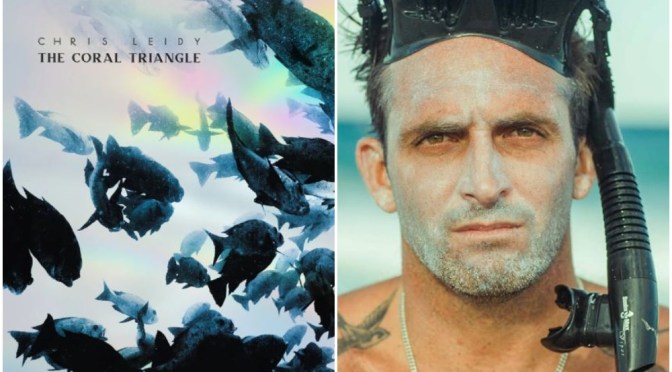
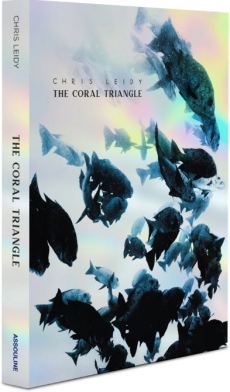 Comprising the most biodiverse ecosystems on our planet, oceans are humanity’s life-support system, processing more carbon dioxide than rainforests. Featuring a passionate text by Fabien Cousteau, The Coral Triangle presents the underwater world as a complex realm filled with vibrant life, inviting readers to fall in love with its majesty, and inspiring deeper understanding of the fragility of coral reefs and the unparalleled importance of taking action to protect our oceans.
Take a breathtaking plunge into the colorful world of the Coral Triangle, the waters that cradle Indonesia, Malaysia, the Philippines, Papua New Guinea, the Solomon Islands and Timor-Leste.
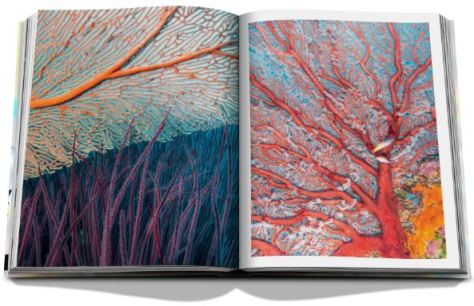
One of the world’s most mature reef networks, home to 30 percent of all the world’s coral, this magnificent marine expanse boasts the highest diversity of coral and fish species on the planet. Underwater photographer Chris Leidy beautifully captures a vision of this wonderland through his lens and conveys the inherent complexities of each singular, fleeting scene, illustrating the vital magic of the Coral Triangle.
Christopher P. Leidy is the great-great-grandson of the newspaper publisher Joseph Pulitzer and the grandson of fashion designer Lilly Pulitzer Rousseau. Over his career, Leidy has established his own legacy as one of the world’s foremost underwater photographers, finding inspiration in the depths of the world’s oceans.
The eldest grandson of Jacques-Yves Cousteau, Fabien Cousteau is an aquanaut, ocean conservationist, and documentary filmmaker devoted to furthering our understanding of the underwater world. An active member of multiple cause-driven and charitable boards, Cousteau works with local communities and children worldwide to help restore local water ecosystems. He dedicates much of his time to the Fabien Cousteau Ocean Learning Center, a nonprofit founded in 2016.
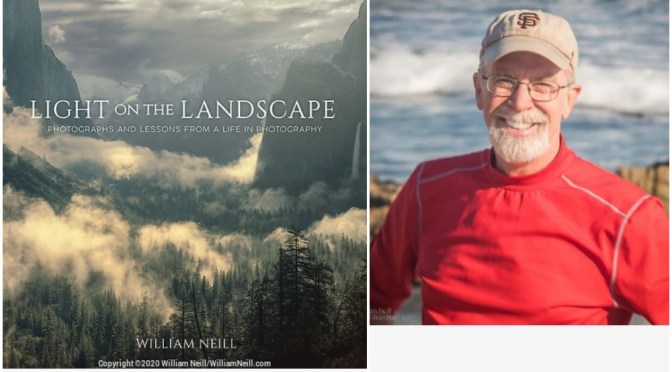
Drawing from the tradition of behind-the-scenes books like Ansel Adams’ Examples: The Making of 40 Photographs and Galen Rowell’s Mountain Light: In Search of the Dynamic Landscape, Light on the Landscape covers in detail the core photographic fundamentals such as light, composition, camera angle, and exposure choices, but it also deftly considers those subjects that are less frequently examined: portfolio development, marketing, printmaking, nature stewardship, inspiration, preparation, self-improvement, and more. The result is a profound and wide-ranging exploration of that magical convergence of light, land, and camera.
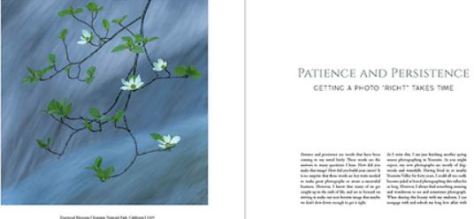
For more than two decades, William Neill has been offering his thoughts and insights about photography and the beauty of nature in essays that cover the techniques, business, and spirit of his photographic life. Curated and collected here for the first time, and accompanying 128 beautiful reproductions of Neill’s photographs, these essays are both pragmatic and profound, offering readers an intimate look behind the scenes at Neill’s creative process behind individual photographs as well as a discussion of the larger and more foundational topics that are key to his philosophy and approach to work.
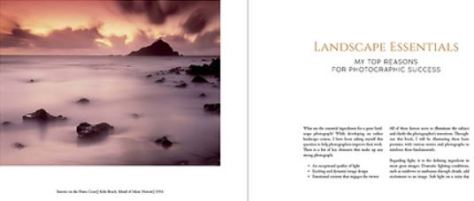
Filled with beautiful and inspiring photographs, Light on the Landscape is also full of the kind of wisdom that only comes from a deeply thoughtful photographer who has spent a lifetime communicating with a camera. Incorporating the lessons within the book, you too can learn to achieve not only technically excellent and beautiful images, but photographs that truly rise above your best and reveal your deeply personal and creative perspective―your vision, your voice.
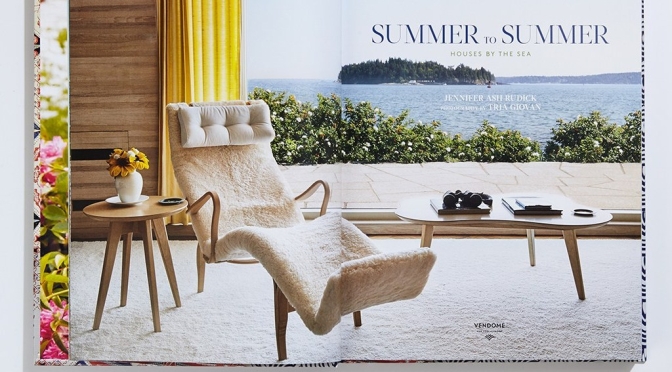
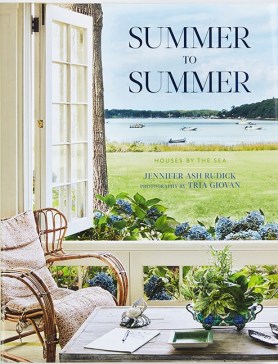 From the rocky coast of Maine to the sandy beaches of the Hamptons, from Nantucket to Newport, from Fire Island to Fishers Island, from Martha’s Vineyard to Provincetown, summer hours are as varied in style as the people who hightail it to the beach as soon as the temperature climbs. In this lushly illustrated book, author Jennifer Ash Rudick has sought out some thirty of the best.
She invites us to a minimally decorated, Isamu Noguchi–designed home in Northeast Harbor, Maine, and Sister Parrish’s cozily decorated house in Dark Harbor, Maine. We imagine relaxing in comfortably cushioned rattan chair on the sun porch of a Nantucket house designed by Tom Scheerer, taking in the view of Long Island Sound through the glass curtain wall of a sleek house on Fishers Island, and feeling snugly cosseted in a tiny Provincetown cottage.
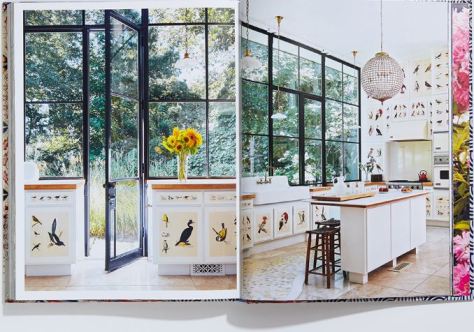
All we need to do is settle back, kick off our shoes, and let the sun-kissed pages of Summer to Summer wash over us.
AUTHORS
Jennifer Ash Rudick is the author of Palm Beach Chic, Out East: Houses and Gardens of the Hamptons, and City of Angels: Houses and Gardens of Los Angeles. A contributing editor to Galerie magazine, she has written for national publications, including the Washington Post, W, and Town & Country. With Maysles Films, she produced the Emmy-nominated documentary Iris, and she directed and produced the documentary Diner en Blanc. She lives in New York City and Southampton, NY.
Tria Giovan specializes in photographing interiors, still life, food, and portraiture. The photographer of Out East: House and Gardens of the Hamptons, her work has appeared in Costal Living, Esquire, House Beautiful, Travel & Leisure, and Veranda. Two volumes of her work have been published: Sand Sea Sky: The Beaches of Sagaponaack and Cuba: The Elusive Island. She lives in Sag Harbor, NY, and New York City.
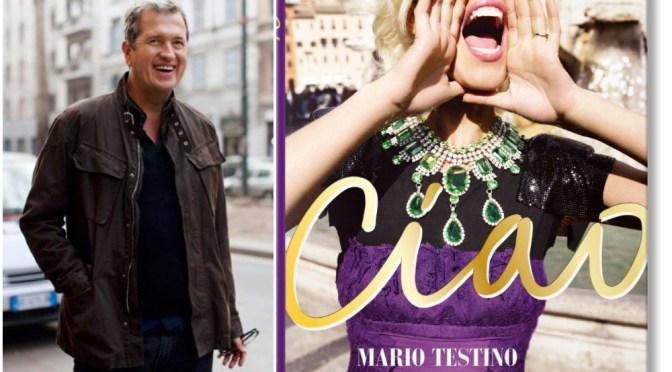
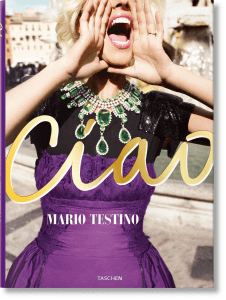 In Ciao, Testino handpicks his favorite images of Italy, a country that has featured heavily in his life, from his friendships and breathtaking vistas to quintessentially Italian iconic fashion shoots and Italians’ ever-evolving allure to their effervescent lifestyle. Featuring three sections, IN GIRO (out and about), ALLA MODA (in fashion), and AL MARE (at sea), the result is a highly personal journey across the country through Testino’s lens paying homage to Italy, and it’s culture as well as a chronicle of 40 years of genre-defining photography.
Widely regarded as one of the most influential fashion and portrait photographers, Mario Testino is responsible for the creation of emblematic images, transmitting emotion and energy in an open and intimate way. Throughout his four-decade career, Testino has been on a journey beyond the world of fashion capturing Earth’s traditions and cultures with unparalleled access and an extraordinarily unique point of view.
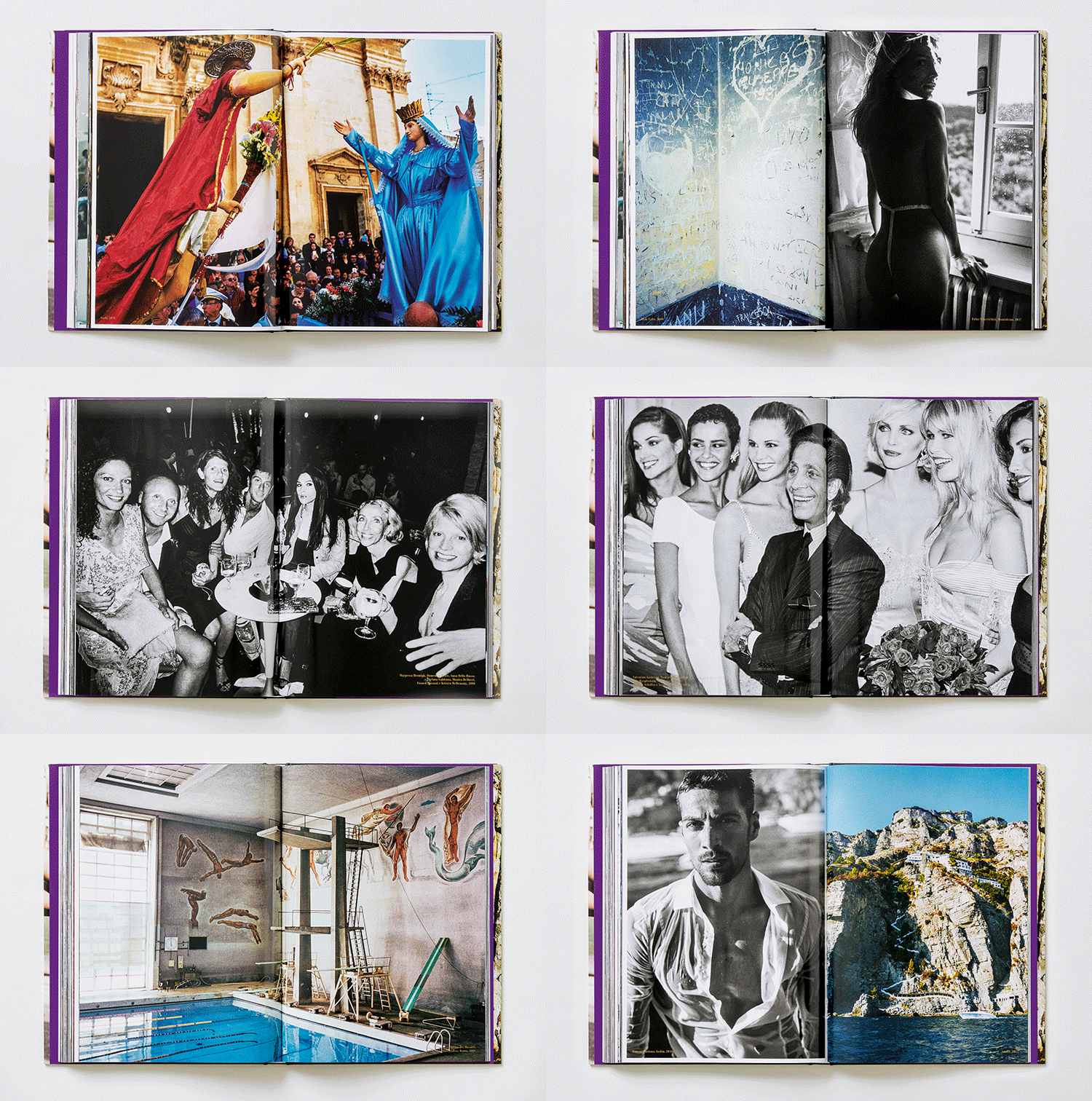
Peruvian by birth, Testino’s intimate connection to Italy found its roots in his Italian heritage, but blossomed when he experienced the country for himself. Discovering Italy was, for Testino, synonymous with discovering his passion for fashion. “Rome was all about the hottest, latest trends and fresh new styling, and I loved the way Italians could shed the latest look for an even newer thing without ever losing their own identity.”
On April 24, 2020, the Hubble Space Telescope celebrates its 30th year in orbit by premiering a never-before-seen view of two beautiful nebulas named NGC 2020 and NGC 2014.
Hubble’s senior project scientist, Dr. Jennifer Wiseman, takes us on a tour of this stunning new image, describes the telescope’s current health, and summarizes some of Hubble’s contributions to astronomy during its 30-year career.
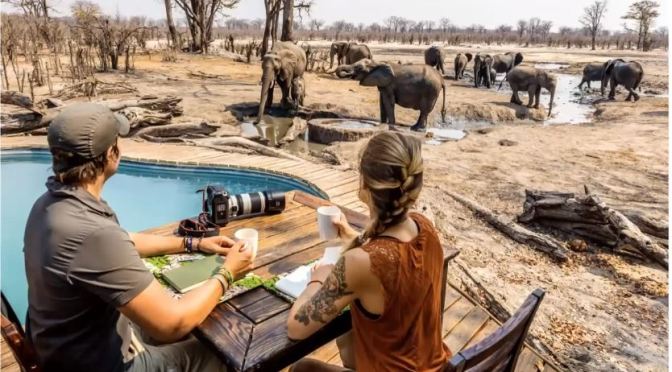
Does wanderlust have you wistfully gazing out the window? Yeah, us too. Hit the virtual road with Times journalists and photographers, as they share never-before-seen video, photos and experiences from captivating spots around the globe, every Saturday. This week, we’re going on safari in search of Zambia’s stunning wildlife.
With special guest Marcus Westberg, photographer. Hosted by Amy Virshup, travel editor.
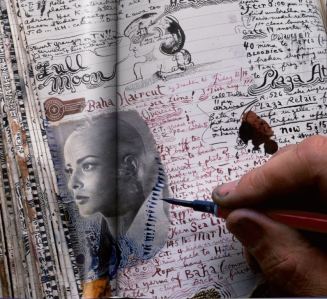 He collaborated with Francis Bacon and Salvador Dalí, he made diaries with Andy Warhol, worked on books with scientists like Dr. Norman Borlaug, Dr. Richard Laws, and Alistair Graham, and toured with Truman Capote, Terry Southern, and the Rolling Stones—all of whom are brought to life, literally and figuratively, in his work. He delved into the world of fashion for its beautiful women, taking Vogue stars like Veruschka to Africa and bringing new ones back to the U.S. with him.
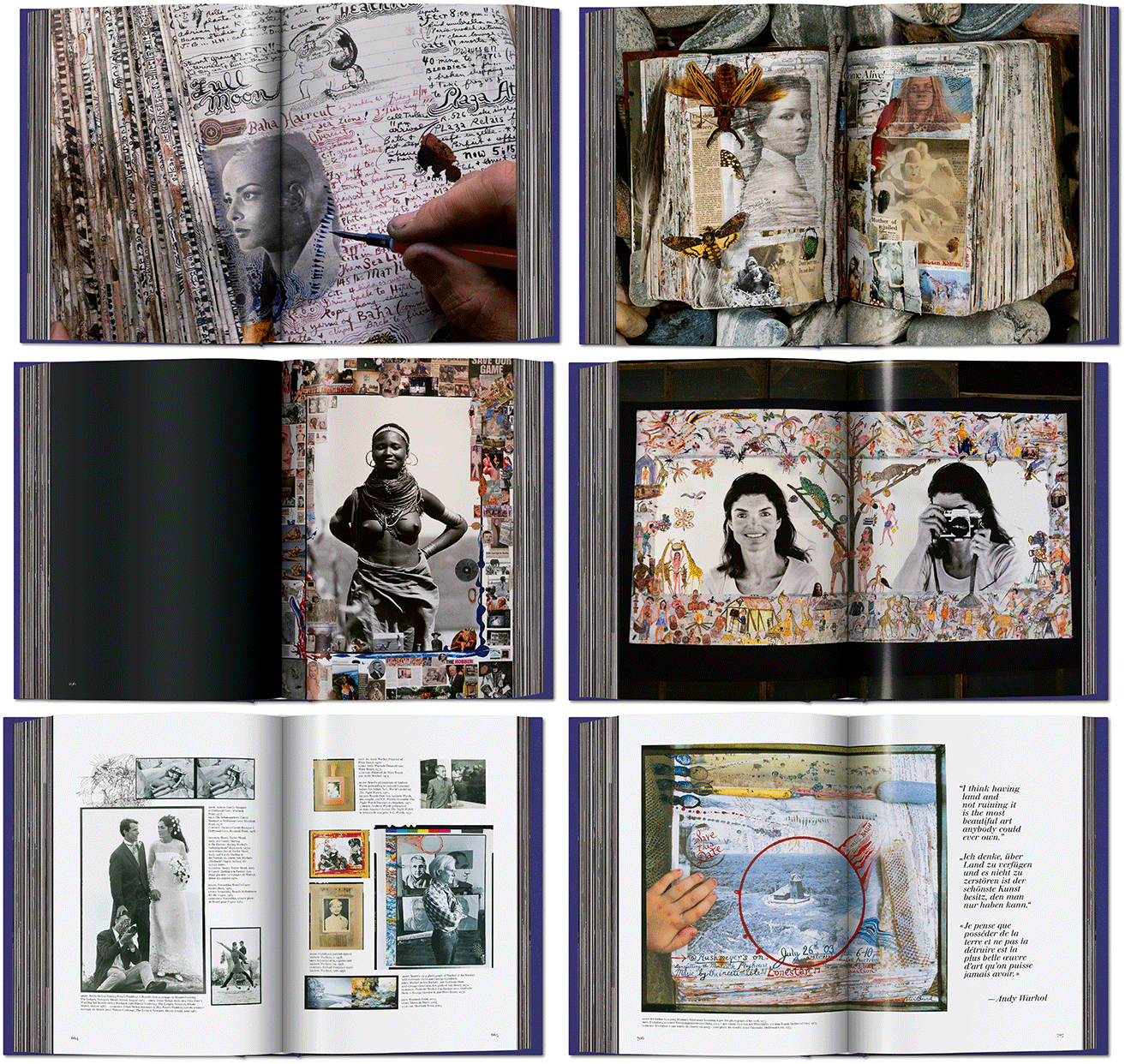
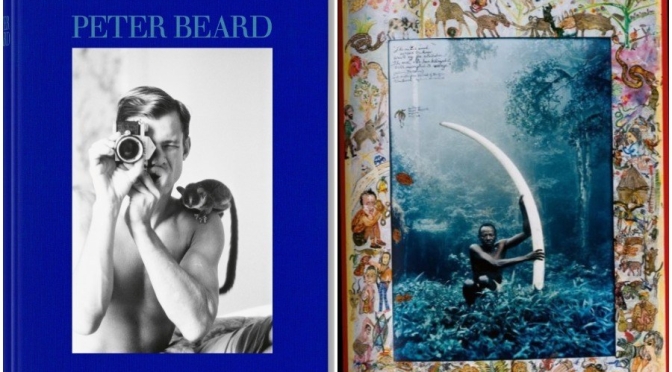
Artist, diarist, collector, and writer Peter Beard has fashioned his life into a work of art; the illustrated diaries he kept from a young age evolved into a serious career as an artist and earned him a central position in the international art world.
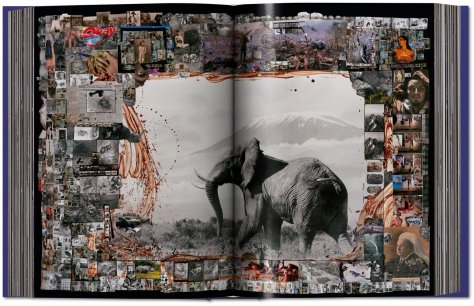
After spending time in Kenya and striking up a friendship with the author Isak Dinesen (Karen Blixen) in the early 1960s, Beard bought 50 acres next to her farm with the stipulation that he would film and write about the land and its flora and fauna. He witnessed the dawn of Kenya’s population explosion, which challenged finite resources and stressed animal populations—including the starving elephants of Tsavo dying by the tens of thousands in a wasteland of eaten trees. So he documented what he saw—with diaries, photographs, and collages. He went against the wind in publishing unique and sometimes shocking books of these works, including The End of the Game. The corpses were laid bare; the facts carefully recorded, sometimes in type and often by hand. Beard uses his photographs as a canvas onto which he superimposes multi-layered contact sheets, ephemera, found objects, newspaper clippings that are elaborately embellished with meticulous handwriting, old-master inspired drawings, and often swaths of animal blood used as paint.
In 2006, TASCHEN first published the book that has come to define his oeuvre, signed by the artist and published in two volumes. It sold out instantly and became a highly sought-after collector’s item. In the decade since, the monograph has been revived in two smaller versions; but sometimes, bigger is better. Now, the book you haven’t been able to get your hands on is available in one large-format volume.
 With such names as ‘Paradise’ and ‘Super Paradise,’ the sands of these shores have captured the imaginations and hearts of industry titans, artists, and party-goers alike from all around the globe, marking it as a stable cosmopolitan destination and as a paramount it haven on the jet-set circuit.
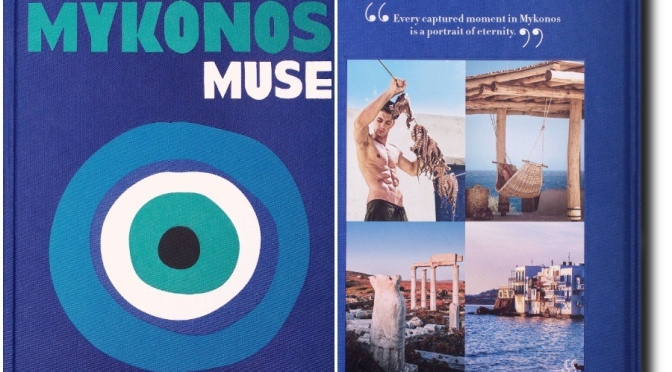
Located in the Cyclades and surrounded by the blue-green water of the Aegean sits whitewashed, windmill-strewn Mykonos, the island of the winds. This ancient island and those surrounding it, mythologized as the bodies of gods felled by Hercules in the time of antiquity, are older than legend and have played host to countless cultures for more than millennia. At forty-square-miles and boasting a population of only ten-thousand, the ‘Ibiza of Greece’ has become prized for gorgeous architecture, welcoming and open-minded locals, and fantastic beaches.
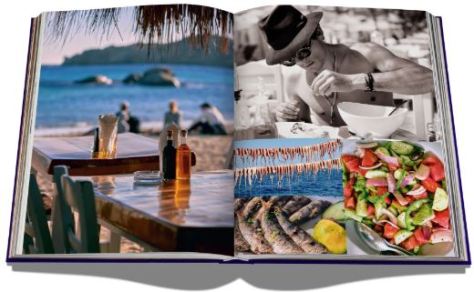
This book chronicles the culture and society that has defined Mykonos over the past century—from its days as a hideout for such luminaries and elites as Le Corbusier and Antonis Benakis, to its moment as a sanctuary for the gay community,to its predominant party scene—all the while indulging the reader with the ruins and myths hidden there.
Lizy Manola is a Greek photographer. A freelancer, her focus is on documentary photography. For more than fifteen years, she has traveled and shot in distant places, where culture and everyday life preserve their natural authenticity. She has published two books with Assouline, Certain Realities and Ethiopian Highlands. Her work has featured in solo and group exhibitions in Greece and worldwide. She lives and works in Athens and New York. Thirty years ago, she bought a house on Mykonos; she has spent endless summers holidays on the island ever since.

 Boomers Daily