
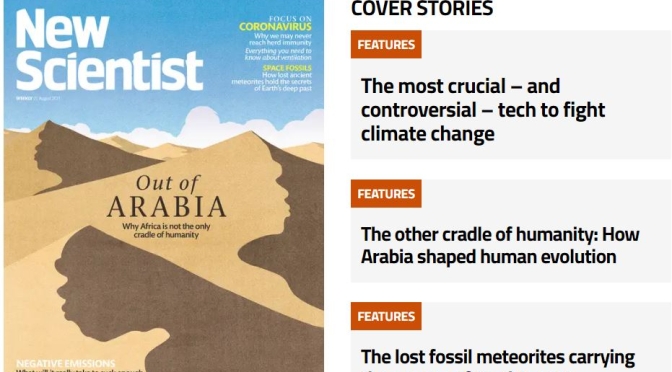

Tag Archives: New Scientist
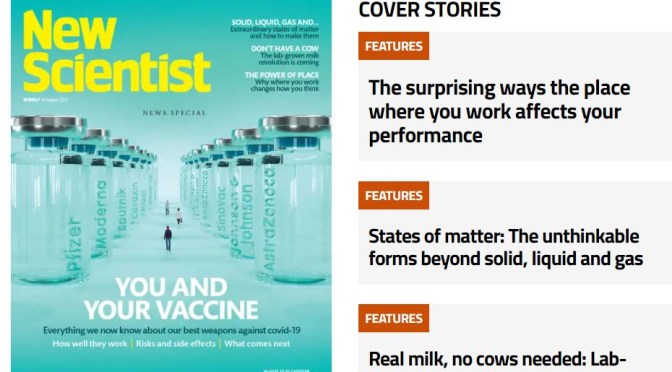
Previews: New Scientist Magazine – August 14


Front Cover Views: New Scientist Magazine – Aug 7

EDITOR’S PICK

Samir Shaheen-Hussain interview: Doctors left children to suffer
Discoveries of mass graves of Indigenous children in Canada have prompted new scrutiny of the residential school system – including the role physicians played in unethical experiments, says paediatrician Samir Shaheen-Hussain

How the fossil fuel era ends – and four possibilities for what follows
Killing fossil fuels to halt global warming is the greatest challenge we face. We now have a masterplan of what we must do when – and there’s no time to delay

Fatih Birol interview: Using energy isn’t evil – creating emissions is
People think using more energy is a bad thing, says International Energy Agency chief Fatih Birol – but as long as we can make it cleanly, it needn’t be

How we can transform our energy system to achieve net-zero emissions
Killing fossil fuels to halt global warming is the greatest challenge we face. We now have a masterplan of what we must do when – and there’s no time to delay

Ocean Science: Can Kelp Forests Survive Climate Change, Trawler Fishing
Kelp locks up millions of tonnes of carbon globally, provides a nursery for fish and is a buffer against coastal flooding. But climate change, weather and fishing are taking their toll. Now, Mika Peck and his team at the University of Sussex are monitoring kelp off the south coast of the UK, to see if it can recover from the damage done to it by trawling and help improve biodiversity in the area.
Science: Race-Based Medicine, Space Tourism & Western U.S. Heatwave
Race-based medical practises are being challenged more and more, as it becomes increasingly clear they have little basis in science.
The team finds out why adjustments for race and ethnicity are still being made in medicine, despite the potential harm and healthcare implications they cause. It’s been a massive week for the future of space tourism – the team shares a clip of a very excited Richard Branson who’s recent journey into microgravity has set the stage for the launch of Virgin Galactic’s first commercial space flights. The team gives an update on the dramatic heatwave ravaging the US, as more record high temperatures are set, continuing to leave destruction in its wake. They also explain what ‘impact gardening’ is and why it might help us find alien life on Jupiter’s moon Europa, and they share important news on the state of the cosmetics industry in Neolithic times. On the pod are Rowan Hooper, Chelsea Whyte, and Layal Liverpool.
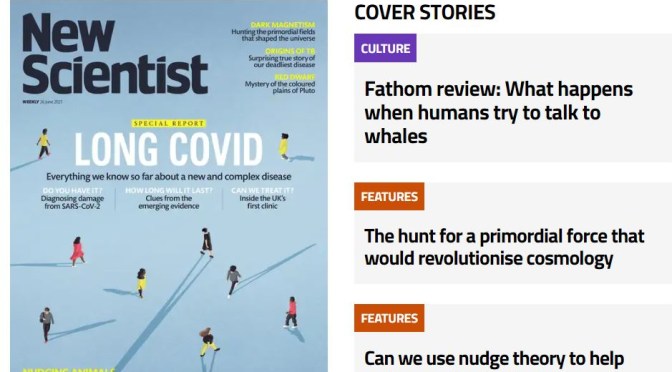
Top Magazine Issues: New Scientist – June 26, 2021
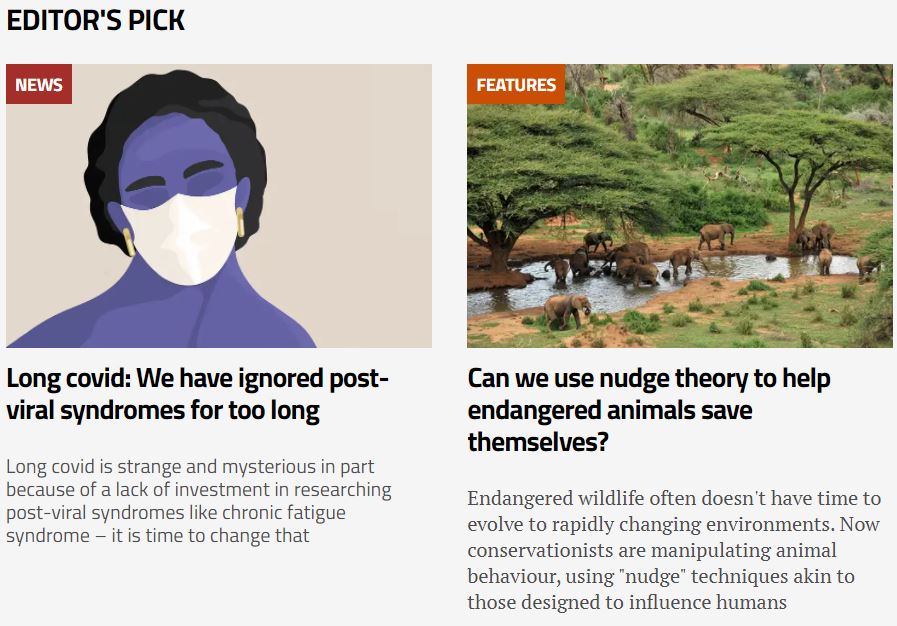
Long covid is strange and mysterious in part because of a lack of investment in researching post-viral syndromes like chronic fatigue syndrome – it is time to change that…

Read more

Magazine Vews: ‘New Scientist’ – June 19, 2021


Research: Importance Of Exercise & Movement For Brain Function & Health
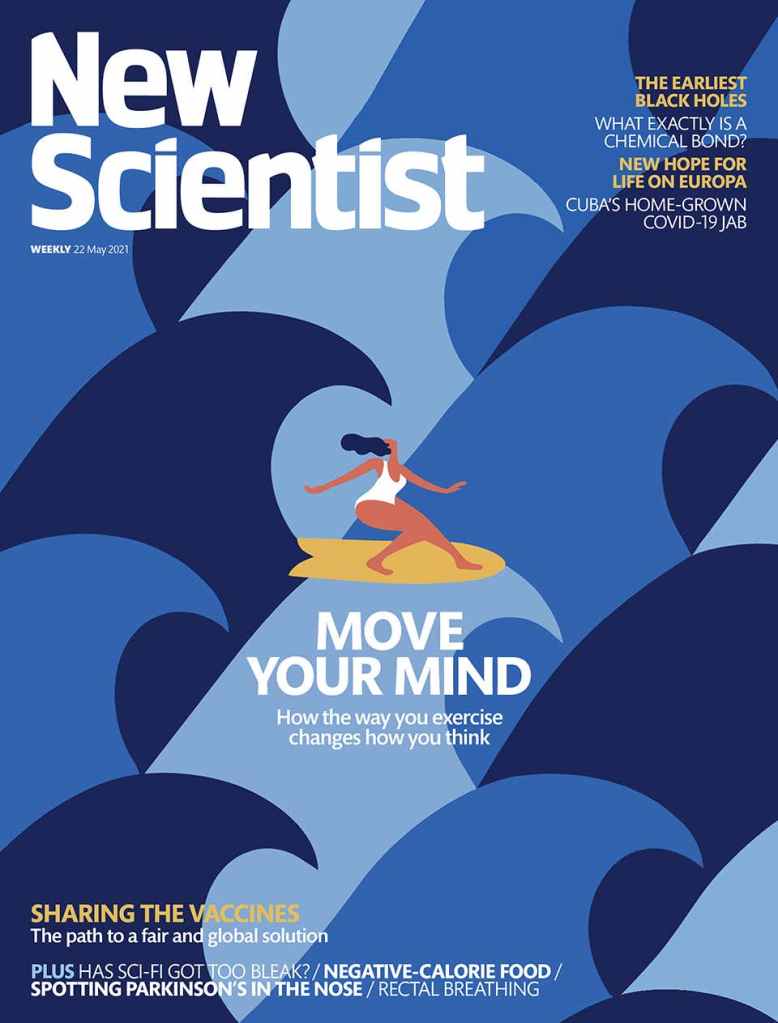
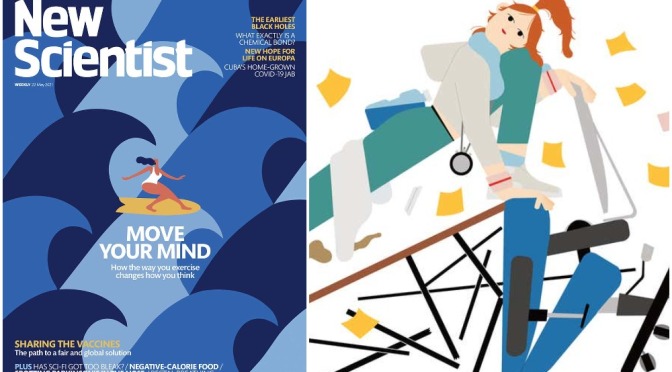
But the connection between movement and the brain goes deeper than you might think. A revolutionary new understanding of the mind-body connection is revealing how our thoughts and emotions don’t just happen inside our heads, and that the way we move has a profound influence on how our minds operate. This opens up the possibility of using our bodies as tools to change the way we think and feel.
Evidence is starting to stack up that this is indeed the case, and it isn’t all about doing more exercise. In my new book, Move! The new science of body over mind, I explore emerging research in evolutionary biology, physiology, neuroscience and cell biology to find out which body movements affect the mind and why.
Whatever it is that you want from your mind – more creativity, improved resilience or higher self-esteem – the evidence shows that there is a way of moving the body that can help. Here is my pick of the best ways to use your body to achieve a healthier, better-functioning mind.
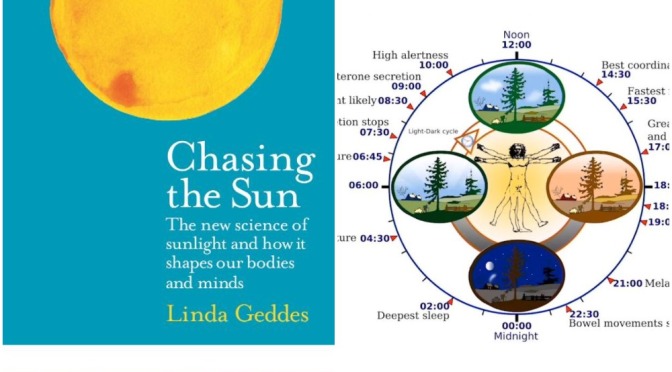
Health: “Chasing The Sun – How Light And Dark Shape Our Bodies And Minds”
Human biology is tuned to a 24-hour light-dark cycle but modern lifestyles are disrupting it with unhealthy consequences, says Linda Geddes
 Boomers Daily